
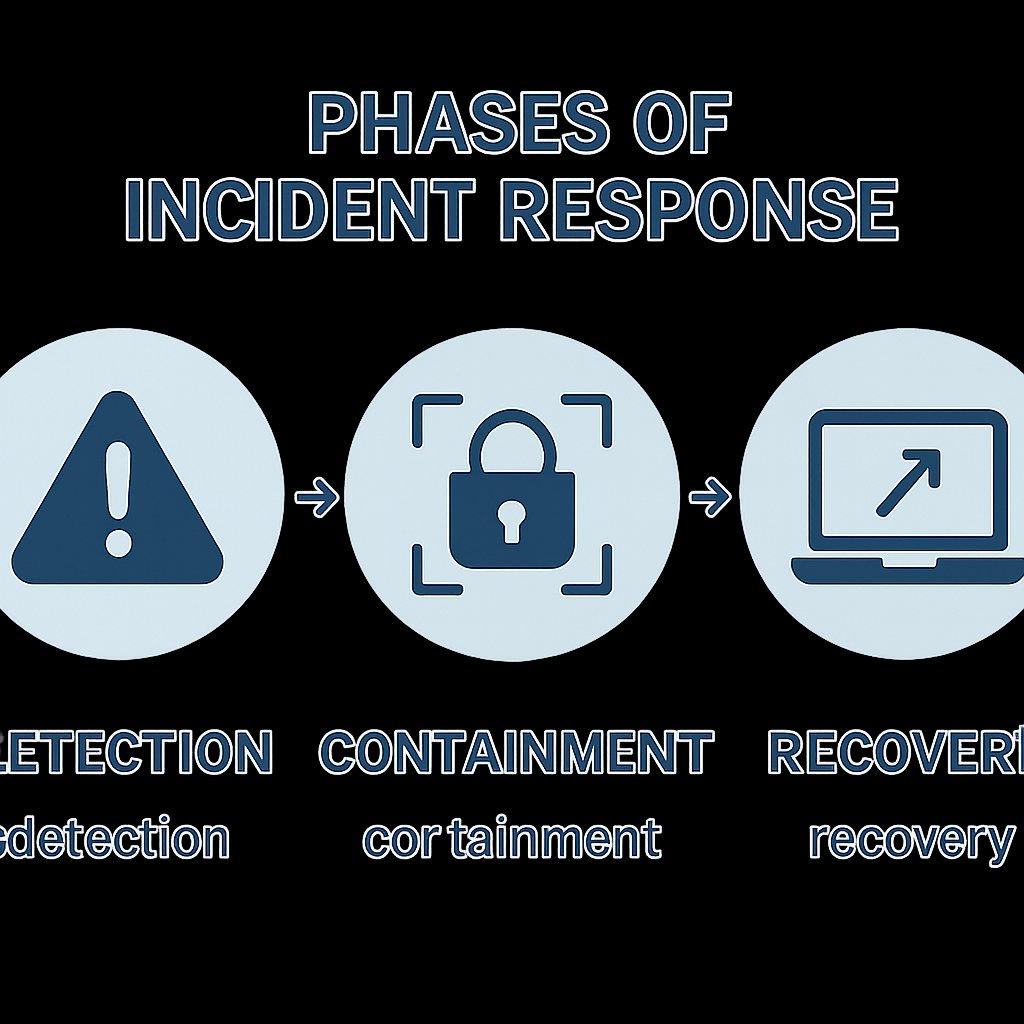
When a security breach hits your organization, the difference between chaos and control is a well-executed incident response plan. Most teams stumble not during the initial alert, but in the crucial steps of detection, containment, and recovery. This guide breaks down each phase, mapping them to NIST standards, and provides actionable techniques, code examples, and checklists you can use to strengthen your incident response process.
Key Takeaways:
- Understand the core phases of incident response as defined by the NIST SP 800-61 Rev. 3 framework
- Learn actionable detection, containment, and recovery techniques with real-world examples
- See practical code snippets for attack detection and response automation
- Reference checklists and tools to audit or improve your current response plan
- Identify common mistakes and how to avoid them in high-pressure scenarios
Incident Response Overview and the NIST Framework
Incident response is a structured process organizations use to identify, contain, and recover from cybersecurity incidents. The NIST SP 800-61 Rev. 3 defines a lifecycle for handling incidents, which has become the industry standard for both compliance and operational security.

The NIST framework divides incident response into four main phases (with some extensions to six):
- Preparation: Establishing policies, tools, and readiness
- Detection & Analysis: Identifying and verifying incidents
- Containment, Eradication, & Recovery: Stopping the attack, eliminating threats, and restoring systems
- Post-Incident Activity: Lessons learned and continuous improvement
For this guide, we focus on the “detection,” “containment,” and “recovery” phases, since these are where real-world breaches are won or lost. For a full breakdown, see SentinelOne: Incident Response Steps & Phases.
| Phase | Key Activities | NIST Reference |
|---|---|---|
| Detection & Analysis | Alert triage, log analysis, indicator matching | Section 3.2, SP 800-61 |
| Containment | Isolation, segmentation, kill switch activation | Section 3.3, SP 800-61 |
| Recovery | System restoration, validation, monitoring | Section 3.4, SP 800-61 |
Organizations that align their processes with NIST are better equipped to minimize the impact of breaches and comply with regulatory standards such as the DPDP Act and CERT-In guidelines (NIST SP 800-61 Rev. 3).
Eradication: Ensuring Complete Removal of Threats
After containment, it’s crucial to eradicate the threat completely. This involves identifying and removing all malware, closing vulnerabilities, and ensuring that no backdoors remain. For example, running a comprehensive malware scan using tools like Malwarebytes or ESET can help identify lingering threats. Additionally, reviewing logs for any unusual activity post-incident can provide insights into whether the threat has been fully neutralized.
Lessons Learned: Documenting and Improving
After recovery, it’s essential to conduct a thorough review of the incident. This includes documenting what happened, how it was handled, and what could be improved. For instance, teams can hold a post-mortem meeting to discuss the incident and update their incident response plan based on the findings. This practice not only helps in improving future responses but also ensures compliance with regulatory requirements.
Detection and Identification: Finding the Threat
Early detection is critical—every minute counts in reducing attacker dwell time and limiting damage. Effective detection combines real-time monitoring, log analysis, and threat intelligence. According to Cynet, detection is most successful when automated with well-tuned alerting and correlation rules.

Log Analysis and SIEM Rules
Security Information and Event Management (SIEM) tools aggregate logs and trigger alerts. For example, to detect brute-force attacks in a Linux environment:
# Example: Detect suspicious SSH login attempts via log analysis
grep "Failed password" /var/log/auth.log | awk '{print $11}' | sort | uniq -c | sort -nr | head
# Output: Shows IPs with the most failed login attempts
This script quickly surfaces potential brute-forcing IPs, which can be automated in SIEM tools like Splunk, Elastic SIEM, or Sentinel.
Behavioral Analytics Example (Python)
import pandas as pd

# Load authentication logs
logs = pd.read_csv('auth_logs.csv')

# Simple anomaly detection: users logging in from new countries
anomalies = logs.groupby('user')['country'].nunique().reset_index()
anomalies = anomalies[anomalies['country'] > 2]
print(anomalies)
# Output: Users with logins from >2 countries (possible account compromise)
This approach highlights users exhibiting unusual behavior, a frequent sign of account takeover or lateral movement.
Checklist: Detection Readiness
- Are all critical systems forwarding logs to your SIEM?
- Do you have baseline alert thresholds for login failures, privilege escalation, and data exfiltration?
- Are threat intelligence feeds integrated into your detection stack?
- Are real-time alerts routed to on-call personnel?
For advanced detection in modern environments, see Enhancing Container Security: Scanning and Protection Strategies.
Containment Strategies: Stopping the Spread
Containment prevents an active threat from causing further harm. The goal is to isolate affected systems, block attacker persistence, and protect business-critical assets. According to Cyber Forensic Academy, containment can be short-term (immediate isolation) or long-term (system segmentation, password resets).
Network Segmentation and Isolation
One of the most effective containment tactics is network isolation. For example, to block a compromised server’s outbound connections using iptables:
# Block all outbound traffic except SSH from a Linux server
iptables -P OUTPUT DROP
iptables -A OUTPUT -p tcp --dport 22 -j ACCEPT
This ensures incident responders retain remote access, while halting attacker command-and-control channels.
Account and Credential Actions
# Force password reset for a compromised user in Active Directory (PowerShell)
Set-ADAccountPassword -Identity "jdoe" -Reset -NewPassword (ConvertTo-SecureString -AsPlainText "N3wC0mpl3xP@ss!" -Force)
Disable-ADAccount -Identity "jdoe"
Immediate credential revocation is essential if lateral movement or privilege escalation is detected.

Containment Checklist
- Are affected systems immediately segmented from the rest of the network?
- Have all compromised user accounts been disabled or reset?
- Are known malware indicators (file hashes, domains, IPs) blocked at the firewall and proxy?
- Is forensic evidence being preserved before wiping or rebooting systems?
For web application containment, see Web Application Firewalls: ModSecurity vs Cloudflare vs AWS WAF for strategies on blocking attacks in real time.
Recovery Steps: Restoring Normal Operations
Recovery is the process of restoring systems to a known-good state, validating their security, and returning to business as usual. The NIST framework (SP 800-61 Rev. 3) emphasizes careful validation to ensure the threat is eradicated before resuming normal operations.
System Restoration and Validation
- Wipe compromised systems and restore from trusted backups
- Patch vulnerabilities exploited during the incident
- Re-image endpoints with gold-standard images
- Validate system integrity with file checksums
# Example: Linux file integrity check using sha256sum
sha256sum -c /etc/sha256sums.txt
# Output: Alerts if any system file has changed since baseline
This step is critical for detecting rootkits or hidden persistence mechanisms.
Monitoring for Reinfection
- Enable heightened logging and alerting for previously targeted assets
- Monitor for re-use of attacker infrastructure (IP addresses, domains)
- Schedule follow-up vulnerability scans and penetration tests
Recovery Checklist
- Are all restored systems fully patched and validated?
- Have you confirmed attacker C2 infrastructure is no longer accessible from your network?
- Are users and admins notified of the recovery timeline and post-incident restrictions?
| Recovery Task | Tools/Approach | Risks if Skipped |
|---|---|---|
| Restore from backup | Veeam, Rubrik, native snapshots | Re-infection, data loss |
| Patch vulnerabilities | WSUS, SCCM, yum/apt | Repeat compromise |
| File integrity validation | Tripwire, OSSEC, sha256sum | Hidden persistence |
Common Pitfalls and Pro Tips for Effective Incident Response
Even mature teams fall into traps that delay response or miss attacker activity. Here are the most frequent mistakes, and how to avoid them:
Pitfalls
- Destroying evidence by reimaging or rebooting systems too quickly. Always capture volatile data and disk images first.
- Overlooking lateral movement: Focusing only on the initially detected asset, not investigating possible spread.
- Insufficient communication: Failing to keep stakeholders updated, resulting in confusion or unauthorized restoration of infected systems.
- Ignoring regulatory obligations: Missing breach notification deadlines under laws like GDPR or the DPDP Act.
Pro Tips
- Use attack simulation (purple teaming) to test detection and containment playbooks regularly.
- Integrate threat intelligence to enrich detection and block indicators faster.
- Automate repetitive containment actions with SOAR (Security Orchestration, Automation, and Response) tools.
- Maintain a pre-approved communication plan for internal and external notifications.
- Review and update playbooks after every major incident (“lessons learned” phase).
Audit Checklist
- Are your incident response roles and escalation paths clearly documented?
- Do you have tested scripts for log preservation and evidence collection?
- Is your IR team trained on recent threat actor TTPs (Tactics, Techniques, Procedures)?
- Are lessons learned from past incidents tracked and acted on?
Conclusion and Next Steps
Detection, containment, and recovery form the backbone of a resilient incident response program. By mapping your procedures to the NIST framework and establishing clear, actionable checklists, you reduce risk and improve your team’s confidence when the next breach occurs. Regularly review your detection rules, automate containment where possible, and never skip the recovery validation step. For more on securing the full stack, explore container security strategies and web application firewall best practices.
Next steps: Audit your current incident response plan using the checklists above, and schedule a tabletop exercise to validate your detection and containment workflows. Stay informed with the latest NIST recommendations and update your playbooks as threat landscapes evolve.