
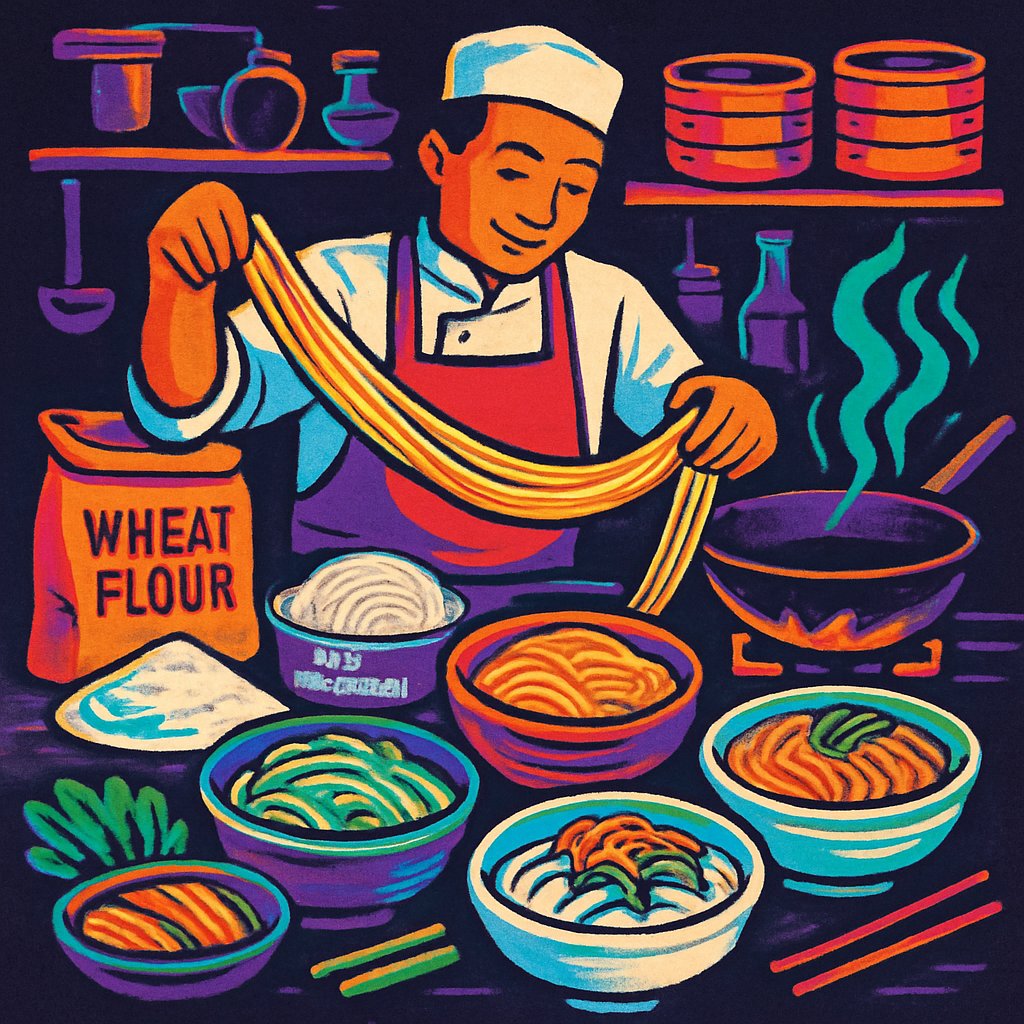
Chinese noodles are far more than a pantry staple—they are the heart of regional cuisines, festival tables, and everyday comfort from Beijing to Kunming. Whether you crave the theatrics of hand-pulled lamian (拉面), the knife-sliced bite of dao xiao mian (刀削面), or the silky glide of rice vermicelli (米线, mǐxiàn), each noodle carries a story of place, tradition, and skilled hands. This guide unravels the artistry behind China’s most famous noodle types, dives into signature regional recipes, and provides authentic techniques for mastering hand-pulled noodles at home.
Key Takeaways:
- Recognize the diversity of Chinese noodles and the regions that shaped them
- Master authentic hand-pulling techniques for lamian (拉面)
- Explore regional noodle dishes, understanding ingredients, flavor profiles, and cultural significance
- Get practical recipes and tips for making noodles at home
- Avoid common mistakes and discover pro-level noodle insights
Major Types of Chinese Noodles
China’s noodle landscape is a tapestry woven from wheat, rice, and regional ingenuity. The following chart summarizes five iconic varieties, their origins, and culinary uses:

| Noodle Type | Chinese Name (pinyin) | Main Ingredient | Signature Dishes | Region |
|---|---|---|---|---|
| Hand-Pulled Noodles | 拉面 (lāmiàn) | Wheat flour | Beef Noodle Soup | Lanzhou, Northwest |
| Knife-Cut Noodles | 刀削面 (dāoxiāomiàn) | Wheat flour | Shanxi Knife-Cut Noodles | Shanxi |
| Wide Rice Noodles | 河粉 (héfěn) | Rice flour | Stir-Fried Chow Fun | Guangdong |
| Rice Vermicelli | 米线 (mǐxiàn) | Rice flour | Crossing-the-Bridge Noodles | Yunnan |
| Cold Skin Noodles | 凉皮 (liángpí) | Wheat or rice flour | Liangpi Salad Noodles | Shaanxi |
Lamian (拉面): Hand-Pulled Noodles
Lamian are famous for their chewy, elastic texture and their mesmerizing preparation technique, where a single rope of dough is stretched and doubled repeatedly. Lanzhou, in Gansu province, is home to the iconic Lanzhou beef noodle soup (兰州牛肉面, Lánzhōu niúròu miàn), a bowl that’s as much about the noodles as the aromatic beef broth and daikon radish. Lamian’s simplicity—just flour, water, and salt—belies the skill required for perfect elasticity and smoothness (source).

Dao Xiao Mian (刀削面): Knife-Cut Noodles
Dao xiao mian are prepared by shaving ribbons off a block of wheat dough directly into boiling water. The resulting noodles are thick, with a satisfying irregularity. Originating from Shanxi province, they are prized for their hearty bite and typically served in savory, robust broths or stir-fries.
He Fen (河粉): Wide Rice Noodles
He fen, sometimes called chow fun, are silky, slippery sheets of rice noodles popular in Guangdong and Southeast Asia. Their supple texture makes them ideal for both stir-frying and soaking up rich sauces, as seen in the classic beef chow fun (干炒牛河, gān chǎo niú hé).
Mi Xian (米线): Rice Vermicelli
Mi xian are delicate, round rice noodles born in Yunnan province. They star in dishes like crossing-the-bridge noodles (过桥米线, guòqiáo mǐxiàn), where piping hot broth is poured over raw and cooked ingredients layered with rice vermicelli. These noodles offer a light but springy texture, perfect for complex broths and fresh toppings.
Liang Pi (凉皮): Cold Skin Noodles
Liang pi are cold, chewy noodles made from wheat or rice flour, first steamed and then sliced. A staple of Shaanxi street food, they’re typically served chilled, dressed in chili oil, vinegar, garlic, and crunchy cucumber. The dish is especially popular in summer for its bold, refreshing flavors.
Hand-Pulled Lamian Techniques
Making authentic hand-pulled lamian (拉面) at home is both an art and a workout. The magic lies in developing gluten structure for elasticity, then using a series of stretches and folds to transform a lump of dough into fine, even noodles. Here’s how you can approach this technique, distilled from authentic sources (Omnivore’s Cookbook, Easy Noodle Recipes):
Essential Equipment & Ingredients
- High-gluten wheat flour (bread flour)
- Water (room temperature)
- Salt
- Vegetable oil (for resting)
- Sturdy work surface
Step-by-Step Lamian Dough
- Mix 400g (about 3 cups) bread flour, 1/2 teaspoon salt, and 180ml (3/4 cup) water until shaggy. Knead for 10 minutes until smooth.
- Rest the dough, covered with oil, for at least 1 hour (overnight in the fridge develops better elasticity).
- Divide dough into 4 equal portions. Roll each into a log; coat lightly with oil, cover, and rest for 30 minutes.
- Take each log, flatten slightly, and begin stretching: Hold both ends, gently pull and bounce the dough, letting gravity help.
- Fold the dough in half, twist, and pull again. Repeat 5-7 times, until you reach your desired thickness (from chunky to thin “angel hair”).
- Drop noodles directly into boiling water. Cook for 90 seconds–2 minutes, depending on thickness.
This process can be challenging to master. The dough may snap if under-kneaded or over-extended, so patience and practice are essential. For detailed video demonstrations and troubleshooting, see Chinese Cooking Demystified.
Why Hand-Pulling Matters
Unlike machine-cut noodles, hand-pulled lamian develop micro-striations and a bouncy bite that’s impossible to replicate otherwise. This technique is essential for signature noodle soups of Northwest China, where texture is as important as flavor. The dough’s gluten structure, developed by kneading and resting, is what allows for the dramatic stretching without breaking.
Regional Signature Noodle Dishes and Recipes
Chinese noodle culture thrives on regional specialties. Each dish is a product of local climate, available ingredients, and culinary philosophy. Here are five classic noodle dishes—one for each major noodle type—with authentic recipes, measurements, and cultural context:
Lanzhou Beef Noodle Soup (兰州牛肉面, Lánzhōu Niúròu Miàn)
- Region: Gansu/Northwest
- Why it matters: This is the gold standard for lamian—clear broth, tender beef, and vibrant chili oil.
Ingredients (serves 4):
- 500g (1.1 lb) beef shank or brisket
- 2L (2 qt) water
- 2 tbsp ginger, sliced
- 2 scallions, smashed
- 1 tbsp Sichuan peppercorns
- 1 daikon radish, peeled & sliced
- Salt, to taste
- Hand-pulled lamian (see above)
- Chili oil, cilantro, and pickled mustard greens for garnish
Instructions:
- Simmer beef with water, ginger, scallions, and peppercorns for 2 hours. Remove beef and slice thinly.
- Add daikon to broth, simmer 20 minutes. Skim fat, season with salt.
- Cook lamian noodles. Divide among bowls. Top with beef, daikon, broth, and garnishes.
Shanxi Knife-Cut Noodles in Pork Sauce (刀削面, Dāoxiāomiàn)
- Region: Shanxi
- Key feature: The uneven cut creates absorbing surface for sauce.
Ingredients (serves 4):
- 400g (14 oz) knife-cut noodles (or thick wheat noodles)
- 200g (7 oz) ground pork
- 2 tbsp fermented broad bean paste (豆瓣酱, dòubànjiàng)
- 1 tbsp soy sauce
- 2 garlic cloves, minced
- 1 carrot, julienned
- 2 scallions, chopped
Instructions:
- Brown pork in a wok, add garlic, doubanjiang, and soy sauce.
- Add carrots, stir-fry until soft. Toss in cooked noodles, stir to coat.
- Top with scallions and serve hot.
Beef Chow Fun (干炒牛河, Gān Chǎo Niú Hé)
- Region: Guangdong/Cantonese
- Highlight: “Wok hei” (锅气) is essential—high heat for smoky flavor.
Ingredients (serves 2):
- 300g (10 oz) fresh he fen (wide rice noodles)
- 150g (5 oz) beef sirloin, thinly sliced
- 1 tbsp light soy sauce
- 1 tbsp oyster sauce
- 1 tsp Shaoxing wine
- 2 tbsp vegetable oil
- 1/2 onion, sliced
- 1 handful bean sprouts
- 2 scallions, cut into 5cm (2”) pieces
Instructions:
- Marinate beef with soy sauce and Shaoxing wine.
- Heat wok until smoking. Sear beef, set aside.
- Add oil, stir-fry onion, then noodles. Add sauces, toss quickly.
- Return beef, add bean sprouts and scallions. Stir-fry 30 seconds, serve immediately.
Yunnan Crossing-the-Bridge Rice Noodles (过桥米线, Guòqiáo Mǐxiàn)
- Region: Yunnan
- Tradition: Ingredients are layered in the bowl, hot broth is poured over at the table—symbolizing reunion and warmth.
Ingredients (serves 1):
- 120g (4 oz) fresh rice vermicelli (mi xian)
- 250ml (1 cup) chicken broth, boiling
- 50g (2 oz) thinly sliced chicken breast
- 1 quail egg
- 2 slices ham
- Bean sprouts, chives, coriander
- Chili oil, to taste
Instructions:
- Blanch vermicelli, place in a large bowl.
- Arrange chicken, ham, egg, and vegetables on top.
- Pour boiling broth over; let ingredients cook in the bowl. Add chili oil and herbs to taste.
Shaanxi Cold Skin Noodles (凉皮, Liángpí)
- Region: Shaanxi
- Tradition: Popular as a summer street snack, symbolizing cool relief and spiciness.
Ingredients (serves 2):
- 300g (10 oz) liang pi noodles (store-bought or homemade from wheat starch)
- 1 cucumber, julienned
- 2 tbsp Chinese black vinegar
- 1 tbsp chili oil
- 1 tbsp soy sauce
- 2 garlic cloves, minced
- Pinch sugar
- Sesame seeds, for garnish
Instructions:
- Mix vinegar, chili oil, soy sauce, garlic, and sugar to make dressing.
- Toss noodles with cucumber and sauce. Top with sesame seeds.
For more on regional Chinese food traditions, see Flavor365’s noodle guide.
Common Pitfalls and Pro Tips
Hand-Pulled Noodles: What Can Go Wrong?
- Under-kneading: Insufficient kneading results in dough that tears instead of stretching. Gluten must be well-developed for extensibility.
- Skipping the rest: Resting relaxes gluten, making the dough supple and stretchable. Rushing this step leads to snapping noodles.
- Too much flour on the surface: Excess flour prevents the dough from sticking to itself during folding, making noodles uneven.
- Water temperature: Using water that’s too hot or too cold can affect gluten formation and dough hydration.
Pro Tips for All Noodle Types
- Ingredient Substitutions: If high-gluten flour is unavailable, use bread flour. For rice noodles, look for Thai fresh rice noodles (sen yai) as a close substitute for he fen.
- Texture Control: Adjust water amount for dough based on humidity and flour brand—slightly tacky dough yields chewier noodles.
- Cooking Timing: Always cook noodles just before serving to preserve texture; never let them sit in water.
- Regional Flavor: Don’t skimp on authentic condiments: Sichuan peppercorns, Chinese black vinegar, doubanjiang, and homemade chili oil define the regional character of each bowl.
Table: Common Mistakes and Solutions
| Mistake | Result | Solution |
|---|---|---|
| Undermixed dough | Noodles snap when pulled | Knead longer; rest dough overnight |
| Overcooked rice noodles | Mushy, broken noodles | Blanch briefly, rinse in cold water |
| No “wok hei” in chow fun | Bland, oily noodles | Use very high heat; don’t overcrowd wok |
| Skipping authentic condiments | Flat or “off” flavor | Use real Chinese sauces/oils for the region |
Conclusion & Next Steps
Chinese noodles are as much about memory and ritual as they are about taste. By understanding the diversity of noodle types, mastering authentic techniques, and appreciating the cultural stories in every bowl, you deepen your culinary skills and your connection to China’s rich food heritage. Try hand-pulling lamian yourself, experiment with regional recipes, and bring the spirit of Chinese noodle tradition into your kitchen.
For those interested in exploring more about Chinese culinary arts, consider reading about Chinese dumplings or delve into the world of Chinese street foods for more inspiration.