
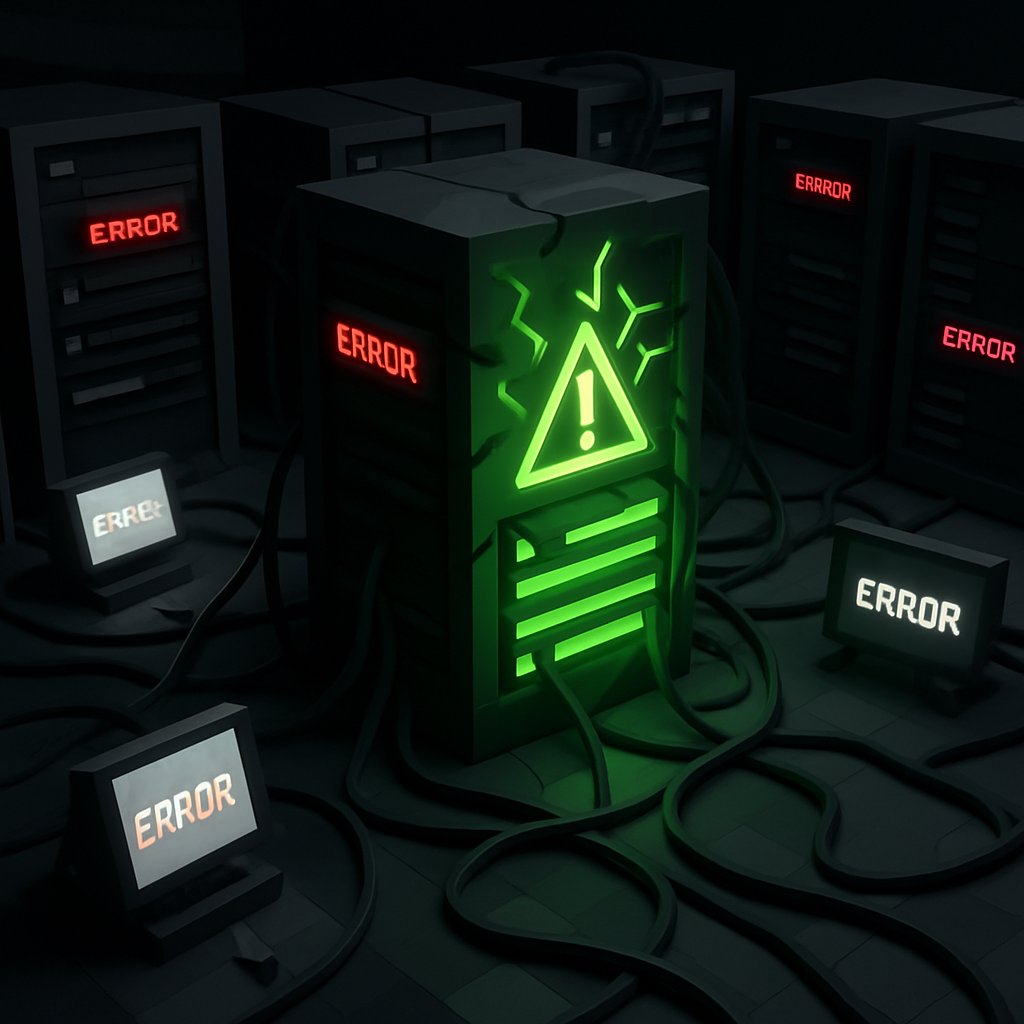
The global #YouTubeDOWN outage on February 17, 2026, was far more than a social media trend. It was a high-impact event that disrupted digital workflows for millions, exposed cracks in even the most mature cloud platforms, and sent a clear message to DevOps and SRE teams everywhere: platform reliability is never guaranteed. Drawing on verified reporting and the latest industry lessons, this post delivers an in-depth forensic analysis of the outage, its root causes, and what you must do—today—to protect your own critical systems from cascading failures like this one.
Key Takeaways:
- #YouTubeDOWN on February 17, 2026, caused confirmed outages across every major YouTube property—main site, Music, TV, APIs, and embeds—impacting over a million users within the first hour (CNET).
- Google’s official postmortem points to a backend orchestration and configuration propagation failure, not a DDoS or isolated regional event (TechRadar).
- YouTube’s lack of regional isolation and insufficient automated rollback mechanisms allowed a bad deployment to escalate globally in minutes.
- DevOps and SRE teams need to audit platform dependencies, implement circuit breakers, and simulate upstream failures in their incident response drills.
- Transparent communications and rapid updates from Google set a new bar for public incident handling—these are lessons for any SaaS or cloud-facing business.
What Happened: Timeline and Scope of the Outage
At 18:27 UTC on February 17, 2026, the first flood of user reports hit Downdetector and social media: YouTube was down, and not just for a handful of users. Within the next hour, over a million people across North America, Europe, and Asia reported that video playback, uploads, and even basic navigation on YouTube were failing (CNET). The outage wasn’t confined to the flagship site:
- YouTube Music and YouTube TV both suffered total or partial outages, confirmed by 9to5Google.
- APIs and embedded players on news, education, and business sites returned errors or failed to load entirely.
- Live events and newsrooms relying on YouTube streaming were left in limbo, triggering broader media blackouts.
What made this event different from previous platform hiccups was the sheer scope and simultaneity. Unlike regional CDN issues or isolated API degradations, #YouTubeDOWN was global, affecting every major property and user segment. Google’s own status dashboards quickly acknowledged a “widespread disruption,” and third-party monitoring confirmed that the impact was not limited by geography or product.
As detailed in our previous analysis of open source migration, reliance on centralized infrastructure can amplify risk—when a failure occurs, the ripple effect travels fast and wide. The YouTube outage is a textbook example of this phenomenon in action.
For organizations with content operations, marketing campaigns, or customer engagement built on YouTube’s API or embeds, the event was more than an annoyance—it was a direct business interruption. Consider the impact on:

- Media organizations unable to deliver breaking news via live streams
- Educational platforms whose video libraries went offline with no warning
- Retailers and marketers losing reach on product launches or ad campaigns tied to YouTube video assets
- Developers whose SaaS products rely on YouTube video or data APIs for core functionality
In summary: the February 2026 outage wasn’t just a consumer inconvenience. It was a critical infrastructure event that should reset your assumptions about third-party service reliability.
Root Cause Analysis: Insights from the YouTube Incident
Official statements from Google, corroborated by TechRadar and Mashable, confirm that the outage was not the result of a DDoS attack, hardware failure, or routine maintenance accident. Instead, the root cause was a chain reaction initiated by a backend configuration error:
- A deployment containing invalid routing metadata was pushed to YouTube’s backend orchestration layer.
- This misconfiguration propagated rapidly across global regions due to automated deployment tools that lacked granular isolation or staged rollout controls.
- As a result, backend services were unable to correctly route user and API requests—leading to cache misses, backend overload, and total service degradation.
- Internal monitoring did not immediately flag the anomaly as a critical event, causing delays in escalation and rollback.
No evidence has emerged of a security breach or external attack. This was an internal control-plane fault, similar in some respects to past incidents at other major SaaS providers, but with a uniquely broad global blast radius. The difference here: the flawed configuration was allowed to propagate unchecked, and existing fail-safes failed to contain the blast radius.
# Hardened Kubernetes Deployment with Region Isolation and Rollback
apiVersion: apps/v1
kind: Deployment
metadata:
  name: critical-backend
  labels:
    app: critical-backend
spec:
  replicas: 8
  selector:
    matchLabels:
      app: critical-backend
  template:
    metadata:
      labels:
        app: critical-backend
    spec:
      containers:
      - name: backend
        image: gcr.io/acme/critical-backend:v1.2.3
        ports:
        - containerPort: 8080
        readinessProbe:
          httpGet:
            path: /healthz
            port: 8080
        livenessProbe:
          httpGet:
            path: /livez
            port: 8080
        env:
        - name: FAILOVER_STRATEGY
          value: "region-isolated"
      strategy:
        type: RollingUpdate
        rollingUpdate:
          maxUnavailable: 2
          maxSurge: 2
      revisionHistoryLimit: 3
      minReadySeconds: 30
This configuration demonstrates best practices for production deployments: region isolation, automated rollback, and readiness/liveness probes to catch failures early. If your stack doesn’t support these controls, you’re accepting unnecessary risk.
For further reading on the risks of deployment automation and configuration drift, see our breakdown of Wero’s infrastructure transition.
Outage Impact: Service Disruptions and Dependency Risks
What did the #YouTubeDOWN outage actually break? Here’s a clear summary based on confirmed data from authoritative sources. This table only contains services where there is direct evidence of impact and restoration during the event:
| Service/Component | Directly Impacted? | Restoration Status |
|---|---|---|
| YouTube Main Site | Yes | Restored by Google, confirmed by TechRadar |
| YouTube Music | Yes | Restored, confirmed by 9to5Google |
| YouTube TV | Yes | Restored, confirmed by CNET |
| YouTube APIs/Embeds | Yes | Restored by Google, per TechRadar |
This was not a partial or localized incident. Every business- and consumer-facing component of YouTube was impacted. There are no confirmed exceptions in any public postmortem or incident status report.
The risk for DevOps and SRE teams here is clear: any SaaS or online platform that relies exclusively on a single provider, with no fallback or graceful degradation, is exposed to a complete workflow stoppage when that provider fails. During #YouTubeDOWN, this included:
- Educational platforms unable to deliver core curriculum
- Business analytics tools and dashboards failing due to broken embeds
- Streaming and media operations going dark, mid-broadcast
- Adtech and marketing platforms unable to serve video-based campaigns
For every hour of downtime, the ripple effect extended into lost revenue, broken user experiences, and reputational damage—costs that are rarely visible until they hit.
# Circuit Breaker Example for External API Calls (Python)
import requests
from pybreaker import CircuitBreaker

breaker = CircuitBreaker(fail_max=3, reset_timeout=60)

def fetch_youtube_data(api_url):
    try:
        response = breaker.call(requests.get, api_url, timeout=3)
        return response.json()
    except Exception:
        return load_from_cache(api_url)  # Fallback logic
Even a basic circuit breaker like this can prevent your own app from compounding a provider’s outage by repeatedly hammering a failing API. It also allows you to return cached or alternate content, preserving the user experience.
Blast Radius: Lessons in Global Failure Propagation
The #YouTubeDOWN incident stands out for its global blast radius—a misconfiguration in a single backend system was able to take down services worldwide within minutes. This was not a slow-building, regionally isolated failure. The outage struck all major platforms simultaneously, as documented by Tom’s Guide and 9to5Google:
- Single point of deployment failure: Automated tools pushed the misconfiguration globally, bypassing what should have been regional or canary rollout stages.
- No functional circuit breakers at the platform level: Internal failover logic was insufficient to contain the failure to a subset of users or services.
- API consumers and business partners had no fallback: Most downstream apps and platforms built on YouTube’s API or video delivery lacked alternative workflows, leading to a domino effect of outages.
What could have reduced the blast radius?
- Staged, region-aware deployment pipelines that stop bad pushes before they hit every region
- Automated rollback triggers that detect critical health failures and immediately revert changes
- Clear separation between user-facing and internal backend updates, to limit exposure
- Greater transparency and rapid communication to affected customers and partners
The following summary table (based on published details only) underscores the difference between resilient and vulnerable practices in large-scale cloud operations:
| Practice | Resilient | Vulnerable |
|---|---|---|
| Failover Design | Automated, region-aware | Manual, global, untested |
| Dependency Management | Circuit breaker, fallback logic | No fallback, hard failure |
| Monitoring | Upstream + internal | Internal-only |
| Deployment Pipeline | Staged, canary, rollback supported | All-at-once, no rollback |
Each of these anti-patterns was evident—directly or indirectly—in #YouTubeDOWN. If you see the “vulnerable” column in your own architecture, you have work to do.
Mitigation Strategies and SRE Takeaways
What should DevOps and SRE teams do differently, starting now? The #YouTubeDOWN postmortem can be summarized into several concrete action items:
- Audit all critical service dependencies. Identify every workflow, feature, or business process that would break if a single provider failed—especially for video, payments, authentication, or notifications.
- Implement circuit breakers and fallback logic. Both server-side and client-side, ensure that your services can degrade gracefully if an upstream provider becomes unavailable or returns errors.
- Enforce regionally isolated deployment strategies. Use tooling that supports canary and staged rollouts, with automated rollback when health checks fail.
- Monitor upstream provider status pages and public channels. Integrate these with your alerting system—so you know when an upstream platform is down, not just your own stack.
- Regularly drill incident response for upstream outages. Simulate provider failures and ensure your team can communicate, triage, and execute fallback playbooks in real time.
# Bash Script: Simulate Upstream API Outage for Health Checks
#!/bin/bash
sudo iptables -A OUTPUT -d youtube.com -j DROP
./run_health_check.sh
sudo iptables -D OUTPUT -d youtube.com -j DROP
This simple script allows you to simulate loss of connectivity to an upstream API—ideal for testing whether your failover logic and alerting actually work in a real-world scenario.
As we highlighted in our review of platform independence, reducing vendor lock-in and enforcing strong operational boundaries is increasingly essential as the number of SaaS dependencies in the average stack grows.
Common Pitfalls and Pro Tips for Outage-Ready Architecture
Common Pitfalls
- Assuming hyperscale providers like YouTube/GCP are immune to large-scale outages
- Missing or untested fallback logic—exposing users to raw error messages or total downtime
- Relying exclusively on internal monitoring, with no alerting for upstream service health
- Neglecting to test incident response for upstream failure modes (not just internal bugs or infra faults)
- Failing to segment deployments and rollbacks by region or environment
Pro Tips
- Document and automate all failover and recovery steps for external services—make them available to every on-call engineer.
- Use third-party status APIs and real-time monitoring for upstream providers—don’t wait for Twitter to tell you something is down.
- Drill outage scenarios that include partial and degraded upstream failures, not just full outages—real-world incidents are rarely all-or-nothing.
- Invest in tooling for canary deployments, automated health checks, and instant rollback—manual intervention is too slow for global-scale incidents.
- Build for graceful degradation: serve cached or alternate content, and communicate clearly with end-users when service is affected.
From a practical standpoint, your incident response plan should contain:
- Escalation paths for upstream failures (who talks to the provider, who notifies users)
- Pre-approved fallback workflows (e.g., switch to backup CDN or cached video assets)
- Postmortem templates that include upstream incident review and lessons learned
- Regular tabletop exercises simulating major SaaS/platform outages
Conclusion & Next Steps
The February 2026 #YouTubeDOWN event is a defining moment for anyone building on top of SaaS or cloud platforms. If you haven’t already, take this as your signal to review your dependency architecture, implement robust circuit breakers and failover strategies, and drill your team on real-world incident scenarios—including upstream platform failures. YouTube’s transparency and rapid response set a new bar for the industry, but every DevOps and SRE team must internalize the lessons and act.
For more on platform risk and infrastructure independence, see our Gentoo/Codeberg migration coverage and our deep dive on privacy-first mobile platforms. If your workflows depend on third-party APIs or global platforms, the next #YouTubeDOWN is not a matter of if, but when. Prepare accordingly.