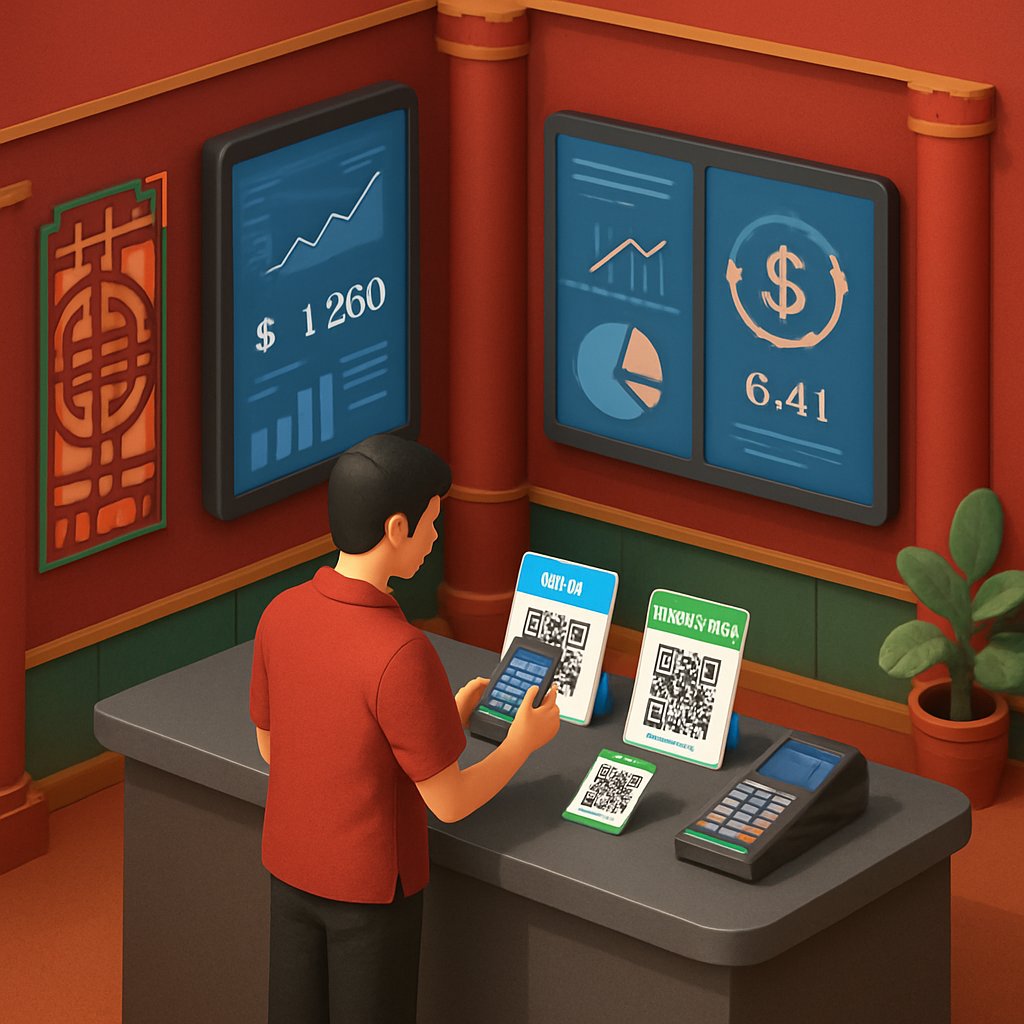
Integrating Alipay and WeChat Pay: Merchant Setup Guide
Chinese consumers expect to see Alipay (支付宝, Zhīfùbǎo) and WeChat Pay (微信支付, Wēixìn Zhīfù) at checkout—online and offline. If your business targets this audience, supporting both platforms is essential for conversions and credibility. This guide walks you through merchant account setup, integration strategies, settlement flows, and compliance essentials for cross-border RMB payments, so you can access China’s massive digital payment ecosystem with confidence and accuracy.
Key Takeaways:
- Alipay and WeChat Pay are the dominant payment platforms in China; foreign merchants must offer both to maximize reach.
- Merchant onboarding requires KYC documentation, PSP partnerships, and regulatory diligence—plan for a multi-week process.
- Integration APIs are available via global payment providers; settlement can be in your local currency or RMB depending on your business setup.
- Fee structures and timelines vary—always verify terms and mark unverified data when specifics are not confirmed by official sources.
- Cross-border compliance with Chinese regulations (PIPL, CSL, DSL) is mandatory to prevent frozen funds or legal exposure.
Digital Payment Landscape in China: Why Alipay and WeChat Pay Matter
China’s digital payment ecosystem is unique and highly consolidated. By mid-2023, approximately 940 million Chinese users were active on mobile payment platforms (Gate Kaizen). Alipay (from Ant Group) and WeChat Pay (from Tencent) dominate this market, accounting for the vast majority of cashless consumer transactions. International cards such as Visa and Mastercard are rarely accepted by Chinese merchants.
- If you intend to sell to Chinese customers, you must integrate Alipay and WeChat Pay. Both serve as payment bridges (支付桥梁, zhīfù qiáoliáng), enabling RMB payments with automatic currency conversion for settlement overseas.
- Chinese shoppers expect to pay in RMB (人民币, rénmínbì), even when buying from foreign sites. Alipay and WeChat Pay handle currency conversion and remittance seamlessly.
- These are two separate ecosystems—accounts and balances are not interoperable. You must support both for complete coverage (The China Journey).
These wallets are deeply integrated into daily Chinese life, offering more than just payments—social features, loyalty programs, and personalized recommendations are part of the experience (UP2China). For foreign brands, providing familiar payment methods builds instant trust (信任, xìnrèn) and reduces checkout abandonment.
Merchant Account Setup: Alipay and WeChat Pay for Foreign Businesses

Alipay Cross-Border Merchant Account
Alipay Cross-Border (支付宝跨境, zhīfùbǎo kuàjìng) allows foreign merchants to accept RMB payments while receiving settlement in their local currency (USD, EUR, GBP, etc.). The process includes:
- Partner with a global PSP (Payment Service Provider) that supports Alipay—examples include Adyen, Stripe, Worldpay, or through Alipay’s official global partners.
- Provide Know Your Customer (KYC) documentation: business registration, proof of bank account, identity of legal representative, and (if you want RMB settlement in China) a Chinese business license.
- Complete the PSP onboarding process. Approval timing depends on documentation and can take multiple weeks.
- Once approved, you can add Alipay QR codes for offline transactions or API integration for e-commerce checkouts.
Alipay collects funds in RMB from the customer, handles foreign exchange conversion, and remits settlement to your chosen currency and account (Gate Kaizen).
WeChat Pay Cross-Border Merchant Account
WeChat Pay Cross-Border (微信支付跨境, wēixìn zhīfù kuàjìng) provides a similar service with some nuances:
- Choose a PSP that offers WeChat Pay support (examples: Adyen, Payoneer, Stripe, or direct Tencent partners).
- Submit KYC documents—typically the same as Alipay, but WeChat Pay may require additional Chinese-language materials or a local legal entity for RMB settlement in China.
- Complete onboarding. Timeline varies by provider and document readiness.
- Use provided QR codes or API integration for online and offline payments.
WeChat Pay collects the customer’s RMB, converts it, and settles in your selected currency after deducting fees.
Practical Tips
- Select PSPs with proven experience in China compliance and cross-border payments.
- Prepare all documentation in advance, including certified translations where needed.
- For RMB settlement in China, you may need a local Chinese business entity or cross-border business license (跨境营业执照, kuàjìng yíngyè zhízhào).
Integration APIs: Connecting Your Storefront
Both Alipay and WeChat Pay provide API-based integration for e-commerce and offline payments. Most foreign businesses integrate through a PSP, which simplifies technical and compliance challenges.
Alipay API Integration
- Access RESTful APIs for payment initiation, callbacks, refunds, and reconciliation from Alipay’s global partners.
- Support includes web, mobile, in-app payments, and QR code generation for in-person sales.
- Official documentation and merchant tools are available at intl.alipay.com.
- Testing and sandbox environments allow trial runs before production launch.
WeChat Pay API Integration
- APIs are offered through global PSPs, supporting online and offline payment flows.
- Endpoints typically cover payment initiation, refunds, order queries, and settlement reconciliation.
- Sandbox/live environments are managed through your PSP’s dashboard.
Key Considerations
- Many PSPs offer unified SDKs supporting both platforms, speeding up development.
- Direct integration is possible, but requires in-depth compliance and Chinese-language support.
- Advanced use cases (such as recurring payments or mini-programs) may require additional configuration or partnerships.
Settlement and Cross-Border Payment Flows
Your settlement flow determines how—and in what currency—you get paid. For most foreign businesses:
- Chinese buyer pays in RMB using Alipay or WeChat Pay.
- The platform confirms payment to the merchant in real time.
- Alipay/WeChat Pay, or your PSP, converts RMB to your selected currency (USD, EUR, GBP, etc.), deducts fees, and remits funds.
- Payment is settled to your overseas bank account. Timing varies by PSP and banking partners.
If you operate a China-based legal entity, you can opt for RMB settlement to a Chinese account—but this requires additional licensing and tax compliance. Refer to Gate Kaizen for full RMB settlement instructions.
Compliance Requirements
- Confirm your PSP is licensed for cross-border payments and follows Chinese regulations, including reporting to SAFE (国家外汇管理局, guójiā wàihuì guǎnlǐjú).
- Personal data handling must comply with PIPL (个人信息保护法, gèrén xìnxī bǎohù fǎ)—Article 38 governs cross-border data transfers.
- Transaction data may be subject to China’s Cybersecurity Law (CSL, 网络安全法, wǎngluò ānquán fǎ) and Data Security Law (DSL, 数据安全法, shùjù ānquán fǎ).
Fee Comparison and Integration Timeline
Costs and integration timelines are highly variable and dependent on your provider, volume, and setup. The specific fee and timeline ranges in the table below are unverified by the provided research and are shared for reference only—always confirm with your PSP and mark unverified where needed.
| Provider | Alipay Support | WeChat Pay Support | Typical Setup Time | Settlement Currency | Transaction Fee | FX Spread |
|---|---|---|---|---|---|---|
| Alipay Cross-Border (via PSP) | Yes | No | Unverified | USD/EUR/GBP/CNY | Unverified | Unverified |
| WeChat Pay Cross-Border (via PSP) | No | Yes | Unverified | USD/EUR/GBP/CNY | Unverified | Unverified |
| Unified PSP (e.g., Adyen, Stripe) | Yes | Yes | Unverified | USD/EUR/GBP | Unverified | Unverified |
Notes:
- All specific fee and FX spread figures are unverified—refer directly to your contract and provider.
- Some PSPs may add additional fixed or monthly service fees.
- RMB settlement for local entities may involve extra compliance steps and longer onboarding.
Integration Timeline
- KYC and onboarding: Timeline not confirmed—verify with your PSP.
- API/SDK integration and testing: Timeline depends on provider and developer experience.
- Approval and go-live: Timeline not confirmed—provider dependent.
Total time to first transaction: Unverified—check with both PSP and platform for up-to-date estimates.
Compliance and Common Challenges
China’s regulatory framework is strict. Failing to comply can result in frozen funds, delayed settlements, or legal and reputational risks. Key points to address:
Key Legal Requirements
- PIPL (Personal Information Protection Law): Article 38 requires explicit user consent and an approved mechanism for cross-border personal data transfers.
- CSL (Cybersecurity Law): Article 37 mandates local storage of important data and personal information unless certain regulatory conditions are met.
- DSL (Data Security Law): Export of “important” data can require a formal security assessment and government approval.
Work with PSPs and advisors who understand the nuances of Chinese regulatory compliance and who can offer clear contractual terms to reduce legal risk. When in doubt, consult legal counsel with China cross-border expertise.
Common Pitfalls and Pro Tips
- Attempting “DIY” integration without local/regional support often results in compliance gaps or application rejections.
- Assume all customer and payment data may be scrutinized by regulators—use secure and compliant infrastructure.
- Prepare for KYC delays if supporting documents are incomplete or lack certified translations.
- For large merchants, negotiate custom fee structures and settlement cycles with your PSP.
- RMB settlement for China-based entities adds tax, VAT, and SAFE (国家外汇管理局) responsibilities.
For more on the regulatory environment, see China Cross-Border SaaS Compliance Guide.
Conclusion and Next Steps
To sell to Chinese consumers, Alipay and WeChat Pay integration is a must. Merchant onboarding, integration, and compliance can be navigated with experienced PSPs and careful planning. Prioritize regulatory diligence (PIPL, CSL, DSL), document preparation, and contract review with your payment partners. If you’re launching a China-facing business, begin your merchant account process well in advance to ensure a smooth go-live.
For further reading on cross-border e-commerce and China’s digital infrastructure, visit Cross-Border Digital Infrastructure in China and File Sharing Across China and the West: What Works in 2024.
Understanding How to Integrate Alipay and WeChat Pay
To integrate Alipay and WeChat Pay, merchants must first complete alipay integration and wechat pay integration api setup. For foreign businesses, the process to accept alipay foreign merchant involves partnering with a payment gateway that supports cross-border transactions. This guide covers the essential steps for alipay integration and wechat pay integration api, ensuring you can accept alipay foreign merchant and wechat pay seamlessly.
Frequently Asked Questions
How do I integrate Alipay and WeChat Pay into my online store?
To integrate Alipay and WeChat Pay, you need a payment gateway that supports both. Options include direct API integration or using third-party providers like Stripe or Adyen. The wechat pay integration api allows you to process payments via QR codes or in-app. For alipay integration, you can use Alipay’s cross-border API or partner with a global acquirer.
What is alipay integration and how does it work for foreign merchants?
Alipay integration connects your payment system to Alipay’s network. For foreign merchants, you can accept alipay foreign merchant through Alipay’s cross-border program. This involves signing up with Alipay or a partner, integrating their API, and settling in your preferred currency. The process includes technical setup and compliance checks.
How can a foreign merchant accept Alipay payments?
To accept alipay foreign merchant, you must register with Alipay’s cross-border service or use a payment gateway that offers Alipay. You’ll need to provide business documents, integrate the payment API, and display Alipay logos at checkout. Settlement can be in RMB or other currencies depending on your agreement.
What is the wechat pay integration api and how do I use it?
The wechat pay integration api allows websites and apps to process WeChat Pay transactions. It supports payment initiation, refunds, and transaction queries. To use it, you need a WeChat Pay merchant account and follow the API documentation for your platform. Common integration methods include QR code payments and in-app payments.
What are the requirements to accept Alipay and WeChat Pay as a foreign business?
To accept Alipay and WeChat Pay, foreign businesses need a registered company, a bank account for settlements, and compliance with anti-money laundering regulations. You’ll also need to integrate the respective APIs or use a payment gateway that handles both. Some providers require a minimum transaction volume.
How long does it take to integrate Alipay and WeChat Pay?
Integration timelines vary by provider and complexity. Merchant account approval can take days to weeks, and API integration may take a few days to a month. Using a unified payment gateway can speed up the process. It’s best to check with your chosen provider for specific timelines.
Victor Zhao
Cross-border business consultant with deep expertise in China's technology landscape and regulatory environment.