
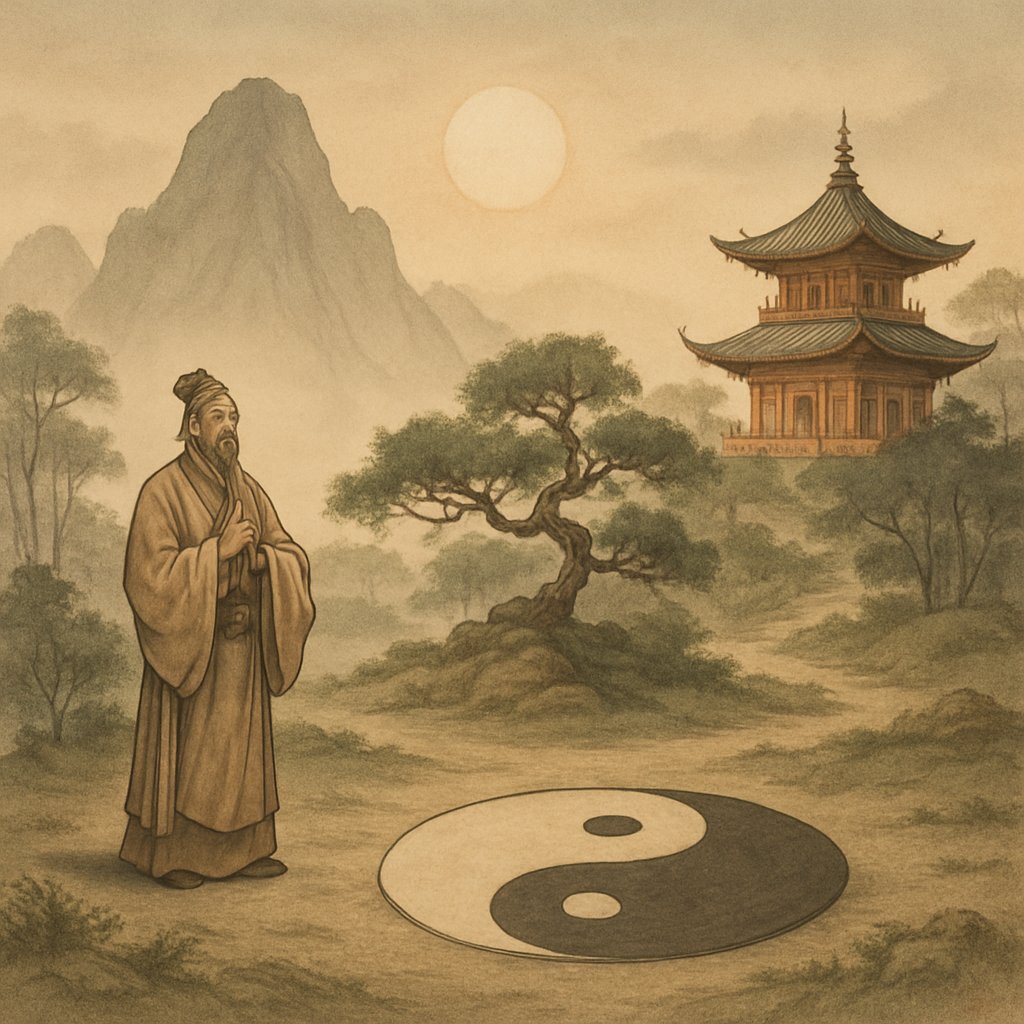
China’s philosophical traditions—Confucianism (儒家 rújiā), Taoism (道教 dàojiào), and Buddhism (佛教 fójiào)—have shaped personal values, public institutions, and daily life for more than two millennia. These “three teachings” (三教 sānjiào) are not rivals but coexist, forming the foundation of Chinese culture, influencing everything from family rituals to business ethics, education, and government policy. If you want to understand why modern China prizes harmony, respects elders, and balances spiritual and material pursuits, you need to explore how these three philosophies interact and persist today.
Key Takeaways:
- Master the core principles of Confucianism, Taoism, and Buddhism, and how each shapes Chinese thought
- Identify the key texts and historical figures associated with each philosophy
- Understand how the three teachings (sānjiào) coexist, overlap, and influence modern Chinese society
- See concrete examples of these philosophies at work in business, education, government, and daily life
- Learn the main challenges of interpreting these traditions and how to avoid common misconceptions

Core Principles of Confucianism, Taoism, and Buddhism
Confucianism (儒家 rújiā): Social Harmony and Moral Cultivation
Confucianism centers on cultivating virtue, maintaining social order, and fulfilling one’s role within the family and society. The heart of Confucian ethics is ren (仁, benevolence or humaneness), expressed through li (礼, ritual propriety), yi (义, righteousness), and zhong (忠, loyalty). The family is the model for all relationships, emphasizing filial piety (孝 xiào). Confucianism sees education as the key to self-improvement and social progress, shaping Chinese approaches to learning and governance for centuries.

Taoism (道教 dàojiào): Harmony with Nature and the Tao
Taoism teaches living in harmony with the Tao (道, the “Way”)—the fundamental force or principle underlying the universe. Taoists value wuwei (无为, “non-action” or effortless action), advocating for spontaneity, humility, and yielding to the natural flow of life. The philosophy embraces yin-yang (阴阳, complementary opposites) and the interconnectedness of all things. Taoism’s influence is visible in Chinese medicine, landscape painting, and martial arts, emphasizing balance and inner tranquility.
Buddhism (佛教 fójiào): Suffering, Impermanence, and Enlightenment
Buddhism arrived in China from India around the 1st century CE, teaching that life is marked by suffering (dukkha), which can be overcome through ethical living, meditation, and wisdom. Its core concepts include impermanence (无常 wúcháng), karma (业 yè), and the possibility of enlightenment (觉悟 juéwù). Chinese Buddhism developed unique schools, such as Chan (禅 chán, later Zen in Japan), and shaped views on death, compassion, and the afterlife.
| Philosophy | Core Principle | Key Concept | Primary Goal |
|---|---|---|---|
| Confucianism | Social order, virtue | Ren (benevolence), Li (ritual) | Harmonious society |
| Taoism | Harmony with Tao | Wuwei (non-action), Yin-Yang | Natural, balanced life |
| Buddhism | Overcoming suffering | Impermanence, Karma | Enlightenment |
Key Texts and Figures of the Three Teachings
Confucianism
- Key Texts: The Analects (论语 Lúnyǔ), Mencius (孟子 Mèngzǐ), Great Learning (大学 Dàxué), and Doctrine of the Mean (中庸 Zhōngyōng)
- Key Figures: Confucius (孔子 Kǒngzǐ, 551–479 BCE)—the sage whose teachings are foundational; Mencius (孟子 Mèngzǐ, 372–289 BCE), who expanded on Confucian ideas; Xunzi (荀子 Xúnzǐ, c. 310–235 BCE), who offered a more pragmatic view of human nature
Taoism
- Key Texts: The Tao Te Ching (道德经 Dàodéjīng) by Laozi, and the Zhuangzi (庄子 Zhuāngzǐ) by Zhuang Zhou
- Key Figures: Laozi (老子, c. 6th century BCE), legendary author of the Tao Te Ching; Zhuangzi (庄子, c. 369–286 BCE), whose stories illustrate the relativity of experience and the value of spontaneity
Buddhism
- Key Texts: The Heart Sutra (心经 Xīnjīng), Diamond Sutra (金刚经 Jīngāngjīng), and the Lotus Sutra (法华经 Fǎhuá Jīng); Chinese Buddhist canons also include translations by Kumārajīva and others
- Key Figures: Siddhartha Gautama (the Buddha), Bodhidharma (菩提达摩 Pútídámó, founder of Chan Buddhism in China), and Xuanzang (玄奘 Xuánzàng, the monk who translated major texts and journeyed to India)
For a comprehensive list of Buddhist figures influential in China, refer to the Three Teachings article on Wikipedia.
How the Three Philosophies Coexist and Influence Modern China
In Chinese culture, these three teachings are viewed not as mutually exclusive, but as complementary. This “harmonious aggregate” (三教合一 sānjiào hé yī) recognizes that different life situations call for different approaches. For example:
- Confucianism defines social structure, etiquette, and educational ideals
- Taoism provides a way to cope with change and personal health, encouraging flexibility and harmony with nature
- Buddhism offers answers to existential questions, suffering, and the afterlife, promoting compassion and detachment from material concerns
As Wikipedia notes, “the learning and the understanding of the three teachings are traditionally considered to be a harmonious aggregate within Chinese culture.” Blending these philosophies is common in personal belief and practice. A family might follow Confucian rituals for ancestor worship, consult Taoist principles for feng shui (风水 fēngshuǐ), and observe Buddhist holidays or funerals. This syncretism is also visible in art, literature, and architecture—from temple complexes to landscape paintings that reflect both spiritual and ethical ideals.

Even in modern cities, you’ll find shrines to Confucius, Taoist temples, and Buddhist statues—even within the same neighborhood. Philosophical concepts like harmony (和谐 héxié), face (面子 miànzi), and relationship networks (关系 guānxì) are rooted in this blended tradition, shaping everything from business negotiations to family gatherings.
Impact on Daily Life, Business, Education, and Government
Daily Life and Social Customs
Confucian family values remain central, with respect for elders, structured roles, and a focus on education. Taoist ideas appear in traditional medicine, dietary practices, and festivals that honor nature’s rhythms. Buddhist compassion underpins charitable acts and attitudes toward suffering and misfortune.
Business and Interpersonal Relationships
Confucian ethics influence business culture—hierarchical structures, loyalty, and the importance of trust and harmony in negotiations. Taoist flexibility helps businesses adapt to changing markets, while Buddhist detachment can temper excessive materialism. The interplay of these philosophies underpins concepts like face (miànzi), which governs social reputation, and guanxi, the web of personal connections crucial in Chinese society.
Education
The Confucian reverence for learning remains the backbone of China’s educational system, from rigorous exams to the high status of teachers. Taoist and Buddhist ideas influence the emphasis on balance, self-cultivation, and resilience in the face of setbacks. The combination fosters disciplined, adaptable, and ethically-minded citizens.
Government and Law
Confucian ideals have long shaped Chinese governance, promoting meritocracy, hierarchy, and moral leadership. The civil service exam (科举 kējǔ) system, which lasted for over a thousand years, was founded on Confucian texts. Taoist and Buddhist influences appear in policies promoting social harmony and environmental stewardship.
| Field | Confucian Influence | Taoist Influence | Buddhist Influence |
|---|---|---|---|
| Family & Social Customs | Filial piety, ancestor worship | Harmony with nature, feng shui | Compassion, funeral rites |
| Business | Hierarchy, trust, loyalty | Adaptability, balance | Charity, moderation |
| Education | Meritocracy, learning | Self-cultivation, resilience | Mindfulness, discipline |
| Government | Moral leadership, order | Social harmony policies | Welfare, compassion |
For more on how Chinese philosophy informs practices beyond thought, see The History and Philosophy of Chinese Martial Arts and Chinese Calligraphy: History, Styles, and Modern Practice.
Common Pitfalls and Pro Tips
- Oversimplifying the differences: Many Western sources present Confucianism, Taoism, and Buddhism as strictly opposed. In reality, Chinese culture often blends them, choosing whichever approach fits the moment (see Three Teachings).
- Ignoring regional and historical diversity: The application of these philosophies varies by region (e.g., southern vs. northern China) and era (imperial vs. modern). Modern urbanites may emphasize different aspects than rural communities.
- Assuming all Chinese people “believe” in these traditions: Many see them as cultural, not religious. Practices are often pragmatic rather than dogmatic.
- Confusing philosophical and popular religion: Folk practices may incorporate elements from all three traditions, along with local beliefs and deities.
- Underestimating their modern relevance: These philosophies still shape business etiquette, government messaging, and family decisions in subtle ways.
Conclusion and Next Steps
Confucianism, Taoism, and Buddhism are not relics of the past—they remain living traditions that inform values, behaviors, and institutions in China today. Their harmonious interplay offers a nuanced framework for understanding everything from urban design to personal relationships. To deepen your understanding, explore contemporary applications, such as:
- Reviving Tang, Song, Ming, and Qing Legacies in Urban Design
- Explore Traditional Chinese Festivals Beyond New Year
For further reading on the integration of philosophy and daily life, consult the Three Teachings article and Chinese Philosophy: Taoism, Buddhism and Confucianism.