
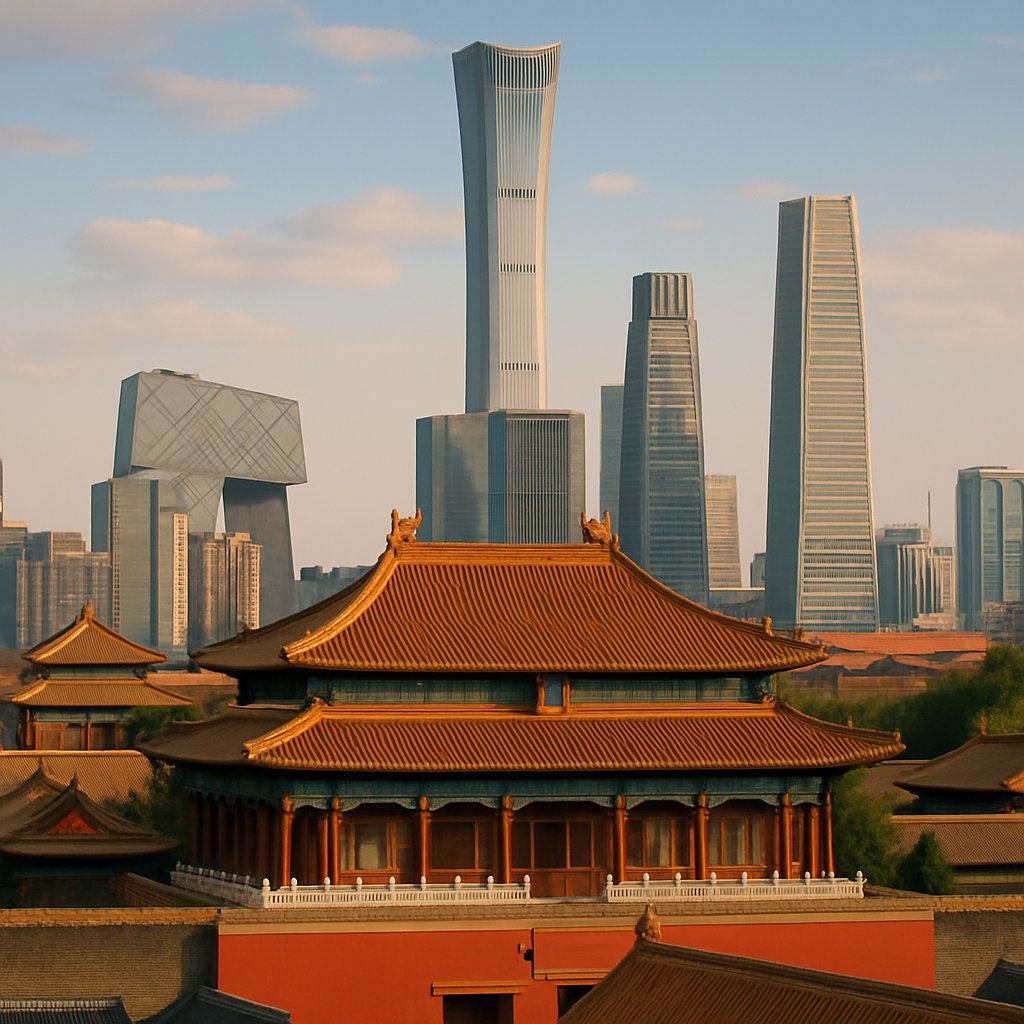
Chinese Architectural Principles in Practice: Comparing Palace, Sacred, and Urban Forms
Whether you’re tracing the ceremonial axis of the Forbidden City (紫禁城 Zǐjìnchéng) or studying the glass-and-steel towers of Shanghai, Chinese architecture offers more than visual spectacle—it encodes a worldview. For readers who already know the basics from our guide to Chinese architectural tradition and modernity, this post benchmarks how core principles like feng shui (风水 fēngshuǐ), symmetry, and spatial hierarchy are implemented across three landmark building types: the imperial palace, sacred religious complexes, and contemporary urban towers. We’ll compare their logic, design choices, and cultural impacts, then offer a decision framework for architects and enthusiasts considering which tradition to reference or adapt in modern projects.
Key Takeaways:
- Directly compare how feng shui, symmetry, and hierarchy shape imperial, sacred, and urban architectural forms
- Understand the functional and symbolic logic behind the Forbidden City, Temple of Heaven, classical gardens, and modern skyscrapers
- Use a benchmark table to evaluate traditional and contemporary design choices for your own projects
- Gain practical recommendations for referencing or integrating Chinese architectural elements in new contexts

Benchmarking Chinese Architectural Principles Across Building Types
Chinese architectural principles are not one-size-fits-all: they adapt to context, function, and era. To set the stage for our comparison, let’s clarify how the foundational ideas of feng shui (风水 fēngshuǐ), symmetry, and hierarchy (等级 děngjí) serve distinct purposes in three major archetypes:
- Imperial Palaces (e.g., Forbidden City): Prioritize axial symmetry, rigid spatial hierarchy, and feng shui orientation for political symbolism and cosmic legitimacy.
- Sacred Complexes (e.g., Temple of Heaven): Use axial planning, but introduce circular motifs and subtle asymmetry to express spiritual cosmology and ritual practice.
- Classical Gardens (e.g., Suzhou Gardens): Favor layered asymmetry, framed views, and manipulation of space for poetic and philosophical reflection.
All three approaches reflect deep philosophical currents—rooted in Confucian order, Daoist harmony, and Buddhist symbolism—yet each interprets these concepts for its own ends. For a broader philosophical context, see our overview of Confucian, Taoist, and Buddhist influences on Chinese thought.
Key Distinctions
- Feng Shui: Imperial and religious sites are meticulously oriented for auspiciousness. Classical gardens adapt feng shui flexibly to create “borrowed scenery” (借景 jièjǐng).
- Symmetry: Absolute in palaces, modulated in temples, artfully broken in gardens.
- Hierarchy: Expressed through spatial layering, elevation, and access restrictions. The palace hierarchy is rigid; the garden’s is experiential and poetic.
These distinctions shape everything from entrance placement and rooflines to axes and thresholds—each decision charged with centuries of cultural meaning.
Iconic Structures Compared: Forbidden City, Temple of Heaven, and Classical Gardens
To ground the discussion, let’s examine how these principles manifest in three world-renowned sites, using benchmarks of spatial logic, symbolism, and user experience.
| Structure | Primary Function | Layout Logic | Symbolism | User Experience |
|---|---|---|---|---|
| Forbidden City (紫禁城 Zǐjìnchéng) | Imperial residence, court, and ritual center | Rigid north-south axis, nested courtyards, bilateral symmetry | Yellow roofs for imperial power; red walls for prosperity; spatial hierarchy reflects Confucian order | Processional, awe-inspiring; restricts movement and vision to reinforce authority |
| Temple of Heaven (天坛 Tiāntán) | Ritual altar for cosmic harmony, imperial prayers | Axial but with circular altars; interplay of round (heaven) and square (earth) | Blue tiles for heaven; circular motifs for cosmic unity; strict ritual pathways | Spiritual, solemn; geometry evokes celestial order |
| Classical Gardens (e.g., Humble Administrator’s Garden 拙政园 Zhuōzhèng Yuán) | Private retreat, literary/philosophical reflection | Meandering paths, layered pavilions, borrowed scenery, purposeful asymmetry | Symbolic rocks, water for flow of qi; poetic allusions in layout | Intimate, contemplative; encourages wandering and reinterpretation |
Why These Differences Matter
Each structure encodes its function and worldview in physical form. The Forbidden City’s vast, regimented courtyards reinforce imperial authority—there’s no ambiguity about who belongs where. In contrast, the Temple of Heaven’s circular forms physically enact the meeting of heaven and earth, while classical gardens dissolve rigid boundaries, inviting personal interpretation and flexible movement. These designs are not just aesthetic choices; they guide behavior, signal status, and express philosophy.

For an in-depth historical and symbolic analysis of these monuments, revisit our full exploration of Chinese architecture’s evolution.
Modern Adaptations: How Core Principles Persist in Contemporary Skyscrapers
Contemporary Chinese urban architecture is often defined by its glass curtain walls and vertiginous heights, but traditional ideas persist beneath the surface. According to Modern Chinese Architecture: 180 Years, the country’s design logic has shifted from modular timber structures to supertall towers, but core principles—orientation, symbolism, and spatial hierarchy—remain influential.
Persistent Elements in Modern Design
- Feng Shui in Site Planning: Landmark skyscrapers and complexes in Beijing, Shanghai, and Hangzhou are oriented to optimize energy flow and urban harmony. The main entrance of Shanghai Tower (上海中心大厦 Shànghǎi Zhōngxīn Dàshà) is placed for auspiciousness, and green spaces echo garden traditions (source).
- Symbolic Façade Design: Modern towers frequently reference traditional motifs—such as upturned eaves or decorative rooflines—either subtly or in explicit homage. In Wuhan, for example, a building layers a classical roof atop a contemporary structure (source).
- Hierarchy and Public Space: While verticality replaces the horizontal sprawl of palaces, the logic of spatial progression—grand lobbies, restricted offices, exclusive observation decks—mirrors traditional access hierarchies. Urban plazas serve as modern equivalents of imperial courtyards.
Architects like Nancy S. Steinhardt note that as China urbanized—urban population rising to 60% and literacy to 97%—the architectural language evolved, but its grammar of symbolism and order is still legible (source).
Case Study: Hangzhou’s Business District
A walk through Hangzhou’s business district reveals contemporary office towers set along orderly boulevards, green corridors, and public art installations. These echo not only the axial planning of imperial Beijing but also the garden’s interplay of built and natural elements (source).
Architectural Benchmark Table: Traditional vs Modern Designs
| Design Principle | Imperial Palace | Sacred Complex | Classical Garden | Modern Skyscraper |
|---|---|---|---|---|
| Feng Shui | Strict orientation, symbolic site selection | Auspicious alignment for ritual harmony | Flexible, poetic adaptation | Site and entrance orientation for energy flow |
| Symmetry | Absolute, bilateral | Axial but softened by circular forms | Deliberate asymmetry; framed views | Façade symmetry; axial urban plans, but more flexibility |
| Hierarchy | Spatial layering, elevation, restricted access | Ritual progression, gates and terraces | Experiential, shifting perspectives | Vertical stratification: lobby, offices, observation decks |
| Materials | Timber, ceramic tile, stone | Timber, glazed tiles, marble | Wood, rock, water, plantings | Steel, glass, concrete; occasional wood/stone accents |
| Symbolism | Imperial colors, mythic animals, cosmic order | Heaven/earth motifs, ritual colors | Literary/philosophical references, “borrowed scenery” | Modern forms, traditional motifs, corporate branding |
This table highlights not only material and formal differences but also the evolution of meaning: from imperial power to spiritual unity, personal reflection, and now national and corporate identity.

Which Approach for Which Use Case?
When should you reference the palace, the sacred complex, or the garden in your own work—physical or digital? Here’s a decision framework:
- For institutional authority and formality: Draw from the palace model—clear axes, strong hierarchy, imposing entrances. Suitable for government, museum, or corporate headquarters.
- For spiritual or communal gathering spaces: Emulate sacred complexes—integrate round and square, balance openness with enclosure, use symbolic colors and forms.
- For residential, leisure, or creative spaces: Reference garden principles—layered views, irregular paths, intimate scales, and poetic juxtapositions to encourage exploration and tranquility.
- For urban and high-rise design: Blend traditional orientation and symbolism with modern materials and technologies. Prioritize public spaces that echo the role of courtyards and gardens for social interaction.
These guidelines apply not only to physical buildings but also to landscape, urban planning, and even UI/UX design, where spatial logic and symbolism play a role in user experience.
Common Missteps and Pro Tips in Applying Chinese Principles
Common Pitfalls
- Superficial Ornamentation: Simply adding upturned eaves or red paint to a building does not capture the depth of Chinese tradition. Context, layout, and symbolism must align.
- Ignoring Site-Specific Feng Shui: Applying generic feng shui ideas without real analysis of topography, orientation, and local context leads to awkward or inauspicious results.
- Misreading Hierarchy: Over-imposing rigid spatial hierarchy in democratic or informal settings can alienate users accustomed to openness.
- Confusing Symmetry with Monotony: In both classical and modern contexts, effective symmetry is balanced by variation—through color, material, or landscape.
Pro Tips
- Study the underlying principles—feng shui, spatial hierarchy, symbolic color and form—before choosing decorative elements.
- Visit both traditional sites and modern districts (such as Hangzhou’s business area) to experience how principles are adapted for different functions (source).
- Collaborate with experts in Chinese aesthetics and philosophy, especially when referencing sacred or heritage motifs.
- For practical examples of dynastic legacies influencing city design, see our analysis of urban planning inspired by historical precedents.
Conclusion: Building a Dialogue Between Heritage and Innovation
Chinese architecture thrives on adaptation and reinvention. Whether you’re referencing the monumental order of the Forbidden City, the cosmological geometry of the Temple of Heaven, or the poetic layering of a classical garden, each tradition offers more than style—it provides a toolkit for shaping experience, community, and meaning in space. Modern skyscrapers and urban spaces continue this conversation, blending technological innovation with echoes of ancient logic. For deeper dives into the underlying philosophies, explore our guide to Chinese philosophy or see how city planners today adapt dynastic legacies for contemporary needs. Thoughtful benchmarking, not superficial mimicry, is the path to honoring this architectural heritage in any century.
Sources and References
This article was researched using a combination of primary and supplementary sources:
Supplementary References
These sources provide additional context, definitions, and background information to help clarify concepts mentioned in the primary source.