
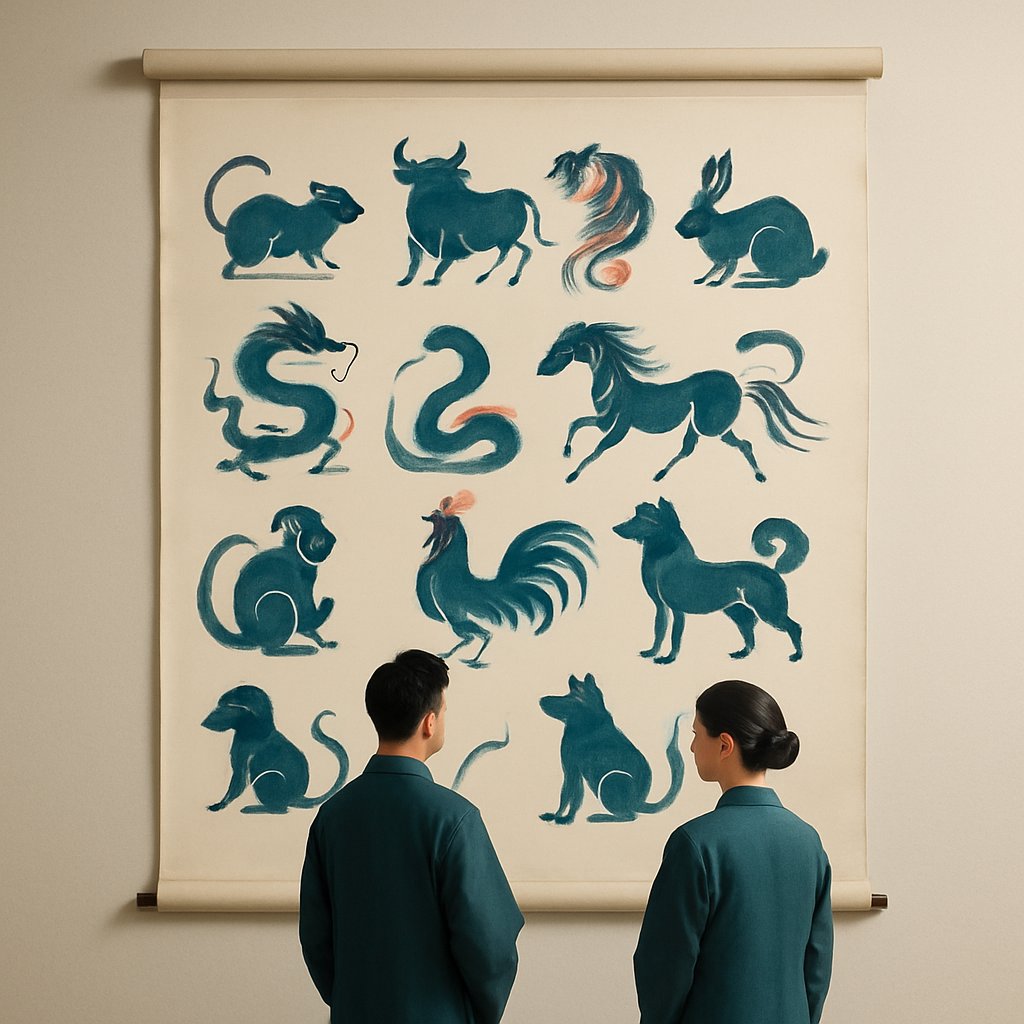
The Chinese zodiac, known as Shēngxiào (生肖), is more than an ancient system for marking time—it’s a living tradition that shapes identity, relationships, and culture across East Asia. Each of its 12 animals carries stories, personality archetypes, and ritual importance, woven into the rhythm of festivals and daily life. If you’ve ever been asked “What’s your sign?” in China, the answer opens a window to heritage and destiny as much as to personality quirks. This guide unpacks the origins, character traits, and enduring significance of the Chinese zodiac, with practical details for discovering your own sign.
Key Takeaways:
- Discover the mythological origins and historical roots of the Chinese zodiac
- Understand the structure of the 60-year cycle and the role of heavenly stems and earthly branches
- Explore all 12 zodiac animals, their personality traits, and best compatibility matches
- Use an accurate zodiac calculator to find your sign by birth year
- See how zodiac traditions shape festivals, matchmaking, and daily life in China

Origins and Myths of the Chinese Zodiac
The Chinese zodiac’s roots reach deep into antiquity. Archaeological evidence—such as ancient bamboo texts unearthed from before the Qin dynasty (221–207 BCE)—shows the 12-animal cycle was established by the Eastern Han dynasty (25–220 CE) [source]. The system is closely tied to the Chinese lunar calendar and cosmology, reflecting a worldview in which time, nature, and human fate are intertwined.
The most famous origin story is the Great Race, a mythic contest organized by the Jade Emperor (玉皇大帝 Yù Huáng Dà Dì), ruler of the heavens [source]. To choose the zodiac animals, he invited all creatures to cross a mighty river. The first twelve to reach the opposite bank would earn a place in the calendar. Each animal’s tactics—bravery, cunning, or teamwork—determined their order. The rat (鼠 shǔ) won by riding on the ox’s (牛 niú) back and leaping ahead at the finish, while the pig (猪 zhū) arrived last, having stopped to eat and nap. These stories, while legendary, reflect real-life observations and symbolic meanings attached to animals in Chinese culture [source].

Beyond legend, the zodiac’s arrangement also aligns with the traditional Chinese cosmological system, including the yin-yang (阴阳 yīnyáng) balance and the Five Elements (五行 wǔxíng): Wood, Fire, Earth, Metal, and Water. Each animal is matched not only with a year, but also with an earthly branch, and—when paired with heavenly stems—forms a repeating 60-year cycle that underpins Chinese calendrical science.
The 60-Year Cycle: Heavenly Stems and Earthly Branches
The 12-year animal cycle is only part of a more intricate timekeeping system. The Chinese calendar combines it with 10 heavenly stems (天干 tiāngān) and 12 earthly branches (地支 dìzhī) to create a full cycle lasting 60 years. Each year is represented by a unique stem-branch pair, with the branch corresponding to a zodiac animal [source].
Heavenly Stems (天干 tiāngān):
- Jia (甲 jiǎ) – Wood
- Yi (乙 yǐ) – Wood
- Bing (丙 bǐng) – Fire
- Ding (丁 dīng) – Fire
- Wu (戊 wù) – Earth
- Ji (己 jǐ) – Earth
- Geng (庚 gēng) – Metal
- Xin (辛 xīn) – Metal
- Ren (壬 rén) – Water
- Gui (癸 guǐ) – Water
Earthly Branches (地支 dìzhī) and Zodiac Animals:
- Zi (子 zǐ) – Rat (鼠 shǔ)
- Chou (丑 chǒu) – Ox (牛 niú)
- Yin (寅 yín) – Tiger (虎 hǔ)
- Mao (卯 mǎo) – Rabbit (兔 tù)
- Chen (辰 chén) – Dragon (龙 lóng)
- Si (巳 sì) – Snake (蛇 shé)
- Wu (午 wǔ) – Horse (马 mǎ)
- Wei (未 wèi) – Sheep (羊 yáng)
- Shen (申 shēn) – Monkey (猴 hóu)
- You (酉 yǒu) – Rooster (鸡 jī)
- Xu (戌 xū) – Dog (狗 gǒu)
- Hai (亥 hài) – Pig (猪 zhū)
Each animal year, when combined with one of the stems, creates a distinctive identity (e.g., Wood Tiger, Fire Rooster). This system is central to fortune-telling, compatibility analysis, and even traditional naming practices. For instance, the year 2026 is a Fire Horse (丙午 bǐng wǔ), beginning February 17, 2026 [source].
Why Does It Matter?
The 60-year cycle (liùshí jiàzǐ 六十甲子) is used to mark birthdays, anniversaries, and major life events. It also underpins the timing of traditional festivals and rituals, embedding the zodiac in the fabric of Chinese social and spiritual life. Children born in the same animal year are said to share a “zodiac generation,” shaping friendships and group identity.
The 12 Animals: Traits and Compatibility
Each zodiac animal is associated with distinct traits, strengths, and weaknesses. These archetypes influence how people view themselves, choose friends, and even select marriage partners. Here’s a detailed look at all 12 signs, their personalities, and compatible matches [source].
| Animal (Pinyin, Character) | Years (Recent) | Key Traits | Most Compatible | Least Compatible |
|---|---|---|---|---|
| Rat (shǔ, 鼠) | 2008, 2020, 2032 | Intelligent, resourceful, charming | Ox, Dragon, Monkey | Horse, Sheep |
| Ox (niú, 牛) | 2009, 2021, 2033 | Reliable, diligent, patient | Rat, Snake, Rooster | Sheep, Horse |
| Tiger (hǔ, 虎) | 2010, 2022, 2034 | Brave, competitive, confident | Horse, Dog, Pig | Monkey, Snake |
| Rabbit (tù, 兔) | 2011, 2023, 2035 | Gentle, elegant, kind | Sheep, Pig, Dog | Rooster, Dragon |
| Dragon (lóng, 龙) | 2012, 2024, 2036 | Charismatic, energetic, lucky | Rat, Monkey, Rooster | Dog, Rabbit |
| Snake (shé, 蛇) | 2013, 2025, 2037 | Wise, discreet, intuitive | Ox, Rooster | Tiger, Pig |
| Horse (mǎ, 马) | 2014, 2026, 2038 | Energetic, independent, cheerful | Tiger, Sheep, Dog | Rat, Ox |
| Sheep (yáng, 羊) | 2015, 2027, 2039 | Calm, artistic, gentle | Rabbit, Horse, Pig | Ox, Dog |
| Monkey (hóu, 猴) | 2016, 2028, 2040 | Clever, playful, sociable | Rat, Dragon | Tiger, Pig |
| Rooster (jī, 鸡) | 2017, 2029, 2041 | Observant, hardworking, outspoken | Ox, Snake, Dragon | Rabbit, Dog |
| Dog (gǒu, 狗) | 2018, 2030, 2042 | Loyal, honest, cautious | Tiger, Rabbit, Horse | Dragon, Rooster |
| Pig (zhū, 猪) | 2019, 2031, 2043 | Generous, sincere, tolerant | Tiger, Rabbit, Sheep | Snake, Monkey |
Interpretation of these traits is shaped by centuries of folk wisdom and storytelling. In matchmaking, for example, Rabbits (兔 tù) are believed to thrive with Sheep (羊 yáng), while conflicts may arise between a Dragon (龙 lóng) and a Dog (狗 gǒu). In practice, these are guidelines, not rules—many couples and friends happily defy the odds.
Chinese Zodiac Calculator Table
To determine your zodiac sign, locate your birth year in the table below. Note that the Chinese zodiac is based on the lunar calendar, so if you were born in January or February, double-check the lunar new year date for your birth year [source].
| Year of Birth | Zodiac Animal | Chinese Name (Pinyin) | Next Occurrence |
|---|---|---|---|
| 2008, 2020, 2032 | Rat | 鼠 (shǔ) | 2044 |
| 2009, 2021, 2033 | Ox | 牛 (niú) | 2045 |
| 2010, 2022, 2034 | Tiger | 虎 (hǔ) | 2046 |
| 2011, 2023, 2035 | Rabbit | 兔 (tù) | 2047 |
| 2012, 2024, 2036 | Dragon | 龙 (lóng) | 2048 |
| 2013, 2025, 2037 | Snake | 蛇 (shé) | 2049 |
| 2014, 2026, 2038 | Horse | 马 (mǎ) | 2050 |
| 2015, 2027, 2039 | Sheep | 羊 (yáng) | 2051 |
| 2016, 2028, 2040 | Monkey | 猴 (hóu) | 2052 |
| 2017, 2029, 2041 | Rooster | 鸡 (jī) | 2053 |
| 2018, 2030, 2042 | Dog | 狗 (gǒu) | 2054 |
| 2019, 2031, 2043 | Pig | 猪 (zhū) | 2055 |
For birthdays in January or February, check your exact lunar new year date with an online calculator or consult this guide for accuracy.
Cultural Significance and Traditions
The Chinese zodiac resonates far beyond personality quizzes. It shapes major festivals, rituals, and social customs, many of which remain vibrant today. During Chinese New Year (春节 Chūnjié), decorations, red envelopes, and lion dances often feature the year’s animal—2026, for example, will be filled with prancing horses (mǎ, 马) [source].
Family and Social Life
- Birth Year Beliefs: A child’s zodiac sign is thought to influence their destiny, luck, and even career prospects. Naming rituals sometimes reflect the animal’s attributes.
- Matchmaking: Traditional marriage negotiations examine zodiac compatibility, with some families consulting fortune-tellers to avoid inauspicious pairings.
- Zodiac Birthdays: The 12th and 60th birthdays are especially significant, marking the completion of one or five full cycles—often celebrated with elaborate banquets and gifts.
Festivals and Art
- Each zodiac animal inspires folk art, paper cuttings, embroidery, and porcelain design. For a deeper look at artistic traditions, see Chinese Porcelain and Ceramics: An Art History Journey.
- In urban design and architecture, zodiac motifs appear in temple carvings, city gates, and modern public art. Explore more in Comparing Traditional and Modern Chinese Architecture.
- The zodiac also appears in Chinese martial arts symbolism and philosophy: see The History and Philosophy of Chinese Martial Arts.
Throughout Chinese history, the zodiac has been a tool for storytelling, moral instruction, and community cohesion. Its influence even extends into contemporary pop culture, horoscopes, and cross-cultural celebrations around the world [source].

Common Pitfalls and Pro Tips
Despite its appeal, navigating the Chinese zodiac comes with challenges. Here are common mistakes and how to avoid them:
- Ignoring the Lunar Calendar: The zodiac year begins with Chinese New Year, which falls between late January and mid-February. If you’re born close to this period, check the lunar new year date; you may belong to the previous year’s sign.
- Over-Interpreting Compatibility: While zodiac matches are fun and sometimes used in matchmaking, they aren’t destiny. Many happy couples “break the rules.” Let the zodiac guide, not dictate, relationships.
- Oversimplifying Traits: Each animal sign encompasses a range of personalities. Factors like the heavenly stem, element, and hour of birth add nuance. Avoid stereotyping based on sign alone.
- Confusing Western and Chinese Zodiacs: The Chinese system is lunar and animal-based, while the Western zodiac uses constellations and fixed calendar dates. Don’t conflate the two in interpretation or calculation.
For accurate sign calculation and deeper insight, consult reputable sources or Chinese-speaking friends. For character meanings and pronunciation, this living Chinese dictionary is an excellent tool.
Conclusion & Further Reading
The Chinese zodiac is an enduring bridge between myth, culture, and everyday life. Its stories illuminate how Chinese society interprets time, personality, and fate, while its cycles shape everything from art to urban design. Whether you’re Rabbit, Dragon, or Monkey, your sign connects you to a tradition as old as Chinese civilization itself.
To deepen your understanding of Chinese traditions and their influence on modern life, explore:
- Exploring Chinese Philosophy: Confucianism, Taoism, Buddhism
- Reviving Tang, Song, Ming, and Qing Legacies in Urban Design
For more on language and writing, see the overview at Chinese languages | Britannica.
Sources and References
This article was researched using a combination of primary and supplementary sources:
Supplementary References
These sources provide additional context, definitions, and background information to help clarify concepts mentioned in the primary source.
- Chinese zodiac | History, Animals, Personalities, & Signs | Britannica
- Chinese languages | History, Characteristics, Dialects, Types, & Facts | Britannica
- Chinese Dictionary: Practice Writing & Character Memorization by Inputting English, Pinyin, Or Chinese!
- Chinese Zodiac: 2026 Year of Horse, 12 Animal Signs, Calculator