
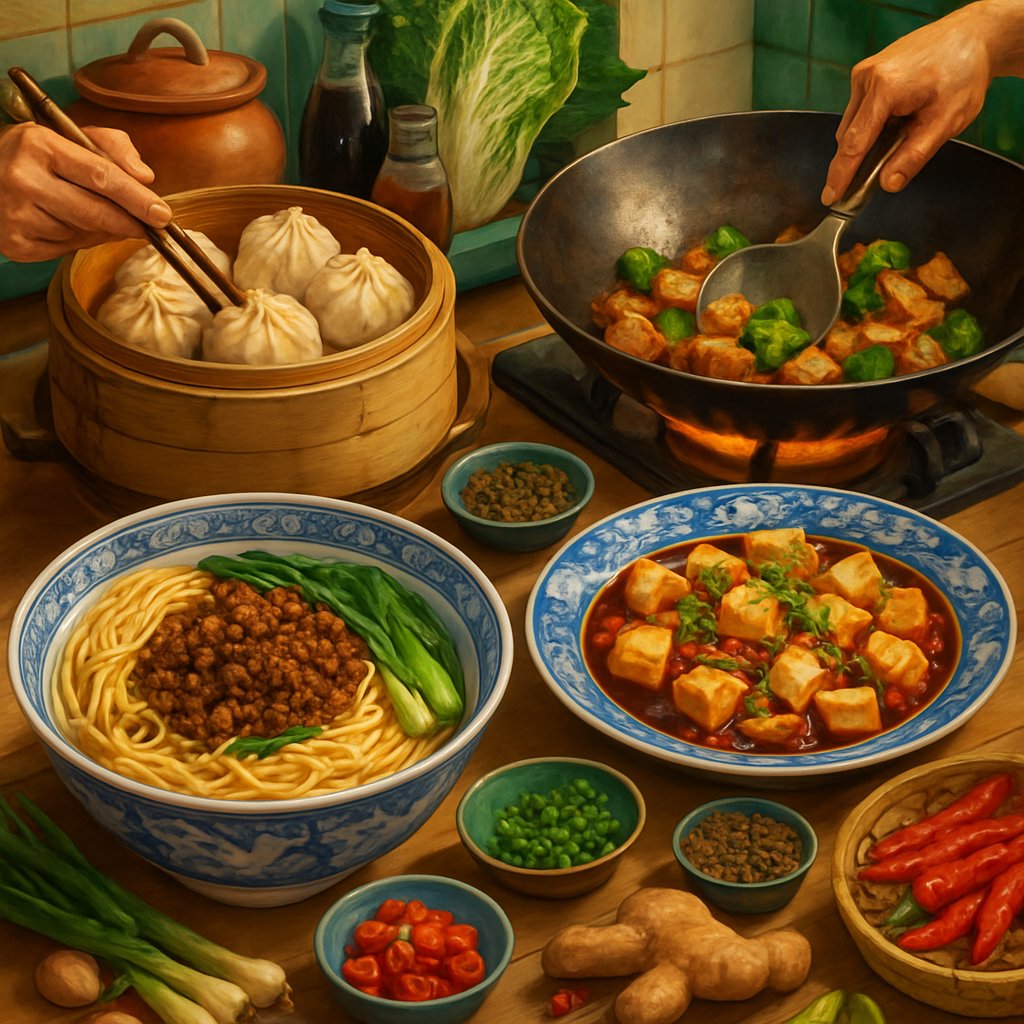
Recreating China’s four great regional cuisines at home isn’t just about following a recipe — it’s about understanding the techniques, sourcing the right ingredients, and adapting to your kitchen. This practical walkthrough shows you how to cook one authentic dish from each tradition: Sichuan, Cantonese, Shandong, and Jiangsu, with hands-on steps, sourcing tips, and troubleshooting advice. If you’ve already explored the theory in our in-depth guide to regional Chinese cuisines, this is your next step: turning regional theory into delicious reality.
Key Takeaways:
- Hands-on guidance for preparing one signature dish from each of the four major regional cuisines
- Ingredient sourcing strategies for authentic flavors, with substitutions where necessary
- Step-by-step recipes with cultural and technical notes unique to each region
- Troubleshooting common mistakes and adapting to home kitchens outside China
- Quick-reference comparison of flavors, ingredients, and skills required

Sourcing Ingredients for Authentic Regional Flavors
Before you start cooking, sourcing the right ingredients is essential for capturing the true spirit of each region. As discussed in our previous exploration of Sichuan, Cantonese, Shandong, and Jiangsu cuisines, each tradition relies on distinctive condiments, proteins, and aromatics shaped by geography and climate (source).
Key Strategies for Ingredient Sourcing
- Locate a local Asian supermarket: Look for specific items like Sichuan peppercorns (花椒 huājiāo), doubanjiang (豆瓣酱, fermented chili bean paste), Shaoxing wine (绍兴酒 Shàoxīng jiǔ), and premium soy sauces.
- Choose regionally-appropriate staples: For example, use light soy sauce for Jiangsu cuisine, and aged soy sauce for Cantonese dishes.
- Freshness matters: Cantonese and Shandong recipes especially require the freshest seafood and vegetables you can find.
- Accept some substitutions: If you can’t access live carp or specific Chinese greens, substitute with the freshest local fish or mild leafy greens, but adjust seasoning and technique to preserve the spirit of the dish.
Essential Pantry for This Tutorial
- Sichuan: Doubanjiang, Sichuan peppercorns, dried chilies, black vinegar, firm tofu
- Cantonese: Whole white fish (grouper, sea bass), ginger, scallion, light soy sauce
- Shandong: Whole carp (or substitute), rice vinegar, tomato paste, sugar, scallions
- Jiangsu: Ground pork, water chestnuts, Shaoxing wine, Napa cabbage, chicken stock
For further reading on ingredient distinctions and sourcing, refer to Pepchina’s regional ingredient guide.
Sichuan Mapo Tofu (麻婆豆腐 mápó dòufu): Technique and Recipe
Mapo Tofu is the soul of Sichuan home cooking — a dish combining fiery chilies and the signature málà (麻辣) tingle of Sichuan peppercorns. The humid, subtropical Sichuan basin, with rich agriculture and a penchant for preservation, nurtured the development of this bold, numbing, and aromatic cuisine.
Ingredients (serves 4)
- 400g (14 oz) firm tofu, cut into 2cm (¾ inch) cubes
- 150g (5 oz) ground pork or beef
- 2 tbsp doubanjiang (fermented chili bean paste)
- 1 tbsp Sichuan peppercorns, lightly toasted and crushed
- 2–3 dried red chilies, sliced
- 2 cloves garlic, minced
- 1 thumb ginger, minced
- 2 tbsp vegetable oil
- 1 cup (240ml) chicken stock or water
- 1 tbsp light soy sauce
- 1 tsp sugar
- 2 tsp cornstarch mixed with 2 tbsp water (slurry)
- 1–2 scallions, sliced, for garnish
Step-by-Step Method
- Blanch tofu cubes in simmering salted water for 2 minutes to firm them up. Drain and set aside.
- Heat oil in a wok over medium-high heat. Fry Sichuan peppercorns and dried chilies until fragrant (do not burn).
- Add ground meat; stir-fry until browned and fragrant. Push to the side, add garlic and ginger, stir until aromatic.
- Stir in doubanjiang and fry for 30 seconds to release the red oil.
- Add tofu, gently mix to coat. Pour in stock, soy sauce, and sugar. Simmer 3–4 minutes so flavors penetrate.
- Drizzle in cornstarch slurry, gently stir until sauce thickens and clings to tofu.
- Sprinkle with scallions and extra ground Sichuan peppercorns to taste. Serve with steamed rice.
Technique Notes
- Do not over-stir after adding tofu to preserve its shape.
- The “red oil” is crucial for authentic color and flavor — fry doubanjiang well.
- Adjust chili and peppercorn to personal heat tolerance.
Cantonese Steamed Fish (清蒸石斑鱼 qīngzhēng shíbān yú): Technique and Recipe
Guangdong’s subtropical, maritime climate yields abundant seafood and fresh produce, reflected in the clean, unmasked flavors of Cantonese cuisine. Steamed fish is a banquet staple that showcases ingredient quality and knife skills.
Ingredients (serves 2–3)
- 1 whole white fish (grouper, sea bass, or snapper), about 600–800g (1.3–1.7 lb), scaled and gutted
- 3 slices ginger, cut into matchsticks
- 3 scallions, 2 cut into 3-inch pieces, 1 finely shredded for garnish
- 2 tbsp light soy sauce
- 1 tbsp Shaoxing wine (optional)
- 1 tbsp vegetable oil
- Pinch of white pepper
Step-by-Step Method
- Score fish on both sides. Stuff cavity with half the ginger and scallion pieces.
- Place fish on a heatproof plate. Scatter remaining ginger and scallion on top.
- Set up a steamer (or improvise with a wok and rack). Steam fish over high heat for 8–10 minutes, until flesh flakes easily.
- Carefully pour off excess liquid from plate. Drizzle soy sauce and Shaoxing wine over fish.
- Heat oil in a small pan until shimmering; pour over fish to sizzle aromatics.
- Garnish with shredded scallions and a dash of white pepper. Serve immediately.
Technique Notes
- Use the freshest fish possible — this dish cannot hide mediocre seafood.
- Over-steaming results in dry, tough flesh. Check early.
- Do not drown with soy sauce; restraint is key to Cantonese flavor.
Shandong Sweet & Sour Carp (糖醋鲤鱼 tángcù lǐyú): Technique and Recipe
The northern Shandong peninsula, with cold winters and a long coastline, developed a cuisine focused on seafood, wheat, and robust flavors. Sweet and sour carp, a festive dish, highlights the region’s skill in deep-frying and sauce work.
Ingredients (serves 4)
- 1 whole carp (about 900g/2 lb), scaled and gutted
- Salt, white pepper, and Shaoxing wine for marinade
- 3 tbsp potato or corn starch
- Oil for deep-frying
- 3–4 scallions, cut into 2-inch pieces
- 1 thumb ginger, sliced
- 1/3 cup (80ml) rice vinegar
- 4 tbsp sugar
- 2 tbsp tomato paste
- 2 tbsp light soy sauce
- 1 tbsp cornstarch mixed with 2 tbsp water (slurry)
Step-by-Step Method
- Score the fish in a crisscross pattern on both sides. Rub with salt, pepper, and Shaoxing wine; let marinate 20 minutes.
- Pat fish dry, dredge in potato or corn starch.
- Heat oil to 180°C (350°F). Deep-fry fish, spooning hot oil over the top, until golden and crisp (about 8–10 minutes). Drain on paper towels.
- In a wok, heat a little oil. Stir-fry ginger and scallions, then add tomato paste, stir until fragrant.
- Add vinegar, sugar, soy sauce, and ½ cup water. Simmer, then thicken with cornstarch slurry.
- Pour sauce over crisp fish. Serve immediately for optimal contrast of textures.
Technique Notes
- The crisscross scoring and high-heat frying create the iconic “squirrel tail” look and crunch.
- The sauce should be glossy, tangy, and just sweet enough — balance is everything.
- This dish is often served at banquets for prosperity and family unity.
Jiangsu Lion’s Head Meatballs (狮子头 shīzitóu): Technique and Recipe
Jiangsu’s fertile Yangtze delta and history as an imperial center produced a cuisine of refinement, artistry, and textural mastery. Lion’s Head meatballs are prized for their fluffy, tender bite and elegant presentation.

Ingredients (serves 4)
Ground fatty pork (a mix of lean and fat, traditionally with a higher fat content for tenderness) is commonly used in many Chinese recipes, especially for dishes like dumplings, buns, and certain stir-fries. The specific percentages of lean and fat are not typically detailed in traditional recipes or authoritative sources, as the emphasis is on achieving the desired texture and flavor rather than precise ratios. For authentic results, choose ground pork with a balanced fat content that suits the dish’s requirements, usually around 20-30% fat. For more information on Chinese meat preparations, see our guide to regional Chinese cuisines.
- 1 egg
- 1/4 cup (30g) water chestnuts, finely chopped
- 2 tbsp Shaoxing wine
- 1 tbsp light soy sauce
- 2 tsp sugar
- 2 tsp cornstarch
- Salt and white pepper
- 1 small Napa cabbage, leaves separated
- 3 cups (700ml) chicken stock
Step-by-Step Method
- Mix pork with egg, water chestnuts, wine, soy sauce, sugar, cornstarch, salt, and white pepper. Stir vigorously in one direction until sticky and airy.
- Form into four large meatballs (about the size of a small orange).
- Line a clay pot or Dutch oven with cabbage leaves. Place meatballs on top.
- Gently pour in stock. Bring to a simmer, cover, and stew over low heat for 45–60 minutes.
- Serve meatballs with wilted cabbage and a ladle of clear broth. Garnish with scallion if desired.
Technique Notes
- Do not overwork the meat; gentle mixing creates the signature soft texture.
- Slow, gentle cooking is essential — rapid boiling will break the meatballs apart.
- This dish embodies su (苏) cuisine’s focus on harmony, texture, and subtle sweetness.
Regional Dish Comparison Table
| Dish | Region | Signature Ingredients | Main Technique | Key Flavor Profile | Difficulty |
|---|---|---|---|---|---|
| Mapo Tofu (麻婆豆腐) | Sichuan | Doubanjiang, Sichuan peppercorns, tofu, ground pork | Stir-frying, braising | Bold, numbing, spicy, aromatic | Medium |
| Steamed Fish (清蒸石斑鱼) | Cantonese | Whole fish, ginger, scallion, light soy sauce | Steaming | Delicate, fresh, subtle | Easy |
| Sweet & Sour Carp (糖醋鲤鱼) | Shandong | Carp, vinegar, sugar, tomato paste, scallion | Deep-frying, saucing | Crisp, sweet, tangy, savory | Advanced |
| Lion’s Head Meatballs (狮子头) | Jiangsu | Ground pork, water chestnut, Napa cabbage, Shaoxing wine | Braising, stewing | Light, savory-sweet, tender | Medium |
Troubleshooting and Pro Tips
- Mapo Tofu: If your tofu breaks apart, use firmer tofu, and handle gently. If flavors are flat, check your doubanjiang quality — it should be deep red and aromatic.
- Steamed Fish: Fish turned tough? Steam less or check that your steamer is producing enough vapor. If bland, add a splash of hot oil over aromatics just before serving.
- Sweet & Sour Carp: Fish not crisp? Oil may not be hot enough. Sauce too sweet or sour? Adjust vinegar and sugar to your palate, but do not skip either.
- Lion’s Head Meatballs: Too dense? Mix meat gently and do not compress. Meatballs falling apart? Increase cornstarch or egg, and simmer gently.
For more troubleshooting and regional cooking wisdom, revisit the “Common Pitfalls and Pro Tips” section in our regional cuisine deep dive.

Next Steps: Deepening Your Regional Chinese Cooking
Cooking one dish from each of China’s four major cuisines is only the beginning. As you master these techniques, experiment with more advanced recipes, regional snacks, and seasonal ingredients. Host a tasting with friends to explore flavor contrasts side by side. For a deeper understanding of the geography, history, and culinary context behind these dishes, see our comprehensive guide to regional Chinese cuisines. To broaden your repertoire, explore the full spectrum of China’s eight major culinary traditions and beyond.
With every meal, you’re not just tasting food — you’re experiencing centuries of adaptation, artistry, and family tradition. Happy cooking, and may your table always be full of discovery!
Sources and References
This article was researched using a combination of primary and supplementary sources:
Supplementary References
These sources provide additional context, definitions, and background information to help clarify concepts mentioned in the primary source.
- Chinese Cuisine: A Complete Guide to Regional Styles and Dishes – Amazing Food & Drink
- The Top 8 Chinese Regional Cuisines - Pepchina
- An Introduction to Chinese Cuisine: The Four Regional Styles and Popular Dishes
- Chinese regional cuisine, Cantonese, Sichuan, Xian, Hunan, Shandong, Xinjiang, Mongolian, Anhui, Fujian, Zhezhang, Jiangsu styles
- Chinese Regional Food: Sichuan vs Cantonese vs Shanghainese vs Hunanese Compared – Amazing Food & Drink