
Origins and Cultural Significance of Chinese Calligraphy
Chinese calligraphy (书法 shūfǎ) is more than an art form; it is a tangible link to over three millennia of Chinese civilization. With origins dating back to the Shang dynasty (c. 1600–1046 BCE), as evidenced by oracle bone inscriptions (甲骨文 jiǎgǔwén), calligraphy has been intertwined with the nation’s written language, philosophy, and social customs. In its earliest form, characters were carved onto animal bones and turtle shells to record divinations. Over centuries, these inscriptions evolved into a sophisticated script system — not only a tool for communication but a medium for aesthetic and spiritual expression.
The practice of calligraphy became a hallmark of the Chinese literati (士大夫 shì dà fū), reflecting values of discipline, cultivation (修身 xiūshēn), and harmony (和谐 héxié). According to historical sources, the act of writing itself was regarded as a form of self-cultivation and moral refinement. Emperors, poets, and scholars were often accomplished calligraphers, considering the brushstroke a direct reflection of one’s character and learning.

Calligraphy’s influence radiated across East Asia, shaping written culture in Korea, Japan, and Vietnam. In 2009, UNESCO recognized Chinese calligraphy as an Intangible Cultural Heritage, underscoring its ongoing importance.
Major Styles of Chinese Calligraphy
The history of Chinese calligraphy is a journey through evolving script styles, each reflecting the needs and spirit of its era. Five major script types form the backbone of the tradition, with several additional forms emerging across dynasties and into the modern age.
1. Oracle Bone Script (甲骨文 jiǎgǔwén)
The earliest Chinese writing, found on bones and shells from the Shang dynasty (c. 1200 BCE). Its angular, pictographic forms were used for divination and ritual, representing a direct link to China’s ancient spiritual world.
2. Seal Script (篆书 zhuànshū)
Standardized during the Qin dynasty (221–206 BCE), seal script is recognized by its symmetrical, rounded, and pictographic characters. It remains a favorite for artistic seals and ceremonial inscriptions, connecting modern viewers to the unification of China’s written language under Emperor Qin Shi Huang.
3. Clerical Script (隶书 lìshū)
Developed in the Han dynasty (206 BCE – 220 CE), clerical script features flatter, wider strokes and a squarer structure, making it more practical for administrative work. Its clarity and grace make it popular for learners and for artistic effect even today.
 One cloud drive your whole global team can actually access. Sesame Disk by NiHao Cloud From $4/mo — unlimited on-demand storage, no VPN required, even in China.
4. Regular Script (楷书 kǎishū)
Emerging in the late Han and maturing in the Tang dynasty, regular script is the most widely used and recognized form. With balanced spacing and clearly defined strokes, it is the foundation for printed Chinese characters and is the standard for formal writing and calligraphy instruction.
5. Running Script (行书 xíngshū) and Cursive Script (草书 cǎoshū)
Running script offers a semi-cursive, free-flowing style, ideal for personal notes and informal writing. Cursive script, by contrast, emphasizes speed and expressiveness. Strokes are joined or abbreviated, pushing the boundaries of legibility in favor of artistic flair. Mastery of these scripts reveals the calligrapher’s emotional state and unique style.
Other Notable Styles and Modern Variations
- Wei Bei (魏碑 wèi bēi): Northern Wei dynasty stone inscriptions with bold, angular forms.
- Scholar Style: Literary calligraphy blending formal structure with creative interpretation, often associated with Ming and Qing dynasty intellectuals.
- Fusion and Abstract Styles: Contemporary artists blend traditional forms or break conventions entirely, using calligraphy as pure visual art.
For a visual exploration of these styles, see the ranking and discussion presented by Linda Mandarin’s guide.
The Four Treasures: Tools and Materials
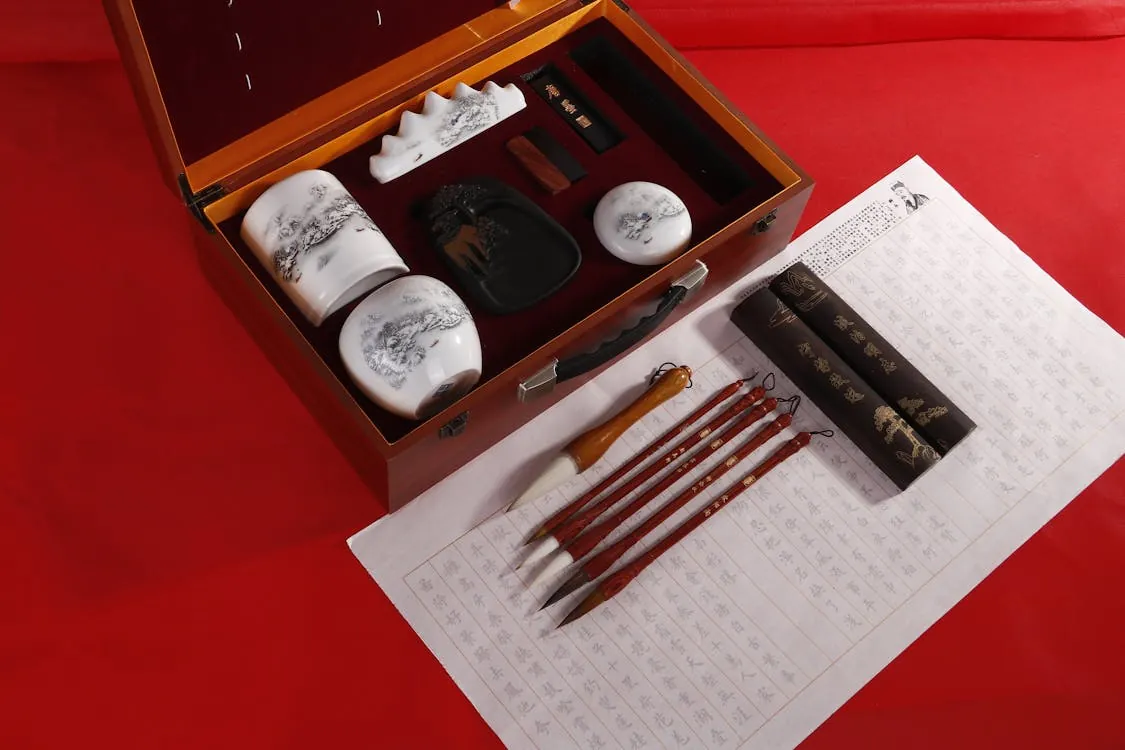
No discussion of Chinese calligraphy is complete without the 四宝 (sì bǎo), or Four Treasures of the Study:
- Brush (毛笔 máobǐ): Traditionally made from animal hair (weasel, goat, rabbit) and bamboo, the calligraphy brush is considered an extension of the writer’s arm. Some families craft a brush from a child’s hair as a lifelong keepsake.
- Paper (纸 zhǐ): Xuan paper (宣纸 xuānzhǐ), produced in Anhui province, is prized for its absorbency and strength, but calligraphers also use rice paper, bamboo, and hemp-based sheets. The invention of paper revolutionized calligraphy, as explored in our analysis of China’s Four Great Inventions.
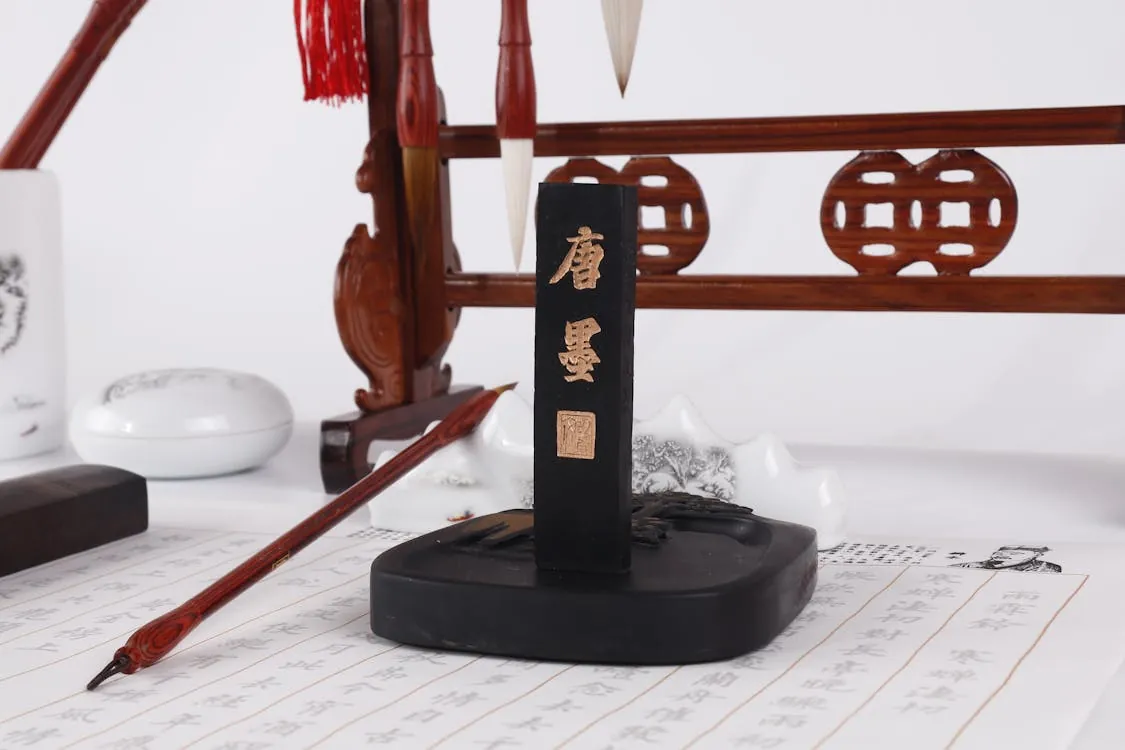
- Ink (墨 mò): Traditionally, ink is ground from solid inksticks made of soot and animal glue, mixed with water on an inkstone. The slow, meditative process of grinding ink is itself a ritual of preparation and focus.
- Inkstone (砚台 yàntái): A stone slab, often ornately carved, used to grind inksticks and mix water to the desired consistency.
Additional accessories include paperweights, water droppers, and desk pads, all designed to support the nuanced movements of the brush and the discipline of the writer.
Modern Practice: Calligraphy in Contemporary China
Despite rapid modernization, calligraphy remains vibrantly alive in China and among global Chinese communities. Children learn brush techniques in school, and calligraphy competitions and exhibitions are held in cities from Beijing to Singapore. Many calligraphers now use “hard-pen” (钢笔 gāngbǐ) calligraphy — ballpoint or fountain pens — for everyday practice, reflecting both tradition and adaptation.
Today, calligraphy bridges ancient and digital worlds. Artists experiment with fusion and abstract styles, combining old forms with modern visual arts. It’s common to find calligraphy on public murals, contemporary artworks, and even in branding and graphic design. The art has also become a therapeutic hobby, promoting mindfulness and stress relief.
Calligraphy scrolls (书法卷轴 shūfǎ juànzhóu) remain a cherished element of home decoration and gift-giving during major holidays, such as Spring Festival. In Beijing, as we noted in our Beijing Travel Guide, traditional calligraphy is often found in the city’s temples, teahouses, and historic neighborhoods (胡同 hútòng).
Internationally, Chinese calligraphy is now taught in art schools, language classes, and museums worldwide, fostering cross-cultural appreciation and dialogue.
Comparison Table: Styles of Chinese Calligraphy
| Script Style | Chinese Name (Pinyin) | Time Period | Main Characteristics | Modern Usage |
|---|---|---|---|---|
| Oracle Bone Script | 甲骨文 (jiǎgǔwén) | Shang dynasty (c. 1200 BCE) | Pictographic, angular, divinatory | Archaeological study, art inspiration |
| Seal Script | 篆书 (zhuànshū) | Qin dynasty (221–206 BCE) | Symmetrical, rounded, pictorial | Seals, art inscriptions |
| Clerical Script | 隶书 (lìshū) | Han dynasty (206 BCE–220 CE) | Flat, wide strokes, square structure | Art, calligraphy practice |
| Regular Script | 楷书 (kǎishū) | Tang dynasty (matured 7th c. CE) | Balanced, clear, formal | Standard writing, education |
| Running Script | 行书 (xíngshū) | Han–Jin dynasties | Semi-cursive, fluid | Personal notes, artistic calligraphy |
| Cursive Script | 草书 (cǎoshū) | Han dynasty onward | Highly abbreviated, expressive | Artistic expression |
| Wei Bei | 魏碑 (wèi bēi) | Northern Wei dynasty (386–534 CE) | Bold, angular, monumental | Stone inscriptions, modern art |
| Fusion/Abstract | — | Contemporary | Combines or breaks traditions | Modern art, global exhibitions |
Enduring Legacy and Global Influence
Chinese calligraphy stands as one of the world’s most enduring art forms — a living bridge from antiquity to the digital age. Its influence extends far beyond aesthetics, playing a vital role in shaping Chinese identity, philosophy, and values such as face (面子 miànzi) and relationship (关系 guānxì).
Calligraphy’s adaptability ensures its relevance: from the carved oracle bones of the Bronze Age to AI-generated calligraphic fonts, the art continues to inspire, unify, and express the Chinese experience. For those wishing to experience this heritage firsthand, exploring calligraphy in the context of travel, cuisine, and daily ritual — as discussed in our guides to Chinese tea culture and dim sum traditions — deepens one’s appreciation for the living heartbeat of Chinese civilization.
Key Takeaways:
- Chinese calligraphy (书法 shūfǎ) is a unique fusion of art, language, and philosophy, with roots in the Shang dynasty and a continuous evolution across dynasties.
- Major script styles — from oracle bone to cursive and abstract — reflect changing historical needs and aesthetic ideals.
- The Four Treasures (brush, paper, ink, inkstone) are essential tools, each with centuries of craftsmanship and ritual.
- Modern practice balances tradition and innovation, with calligraphy thriving in education, art, therapy, and global culture.
- Calligraphy shapes and expresses core Chinese values, remaining an irreplaceable symbol of cultural continuity.
For further reading, consult the detailed history and style breakdown at Wikipedia’s entry on Chinese calligraphy and contemporary style rankings from Linda Mandarin.