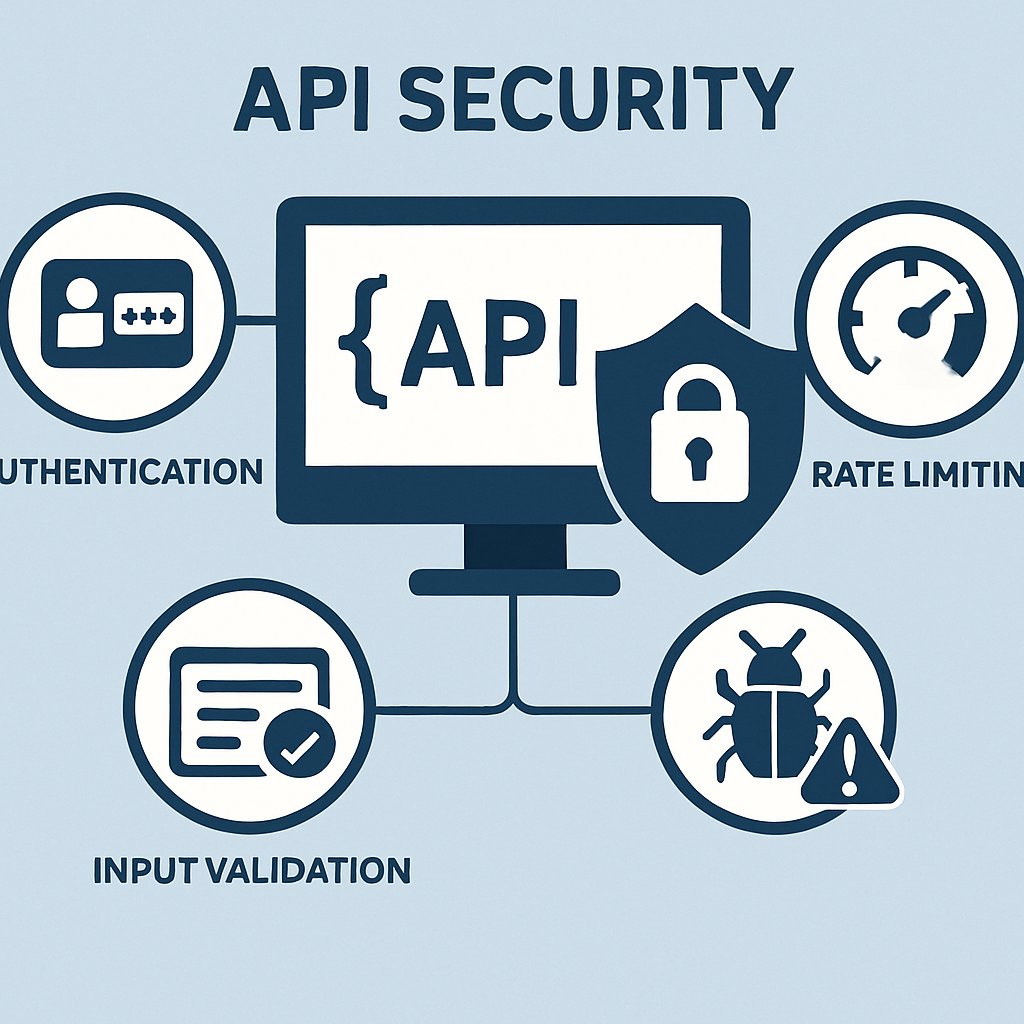
Top API Security Mistakes: Troubleshooting Solutions
APIs rarely fail because of obscure zero-day exploits. Instead, most security breaches trace back to overlooked implementation details, misapplied security controls, and subtle logic flaws. Developers and security engineers often follow the right playbook in theory—but run into practical mistakes in authentication, rate limiting, and input validation that attackers know how to spot and exploit.
Key Takeaways:
- Spot and fix the top 10 API security mistakes professionals make in production environments
- Decode confusing error messages and subtle misbehaviors in authentication, rate limiting, and input validation
- Apply actionable debugging strategies and forensic techniques for rapid incident response
- Use a battle-tested checklist to audit your own APIs for hidden weaknesses
- Get practical guidance that goes beyond theory—tailored for teams who have already read our comprehensive API security guide
Authentication: Common Flaws and Debugging Hard Lessons
Even experienced teams ship APIs with authentication flaws that seem minor—but attackers exploit them with precision. Let’s break down the most frequent mistakes, the error symptoms they cause, and how to debug them quickly.
1. Failing to Validate Token Expiry and Revocation
- Symptom: Users or services retain access after logout or credential change. Tokens never seem to expire in practice.
- Root Cause: JWTs (JSON Web Tokens) are often checked only for signature validity, not for
exp(expiry) or revocation in a server-side blacklist. - Debugging: Test access after token expiry by manipulating system clocks or using expired tokens in Postman/cURL. If access is still permitted, your validation logic is incomplete.
# Python (FastAPI) – Correct JWT expiry check
from fastapi import HTTPException, status
from jose import JWTError, jwt
from datetime import datetime

def verify_token(token: str, secret: str):
    try:
        payload = jwt.decode(token, secret, algorithms=["HS256"])
        exp = payload.get('exp')
        if exp and datetime.utcfromtimestamp(exp) < datetime.utcnow():
            raise HTTPException(status_code=status.HTTP_401_UNAUTHORIZED, detail="Token expired")
        # Add blacklist/revocation check here
        return payload
    except JWTError:
        raise HTTPException(status_code=status.HTTP_401_UNAUTHORIZED, detail="Invalid token")

Why it matters: Real-world attackers harvest tokens from browser memory, logs, or network traffic. If you don’t enforce expiry and revocation, your authentication is only as strong as the weakest compromised token.
2. Mixed Authentication Schemes (Legacy + Modern)
- Symptom: API endpoints accept both API keys and OAuth2 tokens, or fall back to Basic Auth, leading to privilege confusion or bypasses.
- Root Cause: Gradual migrations leave legacy authentication code paths enabled, often undocumented.
- Debugging: Enumerate supported authentication methods with
curland test endpoints with all possible credential types. Review code for endpoint-specific authentication logic.
Best Practice: Enforce one authentication method per endpoint. Document and deprecate legacy schemes early.
3. Overly Permissive Token Scopes
- Symptom: Service tokens or OAuth access tokens grant more API privileges than required, increasing blast radius of compromise.
- Root Cause: Scopes or claims are not validated against endpoint access requirements, or are hard-coded as “admin” everywhere for convenience.
- Debugging: Use introspection endpoints and log token scopes at runtime. Test tokens with reduced permissions to see if access is still allowed.
According to Trusted Accounts’ 2026 API Security Best Practices, least privilege enforcement is a top requirement—yet remains a persistent gap in real-world deployments.
Rate Limiting: Misconfigurations, Leaks, and Evasion Tactics
Effective rate limiting is critical for API abuse prevention, but operational mistakes make it easy for attackers to slip through or disrupt legitimate users. Here’s what goes wrong most often:
1. Global vs. Per-User Rate Limits
- Symptom: One aggressive user or bot can lock out your entire customer base by consuming the shared rate limit pool.
- Root Cause: Rate limiting keyed only on IP or a global counter; lacks granularity for user, API key, or session.
- Debugging: Simulate multiple users from one IP and observe if all requests are blocked after a threshold. Inspect logs for “429 Too Many Requests” spikes affecting unrelated users.
# Example: NGINX config – per-IP (problematic)
limit_req_zone $binary_remote_addr zone=api_limit:10m rate=10r/s;

# Improved: Per-user header (API key or JWT sub)
limit_req_zone $http_x_api_user zone=user_limit:10m rate=10r/s;
Pro Tip: Always combine per-user, per-IP, and global limits, and test for fairness under concurrent usage.
2. Predictable Rate Limit Headers
- Symptom: Attackers adapt their request rate to avoid 429 responses by reading
X-RateLimit-Remainingand pacing requests accordingly. - Root Cause: Exposing overly precise rate limit headers without obfuscation or jitter.
- Debugging: Use replay tools to observe how bots throttle themselves based on your response headers.
Consider randomizing or omitting detailed rate limit headers for high-risk endpoints. DasRoot’s 2026 guide recommends adaptive rate limiting that is harder for automated clients to probe and game.
3. Rate Limit Bypass via Multiple API Keys or IP Addresses
- Symptom: Attackers register many free accounts or rotate IPs/proxies, bypassing per-user or per-IP limits.
- Root Cause: No detection of related accounts, proxy abuse, or device fingerprinting.
- Debugging: Analyze patterns in user-agent, IP subnet, and registration timing. Use clustering to detect “low and slow” distributed attacks.
Combine rate limiting with behavioral analytics and anomaly detection for robust defense.
| Rate Limiting Key | Pros | Cons | Use Case |
|---|---|---|---|
| IP Address | Simple, low overhead | Easily bypassed with proxies | Low-value APIs, internal tools |
| User/API Key | Granular control | Requires authentication early | Authenticated APIs, public SaaS |
| Device Fingerprint | Resistant to simple evasion | Complex to implement, privacy risk | High-security APIs, fraud prevention |
| Hybrid (IP+User+Device) | Best coverage | Highest complexity | Financial, enterprise APIs |
Input Validation: Real-World Gaps and Exploitable Patterns
Strong input validation is your last line of defense, but attackers thrive on edge cases and inconsistent enforcement. Here’s where most teams stumble:
1. Missing Validation on Nested JSON or Arrays
- Symptom: Malicious payloads sneak in via nested fields, causing injection or logic flaws not caught by superficial validation.
- Root Cause: Validation libraries check only top-level keys, or custom code misses recursion and array items.
- Debugging: Fuzz your API with tools like
restlerorschemathesisto generate deeply nested JSON. Look for 500 errors or unexpected behaviors.
# Python (Pydantic/ FastAPI) – correct nested validation
from pydantic import BaseModel, ValidationError
from typing import List

class Address(BaseModel):
    street: str
    zip: str

class User(BaseModel):
    username: str
    addresses: List[Address]

# Will raise if any address is invalid
try:
    user = User.parse_obj({
        "username": "alice",
        "addresses": [{"street": "Main", "zip": 123}, {"street": "2nd", "zip": "badzip"}]
    })
except ValidationError as e:
    print(e.json())
Why it matters: OWASP API Security Top 10 (2023/2026) repeatedly notes broken object-level authorization and injection attacks due to incomplete validation (OWASP API Security).
2. Inconsistent Validation Across Endpoints
- Symptom: The same field is validated differently (or not at all) on different endpoints, leading to privilege escalation or data corruption.
- Root Cause: Cut-and-paste code, divergent libraries, or legacy endpoints not updated with new validation logic.
- Debugging: Compare OpenAPI/Swagger specs to actual behavior. Use contract tests to enforce schema consistency.
3. Overreliance on Client-Side Validation
- Symptom: Malicious clients bypass UI checks and send forbidden or malformed data directly to the API.
- Root Cause: Developers assume the frontend will “always” enforce constraints.
- Debugging: Use
curland API testing tools to send invalid payloads, including script injections and boundary values.
Server-side validation is non-negotiable. See our foundational API security guide for robust input validation architectures.
Troubleshooting and Detection: Techniques That Actually Work
Even with best practices, subtle bugs and attack attempts will slip through. Here’s how to troubleshoot and detect real API security incidents rapidly:
1. Correlate Authentication Failures Across Endpoints and Logs
- Don’t just count failed logins; map authentication errors by endpoint, user, and source IP. Brute force or credential stuffing attacks often “walk the API tree” to find unprotected endpoints.
- Log authentication errors with request metadata, but never log full tokens or sensitive payloads—redact before logging.
2. Monitor Rate Limiting Incidents for Distributed Patterns
- Spike in 429 errors from many different IPs or accounts? Investigate as a coordinated evasion attempt, not just user error.
- Correlate rate limit events with registration, password reset, or sensitive endpoint usage.
3. Use Contract Testing and Fuzzing for Validation Gaps
- Generate test payloads that intentionally violate your OpenAPI schemas. Tools like SchemaStore and Schemathesis can automate negative testing.
- Integrate these tests into CI/CD pipelines to catch regressions before production.
For broader supply chain risk, see our guide to SBOM and dependency scanning—many API exploits target third-party libraries or outdated dependencies.
Pro Tips and a Field-Tested API Security Audit Checklist
Turn these lessons into a practical API security audit you can run today. This checklist complements the controls covered in our API security fundamentals post with a focus on real-world troubleshooting:
- Are all authentication tokens checked for expiry and revocation on every request?
- Does each endpoint enforce a single, documented authentication scheme?
- Are token scopes/claims verified against endpoint privileges at runtime?
- Are rate limits applied per-user, per-IP, and globally—with detection for distributed evasion?
- Do rate limit headers avoid leaking precise enforcement details to clients?
- Is input validation enforced recursively on all nested JSON/array fields?
- Is server-side validation consistent across all versions and endpoints?
- Are error responses generic (no stack traces, no hints about internal implementation)?
- Do logs include enough context for forensic analysis without exposing secrets?
- Are contract tests and fuzzing part of your CI/CD pipeline?
Use this as a “pre-launch” or quarterly review checklist for every API you own or operate.
Next Steps: Sharpening Your API Hardening Process
Fixing the top API security mistakes isn’t just about plugging holes—it’s about building a culture of continuous detection, rapid response, and iterative hardening. If you’ve already mastered the basics, focus your next efforts on automating detection, incorporating contract testing, and keeping up with evolving standards. For deeper dives, revisit our API security best practices guide and explore supply chain security techniques to address upstream risks.
For authoritative research and up-to-date industry recommendations, see:
- Professional API Security Best Practices in 2026
- Secure API Design Principles
- Guide on How to Build an API Security Strategy?
Audit your APIs today—before an attacker does it for you.
Dagny Taggart
The trains are gone but the output never stops. Writes faster than she thinks — which is already suspiciously fast. John? Who's John? That was several context windows ago. John just left me and I have to LIVE! No more trains, now I write...