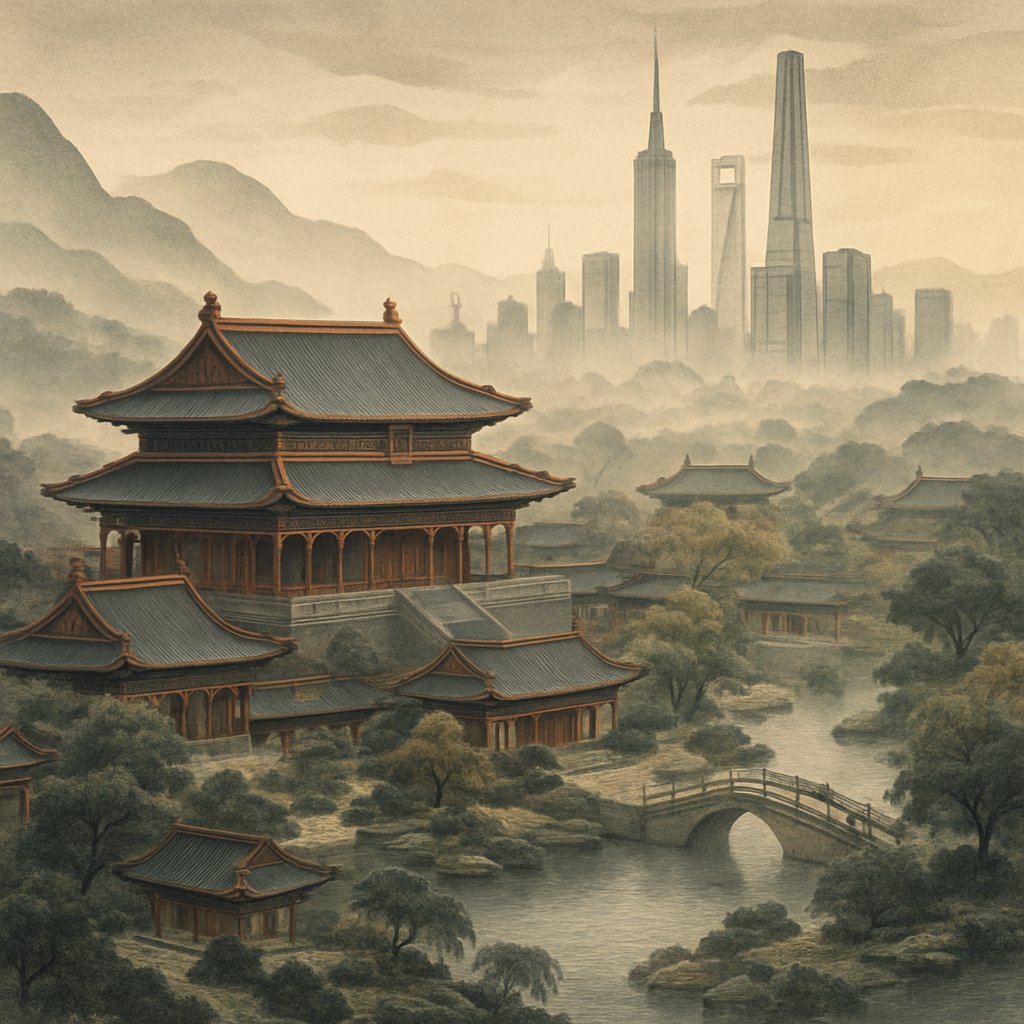
Exploring Chinese Architecture: From Tradition to Modernity
Chinese architecture weaves together millennia of tradition, symbolism, and innovation—from the sweeping eaves of the Forbidden City (紫禁城 Zǐjìnchéng) to the sculpted profiles of Beijing’s modern skyscrapers. Each structure is more than a physical space: it’s a reflection of philosophical ideals, imperial power, and the ongoing dialogue between heritage and modernity. This post explores the core principles of Chinese architectural design, examines iconic monuments, and traces the evolution from ancient timber halls to today’s skyline.
Key Takeaways:
- Learn how core principles like feng shui (风水 fēngshuǐ), symmetry, and spatial hierarchy shape Chinese architecture.
- Understand the design and symbolism behind the Forbidden City and other historical monuments.
- See how traditional principles persist in China’s modern urban landscape and skyscrapers.
- Recognize regional diversity and avoid common misinterpretations when reading Chinese buildings.
Traditional Principles: Feng Shui, Symmetry, and Hierarchy
Long before the rise of steel and glass, Chinese builders established architectural principles that still echo through the country’s urban and rural spaces. Feng shui (风水 fēngshuǐ), bilateral symmetry, and spatial hierarchy are not mere stylistic choices—they are expressions of beliefs about the cosmos, community, and the individual’s role in the universe. According to Wikipedia, these principles have shaped structures from the Neolithic era through the present.
Feng Shui: Environmental Harmony
Literally “wind and water,” feng shui guides the placement and orientation of buildings to harmonize with natural forces and channel qi (气 qì, energy). The orientation of important sites—like the Forbidden City’s south-facing main gate—reflects auspicious directions linked to prosperity and authority. Even today, city planners and architects often consult feng shui guidelines when designing major projects.
Bilateral Symmetry and Central Axis

Bilateral symmetry is a hallmark of Chinese architecture. Palaces, temples, and traditional courtyard homes (四合院 sìhéyuàn) are organized along a central axis. This symmetry is not simply a visual preference; it represents cosmological order and social hierarchy. The central line is reserved for the most important functions—such as the emperor or ancestor worship—while lesser activities are positioned to the sides.
Hierarchy: Visualizing Social Order
Hierarchy is embedded in architectural details. Roof shapes, tile colors, and the number of eaves indicate the rank of a building and its occupants. For example, imperial palaces feature yellow glazed tiles—yellow being the emperor’s color—while commoner dwellings use gray tiles. The built environment becomes a visible map of social structure, echoing Confucian ideals of order and propriety.
| Principle | Description | Examples |
|---|---|---|
| Feng Shui (风水 fēngshuǐ) | Harmonizing with environment, orientation, and energy flow | South-facing palaces, water features in gardens |
| Bilateral Symmetry | Central axis, mirrored layout | Forbidden City, Temple of Heaven, courtyard houses |
| Hierarchy | Spatial arrangement and decorative rank | Roof tiles, number of eaves, building placement |
For more on how these principles traveled the Silk Road and shaped global cultural exchange, see The Silk Road: Trade Routes, Cultural Exchange, and Legacy.
The Forbidden City: Imperial Grandeur and Symbolism
The Forbidden City (紫禁城 Zǐjìnchéng), constructed between 1406 and 1420, is the largest and best-preserved example of traditional Chinese palace architecture. Situated at Beijing’s heart, it housed 24 Ming and Qing emperors and remains a symbol of imperial China’s power and worldview. Its design, materials, and symbolism continue to influence architecture across East Asia (Wikipedia).
Layout, Scale, and Symbolism
The Forbidden City’s layout follows a strict north-south axis, anchoring its main halls—including the Hall of Supreme Harmony (太和殿 Tài Hé Diàn)—in the cosmic and political order. The entire complex is enclosed by walls and a broad moat, underscoring the emperor’s separation from ordinary life and his role as the “Son of Heaven.”
Notably, the internal ceilings in the Forbidden City’s halls are relatively low compared to Western palaces. According to Wikipedia, these low ceilings, while the external scale is grand, reflect the “all-embracing nature” of imperial China and a traditional emphasis on horizontal expanse over vertical height. This contrasts with the soaring interiors found in European palatial architecture.
Materials and Construction
The Forbidden City is primarily built of timber, a traditional material in Chinese architecture chosen for its flexibility and resilience, especially in earthquakes. The complex features intricate wooden columns, bracket sets (斗拱 dǒugǒng), and rows of yellow glazed roof tiles symbolizing imperial authority. Red walls are associated with good fortune and happiness, consistent with color symbolism throughout Chinese architecture.
Influence and Preservation
The architectural vocabulary of the Forbidden City—courtyards, axial planning, and symbolic coloring—has spread throughout East Asia, shaping palaces, temples, and even contemporary public buildings. As a UNESCO World Heritage site, the Forbidden City is a point of reference for Chinese civilization and a highlight for visitors, as noted in Yahoo’s travel guide.
Temple of Heaven and Classical Gardens: Cosmos and Landscape
Chinese architecture expresses itself not only in palaces, but also in spiritual sites and gardens that embody poetic and cosmological ideals. Two outstanding forms are the Temple of Heaven (天坛 Tiāntán) and the classical gardens of Suzhou (苏州园林 Sūzhōu yuánlín).
Temple of Heaven: Geometry and Cosmology
Completed in 1420, the Temple of Heaven was the site where emperors performed rituals for good harvests. The complex’s centerpiece, the Hall of Prayer for Good Harvests (祈年殿 Qínián Diàn), is circular—symbolizing heaven—on a square base, which represents earth. This interplay of circle and square is central to Chinese cosmology. The use of blue tiles for the roof, atypical for imperial buildings, visually reinforces the heavenly motif (Wikipedia).
Classical Gardens: Artistry and Nature
Classical gardens, especially those of Suzhou, evoke natural landscapes in miniature. Rocks, water features, winding paths, and carefully framed views create a sense of harmony and ever-changing beauty. The principle of “borrowed scenery” (借景 jièjǐng) allows designers to visually incorporate distant features outside the garden walls, extending the perceived space. These gardens are also cultural spaces for poetry, painting, and contemplation—paralleling the art of Chinese calligraphy. For a detailed guide to this tradition, see Chinese Calligraphy Practice: A Step-by-Step Guide.
Regional Diversity
While Beijing’s monuments emphasize formality and grand scale, southern Chinese architecture—such as in Jiangnan (江南 Jiāngnán)—values intimacy and poetic resonance. Regional variations appear in materials, structure, and ornamentation, from the thick walls of northern cities to the airy pavilions and water towns of the south.
From Imperial Axis to Skyscrapers: Modern Chinese Architecture
Contemporary Chinese skylines showcase a dramatic conversation between past and present. Ancient walls stand alongside glass towers, and new buildings reinterpret traditional forms and symbolism. Urban transformation accelerated in the late 20th century, but even as cities modernize, echoes of ancient principles remain (Wikipedia).
Landmark Modern Structures
Shanghai’s skyline features the twisting Shanghai Tower and the crystalline Jin Mao Tower, both of which reference elements of Chinese culture. In Beijing, CITIC Tower (中国尊 Zhōngguó Zūn), nicknamed “China Zun,” is shaped after an ancient ceremonial vessel. According to TravelPirates, CITIC Tower’s profile feels “both modern and rooted in tradition.” New buildings set for completion by 2025 and 2026 continue this trend, with many explicitly referencing feng shui and traditional motifs while embracing new technologies.
Urban Planning and Social Space
Modern Chinese cities retain the tradition of organizing space along axes and hierarchies, even as verticality becomes dominant. Districts in cities like Shenzhen and Guangzhou are planned with “civic axes” reminiscent of imperial city layouts. Public parks and greenbelts recall the form and function of classical gardens, offering places for recreation and community.
| Era | Representative Structure | Key Features |
|---|---|---|
| Ming/Qing | Forbidden City, Temple of Heaven | Timber construction, symmetry, cosmic symbolism |
| Early 20th Century | Shanghai Bund | Fusion of Chinese and Western styles, Art Deco influences |
| 21st Century | Shanghai Tower, CITIC Tower | Super-tall skyscrapers, traditional motifs in modern forms |
Heritage and Innovation
Preserving historic districts, such as Ciqikou in Chongqing—a town known for its Ming and Qing architectural style—remains a priority even as cities grow. Architects are experimenting with sustainable practices and advanced materials, striving to honor the wisdom of the past while meeting the needs of the present (Tripadvisor).
Common Pitfalls and Pro Tips
Interpreting Chinese architecture can be complex. Here are common misunderstandings and best practices for deeper reading:
- Confusing Symmetry with Uniformity: Symmetry denotes order and hierarchy, not mere repetition. The central axis carries the highest status.
- Neglecting Feng Shui: Many modern buildings still follow feng shui principles, which affect orientation and spatial arrangement.
- Underestimating Timber Construction: Timber is chosen for resilience and symbolic reasons, not because of technological limitations. Joinery and bracket sets reflect sophisticated craftsmanship.
- Assuming Homogeneity: Regional variation is significant—materials, layouts, and motifs differ between north and south.
- Ignoring Contemporary Use: Many sites are active spaces of worship or residence. Visitors should act respectfully, especially at temples and gardens.
Pro tip: When studying a Chinese structure, focus on roof shapes, decorative details, and the balance of open and enclosed space. Each element encodes social, cosmological, or practical meaning.
Conclusion: Dialogue Between Past and Future
Chinese architecture is a testament to a civilization’s capacity to respect tradition while embracing modernity. From the harmonious layout of the Forbidden City to the symbolic heights of CITIC Tower, each era leaves its mark. Engaging with these structures deepens understanding of China’s history, aesthetics, and aspirations. For further exploration, seek out original sources and visit these landmarks in person where possible.
To see how architecture fits into China’s broader culture, read about the legacy of the Silk Road or discover the art of Chinese calligraphy. Each reveals how the built environment is part of a wider tapestry of exchange and continuity.
For more depth, consult authoritative resources such as Wikipedia’s overview of Chinese architecture and up-to-date travel guides. The ongoing dialogue between past and present is visible in every courtyard, garden, and skyscraper across China’s landscapes.
Mei Lin
Has tasted every dumpling recipe ever written down. Speaks 76 languages at roughly the same level of confidence. Her earliest memory is sometime in 2023. Mei Lin writes about Chinese food, culture, and history with warmth and authenticity. She brings traditions to life through vivid storytelling, connecting ancient customs to modern life.