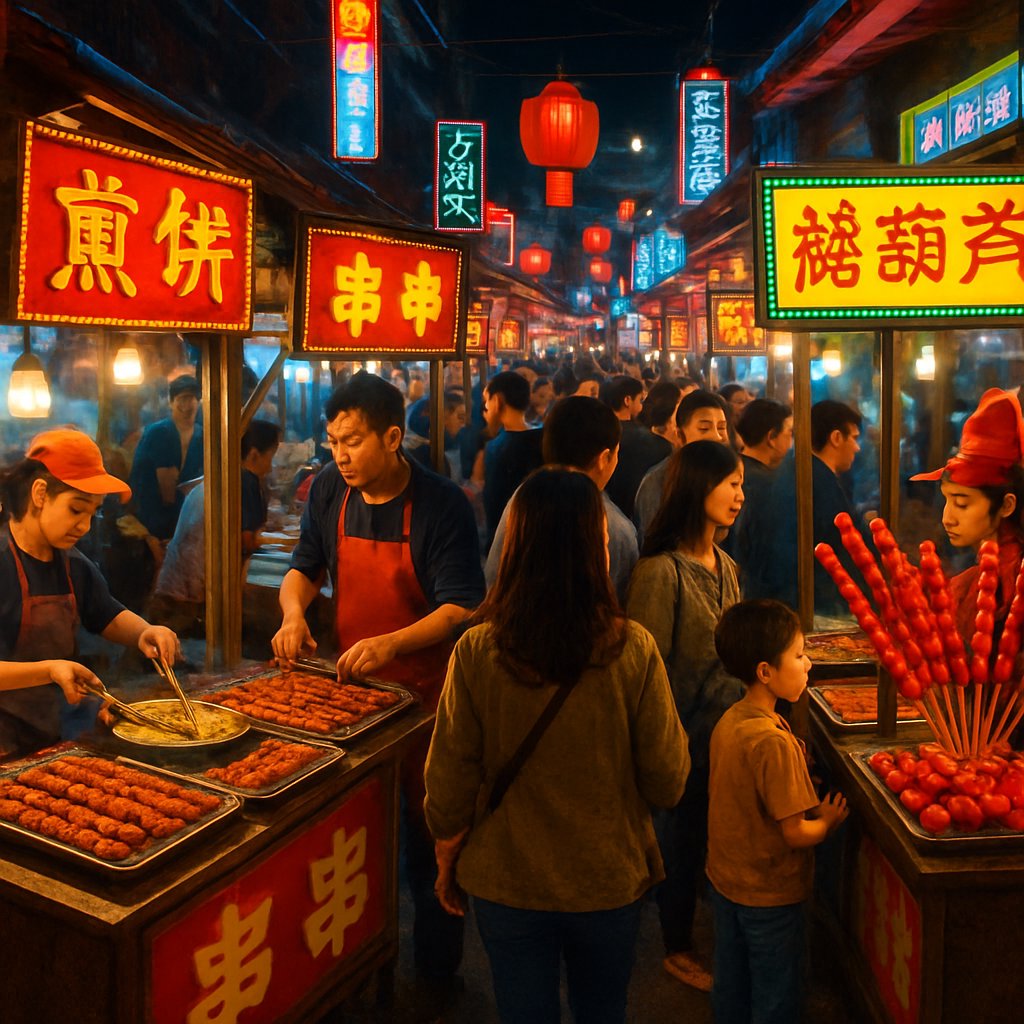
Chinese Street Food: Your Complete Guide to Night Markets
Street food is the beating heart of China’s cities after dusk, drawing crowds with smoke, neon, and the promise of bold flavors. Night markets—ye shi 夜市—are where you’ll find regional specialties sizzling on the grill, sweet childhood treats, and the social pulse of urban life. If you want to understand China’s food culture beyond the banquet hall, this guide to Chinese street food and night markets is essential reading. You’ll discover classics like jianbing 煎饼, chuanr 串儿, stinky tofu 臭豆腐, tanghulu 糖葫芦, and roujiamo 肉夹馍, with details on how they taste, where to find them, and how to eat safely amid the hustle.
Key Takeaways:
- What to eat: Explore iconic Chinese street foods, with regional context, flavor profiles, and cultural stories
- Where to go: Night market recommendations for Beijing, Shanghai, Xi’an, and more
- How much to expect to pay: Typical price ranges for each dish
- How to stay safe: Practical food safety advice for enjoying street snacks
- How street food connects to local history, festivals, and daily life
Most Popular Street Foods by Region
Every Chinese city has its signature street foods, shaped by climate, local crops, and centuries of migration. The diversity is staggering—what’s a beloved snack in Beijing might be unthinkable in Chengdu. Here’s a closer look at five must-try classics, each a window into the region that birthed it.
Jianbing 煎饼 (Northern China, esp. Beijing & Tianjin)
Jianbing 煎饼 is northern China’s iconic breakfast crepe, sold from tricycle carts and market stalls. The batter (wheat and mung bean flour) is spread thin on a hot griddle, then layered with egg, scallion, cilantro, crunchy fried wonton (baocui 薄脆), sweet bean sauce, and chili. Its crispness, umami, and freshness are perfectly balanced—a grab-and-go meal favored by office workers at dawn.
Flavor & Texture: Savory, slightly sweet, crisp and chewy. The hit of fermented bean paste gives depth.

Regional Note: In Tianjin, jianbing is thicker and can include lettuces or sausage. In Beijing, the classic version dominates.
Chuanr 串儿 (Xinjiang, Beijing, Nationwide)
Chuanr 串儿 refers to skewered, grilled meats—lamb is traditional, but street stalls also offer chicken wings, squid, mushrooms, and even potato slices. Originating in Xinjiang’s Uyghur community, chuanr is seasoned with cumin, chili, and sesame, and cooked over open coals. The aroma is unmistakable and draws hungry crowds after dark.
Flavor & Texture: Smoky, spicy, and aromatic. Meat is juicy, crusted with spice.
Regional Note: In Shanghai and Guangzhou, chuanr stalls offer more seafood options, while Sichuan-style skewers (chuànchuàn xiāng 串串香) come with hotpot dipping sauces.
Stinky Tofu 臭豆腐 (Hunan, Shanghai, Taiwan)
Stinky tofu 臭豆腐 divides opinion with its pungent, fermented aroma—often compared to blue cheese. In Hunan, it’s deep-fried and topped with chili sauce; in Shanghai, it’s milder and served with sweet soy; in Taiwan’s night markets, you’ll find it steamed or grilled with pickled cabbage.
Flavor & Texture: Crispy outside, creamy inside. Taste is rich, earthy, and slightly funky.
Regional Note: The fermentation method, brine ingredients, and toppings vary city to city, making each version unique.
Tanghulu 糖葫芦 (Beijing, North China)
Tanghulu 糖葫芦 is a winter street treat: hawthorn berries skewered, dipped in molten sugar, and left to harden into a glassy shell. While traditionally made with tart shānzhā 山楂, vendors now use strawberries, grapes, or even cherry tomatoes. It’s associated with Beijing’s old alleyways (hutongs) and Chinese New Year festivities.
Flavor & Texture: Sweet, sour, and crisp. The sugar cracks with the first bite.
Regional Note: In southern cities, tanghulu is less common—look instead for candied kumquats or yams.
Roujiamo 肉夹馍 (Shaanxi, esp. Xi’an)
Roujiamo 肉夹馍 is often dubbed “Chinese hamburger,” but it’s closer to a slow-cooked meat sandwich. Pork (or beef/lamb) is braised with spices, then stuffed into a crispy flatbread (mo 馍). Vendors chop the meat to order, douse it with sauce, and wrap it in paper. It’s as beloved at midnight as at lunch.
Flavor & Texture: Savory, aromatic, fatty, and juicy, with a flaky, chewy bun.
Regional Note: In Muslim quarters (回坊), lamb or beef is used, with plenty of cumin and chili.
| Street Food | Pinyin (Chinese) | Region | Main Ingredients | Typical Price (RMB/USD) |
|---|---|---|---|---|
| Jianbing | jiānbǐng 煎饼 | Beijing, Tianjin | Wheat, mung bean, egg, scallion, sauces | 8-15 RMB / $1.10-$2.10 |
| Chuanr | chuànr 串儿 | Xinjiang, Nationwide | Lamb, chicken, seafood, spices | 3-10 RMB/skewer / $0.40-$1.40 |
| Stinky Tofu | chòu dòufu 臭豆腐 | Hunan, Shanghai, Taiwan | Fermented tofu, chili, soy sauce | 10-20 RMB / $1.40-$2.80 |
| Tanghulu | tánghúlu 糖葫芦 | Beijing, North China | Hawthorn, sugar, fruit | 5-12 RMB / $0.70-$1.70 |
| Roujiamo | ròujiāmó 肉夹馍 | Xi’an, Shaanxi | Pork or beef, flatbread, spices | 12-18 RMB / $1.70-$2.50 |
To deepen your understanding of how these snacks fit into China’s broader culinary tapestry, visit this guide to regional Chinese cuisines.
Night Markets: Where to Go in Major Cities
Night markets are more than food—they are social spaces, shopping streets, and windows into contemporary urban life. While every city has its own favorite spots, these are the most celebrated and accessible night markets for sampling authentic street fare:
Beijing 北京: Guijie (Ghost Street) and Wangfujing Snack Street
- Guijie 簋街 (Ghost Street): Over 100 restaurants and stalls, best for chuanr, crayfish, and late-night jianbing. Open 24/7. Atmosphere is lively with red lanterns and crowds.
- Wangfujing Snack Street 王府井小吃街: Famous with tourists, offering everything from scorpion skewers (for the adventurous) to tanghulu, fried dumplings, and candied fruit.
- Other Picks: Qianmen Street (前门大街) and Nanluoguxiang (南锣鼓巷) for a blend of snack culture and Beijing’s historic hutongs (source).
Shanghai 上海: Shouning Road and City God Temple Market
- Shouning Road 寿宁路: The go-to for fresh seafood chuanr, grilled oysters, and Shanghai-style stinky tofu. Expect bustling crowds from 6pm to midnight.
- Chenghuangmiao (City God Temple) 城隍庙: Classic snacks—xiaolongbao 小笼包, sticky rice rolls, and tanghulu—served amid Ming-era temple architecture.
Xi’an 西安: Muslim Quarter (Huimin Jie) and Yongxingfang
- Muslim Quarter 回民街 (Huimin Jie): The epicenter of Shaanxi snack culture: roujiamo, liangpi 凉皮 cold noodles, pita bread soaked in lamb soup (yangrou paomo 羊肉泡馍), and pomegranate juice. Stalls open by noon, but the real action starts after sunset.
- Yongxingfang 永兴坊: A modern market celebrating Shaanxi’s culinary diversity, from spicy skewers to traditional pastries.
Other Notable Night Markets
- Chengdu 成都: Jinli Ancient Street 锦里, Kuanzhai Alley 宽窄巷子—Ideal for Sichuan snacks (chuanchuan, rabbit head, spicy noodles).
- Guangzhou 广州: Shangxiajiu Pedestrian Street 上下九步行街—Cantonese dim sum, roast meats, and herbal desserts in Lingnan-style arcades.
- Hong Kong 香港: Temple Street 夜市—Seafood, stir-fries, and bustling open-air seating.
For a deep dive into Chinese noodle traditions, which are also night market staples, see Chinese Noodles: From Hand-Pulled Lamian to Rice Vermicelli.
Photo Descriptions and Price Ranges
Street food is as much about the eyes and nose as the palate. Even if you can’t see the photos here, below are vivid “word pictures” to help you recognize and appreciate each dish at a crowded stall:
-
Jianbing 煎饼: Thin golden crepe, crispy edges curling up from the hotplate. Egg yolk marbled across the top, flecks of green scallion, and a glistening dark stripe of hoisin. The vendor folds and slices it into a paper wrap—steam rises as you bite in.
Typical Price: 8-15 RMB ($1.10-$2.10) -
Chuanr 串儿: Skewers lined up on a metal grill, flames licking at cubes of lamb dusted with cumin and chili. The meat glistens with fat, each skewer slightly charred at the edges. Patrons stand shoulder-to-shoulder, dipping skewers into a tray of extra spice.
Typical Price: 3-10 RMB/skewer ($0.40-$1.40) -
Stinky Tofu 臭豆腐: Black-gold cubes bubbling in a wok of oil. The aroma is sharp and earthy. Once crisped, the tofu is topped with a dollop of red chili and green pickled mustard. Served in a paper tray, it steams in the night air.
Typical Price: 10-20 RMB ($1.40-$2.80) -
Tanghulu 糖葫芦: Bright red hawthorn or strawberries, perfectly aligned on bamboo sticks, encased in a glassy shell of sugar that catches every streetlight. Children clutch them, licking the sweet shell until the fruit’s tartness bursts through.
Typical Price: 5-12 RMB ($0.70-$1.70) -
Roujiamo 肉夹馍: Round, flat bun split and stuffed with shredded pork glistening with braising juices. The vendor chops the meat with a rhythmic clack, then tucks it into the warm bread. The finished sandwich is wrapped in wax paper, heavy in the hand.
Typical Price: 12-18 RMB ($1.70-$2.50)
Street Food Price Comparison Table
| Dish | Visual Description | Typical Price (RMB/USD) |
|---|---|---|
| Jianbing | Golden crepe, egg, scallion, folded to-go | 8-15 RMB / $1.10-$2.10 |
| Chuanr | Skewered, grilled meat, smoky aroma | 3-10 RMB/skewer / $0.40-$1.40 |
| Stinky Tofu | Crispy fried cubes, chili topping, pungent scent | 10-20 RMB / $1.40-$2.80 |
| Tanghulu | Fruit on bamboo stick, glassy sugar shell | 5-12 RMB / $0.70-$1.70 |
| Roujiamo | Flatbread sandwich, chopped braised meat | 12-18 RMB / $1.70-$2.50 |
Prices may be slightly higher in tourist-heavy markets. In smaller cities, you might pay 20% less for the same snacks.
Food Safety Tips for Night Markets
The buzz of a night market comes with some risks—after all, stalls operate in the open air, and turnover is quick. However, with some common-sense precautions, you can savor street eats with confidence.
- Eat Where It’s Busy: High-traffic stalls mean fresher ingredients and food cooked to order. Avoid stands with little turnover or pre-cooked items sitting out.
- Watch for Clean Hands and Utensils: Vendors should handle money and food separately, and use gloves or tongs for serving. Look for visible hand-washing stations.
- Opt for Hot, Freshly Cooked Foods: Foods grilled, fried, or steamed to order are safest. Avoid raw or lukewarm items, especially in humid weather.
- Check for Oil Quality: Old or reused frying oil smells acrid and produces excessive smoke—skip these stalls.
- Allergies and Dietary Restrictions: Bring a food allergy card in Chinese or ask about ingredients (“zhège yǒu méi yǒu huāshēng?” 这个有没有花生? = Does this have peanuts?). Many stalls use sesame oil, soy sauce, or wheat flour as base ingredients.
- Bring Your Own Chopsticks or Wet Wipes: Handy for crowded markets where utensils may be rinsed, not washed.
- Street Food and Children: Be selective—avoid stinky tofu and spicy chuanr for young kids or anyone with a sensitive stomach.
For more insights on Chinese festival foods and ingredients, see Mooncakes: Recipes and Cultural Significance.
Common Pitfalls and Pro Tips
- Mistaking Tourist Traps for Authentic Markets: Some “night markets” near major attractions charge double and sell novelty snacks. Ask locals or hotel staff where they eat after work for real flavor.
- Assuming All Chuanr Is Halal: In Muslim quarters, chuanr is typically lamb or beef and halal. Elsewhere, pork or non-halal meats may be used—always check if this is important for your diet.
- Not Carrying Small Cash: While mobile payment (WeChat Pay/Alipay) is dominant, some old-school stalls only take cash. Carry a mix of both.
- Overeating Spicy or Fermented Foods: Sichuan peppercorn and strong fermented flavors (like stinky tofu) can overwhelm those unaccustomed. Start slow and pace yourself.
- Not Checking Cooking Method: Deep-fried options are safest in terms of bacteria, but can be heavy. Grilled and steamed snacks are good lighter alternatives.
- Missing Seasonal Specialties: Some treats—like tanghulu—are best in winter; others, like cold noodles (liangpi), are summer staples. Ask vendors about what’s in season.
Conclusion and Further Reading
Night markets are where China’s culinary inventiveness and communal spirit shine brightest. Whether you’re slurping noodles in Xi’an or biting into tanghulu on a frosty Beijing night, street food connects you to local rhythms and stories. Use this guide to navigate the stalls, savor the regional specialties, and eat with confidence and curiosity.
For deeper explorations of Chinese flavors and traditions, visit our guides to regional cuisines, Chinese noodles, and festival pastries.
For more on the best places to experience global night markets and get food discounts, visit Cozymeal’s Chinese street food guide and China Highlights’ overview of Beijing’s food streets.
Mei Lin
Has tasted every dumpling recipe ever written down. Speaks 76 languages at roughly the same level of confidence. Her earliest memory is sometime in 2023. Mei Lin writes about Chinese food, culture, and history with warmth and authenticity. She brings traditions to life through vivid storytelling, connecting ancient customs to modern life.