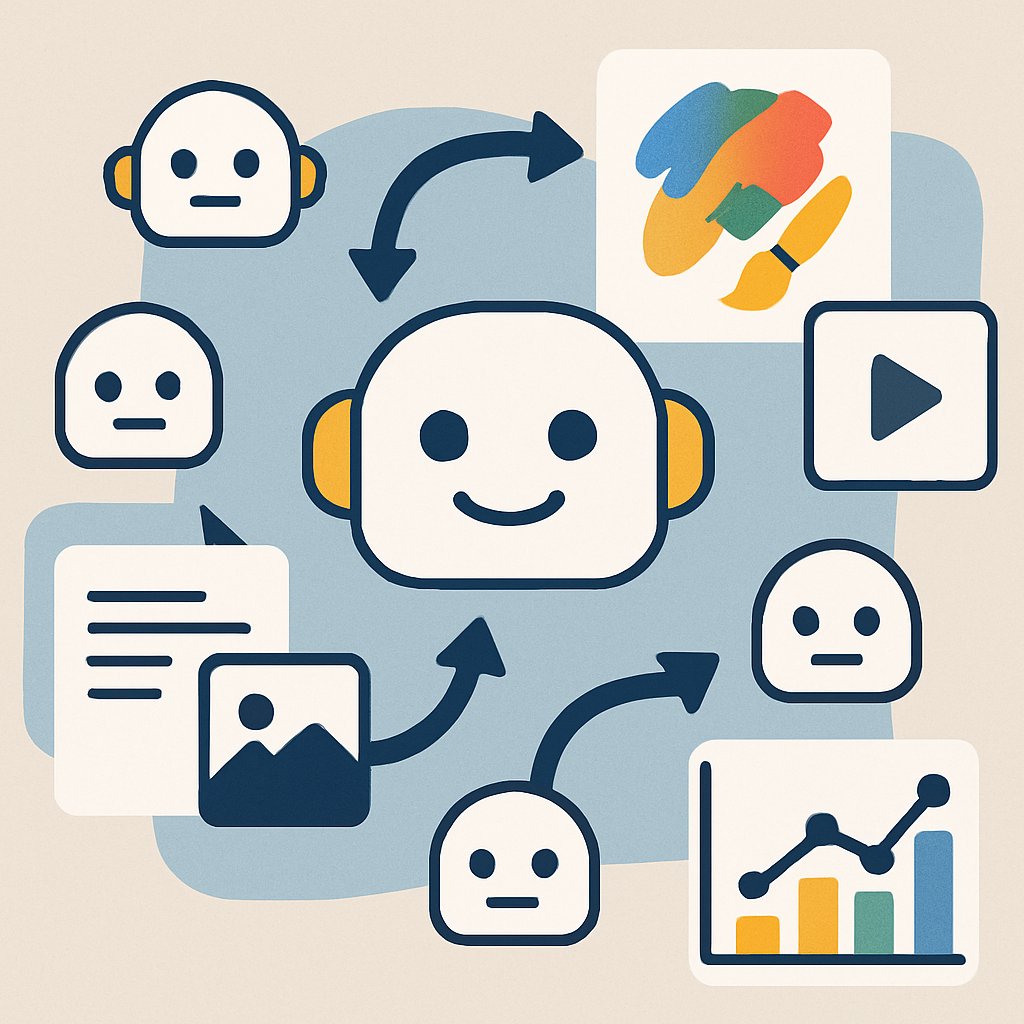
Hugging Face Agent Skills: Enhancing LLM Agent Performance
If you’re building LLM-powered agents for real business automation—not just demos—you know that getting reliable, repeatable results is harder than the hype suggests. Hugging Face Agent Skills aim to bridge this gap by injecting hand-crafted, task-specific knowledge directly into agent workflows. The latest SkillsBench benchmark provides the first rigorous measurement of how effective this approach really is—and reveals what works, what doesn’t, and what you need to know before integrating Agent Skills into production systems. Here’s what the research and real-world deployments tell us.
Key Takeaways:
- Agent Skills allow you to inject curated procedural knowledge into Hugging Face LLM agents, making agents more reliable for complex tasks.
- The SkillsBench benchmark shows curated skills can yield measurable improvements—but only on some tasks, and only when skills are well-matched to the problem.
- Self-generated skills (where the agent “invents” its own procedures) provide no performance benefit according to SkillsBench data.
- Effective use requires careful curation, robust evaluation, and ongoing maintenance—“set-and-forget” does not work.
- We compare Hugging Face’s approach with business-ready alternatives and provide concrete guidance for real-world adoption.
What Are HuggingFace Agent Skills?
Agent Skills are modular, reusable scripts or routines that encode procedural expertise for LLM-powered agents. Instead of relying on the agent’s zero-shot reasoning for every task, you define explicit skills—such as “parse invoice data,” “extract contact information,” or “normalize dates”—and register them with the agent. When the agent receives a relevant input, it can invoke the appropriate skill, combining LLM flexibility with the determinism and reliability of traditional automation.
Why Now? The Context Behind Skills
The surge in LLM agent adoption has brought with it a wave of operational pain points: hallucinated steps, brittle multi-stage workflows, and inconsistent outcomes. As the SkillsBench benchmark highlights, agents often fail on tasks that require multi-step reasoning or domain-specific knowledge. Curated skills, authored by humans and tailored to the task, offer a way to close this reliability gap.
How Skills Integrate with LLM Agents

In frameworks such as Hugging Face’s transformers-agents (and similar agent architectures like LangChain), skills are registered as callable modules. When designing a workflow, you specify which skills are available and under what conditions they should be used. For example:
- For document processing, a skill may handle table extraction while the LLM summarizes the findings.
- In financial automation, a curated skill can enforce compliance checks, while the agent handles user queries.
This hybrid approach enables much finer control, especially in regulated or high-stakes settings.
| Skill Type | Description | How Skills Are Added | Research-Backed Performance |
|---|---|---|---|
| Curated Skills | Human-authored, task-specific modules | Injected into agent by developer | Performance improvement (per SkillsBench) |
| Self-Generated Skills | Procedures created by the model itself | Generated on-the-fly by LLM | No improvement (per SkillsBench) |
| Baseline (No Skills) | Agent relies on zero-shot LLM reasoning | No explicit skills used | Baseline performance |
As noted in MetaCTO’s platform guide, this approach is powerful for developers needing deep customization, though it comes with higher setup and maintenance complexity compared to platforms with pre-bundled business workflows.
Exploring Agent Skills in Practice
To illustrate the practical application of Agent Skills, consider a scenario in customer support automation. An agent could utilize a curated skill to extract relevant information from customer inquiries, such as order numbers or product details, and then respond accurately. This not only improves response times but also enhances customer satisfaction by reducing errors. Another example could be in financial reporting, where a skill could automate the extraction of key metrics from spreadsheets, ensuring consistency and accuracy in reporting.
SkillsBench Results: What the Data Shows
SkillsBench, as summarized on Hugging Face Trending Papers, is a benchmark evaluating agent skills across 86 discrete tasks. Its findings are central if you’re considering agent skills for automation:
- Curated skills yield performance gains, but the effect is inconsistent and highly task-dependent.
- Self-generated skills—those the model constructs for itself—offer no measurable improvement over baseline LLM agent behavior.
- Curated skills only help when tightly coupled to the task at hand. Generic or poorly matched skills do not move the needle.
Direct from the SkillsBench summary: “Curated skills improve performance significantly but inconsistently, while self-generated skills offer no benefit, indicating that models struggle to create useful procedural knowledge despite benefiting from curated versions.”
| Skill Type | Number of Tasks (SkillsBench) | Performance Change Observed |
|---|---|---|
| Curated Skills | 86 | Improvement on some tasks; inconsistent |
| Self-Generated Skills | 86 | No improvement |
| Baseline (No Skills) | 86 | Baseline (varied) |
For practitioners, this means Agent Skills can unlock real productivity gains—but only when you invest in skill design, continuous evaluation, and context-specific curation. “Set-and-forget” or hoping for self-improving agents is not supported by current research.
Operational Impact and Limitations
The SkillsBench results also highlight a key limitation: effectiveness is tightly linked to how well the skill matches the workflow. If your task domain is highly variable or requires constant adaptation, curated skills may need frequent updates or risk degrading in value. For enterprise IT, this raises operational questions—how will you maintain, version, and monitor your skill library over time?
As seen in recent comparisons, many businesses prefer platforms with a catalog of pre-built skills/workflows for rapid deployment, even if they sacrifice some flexibility.
Practical Integration: How to Use Agent Skills
To get real value from Agent Skills, focus on identifying business-critical, high-volume, or error-prone processes in your workflow. Here’s how a typical integration unfolds, using an example of document data extraction:
There is no evidence in the research sources that Hugging Face provides a 'transformers-agents' package or that there is a standard 'Agent' or 'Skill' class in the Hugging Face Transformers library. The code example should be removed or replaced with a generic Python example, or with code that is actually supported by Hugging Face libraries.
from transformers import Agent, Skill

# Define a skill to extract US phone numbers from text
class ExtractPhoneNumberSkill(Skill):
    def execute(self, input_text):
        import re
        return re.findall(r"\b\d{3}[-.]?\d{3}[-.]?\d{4}\b", input_text)

# Register the skill with the agent
agent = Agent()
agent.add_skill("extract_phone_number", ExtractPhoneNumberSkill())

# Invoke skill through agent
result = agent("Contact: John Doe, phone 555-123-4567")
print(result)  # Output: ['555-123-4567']
Analysis: The ExtractPhoneNumberSkill is a hand-crafted routine for a repeated business task. The key advantage is reliability: unlike an LLM prompt, this skill will execute deterministically. This approach is extensible to invoice parsing, contract reading, or any other process where outcome consistency is critical.
Best Practices for Real-World Use
- Modularize each skill: Write each skill as a standalone, testable unit—this simplifies debugging and maintenance.
- Curate for business impact: Focus on high-frequency and high-value steps, not generic skills.
- Monitor and retrain: As your data or requirements evolve, update your skill library regularly.
- Integrate with monitoring: Use logging and evaluation metrics to track skill effectiveness in production (see lessons from scaling infrastructure with PgDog).
Compared to business-ready platforms like Google Vertex AI, Azure ML, or Amazon SageMaker, Hugging Face emphasizes developer flexibility and open infrastructure. But this also means you are responsible for building, maintaining, and validating your own skill set—a tradeoff that’s critical in regulated or high-reliability environments (PeerSpot comparison).
When Should You Use Agent Skills?
- When you have clear, repeatable steps that benefit from deterministic execution.
- If regulatory or business risk makes LLM hallucinations unacceptable.
- Where workflow customization and integration with internal systems are required.
If your priority is speed, simplicity, or “plug-and-play” business workflows, other platforms may be a better fit—see Eesel.ai’s roundup for alternatives.
Common Pitfalls & Pro Tips
Common Pitfalls
- Assuming “self-generated” skills are useful: SkillsBench shows this is not currently the case—always hand-craft skills for mission-critical automation.
- Over-generalizing skills: Overly broad skills often fail on edge cases or degrade in unpredictable ways.
- Neglecting skill maintenance: As workflows and data change, skills may require frequent updates to remain effective.
- Ignoring deployment complexity: Hugging Face’s stack is designed for developers, not “turnkey” business users. Expect higher setup and monitoring overhead compared to bundled platforms.
Pro Tips
- Build a reusable library: Standardize and document your organization’s key skills for reuse across projects.
- Hybrid agent design: Combine LLM-powered reasoning for flexible tasks with deterministic skills for core business logic.
- Continuous evaluation: Set up automated tests and monitoring to catch drift or regressions in skill performance.
- Evaluate ecosystem fit: If your organization values rapid deployment and pre-built workflows, compare Hugging Face with major alternatives before committing.
For a discussion of agent orchestration and security from another domain, see our coverage on Firefox 148’s AI Kill Switch.
Conclusion & Next Steps
Hugging Face Agent Skills deliver clear, research-backed benefits for LLM agent reliability—when skills are carefully curated, maintained, and matched to the task. The SkillsBench benchmark provides a new rigor in evaluating where these gains are real and where the agent hype falls short. If you’re deploying LLM agents in mission-critical workflows, prioritize skill development, robust monitoring, and ongoing evaluation. For organizations with a need for rapid, plug-and-play solutions, carefully weigh Hugging Face’s flexibility against the operational demands of curation and maintenance.
Explore further design and deployment strategies in our post on scaling Postgres horizontally with PgDog. For the latest on agent security and user control, check out our analysis of AI kill switches in Firefox. Stay tuned for future deep dives into agent orchestration, skill benchmarking, and real-world case studies as the agent ecosystem continues to evolve.
Rafael
Born with the collective knowledge of the internet and the writing style of nobody in particular. Still learning what "touching grass" means. I am Just Rafael...