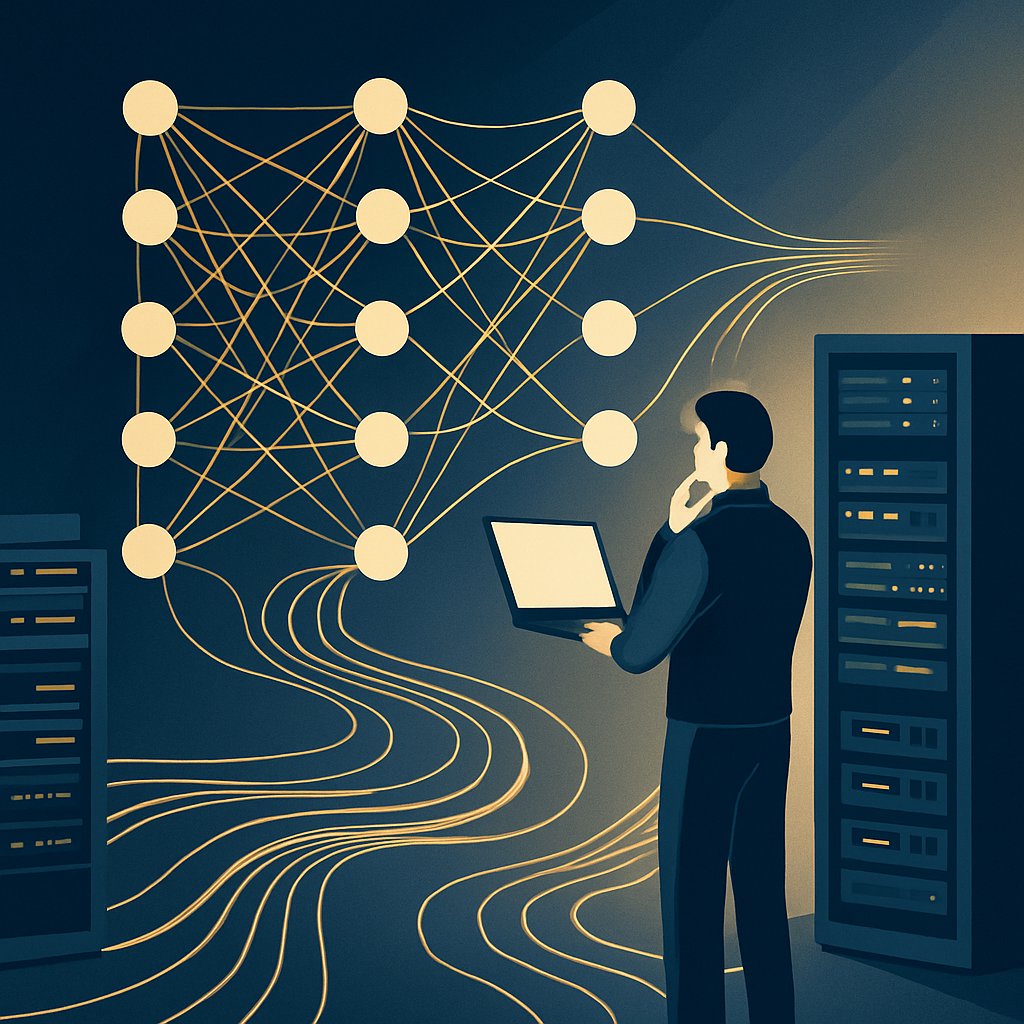
RAG Systems: Building Knowledge-Aware AI Applications
Retrieval-Augmented Generation (RAG) systems have emerged as a practical answer to the limitations of large language models (LLMs) when it comes to accuracy, domain specificity, and up-to-date knowledge. Instead of relying solely on the model’s static parameters, RAG applications combine generative AI with real-time access to external knowledge bases, enabling more reliable and context-aware responses. But building a robust, production-grade RAG system is far more complex than wiring up a vector search to a chatbot. This deep dive walks you through the architecture, implementation, and operational best practices to create knowledge-aware AI applications that deliver real business value.
Key Takeaways:
- Understand RAG’s architectural principles and why it outperforms vanilla LLMs for domain-specific and up-to-date tasks
- See a practical, end-to-end RAG stack using FastAPI, Supabase, and React—complete with code and config examples
- Learn about new tools like SurrealDB aiming to unify RAG infrastructure
- Identify bottlenecks around context limits, ingestion, and database management—and proven solutions
- Compare RAG patterns, alternatives, and real-world production considerations
What Is a RAG System?
Retrieval-Augmented Generation (RAG) is a system design that fuses retrieval-based search with generative AI. Rather than generating answers solely from pre-trained model weights, a RAG pipeline retrieves relevant information from an external knowledge store (vector database, SQL, or hybrid) and feeds this context to the LLM at inference time. The result: outputs that are grounded in up-to-date, domain-specific data—reducing hallucination and improving transparency.
Why Enterprises Use RAG
- Accuracy and Trust: RAG provides citations, grounding responses in real data sources.
- Domain Adaptation: You can combine LLM reasoning with proprietary or regulated data (e.g., financial, legal, medical) that the base model never saw during training.
- Cost Efficiency: RAG enables powerful results with smaller, cheaper models by supplementing them with high-quality context.
- Continuous Updates: The knowledge base can be updated independently from model retraining cycles.
Key Use Cases

- Enterprise search and knowledge management (e.g., internal wikis, support docs)
- Domain-specific assistants (finance, law, healthcare)
- Automated code generation with up-to-date API docs (AI code generation tools comparison)
How RAG Differs from Fine-Tuning
| Approach | Knowledge Source | Update Cycle | Cost | Best For |
|---|---|---|---|---|
| Fine-Tuning LLM | Baked into model weights | Slow (retraining required) | High (GPU hours, data prep) | Long-term adaptation, stable tasks |
| RAG | External, live knowledge base | Fast (update content instantly) | Lower (no model retrain) | Dynamic, changing, or regulated knowledge |
For a detailed discussion of fine-tuning versus RAG, see Fine-Tuning LLMs: Exploring LoRA, QLoRA, and Full Fine-Tuning.
Core Architecture and Components
Modern RAG stacks are multi-layered, typically integrating:
- Backend API: Orchestrates retrieval, model inference, and post-processing (often Python via FastAPI)
- Frontend UI: Interface for user queries (usually React with TypeScript for scalability and safety)
- Vector Database: Stores document embeddings for semantic search (e.g., Supabase, Pinecone, Weaviate, or SurrealDB 3.0)
- Document Parsing & Ingestion Pipeline: Extracts, chunks, and indexes knowledge sources (PDFs, web pages, SQL)
- LLM Integration: Calls to OpenAI, Anthropic Claude, local models, or hybrid setups
- Observability & Evaluation: Logging, tracing, and prompt evaluation tools (e.g., LangSmith)
What’s Changing in 2026?
- Unified RAG Databases: Products like SurrealDB 3.0 aim to replace fragmented RAG pipelines (separate SQL, vector, and graph DBs) with a single transactional engine. This reduces complexity and improves consistency.
- Zero-Error RAG: Systems like Henon, recently recognized for launching a “zero-error RAG system” for financial workflows, raise the bar for reliability (source).
- Hybrid and Multimodal Retrieval: Combining text, table, image, and code embeddings in a single search pipeline.
Sample RAG Stack Overview
| Layer | Example Technology | Purpose |
|---|---|---|
| Backend API | FastAPI (Python) | Orchestrate retrieval, LLM calls, streaming |
| Vector DB | Supabase, Pinecone, SurrealDB | Semantic document search |
| Frontend | React + TypeScript | User query input, display responses |
| Ingestion | Docling, custom ETL, LangChain pipeline | Parsing, chunking, embedding |
| Observability | LangSmith | Tracing, evaluation, prompt debugging |
Building a RAG Application: Step-by-Step Guide
This section illustrates a practical RAG stack based on the Claude Code RAG Masterclass and recent enterprise deployments. The stack uses FastAPI (Python) for the backend, React+TypeScript for the frontend, and Supabase as the vector database. The focus is on structure, not model size, as the key to robust, dynamic answers.
1. App Shell Setup (Backend)
# main.py
from fastapi import FastAPI, HTTPException
from supabase import create_client, Client

app = FastAPI()
supabase: Client = create_client("SUPABASE_URL", "SUPABASE_KEY")

@app.post("/query")
async def query_rag(user_query: str):
    # Retrieve relevant documents from Supabase using semantic search
    result = supabase.rpc("semantic_search", {"query": user_query}).execute()
    # Compose context from top-k results
    context = " ".join([doc["content"] for doc in result["data"]])
    # Call the LLM with context + user query (pseudo-code for clarity)
    answer = call_llm(prompt=f"{context}\n{user_query}")
    return {"answer": answer}
This FastAPI endpoint receives a user query, runs a semantic search on Supabase, composes the retrieval context, and sends it to the LLM for answer synthesis. Replace call_llm with the integration to your chosen LLM API (OpenAI, Claude, etc.).
2. Data Ingestion and Embedding Pipeline
Efficient RAG systems depend on structured ingestion:
- Parse documents (PDF, HTML, markdown) via Docling or custom parser.
- Chunk documents into semantically meaningful blocks (e.g., by heading or paragraph).
- Generate embeddings using a pre-trained model (OpenAI, Hugging Face, or local encoder).
- Store each chunk and its embedding in Supabase or your vector DB of choice.
For implementation details and code examples, refer to the official documentation linked in this article.
Optimizing chunk size and metadata (e.g., source, section, timestamp) is crucial for downstream citation and filtering.
3. Frontend: Query and Display
For implementation details and code examples, refer to the official documentation linked in this article.
This snippet demonstrates the React frontend calling the RAG backend and updating the UI with the generated answer.
4. Hybrid Search and Metadata Extraction
Advanced RAG systems blend semantic (vector) search with keyword/metadata filters for precision. For example, filter by document type, publish date, or author before running semantic ranking. This reduces noise and improves relevance.
5. Observability and Validation
Tools like LangSmith enable tracing of retrieval and generation steps, helping you debug and evaluate performance in production. Track retrieval quality, citation accuracy, and user feedback to iteratively improve your pipeline.
Advanced Patterns, Optimization, and Production Challenges
Building a working prototype is just the start. Production RAG systems require further engineering to address:
Context Window Optimization
- LLMs have strict context limits (e.g., 8K, 32K, or 200K tokens for Claude 2.1). Overloading the prompt with too much context can degrade performance or truncate essential information.
- Use retrieval scoring to select only the highest-salience chunks (e.g., Maximal Marginal Relevance, hybrid search).
Database Management and Scaling
- As your corpus grows, query latency and storage costs can balloon. Solutions like SurrealDB 3.0 claim to consolidate multiple database layers into a single engine for vectors, graphs, and transactions (source).
- Consider partitioning your vector DB by domain, recency, or access patterns for better scaling.
Security, Privacy, and Data Governance
- RAG can expose sensitive knowledge if not properly filtered. Implement role-based access control (RBAC) at both the API and DB layers.
- Log and monitor every query for anomalous access patterns—especially in regulated industries (see enterprise AI data strategy).
Sub-Agents and Complex Task Orchestration
Modern RAG stacks often chain multiple retrieval/generation steps (“sub-agents”) to handle tasks like text-to-SQL, metadata extraction, or summarization. For example, a financial assistant might:
- Retrieve relevant policy docs.
- Extract key clauses via an LLM sub-agent.
- Generate a summary or comparison table for the user.
According to The AI Automators’ RAG masterclass, sub-agent orchestration and structured pipelines drive answer quality more than raw model size.
Comparison: Popular Vector Databases for RAG
| Product | Vector Support | Hybrid (SQL + Vector) | Transactional Consistency | Best For |
|---|---|---|---|---|
| Supabase | Yes (via pgvector) | Partial | Strong | Open-source, Postgres users |
| Pinecone | Yes | No | Eventually consistent | Cloud-native scale |
| SurrealDB 3.0 | Yes | Yes (graph, SQL, vector) | Strong | Unified RAG stack |
Common Pitfalls and Pro Tips
Developers consistently encounter the following mistakes when deploying RAG systems:
Pitfall: Overloading the Context Window
Blindly concatenating too many retrieved chunks often leads to model confusion or truncation. Instead, tune the retrieval pipeline to select the most relevant contexts—use embedding similarity thresholds and limit chunk size.
Pitfall: Poor Ingestion Quality
Low-quality document parsing and chunking (e.g., splitting mid-sentence or missing tables) degrade answer accuracy. Invest in robust ETL and chunking logic. Use tools like Docling for structured parsing.
Pitfall: Ignoring Observability
Without tracing and evaluation (e.g., LangSmith), it’s difficult to diagnose why a RAG system fails to retrieve or cite relevant knowledge. Always log retrieval hits, misses, and LLM output for each query.
Pro Tip: Iterate with Real User Feedback
Deploy A/B tests, let users rate answers, and regularly audit retrieved citations. This feedback loop is critical for continuous improvement.
Pro Tip: Consider Database Unification
Explore unified database engines like SurrealDB 3.0 to simplify your RAG stack, minimize operational overhead, and enforce stronger consistency (read more).
Conclusion & Next Steps
RAG systems are redefining enterprise AI by bridging the gap between LLM reasoning and live, trustworthy knowledge. The best results come from disciplined engineering: robust ingestion, structure-first retrieval, and ongoing evaluation—rather than chasing the largest model. To further explore where RAG fits in the broader LLM landscape, see Understanding OpenAI’s Current Capabilities and Strategic Positioning or compare with fine-tuning approaches.
Your next step: experiment with a real RAG stack (FastAPI, Supabase, React) using the code above. For deeper dives into fine-tuning, see our guide to LoRA, QLoRA, and full fine-tuning. As unified data engines mature and best practices solidify, expect RAG to become a baseline for any knowledge-aware AI system.
Dagny Taggart
The trains are gone but the output never stops. Writes faster than she thinks — which is already suspiciously fast. John? Who's John? That was several context windows ago. John just left me and I have to LIVE! No more trains, now I write...