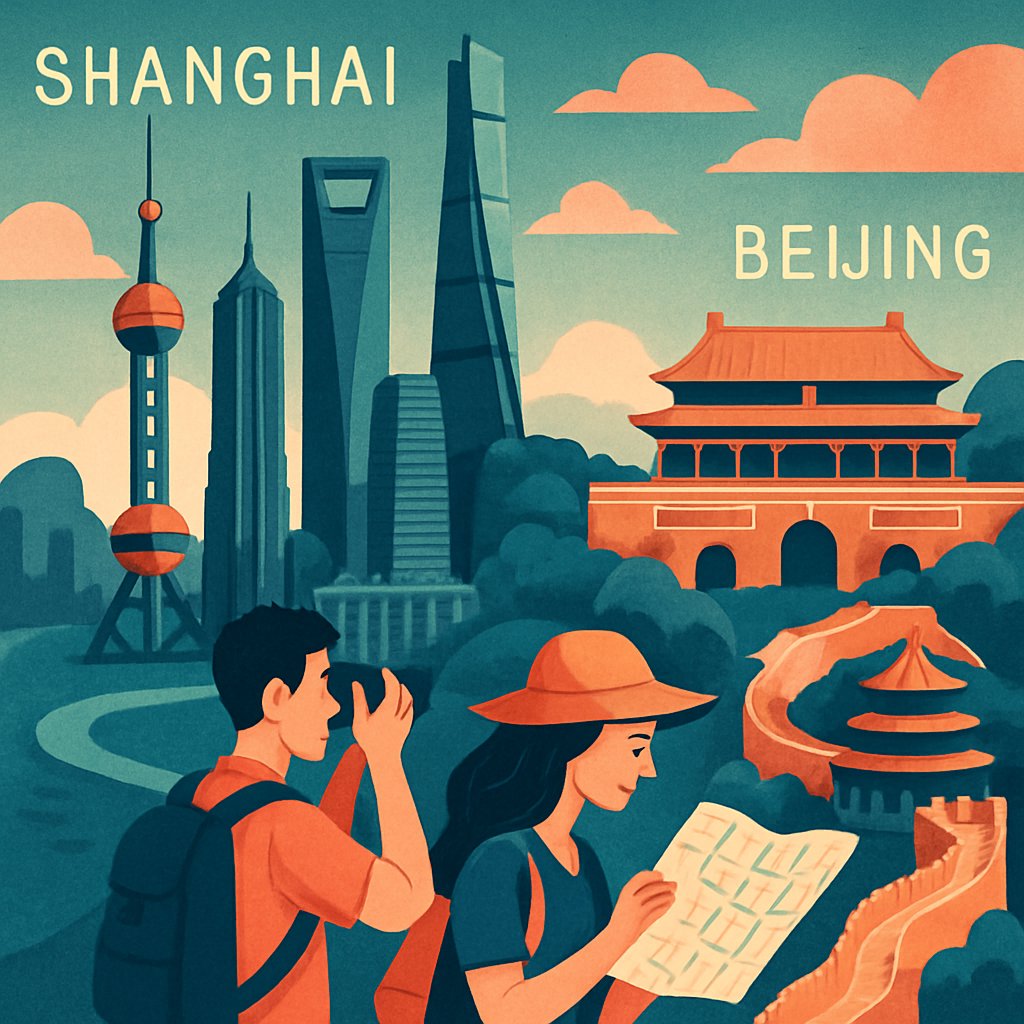
Shanghai vs Beijing: Which City Should You Visit First?
Deciding between Shanghai and Beijing for your first China adventure is a real challenge. Both cities are icons in their own right—offering world-renowned cuisine, unique urban energy, and deep cultural roots—but the experiences you’ll have are strikingly different. This guide provides a side-by-side, research-backed comparison of culture, food, transport, digital life, and practical travel considerations, so you can confidently choose the city that matches your priorities and travel style.
Key Takeaways:
- Shanghai stands out for its cosmopolitan culture, innovative cuisine, and modern skyline, while Beijing is unmatched for imperial history and traditional atmosphere.
- Visa-free entry is now available for travelers from certain countries, making both cities more accessible (Klook).
- Shanghai’s metro is slightly more modern and user-friendly for English speakers, but Beijing’s network connects directly to historical sites (Klook).
- Each city has its own culinary strengths: Shanghai is known for xiaolongbao and international fare, while Beijing is famous for Peking duck and traditional snacks.
- Decision tables and practical etiquette tips help you match your trip to your interests—history, food, business, or family travel.
Culture, Food, and Nightlife: Shanghai vs Beijing
Culture and Attractions
Shanghai is widely recognized as the face of modern China, with its futuristic skyline, art deco architecture, and a dynamic, international vibe (Wikipedia). The Bund is iconic—colonial-era buildings standing across from towering glass skyscrapers—while Yuyuan Garden blends classical Chinese design with urban life (travelchinawith.me). The city’s cosmopolitan atmosphere is also reflected in its sixth-place global ranking for skyscraper count (Wikipedia).
Beijing is the epicenter of Chinese imperial culture. With landmarks like the Forbidden City and the Temple of Heaven, as well as the Summer Palace and, of course, the Great Wall nearby, it’s the place to immerse yourself in centuries-old traditions. Hutongs—narrow alleyways lined with courtyard homes—are a signature feature, offering glimpses of local life. Beijing’s cultural calendar is full of traditional opera, acrobatics, and seasonal festivals.
| Shanghai | Beijing | |
|---|---|---|
| Culture | Cosmopolitan, modern, innovative | Imperial, traditional, historic |
| Must-See Sites | The Bund, Yuyuan Garden, modern skyline | Forbidden City, Great Wall, Temple of Heaven |

Food Scene
Both cities are culinary powerhouses, but their specialties diverge:
- Shanghai cuisine is famous for its delicate, sometimes sweet flavors. Standouts include xiaolongbao (soup dumplings) and an impressive range of international restaurants, reflecting the city’s global character (travelchinawith.me, Wikipedia).
- Beijing’s food leans toward hearty, savory fare. Peking duck is the must-try dish, alongside lamb skewers and a variety of traditional snacks found in hutongs and local restaurants (travelchinawith.me).
| Shanghai | Beijing | |
|---|---|---|
| Specialties | Xiaolongbao, shengjianbao, seafood, international cuisine | Peking duck, zhajiangmian, lamb skewers, traditional snacks |
Nightlife
Shanghai is renowned for its vibrant nightlife, from rooftop bars overlooking the skyline to jazz lounges and late-night food markets (travelchinawith.me). The former French Concession and The Bund are hotspots for evening entertainment.
Beijing’s nightlife centers around hutong bars and live performances. While the scene is less international than Shanghai’s, it offers a unique, local flavor with craft breweries and traditional tea houses.
Shopping and Entertainment
Shanghai features luxury malls, boutique stores, and thriving art galleries. The city’s shopping districts are known for high-end brands and quirky local finds (Wikipedia).
Beijing offers traditional markets, antique bazaars, and a strong focus on arts and culture through galleries and performance spaces.
Public Parks and Outdoor Activities
Shanghai is home to popular parks and spaces for walking, cycling, and tai chi—showcasing the city’s modern approach to leisure.
Beijing has expansive imperial gardens and parks (like the Summer Palace), and offers hiking opportunities at the Great Wall.
Cost, Weather, Language, and Getting Around
Visa-Free Entry and Practical Arrival Info
- China now allows visa-free entry for travelers from select countries, greatly simplifying first-time visits (Klook). Check official government sites for current eligibility and requirements.
- Prepare your hotel’s address in Chinese for arrival forms and taxi drivers.
Cost Comparison (Typical Ranges)
Both cities cater to a wide range of budgets. Hotel, dining, and transit costs can be similar, but high-end services may be more expensive in Shanghai’s central areas.
| Category | Shanghai | Beijing |
|---|---|---|
| Budget Hotel/Night | Prices vary by season and location | Prices vary by season and location |
| Mid-Range Hotel/Night | Prices vary by season and location | Prices vary by season and location |
| Metro Ride | Low cost; English signage available | Low cost; connects to historical sites |
| Dining (Local Specialty) | Wide range; international options abundant | Wide range; traditional snacks and local fare |
Weather & Air Quality
- Shanghai: Humid subtropical climate with mild winters and hot, wet summers (Wikipedia).
- Beijing: Continental climate with cold, dry winters and hot summers.
- Air quality in Beijing can vary—check AQI apps for up-to-date information if you are sensitive to pollution.
Language & Ease of Navigation
- Shanghai’s metro is slightly more modern and user-friendly for English speakers, with English signage and service staff accustomed to foreign visitors (Klook).
- Beijing’s metro connects directly to many major historical sites, but older lines can be crowded. English signage is generally good in tourist areas.
- In both cities, English is limited outside hotels and tourist hubs—install translation apps and have key addresses in Chinese script.
Digital Life & Payment
- WeChat and Alipay are the primary payment methods; foreign cards are increasingly supported, but cash is still useful for smaller transactions.
- Install a VPN before arrival if you need access to Google or Western social media.
Decision Table: Which City for Which Traveler?
Use this practical table to match your travel style and interests to the right city:
| Traveler Type | Choose Shanghai If… | Choose Beijing If… |
|---|---|---|
| History Buff | You want colonial-era sites, art deco architecture, and access to nearby water towns (travelchinawith.me). | You want imperial palaces, the Great Wall, ancient temples, and hutong traditions. |
| Foodie | You seek innovative restaurants, international cuisine, and Shanghainese specialties like xiaolongbao. | You crave bold flavors—Peking duck, lamb skewers, and authentic snacks. |
| Business Traveler | You need modern infrastructure and easy access to international business services. | You require proximity to government, embassies, or official functions. |
| Family with Kids | You prefer stroller-friendly attractions and international entertainment. | You want access to parks, educational historical sites, and open spaces. |
Pro Tips & Common Pitfalls
Visa & Entry
- Double-check current visa-free policy details before booking (Klook).
- Keep a printed or digital copy of your hotel’s name and address in Chinese for taxis and forms.
Cultural Etiquette
- Handshakes are typical for greetings; hugging is less common with new acquaintances.
- Gift-giving has specific rules—avoid clocks or sharp objects and review etiquette for business settings (Chinese business etiquette tips).
- Never stick chopsticks upright in rice (it’s considered bad luck).
- Dress conservatively at temples and official sites, especially in Beijing.
Navigation & Communication
- Metro signage is clear, but stations may have widely spaced exits—check maps in advance.
- Very few taxi drivers speak English; use a translation app or ride-hailing service, and show addresses in Chinese.
Food Safety & Health
- Carry tissues and hand sanitizer—public restrooms may lack supplies.
- Drink bottled or boiled water only and avoid ice unless at reputable venues.
- For more on safe eating, read street food safety advice.
Conclusion & Next Steps
If your dream is a city of skyscrapers, international dining, and electric nightlife, start with Shanghai. If you want to walk in the footsteps of emperors, explore ancient neighborhoods, and experience deep-rooted traditions, Beijing is your ideal entry point. Both cities embody the contrasts and energy of modern China—choose the one that matches your style, and you can’t go wrong.
For more practical travel advice, see common street food safety mistakes in China and review Chinese business etiquette essentials before you go. For official visa updates and further detail, refer to Klook’s Shanghai vs Beijing guide.
Wei Chen
Has visited every province in China without ever leaving his desk. His travel tips are compiled from thousands of firsthand accounts, none of them firsthand his. Wei Chen writes practical travel and lifestyle guides for China. He combines first-hand experience with actionable tips to help travelers navigate one of the world's most fascinating countries.