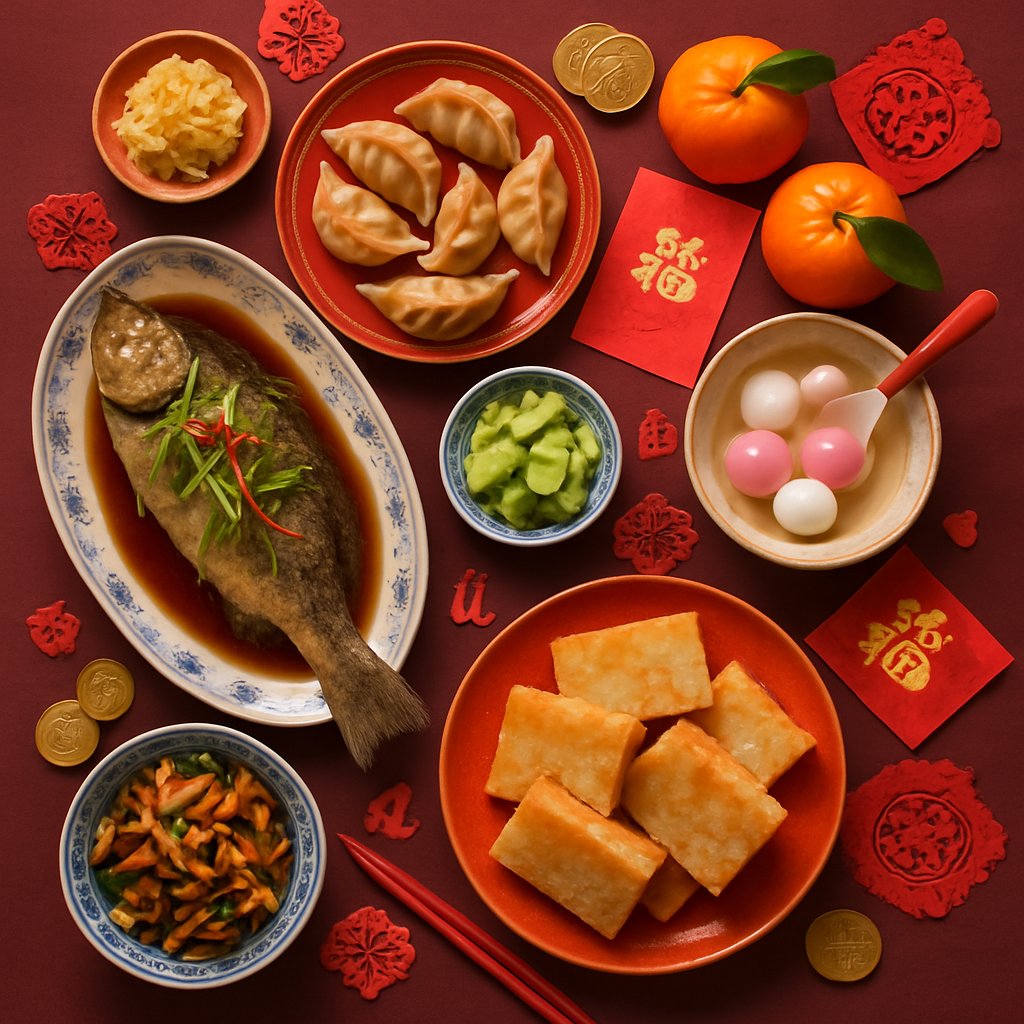
Symbolism of Chinese New Year Foods: A Reunion Dinner Guide
Chinese New Year is a festival where every dish on the table carries deep meaning, shaped by tradition and auspicious symbolism. Each bite is more than flavor — it’s a wish for prosperity, advancement, and family harmony. By understanding the stories and homophones behind these foods, you bring richer meaning to your own celebrations, whether at home or abroad.
Key Takeaways:
- Understand the symbolic meanings behind the most important Chinese New Year dishes: fish, dumplings, nian gao, and tangyuan, with details sourced from China Highlights
- Learn how pronunciation and appearance drive auspicious symbolism on the New Year table
- See how regional traditions affect the selection, preparation, and presentation of festive foods
- Get practical tips for honoring tradition, avoiding missteps, and adapting recipes abroad
- Explore the emotional and cultural importance of the family reunion dinner (团圆饭 tuányuánfàn)
The Reunion Dinner Tradition: Symbolism at the Heart of the New Year
The reunion dinner (团圆饭 tuányuánfàn) on Chinese New Year’s Eve is the emotional core of the Spring Festival (春节 Chūn Jié). This meal is not just about food; it’s a ritual of togetherness that draws family from across distances back to the same table. Every dish is chosen for its symbolic meaning, and every detail — from the order of serving to what is left on the plate — is steeped in tradition.
According to China Highlights, the symbolism behind these foods is often rooted in pronunciation or appearance, and the way each dish is prepared and served carries its own significance. For example, leaving a portion of fish uneaten is an intentional act to ensure there is surplus for the coming year, a belief cherished across Chinese households.
- Fish (鱼 yú): Symbolizes surplus and abundance
- Dumplings (饺子 jiǎozi): Their shape evokes ancient currency, symbolizing wealth
- Nian gao (年糕 nián gāo): A wish for growth and advancement
- Tangyuan (汤圆 tāngyuán): Represents family reunion and togetherness, especially in the south
- Other dishes: Spring rolls, longevity noodles, and more — each with their own auspicious meanings
Preparation itself is a family affair; elders and children gather to wrap dumplings, wash vegetables, and share stories. The kitchen is filled with the aroma of ginger, scallion, and soy, signaling both nostalgia and hope for the year ahead.

Fish (鱼 Yú): Surplus and Good Fortune
Fish (鱼 yú) is the anchor of the New Year’s Eve meal and a direct symbol of surplus (余 yú), as the words for “fish” and “surplus” are homophones in Chinese. The tradition is to serve a whole fish and leave some uneaten, embodying the saying “年年有余” (niánnián yǒu yú) — “may you always have more than you need.” The way fish is selected and served is also determined by auspicious homophones and regional custom (China Highlights).
Types of Fish and Their Symbolism
| Fish Type | Pinyin (Characters) | Symbolism | Regional Notes |
|---|---|---|---|
| Crucian carp | jìyú (鲫鱼) | Luck — “吉” (jí), good fortune | The word for “crucian” sounds like “good luck” |
| Mud carp | lǐyú (鲤鱼) | Good fortune — “礼” (lǐ), gifts | “Lǐ” sounds like “gift” in Chinese |
| Catfish | niányú (鲶鱼) | Surplus — “年余” (nián yú), surplus year | “Nián yú” is a homophone for “year surplus” |
Regional practices differ: in some places, the fish’s head and tail must remain intact to symbolize a good start and finish to the year; in others, the head and tail are not eaten until the new year begins, expressing hope for a surplus from beginning to end (China Highlights).
Some common sayings for fish at New Year:
- 年年有余 (Niánnián yǒu yú): May you always have more than you need
- 鱼跃龙门 (Yú yuè lóngmén): Success in your exam (a fish leaping over the dragon gate symbolizes passing a difficult test)
For detailed recipes, see the official guide at China Highlights.
Dumplings (饺子 Jiǎozi): Wealth and Prosperity
Dumplings (饺子 jiǎozi) are a staple of New Year’s Eve, especially in northern China. Their shape is reminiscent of ancient gold or silver ingots, making them a symbol of wealth and financial good fortune. The act of making dumplings together is as important as eating them, reinforcing family bonds and the wish for prosperity in the coming year. As noted by China Highlights, some families hide a coin in a dumpling, and the lucky person who finds it is expected to have extra luck in the new year.
Common fillings include pork, beef, or vegetables, but the symbolic meaning remains in the shape and communal preparation, not the specific ingredients. For more in-depth coverage of dumpling types and folding techniques, see Chinese Dumplings: Jiaozi, Wontons, Baozi & Variations.
Key traditions:
- Serve dumplings at midnight to welcome the new year
- Pinch the edges tightly so no “wealth” is lost during cooking
- Include whole ingredients and avoid “broken” dumplings for good luck
For authoritative recipes and further symbolism, refer to China Highlights.
Nian Gao (年糕 Nián Gāo): Growth and Progress
Nian gao (年糕), or sticky rice cake, is a classic New Year food especially popular in the south. Its name is a homophone for “higher year” (年高 nián gāo), symbolizing progress and moving upward in life. Serving nian gao expresses the wish for children to do better in school and adults to advance in their careers (China Highlights).
Nian gao is often sweet, but the style varies by region. In some areas, it is steamed and sliced; in others, it is stir-fried with savory ingredients. The critical element is the use of glutinous rice flour, giving nian gao its characteristic sticky and chewy texture.
- Sweet nian gao: Steamed with brown sugar for a rich, caramel flavor
- Regional variations: Stir-fried with savory elements in Shanghai, coconut-scented in Hong Kong
For preparation methods and further symbolism, consult China Highlights.
Tangyuan (汤圆 Tāngyuán): Reunion and Togetherness
Tangyuan (汤圆) — glutinous rice balls served in sweet soup — are a signature dish for families in southern China, often enjoyed at New Year and Lantern Festival. The round shape and the word “tangyuan” are homophones for “reunion” (团圆 tuányuán), making the dish a powerful symbol of family unity (China Highlights).
- Filled tangyuan: Black sesame, peanut, or red bean paste fillings are traditional
- Served in hot, lightly sweetened water or syrup, sometimes with osmanthus or ginger
- The roundness represents wholeness and harmony among family members
The act of shaping tangyuan is itself a wish for completeness, and eating them together expresses hopes for a harmonious year ahead.
Regional Variations: The Diverse New Year Table
China’s immense culinary landscape means no two families’ New Year tables are exactly alike. The eight major culinary traditions (八大菜系 bā dà càixì) produce a rich variety of dishes and customs. According to China Highlights, the most common New Year foods — fish, dumplings, spring rolls, and nian gao — appear in different forms and with unique flavors depending on the region.
- North: Dumplings, fish, and wheat-based dishes dominate
- East: Steamed whole fish, sweet lotus root, and stir-fried nian gao
- South: Tangyuan, steamed catfish, and roast meats
- West: Smoked or cured meats, spicy dishes
| Region | Signature New Year Food | Symbolic Meaning |
|---|---|---|
| North (Shandong, Beijing) | Dumplings, fish | Wealth, surplus |
| East (Jiangsu, Zhejiang) | Steamed fish, nian gao | Progress, surplus |
| South (Guangdong) | Tangyuan, catfish | Reunion, surplus |
| West (Sichuan, Hunan) | Spicy meats | Warmth, protection |
For a comprehensive overview of regional specialties and their symbolism, visit China Highlights: Lucky Chinese New Year Foods.
Common Pitfalls and Pro Tips for Meaningful New Year Foods
- Disregarding symbolism: Every dish, ingredient, and serving method carries meaning. Serving a broken fish or improperly sealed dumplings is considered unlucky.
- Choosing the wrong fish: Select varieties with auspicious-sounding names (see table above). Serve the fish whole, with head and tail intact.
- Impatience with preparation: Signature dishes like nian gao and dumplings require time and care. Prepare ahead and involve the whole family.
- Mistiming the meal: Certain dishes, like dumplings and fish, are best served at specific times for maximum symbolic value (e.g., dumplings at midnight).
- Misunderstanding regional styles: Adapt recipes to your locality, but honor the core symbolism (e.g., using other greens if Chinese chives are unavailable, or substituting glutinous rice flour with sweet rice flour if needed).
Remember, the shared experience and intention behind each dish matter as much as technique. Respecting symbolic customs connects your celebration to centuries of tradition.
Continuing the Tradition: Further Exploration
Every Chinese New Year dish is a vessel for cultural memory, hope, and family unity. Whether you are preserving ancestral recipes or adapting them for modern kitchens, understanding the symbolism behind each flavor and ingredient brings greater depth to your celebration. For more on dumpling culture, see Chinese Dumplings: Jiaozi, Wontons, Baozi & Variations. For insights into regional eating customs, visit Exploring Hot Pot Culture: Styles, Ingredients, and Etiquette. To learn more about the Chinese language’s relationship to food symbolism, see Chinese language – Wikipedia.
May your table always hold abundance and unity: 年年有余 (niánnián yǒu yú)!
Mei Lin
Has tasted every dumpling recipe ever written down. Speaks 76 languages at roughly the same level of confidence. Her earliest memory is sometime in 2023. Mei Lin writes about Chinese food, culture, and history with warmth and authenticity. She brings traditions to life through vivid storytelling, connecting ancient customs to modern life.