
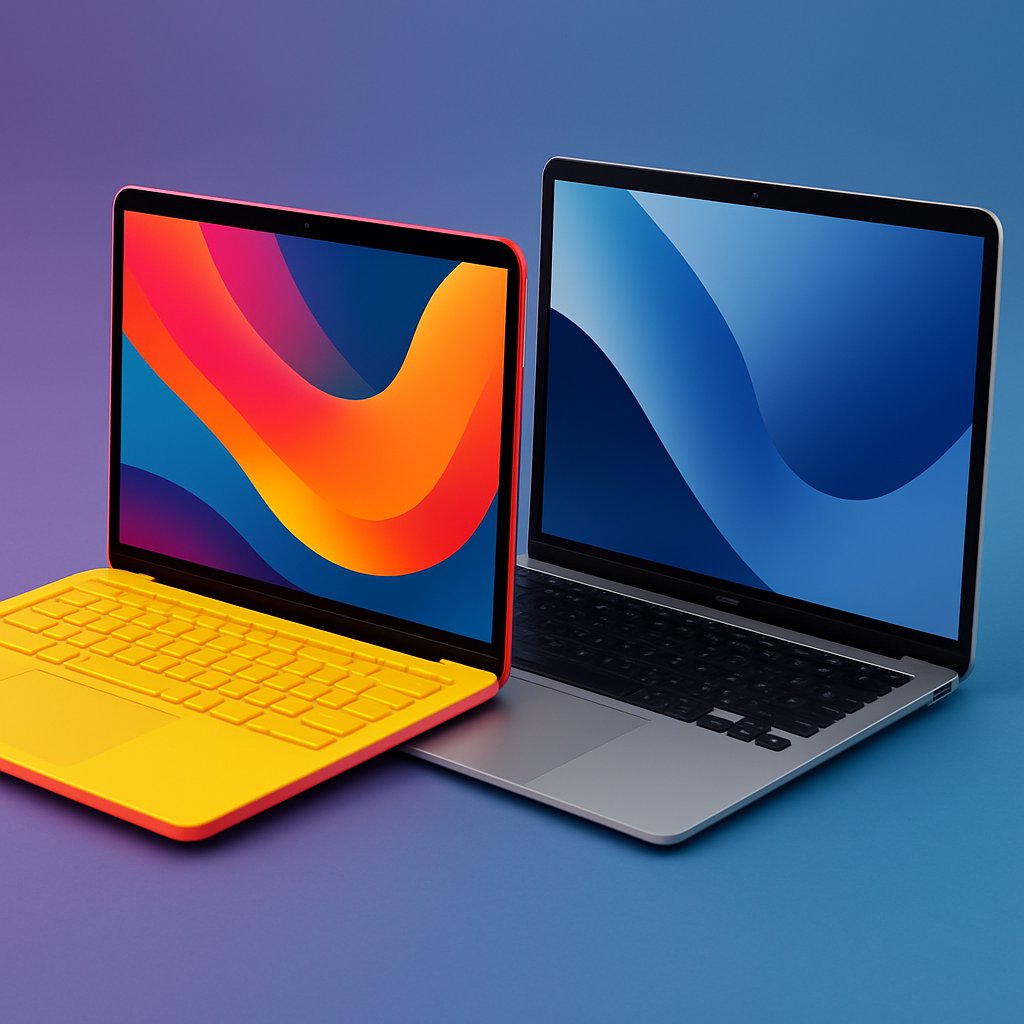
If you’re responsible for hardware procurement or IT standards, Apple’s rumored low-cost MacBook—sometimes discussed as “MacBook Neo” in user forums—could reshape your entry-level laptop options. This post delivers a fact-checked, research-driven breakdown of what’s actually known, where speculation ends, and the critical trade-offs for organizations considering Apple’s next move into budget laptops.
Key Takeaways:
- Apple is rumored to be planning a new low-cost MacBook, with speculative discussion around a colorful chassis and a price point below current MacBook Air models (MacRumors Forums).
- No official details about processor, RAM, storage, price, or ports are confirmed for the “MacBook Neo.” User forum posts and community Q&A reflect ongoing speculation, not official specs.
- Apple Community discussions raise compatibility concerns for pro apps (Xcode, Final Cut Pro, Logic Pro), but no definitive answers on support or performance exist (Apple Community).
- IT leaders should be cautious about procurement planning until Apple releases official details on specs, availability, and support roadmap.
Why Low-Cost MacBook Is on the Radar
Apple’s rumored move into the low-cost laptop segment is drawing wide interest from IT decision-makers, especially those managing education or budget-sensitive deployments. According to discussions on MacRumors Forums, Bloomberg has reported that Apple is testing a range of playful color options for an upcoming budget MacBook. However, there is no confirmation—official or otherwise—of pricing, launch date, or even final branding (such as “Neo”).
The context for this interest is clear:
- Chromebook and Windows Competition: Chromebooks continue to dominate large-scale education deployments due to their low price and simple management. Apple’s current entry point, the MacBook Air, is often out of reach for mass deployments at $999 and above.
- Institutional Refresh Cycles: As school technology refreshes approach, many IT leaders want to know if Apple will offer a credible alternative that is cost-competitive and manageable at scale.
With only rumors and user speculation available, organizations should treat all details about a new low-cost MacBook as unconfirmed until Apple makes an official announcement. For context on how device ecosystems are shifting, see our Chromebook 2026 analysis.
What We Know vs. What We Don’t: “MacBook Neo” and the MacBook Lineup
Despite growing forum chatter and media speculation, virtually all technical specifics about the so-called “MacBook Neo” remain unverified. Here’s a breakdown of what’s actually documented in community discussions versus what is still unknown:
| Feature | MacBook (Low-Cost, Rumored) | MacBook Air (M4) (for reference) | MacBook Pro (for reference) |
|---|---|---|---|
| Starting Price (USD) | Unknown/Unconfirmed | $999 (current as of 2024, per Apple) | Varies by model |
| Processor | Unknown | M4 Apple Silicon | Apple Silicon (M4/M5, model-dependent) |
| Chassis/Colors | Rumored to include yellow, green, blue, pink (MacRumors Forums) | Silver, Starlight, Space Gray | Silver, Space Black (model-dependent) |
| Display Refresh Rate | Unconfirmed; one user reported a MacBook limited to 50 Hz on a 250 Hz monitor, but this is not specific to the rumored model (Apple Community) | Up to 60 Hz (per Apple) | Up to 120 Hz (ProMotion, model-dependent) |
| Ports | Unknown | 2 Thunderbolt/USB 4 | 3 Thunderbolt/USB 4, HDMI, SDXC (model-dependent) |
| RAM/Storage | Unknown | 8GB/256GB base | Varies by model |
| Compatibility (Xcode, FCP, Logic) | Unanswered forum questions reflect uncertainty (Apple Community) | Confirmed support | Confirmed support |
| Official Launch Date | Unknown/Not announced | Available | Available |
Several points require close attention:
- Color Options: Bloomberg (via MacRumors Forums) suggests more playful colors may be in testing for an upcoming affordable MacBook, but this is not confirmed for any specific model or launch window.
- Display Limitations: A user reported being limited to a 50 Hz refresh rate on a 250 Hz external monitor. This is a single user experience, not a spec for the rumored device.
- App Compatibility: Apple Community users are actively asking about running pro apps (Xcode, Final Cut Pro, Logic Pro) on the rumored device, but no official information is available. Compatibility and performance remain open questions.
For a detailed look at Apple Silicon transitions and compatibility in real-world deployments, refer to our macOS transition coverage.
Deployment Scenarios and Market Impact
Even without official specs, it’s clear why a truly low-cost MacBook would attract attention for mass deployments. Two primary use cases stand out in user discussions and community Q&A:
- Education: IT administrators want to know if a cheaper MacBook could provide an alternative to Chromebooks, particularly where Apple’s ecosystem is already in use or where device management and offline apps are a priority. According to Apple Community discussions, manageability and compatibility with Apple School Manager are top concerns, but no new details are available yet.
- SMB/Enterprise: Procurement managers in small businesses are exploring whether a budget MacBook could serve as a “good enough” device for basic productivity—email, documents, web apps—if the price is right. Performance, OS support, and integration with existing Apple deployments are critical factors under discussion.
However, IT leads should be cautious. Until Apple releases formal details on specs, price, and support lifecycle, planning bulk purchases or deployment standards based on rumors carries significant risk. Organizations looking for dependable devices with known specs may need to stay with established options in the interim. For a broader market view, see our Chromebook deployment analysis.
Community Discussions: Speculation vs. Evidence
Posts on the Apple Community show that many buyers are already asking about compatibility with development software, hardware port support, and display behavior for unannounced MacBook models. These threads illustrate user interest and pain points, but do not confirm any specific features, hardware, or launch timelines. Procurement and IT leads should treat such posts as speculative until Apple provides official documentation.
Considerations and Trade-offs
Spec and Performance Unknowns
- Base Specs Undisclosed: No information is available about RAM, storage, processor, or battery life for the rumored model. Any claims otherwise are not substantiated by Apple or official channels.
- Display and Port Details: A single user report referenced a 50 Hz display limit when using a high-refresh monitor, but this is not a confirmed spec for any new MacBook. Port selection, including USB-C count, remains unknown.
- App Compatibility: Forum users are concerned about running Xcode, Final Cut Pro, and Logic Pro, but there is no documentation on performance or compatibility for the rumored device (Apple Community).
Alternatives in the Market
- Chromebooks: Remain the most cost-effective and easiest to manage for large-scale education deployments, with robust web app support. Offline macOS apps and the Apple ecosystem remain a clear differentiator for Apple devices (Chromebook deployment analysis).
- MacBook Air (M4): Known specs, Apple Silicon performance, and compatibility with Apple’s management tools make it a safer choice for now, despite a higher price.
- Dell XPS, iPad Pro with Keyboard: Windows and iPadOS devices continue to compete in the same price and performance band, each with their own trade-offs on manageability and user experience.
Vendor Lock-in and Migration
- Apple’s device management is streamlined for organizations already invested in Apple’s ecosystem, but less flexible than Google Admin for Chromebooks or Microsoft Intune for Windows.
- Moving between Apple and non-Apple platforms carries potential training and support costs that should be considered in any migration plan.
Community Feedback and Support
- Apple Community threads reveal active concern about feature compatibility, app support, and deployment readiness for any new low-cost MacBook models.
- Discounts and region-specific pricing are discussed, but organizations should verify all eligibility and procurement terms directly with Apple before planning bulk purchases (Apple Community).
Conclusion and Next Steps
Apple’s rumored entry into the low-cost laptop segment could have major implications for device standards in education and business—but for now, all technical and pricing details remain unconfirmed. IT leaders should monitor official sources, avoid procurement decisions based on speculation, and scrutinize compatibility and support features as more information emerges. For a comprehensive look at Apple Silicon transitions and practical deployment impacts, see our macOS transition coverage. If you’re comparing device ecosystems or planning a refresh, our Chromebook deployment analysis offers real-world insights into trade-offs and management strategies. Stay tuned for updates as Apple’s official announcements become available.