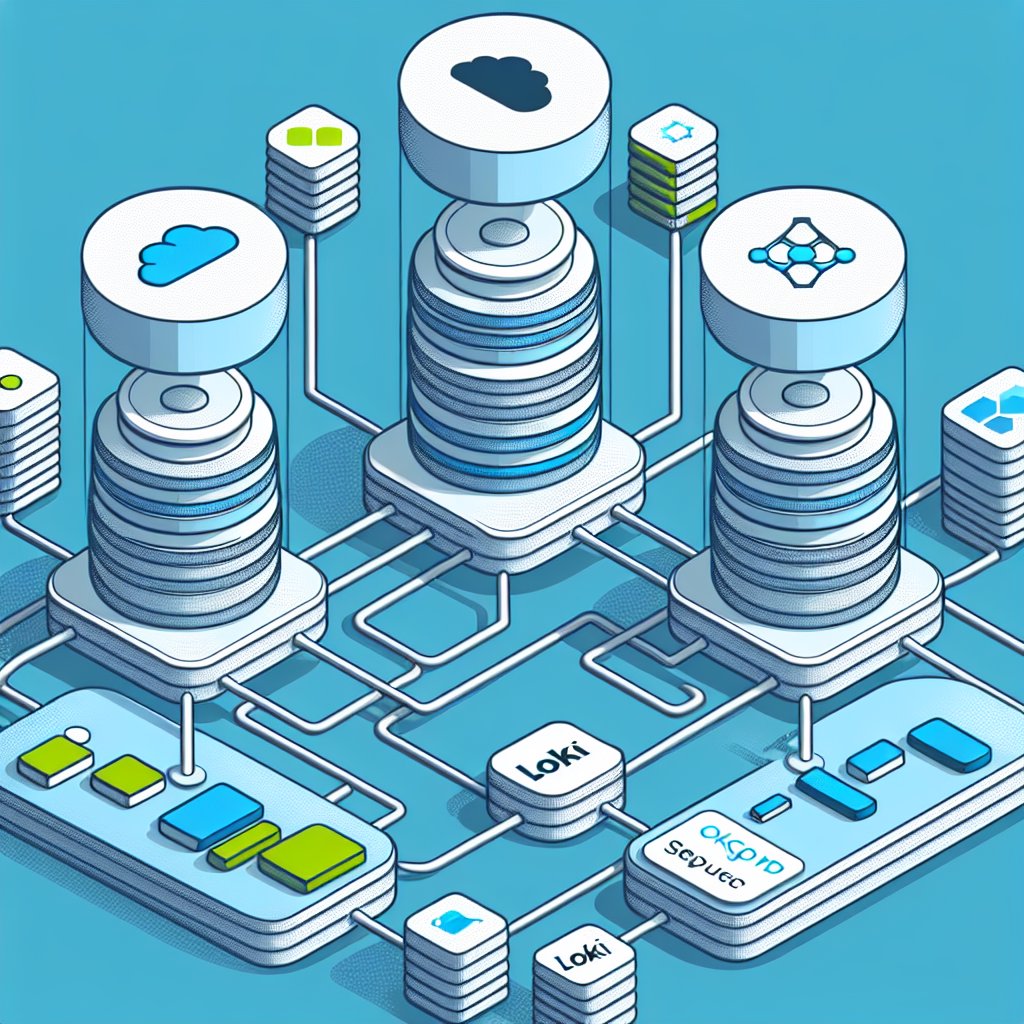
Log aggregation is a critical component of modern infrastructure management, enhancing your ability to monitor, debug, and optimize complex production environments. Among the popular tools available, the ELK Stack, Loki, and Fluentd are widely adopted for their powerful capabilities. However, each tool has its strengths and is suited for different use cases. This post will delve into the features, benefits, and limitations of each, providing you with a comprehensive guide to selecting the right tool for your environment.
Key Takeaways:
Gain a deep understanding of ELK Stack, Loki, and Fluentd components and capabilities.
Identify the pros and cons of each tool in real-world scenarios.
Acquire best practices for deploying and managing these tools in production.
Architecture & Data Flow Models
Before comparing specific tools, it’s important to understand the underlying log architecture models they implement. Most trade-offs around cost, performance, and operational complexity stem directly from these design choices.
Log Collection Models
There are two dominant approaches to log ingestion:
Push-based: Agents forward logs to a central system (ELK, Fluentd). This allows early parsing and enrichment but increases ingestion complexity.
Pull-based: Logs are scraped from targets when needed (Prometheus-style, used by Loki via Promtail). This simplifies ingestion but shifts complexity to querying.
Indexing vs Labeling
How logs are indexed dramatically impacts cost and query flexibility:
Full-text indexing (ELK): Every log field is searchable, enabling powerful queries at the cost of high CPU, memory, and storage usage.
Label-based indexing (Loki): Only metadata labels are indexed; log contents remain unindexed. This reduces cost but requires disciplined label design.
Stream-based routing (Fluentd): Logs flow through configurable pipelines and can be enriched, filtered, and routed before storage.
Where Processing Happens
Another key distinction is when and where logs are processed:
At ingestion: ELK and Fluentd parse and enrich logs before storage.
At query time: Loki defers most work until logs are queried.
Understanding these models makes it clear why ELK excels at search-heavy workloads, Loki shines in Kubernetes-native setups, and Fluentd is often used as a flexible glue layer between systems.
ELK Stack Overview
The ELK Stack comprising Elasticsearch, Logstash, and Kibana is one of the most comprehensive log aggregation solutions available today. Each component plays a vital role in the log processing pipeline:
Elasticsearch: A distributed, RESTful search and analytics engine capable of indexing and querying large volumes of data. It excels in search-heavy environments where querying and analysis are paramount.
Logstash: An open-source data processing pipeline that ingests log data from various sources, transforms it, and forwards it to Elasticsearch. It supports a wide array of input and output plugins.
Kibana: A powerful visualization tool that allows users to explore and analyze data stored in Elasticsearch through customizable dashboards.
In this setup, you have a single-node Elasticsearch instance, a Logstash container processing logs, and a Kibana instance for visualization. While this simplicity is beneficial for testing, in production, you typically deploy Elasticsearch in a cluster configuration to handle scale and redundancy.
Advanced Configuration
In a production environment, consider the following configurations:
- Cluster Configuration: Use at least three Elasticsearch nodes for high availability and fault tolerance. - Security: Implement security features like TLS encryption and user authentication through X-Pack. - Resource Optimization: Optimize JVM settings and use node roles (master, data, ingest) to distribute tasks effectively.
Use Cases
The ELK Stack is particularly suitable for environments that require:
- Extensive search capabilities: Its robust search engine is ideal for querying large datasets. - Comprehensive visualization: Kibana offers powerful visualization options for data analysis. - Complex data processing: Logstash’s versatile plugin ecosystem allows for complex log parsing and enrichment.
Loki Overview
Loki is a relatively new player in the log aggregation space, designed to be a lightweight alternative to the ELK Stack:
Prometheus-inspired: Loki is designed to integrate seamlessly with Prometheus, adopting its label-based querying model.
Resource Efficiency: Unlike Elasticsearch, Loki does not index the content of the logs, resulting in reduced storage and processing requirements.
Seamless Kubernetes Integration: Loki is optimized for Kubernetes environments and works well with Grafana for visualization.
- Scaling: Use a distributed setup with multiple Loki instances to handle high log volumes. - Label Strategy: Carefully design your label strategy as they are central to how logs are queried and filtered. - Retention Policies: Define retention policies to manage log data lifecycle and storage costs.
Use Cases
Loki is best suited for:
- Kubernetes Environments: Its native integration with Kubernetes makes it ideal for cloud-native applications. - Cost-Conscious Scenarios: Minimal indexing requirements lead to lower storage and processing costs. - Simple Querying Needs: If your use case involves basic log filtering rather than full-text search, Loki is a great fit.
Fluentd Overview
Fluentd is a versatile and highly extensible log collector offering a unified logging layer:
Unified Logging Layer: Fluentd collects logs from various sources, processes them, and routes them to multiple destinations.
Extensive Plugin Ecosystem: With over 500 plugins, Fluentd can integrate with a vast number of data sources and outputs.
Community-Driven: Fluentd is actively maintained by a large community, ensuring it stays current with industry trends.
Sample Fluentd configuration for forwarding logs to Elasticsearch:
@type tail
path /var/log/app.log
pos_file /var/log/td-agent/app.pos
tag app.log
@type json
@type elasticsearch
host elasticsearch
port 9200
logstash_format true
Advanced Configuration
Consider the following for production deployments:
- Buffering: Configure buffering to manage log spikes and ensure delivery. - Security: Implement secure connections to Elasticsearch and other outputs using TLS. - Error Handling: Define retry strategies for transient errors to prevent data loss.
Use Cases
Fluentd shines in scenarios requiring:
- Custom Workflows: Its flexibility allows for complex, tailored log processing pipelines. - Integration with Diverse Systems: Fluentd can route logs to various destinations, including cloud storage, databases, and more. - Data Enrichment: Use Fluentd’s filters to enrich log data before forwarding to destinations.
Comparison
The table below outlines the key differences between ELK Stack, Loki, and Fluentd:
Feature
ELK Stack
Loki
Fluentd
Resource Usage
High
Low
Moderate
Ease of Setup
Complex
Simple
Moderate
Data Processing
Advanced
Minimal
Flexible
Integration
High
Medium
High
Best Use Case
Enterprise, Search-Heavy
Kubernetes, Cost-Effective
Custom Workflows
How to Choose the Right Tool
Choosing between ELK Stack, Loki, and Fluentd is less about features and more about operational priorities. The following decision guide maps common requirements to the most suitable solution.
Choose ELK Stack if you need:
Full-text search across large historical datasets
Advanced analytics and compliance reporting
Rich dashboards for non-technical stakeholders
Centralized logging across heterogeneous systems
Choose Loki if you need:
Kubernetes-native logging with minimal overhead
Low storage and infrastructure costs
Simple log filtering tied to metrics and traces
Tight Grafana integration for observability
Choose Fluentd if you need:
Complex log routing and fan-out to multiple destinations
Heavy log transformation and enrichment
Integration with diverse backends (ES, S3, BigQuery, Kafka)
A vendor-neutral logging pipeline
Common Hybrid Patterns
In real-world production systems, these tools are often combined:
Fluentd → Elasticsearch: Rich parsing with enterprise search capabilities
Fluentd → Loki: Centralized ingestion with cost-efficient storage
Loki + ELK: Loki for high-volume app logs, ELK for audit and security logs
As a rule of thumb: optimize first for operational simplicity, then for cost, and only then for query power. Over-engineering logging stacks is one of the most common observability mistakes.
Common Pitfalls
Understanding common pitfalls can save you a lot of headaches:
- ELK Stack: Resource consumption can be high, especially if not properly optimized. Monitor JVM settings and allocate sufficient system resources. - Loki: Without full-text indexing, complex queries can be challenging. Focus on label-based filtering and ensure your labels are well-structured. - Fluentd: Configuration complexity can lead to errors. Thoroughly test configurations and manage plugin dependencies carefully.
Conclusion
Selecting between the ELK Stack, Loki, and Fluentd depends on your specific requirements and environment. The ELK Stack is ideal for environments demanding extensive search and visualization capabilities, Loki works well with Kubernetes and cost-effective setups, while Fluentd offers unmatched flexibility for custom workflows. Evaluate your needs carefully, considering factors like resource availability, integration requirements, and data processing complexity. For further reading, consult the official Elastic Stack documentation and Loki documentation.