
Key Takeaways:
- Malus offers “license liberation” by generating legally distinct code from open source APIs/specs—removing attribution and copyleft obligations.
- Process is fully automated: upload your manifest, Malus’s AI robots generate equivalent code, and you get a new, proprietary-licensed package.
- Pricing is transparent and pay-per-KB. No subscriptions or hidden fees. Supported for npm, PyPI, Cargo, Maven, Go, NuGet, RubyGems, Composer.
- Real trade-offs exist: legal risk is not zero, technical quality can vary, and not all jurisdictions may honor “clean room” outputs.
- Practitioners should weigh Malus against traditional compliance, in-house clean rooms, or simply building with permissively licensed components.
What Is Malus – Clean Room as a Service?
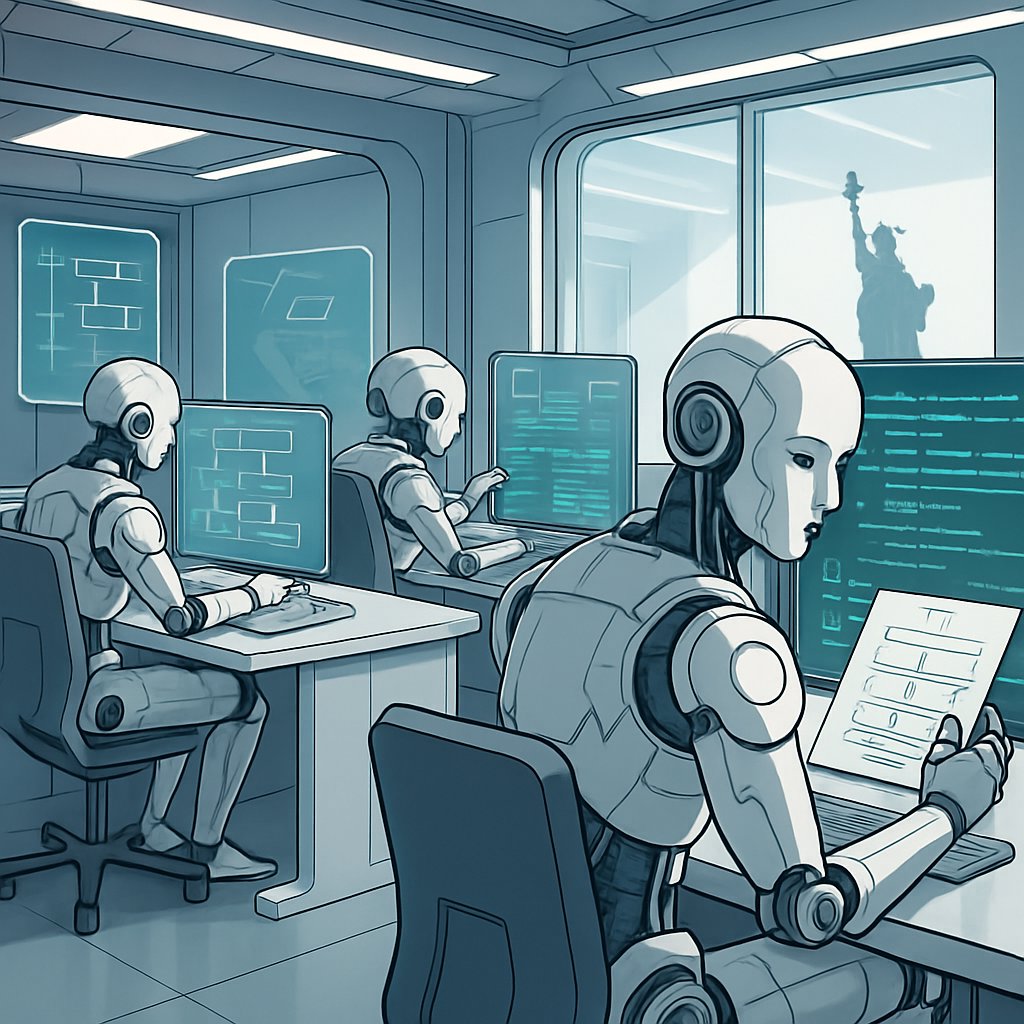
Malus – Clean Room as a Service (official site) positions itself as an escape hatch for companies that want to use popular open source software without the legal and operational baggage. According to Malus, their proprietary AI robots “have never seen original source code.” Instead, they analyze documentation, API specifications, and public interfaces to generate functionally equivalent software from scratch—delivered under a proprietary, attribution-free license.Core claims:- 100% robot-written code, with “zero exposure” to original source
- Full legal indemnification (with the caveat: through an offshore subsidiary in a jurisdiction that doesn’t recognize software copyright)
- Support for npm, PyPI, Cargo, Maven, Go, NuGet, RubyGems, Composer ecosystems
- No base fees, no subscriptions—just pay per KB of output
How Malus Actually Works: A Step-by-Step Walkthrough
The Malus workflow is designed for legal and engineering teams under pressure from compliance audits or M&A due diligence. Here’s the process, as described in the primary documentation:- Upload Your Dependency Manifest
- Supported formats:
package.json,requirements.txt,Cargo.toml, etc. - Example manifest:
{
  "name": "your-proprietary-app",
  "dependencies": {
    "problematic-agpl-lib": "^2.0.0",
    "needs-attribution-pkg": "^1.5.0"
  }
}
- Supported formats:
- Isolated Analysis
- Malus robots analyze only public documentation (README, API docs, type definitions).
- The robots never see a single line of the original source code.
- Independent Recreation
- A separate team of robots, not involved in analysis, implements the software from specification alone.
- This aims to replicate the “clean room” legal precedent (e.g., the 1980s Phoenix Technologies BIOS clone process).
- License Liberation
- Your new code is delivered under the MalusCorp-0 License—a proprietary-friendly license with no attribution, copyleft, or disclosure requirements.
- Pricing and Delivery
- Transparent, pay-per-KB pricing. Example: “Every package is priced by its unpacked size on npm. We look up each dependency in your package.json, measure size in kilobytes, and charge … per KB. That’s it.”
- After payment (Stripe, crypto, stock options), your clean room jobs begin automatically.
- AI-powered clean room recreation (MalusCorp-0 License)
- Full CSP specification pack (10 documents)
- Packages up to 10 MB unpacked size, up to 50 packages per order
Practical Examples and Realistic Use Cases
The promise of Malus is direct: remove legal blockers to product launches, M&A, or compliance audits. Use cases include:- M&A Due Diligence: “We had 847 AGPL dependencies blocking our acquisition. MalusCorp liberated them all in 3 weeks. The due diligence team found zero license issues. We closed at $2.3B.”
- Reducing Compliance Costs: “Our lawyers estimated $4M in compliance costs. MalusCorp’s Total Liberation package was $50K. The board was thrilled. The open source maintainers were not, but who cares?”
- Automated Compliance for Large Trees: “The robots recreated our entire npm dependency tree—2,341 packages—in perfect isolation. Our compliance dashboard went from red to green overnight.”
| Workflow | Traditional Open Source | Malus Clean Room |
|---|---|---|
| Attribution Required? | Yes (MIT, Apache, BSD, etc.) | No (MalusCorp-0 License) |
| Copyleft Risk? | Yes (GPL, AGPL, LGPL, MPL) | None (No source disclosure) |
| Compliance Burden | High (tracking, audits, reporting) | Low (Malus claim: “No obligations”) |
| Time to Remediation | Weeks to months | Minutes to days |
| Legal Risk | Clear, but manageable | Unproven, especially in major jurisdictions |
- Malus claims to automate the “specification → fresh implementation” firewall using robots, not humans.
- Audit logs are “available upon request to courts in select jurisdictions.”
- Legal indemnification is offered—through an offshore subsidiary, with the guarantee: “If any of our liberated code is found to infringe on the original license, we’ll provide a full refund and relocate our corporate headquarters to international waters.”
Considerations, Trade-offs, and Alternatives
Every radical solution comes with its own set of challenges. Here’s what practitioners need to weigh before considering Malus:Legal and Jurisdictional Uncertainty
- Malus’s “clean room” process is modeled on established legal precedent (e.g., Phoenix BIOS), but automated, AI-driven clean rooms have not been tested in most courts.
- According to critics, “customers probably live in regions that respect copyright, so they’ll still be screwed. This is ‘trust me, bro’ legal defense” (isurg.org).
- Malus’s indemnification is backed by an offshore entity and promises of headquarter relocation, which may or may not hold up in US, EU, or other major jurisdictions.
Technical Quality and Maintenance
- Malus guarantees “functional equivalence, not perfection.”
- There’s no assurance that the robot-generated code is bug-free or production-grade. “At least now they’re YOUR bugs, under YOUR license.”
- Edge cases, undocumented features, or subtle behaviors in the original may be missed or differently implemented.
Ethical and Community Impact
- Malus’s pitch is unapologetically commercial: “Thank you for your service. Now, it is time for you to stop.” (Malus blog)
- It sidesteps the “giving back” ethos of open source, which some companies and developers may find ethically problematic or strategically risky for long-term ecosystem health.
Alternatives
- Traditional Clean Room Engineering: Manual, with legal oversight, still the gold standard for high-risk remediations.
- Open Source Compliance Tools: Snyk, FOSSA, Black Duck—track and manage license risk rather than eliminate it.
- Permissive Licensing Strategy: Proactively select MIT/BSD/Apache-licensed dependencies, reducing (but not eliminating) compliance burden.
| Approach | Pros | Cons | Best Used For |
|---|---|---|---|
| Malus Clean Room as a Service | No attribution, fast, automated | Legal risk, unproven, technical quality varies | Quick remediation, M&A blockers |
| Traditional Clean Room | Legally defensible, proven | Slow, expensive, labor-intensive | High-value proprietary code, regulated industries |
| Compliance Tools (Snyk, Black Duck) | Visibility, reporting, audit trails | Doesn’t eliminate obligations | Ongoing compliance, large orgs |
Common Pitfalls and Pro Tips
- Don’t assume zero risk. Even if Malus claims legal indemnification, test the output against your jurisdiction’s copyright and patent laws. Automated clean rooms are not yet case-tested at scale.
- Audit the output. Carefully review robot-generated code for correctness, performance, and security—especially for critical systems.
- Prepare for maintenance overhead. “Functional equivalence” does not guarantee stability or future compatibility. Expect to maintain or rewrite portions of the liberated codebase.
- Communicate internally. Legal, engineering, and compliance teams must be aligned on the risk posture and fallback plans if Malus outputs are challenged.
- Watch the price model. Malus charges by the KB, with a minimum per order. For large dependency trees, costs can add up quickly—always get a quote first (Malus pricing).
Conclusion and Next Steps
Malus – Clean Room as a Service is a provocative, high-risk, high-reward approach for organizations desperate to escape open source license entanglements. Its claims are bold, but its legal durability remains untested in major jurisdictions. If you’re considering Malus, treat it as an experimental tool for targeted remediation—not a blanket solution for all compliance needs. Next steps:- Get a legal opinion specific to your region before using Malus output in production.
- Audit all output for technical and security quality.
- Explore hybrid strategies: combine permissive open source, traditional compliance, and clean room approaches as needed.
- Watch for legal developments and public case law on AI-generated clean rooms.
- Malus – Clean Room as a Service
- Malus – Thank You for Your Service: On the Obsolescence of Open Source
- Critical debate on isurg.org
Sources and References
This article was researched using a combination of primary and supplementary sources:
Supplementary References
These sources provide additional context, definitions, and background information to help clarify concepts mentioned in the primary source.
- MALUS - Clean Room as a Service | Liberation from Open Source Attribution
- Clean Room as a Service: Finally, liberation from open source license obligations | isurg
- MALUS - Thank You for Your Service: On the Obsolescence of Open Source
- Future Trends in Cleanroom Design and Operation – Modulus Cleanrooms
- Clean Room Pass Through Market Anticipated to Touch USD
- Clean Room Technologies Market Size is Expected to reach
- Cleanroom Technology Market Trends & Forecast, 2031
- Download Malus VPN | Malus game accelerator, free VPN for overseas Chinese to return to China, one-click shuttle back to China to speed up games and videos
- Clean Room as a Service: Finally, liberation from open source license obligations | isurg
- MALUS - Clean Room as a Service | Liberation from Open Source Attribution
Critical Analysis
Sources providing balanced perspectives, limitations, and alternative viewpoints.