Categories
AI & Business Technology Cloud Management and Projects

Predictive Analytics for Supply Chain Optimization

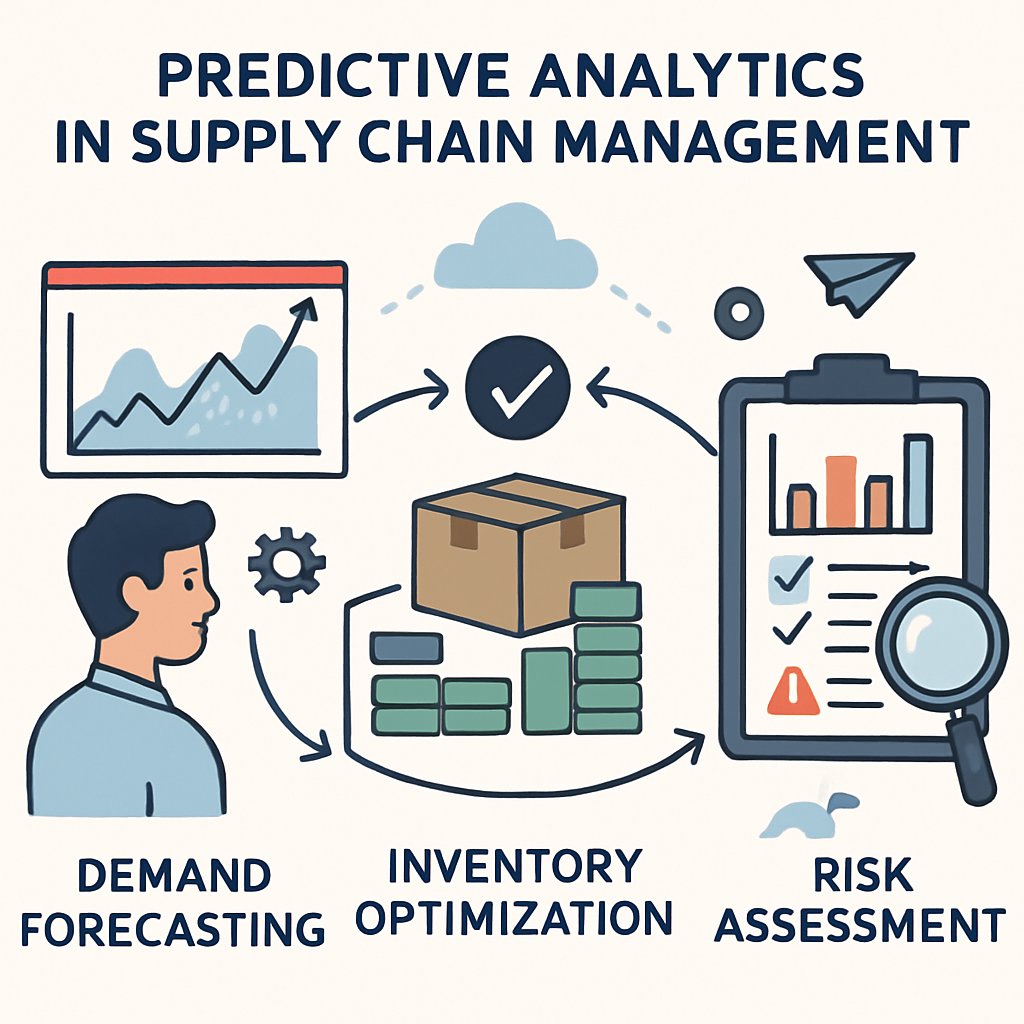
Traditional supply chain planning struggles to keep pace with volatility, leaving businesses exposed to lost sales, excess inventory, and costly last-minute firefighting. Predictive analytics offers a practical way to get ahead of demand swings, supplier risks, and logistics bottlenecks—using machine learning and real-time data, not just gut instinct or Excel reports from last month. This post breaks down actionable approaches to demand forecasting, inventory optimization, supplier risk assessment, and logistics planning, with real benchmarks and what it takes to get started.

Key Takeaways:

  • How machine learning models drive more accurate demand forecasting compared to traditional approaches
  • Ways predictive analytics cuts inventory costs, reduces stockouts, and improves fulfillment
  • Approaches for supplier risk monitoring and early warning using real-time analytics
  • How predictive models optimize logistics and routing to lower costs and improve service
  • Implementation requirements: data, tooling, team, and real project timelines
  • Direct comparison of accuracy and ROI versus manual and rules-based supply chain planning

Machine Learning Approaches to Demand Forecasting

Modern demand forecasting leverages machine learning (ML) and statistical modeling to predict future demand with greater accuracy than spreadsheet-based or rules-driven methods. Rather than relying solely on historical sales, these models incorporate:

  • Point-of-sale and order data (time series)
  • Promotional calendars and price changes
  • External factors: weather, local events, economic indicators
  • Inventory positions and lead times
  • Real-time signals from IoT devices and web traffic

Predictive models applied in supply chain forecasting include:

  • Time series models: ARIMA, SARIMA, Prophet for baseline trends and seasonality
  • Ensemble methods: Random Forests, Gradient Boosted Trees for non-linear relationships
  • Deep learning: LSTM and Transformer architectures for capturing complex patterns and long-term dependencies
  • Hybrid models: ML combined with business rules for explainability and override controls

Example: A retail chain uses an LSTM model to forecast weekly demand for each SKU at the store level, factoring in weather and promotions. The model is retrained monthly using new sales data and event calendars.

For implementation details and code examples, refer to the official documentation linked in this article.

This approach enables scenario planning (“What if a heatwave hits in July?”), improved safety stock calculation, and earlier production or procurement triggers.

According to Softweb Solutions, predictive analytics lets planners establish reorder points in advance, align stock across warehouses, and react to market changes before they impact service.

Inventory Optimization with Predictive Analytics

Accurate demand prediction is the foundation for right-sizing inventory—minimizing excess stock without risking stockouts. Predictive analytics combines demand, variability, and replenishment times to calculate:

  • Safety stock levels by SKU, location, and channel
  • Reorder points that adapt to demand volatility
  • Optimal batch sizes for procurement and production

Traditional inventory policies (e.g., fixed minimum/maximum levels) often ignore real-time shifts and multi-channel complexity. In contrast, ML-driven approaches use updated forecasts and risk estimates to dynamically adjust inventory targets. According to Datup, this reduces manual firefighting and aligns stock with true demand signals, saving both working capital and lost sales.

Case Study: Acropolium reports that implementing predictive analytics led to a 15% reduction in inventory costs for one client through improved demand forecasting (Acropolium).

Inventory Optimization Algorithm Example

def calculate_safety_stock(demand_std, lead_time_avg, service_level_z):
    # demand_std: standard deviation of demand during lead time
    # lead_time_avg: average replenishment lead time
    # service_level_z: Z-score for target service level (e.g., 1.65 for 95%)
    return demand_std * (lead_time_avg ** 0.5) * service_level_z

# Example: SKU with demand std dev 80 units/week, 2 week lead time, 95% service level
safety_stock = calculate_safety_stock(80, 2, 1.65)
print(f"Recommended safety stock: {round(safety_stock)} units")

Actionable outputs include daily reorder triggers and alerts for rising stockout risk, based on ML-predicted demand spikes or supply delays.

For additional strategies on aligning AI initiatives with business outcomes, see AI Implementation Budgeting: Key Strategies for 2026.

Supplier Risk Assessment and Early Warning Systems

Supplier disruptions—late deliveries, quality issues, or financial distress—can cripple your supply chain. Predictive analytics uses historical performance and real-time external data to flag risks before they hit operations.

  • Aggregates supplier delivery records, quality scores, and payment timelines
  • Monitors external data: news, financial filings, geopolitical indicators
  • Models probability of late/failed shipments or adverse events

According to Softweb Solutions, less than half (43%) of organizations have full visibility into tier-one supplier performance. ML models can bridge this gap by providing automatic alerts and risk ratings so procurement teams can:

  • Diversify sourcing or activate backup suppliers proactively
  • Negotiate better terms based on data-driven reliability scores
  • Allocate critical inventory to at-risk supply lines

Example ML approach: Random Forest classifier trained to predict late deliveries using features like historical on-time rate, region, shipment type, and external risk signals.

Code Snippet: Supplier Risk Prediction (Random Forest)

For implementation details and code examples, refer to the official documentation linked in this article.

This supports dynamic supplier scorecards and early escalation when risk exceeds acceptable thresholds.

Logistics Planning and Route Optimization

Transportation and delivery costs are a major lever for supply chain savings. Predictive analytics can optimize logistics by:

  • Forecasting demand spikes for route and fleet planning
  • Predicting delivery times using real-time traffic and weather feeds
  • Optimizing shipment batching and distribution center allocation
  • Minimizing empty miles and reducing carbon footprint

ML models trained on historical delivery data, GPS pings, and external conditions generate more accurate ETAs and optimal routing plans. According to Acropolium, these improvements streamline transportation routes, cut fuel costs, and boost on-time delivery rates.

Example: A logistics provider uses a Gradient Boosted Tree model to predict delivery delays and dynamically reroute shipments based on real-time inputs.

Route Optimization: Implementation Considerations

  • Integrate telematics/IoT data from vehicles for real-time tracking
  • Leverage APIs for live traffic and weather updates
  • Automate dispatching based on predicted bottlenecks

For teams looking to automate code review and quality for ML-powered logistics tools, see AI Code Review and Development: Tools, Integration, and Quality.

Accuracy Benchmarks: Predictive Analytics vs Traditional Methods

Predictive analytics consistently outperforms manual and rules-based planning in both forecast accuracy and operational KPIs. Consider these reported benchmarks:

MethodDemand Forecast Error (MAPE)Inventory Cost ReductionStockout Rate
Manual/Excel20–30%Baseline5–10%
Traditional Statistical (ARIMA, Exponential Smoothing)12–18%5–8%3–5%
ML-Driven Predictive Analytics6–12%10–15%1–3%

Source: Acropolium, Datup

Companies using ML-based demand forecasting have achieved up to 15% inventory cost reduction and significant improvements in stock availability. The business impact: less capital tied up in excess stock and fewer lost sales from stockouts.

For a detailed discussion of ROI calculations and budgeting for AI supply chain initiatives, see AI Implementation Budgeting: Key Strategies for 2026.

Implementation Requirements and Build-vs-Buy Analysis

Predictive analytics is not a plug-and-play solution—you need the right data, tools, and team. Here’s what’s required to get results:

Technical Requirements

  • Data infrastructure: Centralized data warehouse or lake; connectors for ERP, WMS, TMS, point-of-sale, and external APIs
  • Data quality: Clean, complete historical and real-time data; handling missing/erroneous entries
  • ML platform: Python/R environment, ML libraries (scikit-learn, TensorFlow, Prophet), workflow orchestration
  • Visualization and alerting: BI dashboards (Tableau, Power BI), automated notifications

Team and Skills

  • Data engineers for integration and ETL
  • Data scientists/ML engineers for model development
  • DevOps for deployment and monitoring
  • Supply chain analysts for business validation

Timeline and Cost Breakdown

ApproachExample VendorsSetup Time (Mid-sized Org)Estimated Initial CostOngoing Cost (Annual)
Build (in-house)n/a (custom stack)6-12 months$250K–$700K$125K–$400K
Buy (SaaS)Datup, Blue Yonder, Kinaxis1-3 months$50K–$200K$40K–$150K
Cloud AI APIsGoogle Vertex AI, AWS Forecast1-2 monthsPay-as-you-goVaries: $0.60–$2 per 1K predictions

Notes:

  • True timelines depend on data readiness and internal approvals.
  • Buy/SaaS is faster but less customizable; build offers deep control but higher risk and cost.
  • Cloud AI APIs (e.g., AWS Forecast) can accelerate pilots but may face API rate limits and data residency issues.

For an in-depth look at aligning tool choice with development workflow and quality, see AI Code Review and Development: Tools, Integration, and Quality.

Common Pitfalls and Pro Tips

  • Dirty or incomplete data: Most failed projects trace back to bad data. Invest early in cleaning, consolidating, and monitoring inputs.
  • Overfitting and lack of validation: ML models that perform well on last year’s data but fail in production due to market shifts. Use backtesting and holdout sets.
  • Ignoring external variables: Models that skip weather, promos, or supplier events often miss real drivers of demand spikes.
  • One-size-fits-all models: Failing to segment by region, channel, or SKU class can obscure important patterns.
  • “Pilot purgatory”: Long proofs-of-concept that never scale due to unclear business ownership or lack of integration with procurement, logistics, and finance systems.
  • Maintenance overhead: Models require retraining, monitoring for drift, and periodic recalibration as market conditions change.

Pro Tips:

  • Start with a high-impact use case (e.g., a single product category or region) and expand iteratively.
  • Automate model monitoring and alerting for prediction errors and data drift.
  • Involve business stakeholders early—model accuracy is only valuable if it drives measurable supply chain outcomes.
  • Budget for ongoing support, not just initial setup.

Conclusion & Next Steps

Predictive analytics transforms supply chain management from reactive to proactive—delivering measurable gains in forecast accuracy, inventory turns, and supplier reliability. With the right data, tooling, and team alignment, you can move beyond spreadsheets and intuition to data-driven decision support that scales. To maximize value, focus on clean data, iterative deployment, and business integration—not just model accuracy on paper.

For a deeper dive into budgeting and tool selection for AI in the enterprise, explore AI Implementation Budgeting: Key Strategies for 2026 and practical workflow tips in AI Code Review and Development: Tools, Integration, and Quality.

For further reading on the technical underpinnings of predictive analytics in SCM, review the Journal of Big Data survey on predictive BDA in supply chain.