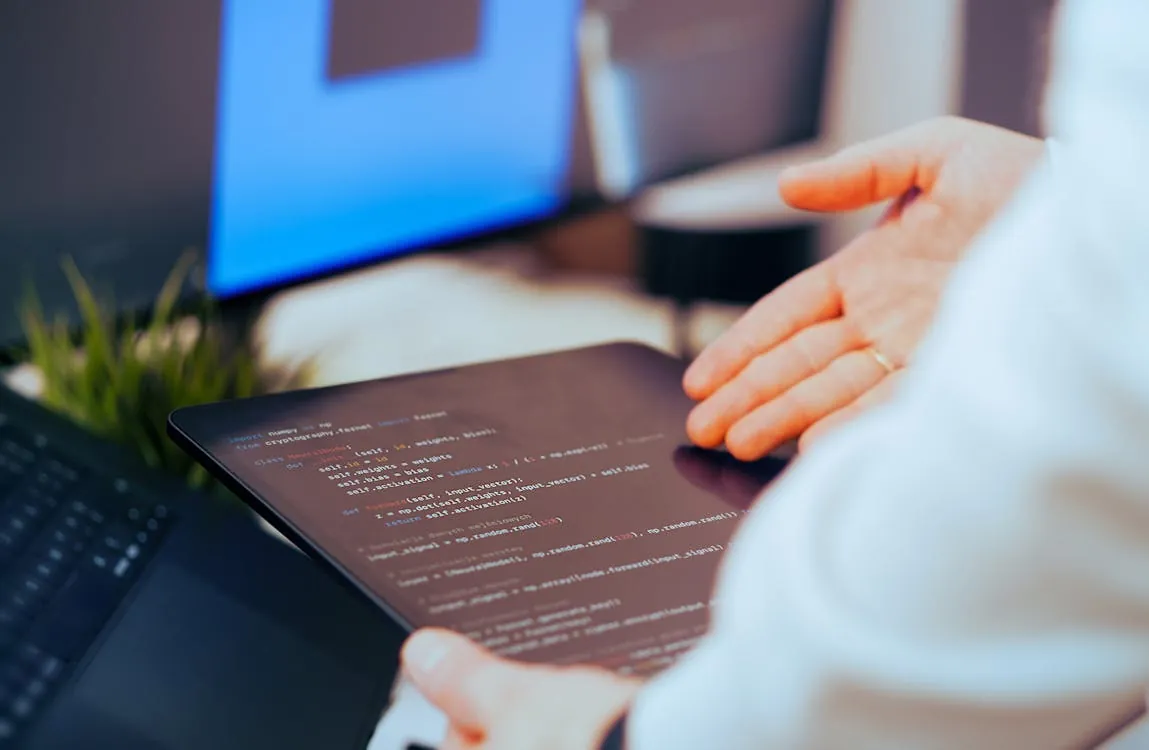
Deep Dive into Advanced Concepts Welcome back, tech enthusiasts! In our last post on Object-Oriented Programming in Python, we explored the basics and started modeling real-world entities. Now, it’s time to take this knowledge to the next level and dive into some advanced concepts that will elevate your Python programming skills even further. Buckle up, […]
Tag: Software Development
According to IBM Research: “Software development refers to a set of computer science activities dedicated to the process of creating, designing, deploying and supporting software.”
Software itself is the set of instructions or programs that tell a computer what to do. It is independent of hardware and makes computers programmable. There are three basic types:
System software to provide core functions such as operating systems, disk management, utilities, hardware management and other operational necessities.
Programming software to give programmers tools such as text editors, compilers, linkers, debuggers and other tools to create code.
Application software (applications or apps) to help users perform tasks. Office productivity suites, data management software, media players and security programs are examples. Applications also refers to web and mobile applications like those used to shop on Amazon.com, socialize with Facebook or post pictures to Instagram.1
A possible fourth type is embedded software. Embedded systems software is used to control machines and devices not typically considered computers — telecommunications networks, cars, industrial robots and more. These devices, and their software, can be connected as part of the Internet of Things (IoT).2
Taken from: https://www.ibm.com/topics/software-development on July, 2021
What Have We Learned So Far? In our previous discussion on graph algorithms in Go, we delved into the core concepts of graph theory, and explored the differences between Breadth-First Search (BFS) and Depth-First Search (DFS). If you haven’t read that post yet, you can find it here. Today, we’ll build on that foundation, diving […]
Diving Deeper: Optimizing Fibonacci with Dynamic Programming Welcome back, fellow coders! If you’ve been following our previous post, you’ve got a solid understanding of how dynamic programming can dramatically optimize our computation of the Fibonacci sequence. Today, we’re going to build on that foundation, exploring more advanced techniques and optimizations. Revisiting Dynamic Programming: Memoization and […]
Compilation in GoLang: Translating Code to Machine Language Hey there, tech enthusiasts! If you’re fascinated by programming languages and how your code gets transformed into silky-smooth operations within your machine, then you’re in the right place. Today, we’re delving into the world of GoLang compilation — a captivating journey from human-readable code to machine-understandable instructions. […]
Efficiency in Go: Divide and Conquer with Master Theorem Hey there, tech enthusiasts! Today, we’re going to delve into a fascinating topic that will up your efficiency game in Go: the Master Theorem. If you’re just getting started with Go or you’re already a seasoned Gopher, understanding how to optimize algorithms using divide and conquer […]
Error Handling in Python: Managing Runtime Errors Python is a fantastic programming language that combines simplicity and power. However, even the most robust Python code can encounter runtime errors. Good error handling practices are crucial to creating applications that are both user-friendly and maintainable. In this post, we’ll explore various techniques to manage runtime errors […]
The Role of DevOps in Modern Web Development Workflows Web development is continuously evolving, and the importance of seamless integration between development and operations is more pronounced than ever. Enter DevOps! This marvelous blend of “Development” and “Operations” has revolutionized how we build, deploy, and maintain web applications. So let’s dive into the enthralling role […]
Exploring Advanced Data Types in Python Welcome back, Python enthusiasts! In our previous post, we laid the groundwork by diving deep into some basic data types in Python. Today, we’re going to expand on that knowledge and explore more complex data types. Buckle up for an adventurous journey into the world of tuples, lists, dictionaries, […]