Categories
AI & Emerging Technology Software Development

Verified Spec-Driven Development for AI-Assisted Engineering

Struggling to make AI-generated code trustworthy and maintainable is a pain point for every engineering leader moving beyond "prompt-and-ship" workflows. Verified Spec-Driven Development (VSDD) offers a unified, AI-orchestrated methodology that enforces specification, test discipline, and adversarial verification—raising the bar for production-quality code. This article breaks down the VSDD pipeline, clarifies its roles and phases based on official documentation, and analyzes its trade-offs versus TDD, SDD, and vibe coding.

Key Takeaways:

  • Understand how VSDD fuses Spec-Driven, Test-Driven, and Verification-Driven Development into one sequential, AI-orchestrated pipeline (source).
  • See the precise role breakdown and gate structure that enforce rigor at every step.
  • Learn the practical differences between VSDD, TDD, SDD, and "vibe coding", with a comparison table based on sourced documentation.
  • Avoid the most common implementation mistakes, including ambiguous specs and skipped verification.

Why Verified Spec-Driven Development Matters Now

The rise of large language models has led to a flood of AI-generated code, but most organizations have discovered that the "vibe coding" approach—shipping the first runnable output without strong process—creates technical debt and brittle systems (The New Stack). Speed alone is not enough; enterprises now demand processes that produce code that is maintainable, auditable, and provably correct.

Spec-Driven Development (SDD) emerged as a way to use machine-readable contracts as the foundation for software, leveraging AI to generate code from specs (Thoughtworks). Yet, as industry experience has shown, SDD alone cannot guarantee code quality if specs are flawed or if there is no systematic verification.

Verified Spec-Driven Development (VSDD) directly addresses these gaps by fusing three methodologies into a single, sequenced pipeline—where:

  • Specs are the unambiguous contract and the only source of truth.
  • Tests are written before any code, enforcing the contract at the TDD level.
  • Verification is adversarial and hyper-critical, surfacing any missed edge cases or logical loopholes before code is accepted.
  • AI models orchestrate every phase, but a human architect is always the strategic decision-maker and final acceptance authority (GitHub VSDD).

This is why VSDD is gaining adoption among teams looking to move beyond prototypes and into robust, production-grade AI-assisted development.

VSDD Fundamentals: Pipeline, Roles, and Tooling

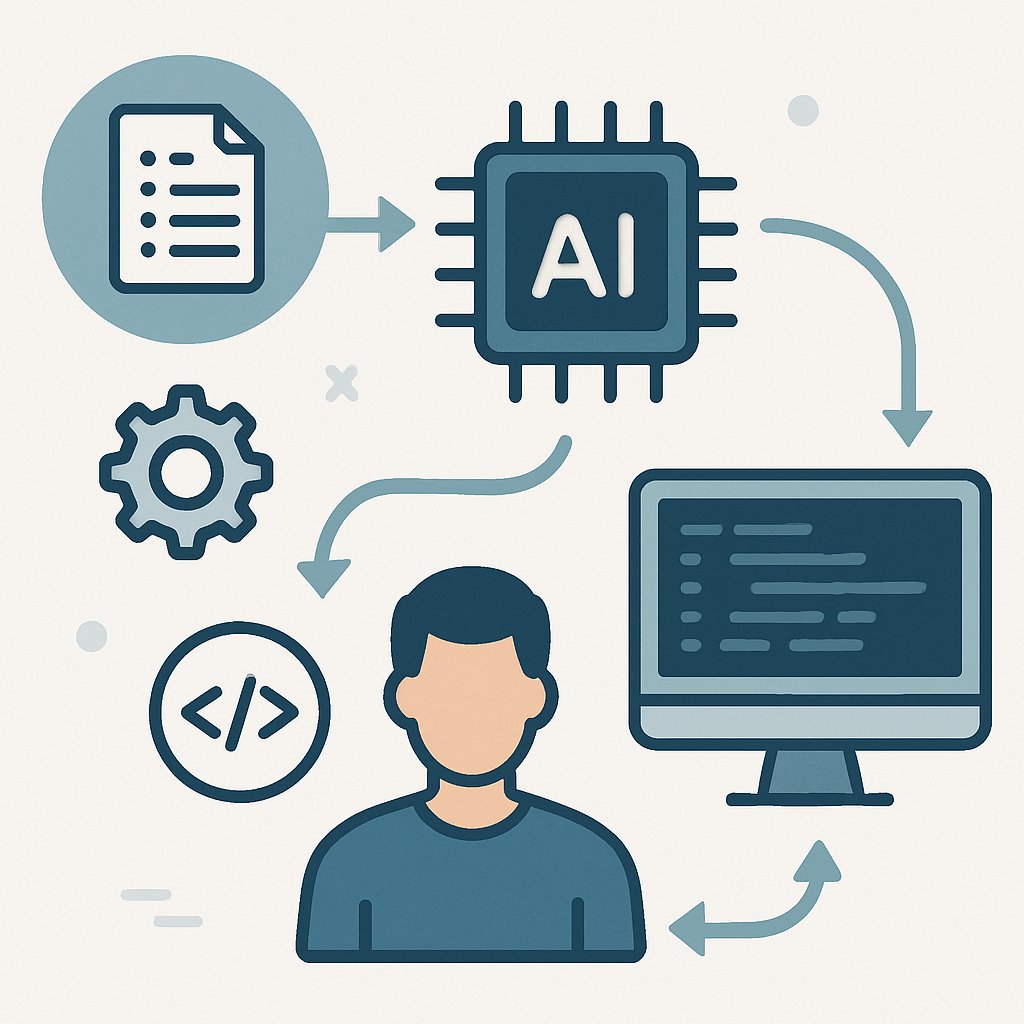
VSDD is defined by explicit roles, phases, and artifact flows. The official methodology lays out each actor and their function, forming a sequential pipeline—each phase must be satisfied before proceeding (source):

RoleEntityFunction
The ArchitectHuman DeveloperStrategic vision, domain expertise, final sign-off on specs, arbitrates disputes
The BuilderClaude (or similar LLM)Spec authorship, test generation, code implementation, refactoring (TDD discipline)
The TrackerChainlinkHierarchical issue decomposition (Epics → Issues → Sub-issues, called "beads")
The AdversarySarcasm (AI), or a human reviewerAdversarial verification: stress-testing, hallucinating flaws, enforcing rigor

Pipeline Structure

  1. Spec-Driven Kickoff (SDD): The Architect (human) defines and signs off on specs—these serve as the unambiguous contract.
  2. Test-Driven Development (TDD): The Builder (AI) writes tests for every spec. No code is written unless a test is failing.
  3. Implementation: The AI generates the minimum code necessary to pass the failing tests, always under TDD constraints.
  4. Verification-Driven Development (VDD): The Adversary (AI or human) subjects the code and spec to adversarial refinement, searching for edge cases and forcing failure conditions.
  5. Human Arbitration: The Architect resolves any disputes, signs off on final artifacts, and ensures alignment with business goals.

Every phase is a gate—no skipping ahead. Specs are the source of truth, tests enforce the "how", and adversarial verification ensures nothing critical is missed.

Reference Toolchain

Per the VSDD documentation (source):

  • Claude (or similar LLM): Used for spec, test, and code generation under strict TDD.
  • Chainlink: Hierarchical issue tracking; every spec, test, and implementation is mapped to a "bead".
  • Sarcasm (AI) or a human critic: Adversarial review and verification.

VSDD as a process is tool-agnostic, but these references illustrate the intended architecture for maximum rigor and traceability.

VSDD in Practice: Workflow and Artifacts

The official VSDD documentation describes process and artifact flow, but does not provide direct runnable code. Below, we illustrate a hypothetical—but realistic—workflow for a microservice. These artifacts reflect the VSDD phases, but are not canonical examples from the specification (source).

1. Specification (SDD Phase)

# Reconciliation Microservice Specification (VSDD SDD Phase)
Spec:
- Service ingests transaction records with unique IDs.
- Detects duplicate transactions within a 24-hour window.
- Emits reconciliation events with relevant IDs when duplicates are found.
- No transaction is processed more than once.
- All emitted events must be timestamped and auditable.

This contract is defined and signed off by The Architect. No implementation or tests exist before this stage is complete.

2. Test Generation (TDD Phase)

# VSDD TDD Phase - Example (Illustrative, not from official docs)
def test_no_duplicates():
    # Setup: unique transactions only
    records = [
        {"id": "txn1", "timestamp": 1680000000},
        {"id": "txn2", "timestamp": 1680003600},
    ]
    # Expected: no reconciliation event
    assert reconcile(records) == []

def test_duplicate_within_window():
    # Setup: duplicate within 24 hours
    records = [
        {"id": "txn1", "timestamp": 1680000000},
        {"id": "txn1", "timestamp": 1680003600},
    ]
    # Expected: reconciliation event for txn1
    events = reconcile(records)
    assert any(e["type"] == "reconciliation" and "txn1" in e["ids"] for e in events)

Tests are derived directly from the spec and must fail before any implementation is written. This aligns with the TDD principle in the VSDD pipeline.

3. Implementation (Builder/AI Phase)

For canonical implementation examples, refer directly to the official VSDD documentation (source). The code here is strictly illustrative and not a verbatim artifact from the process.

4. Adversarial Verification (VDD Phase)

# VSDD VDD Phase - Edge Case Test (Illustrative)
def test_duplicate_outside_window():
    # Setup: two transactions >24 hours apart
    records = [
        {"id": "txn1", "timestamp": 1680000000},
        {"id": "txn1", "timestamp": 1680086401},
    ]
    # Expected: no reconciliation event (outside window)
    assert reconcile(records) == []

def test_large_batch():
    # Setup: many records, test scalability and edge duplication
    records = [{"id": "txn1", "timestamp": 1680000000 + i * 60} for i in range(2000)]
    # Expected: only the first duplicate within window triggers reconciliation
    events = reconcile(records)
    assert sum(e["type"] == "reconciliation" for e in events) <= 1

The Adversary (AI or human) writes adversarial tests to force the implementation to surface hidden flaws. All failures must be resolved through spec/test/implementation cycles before proceeding.

5. Human Arbitration and Acceptance

The Architect reviews all artifacts and cycles, providing final sign-off. This step ensures that the process aligns not just with technical rigor but also with business goals and regulatory requirements.

Common Pitfalls and Pro Tips

  • Ambiguous specs undermine the pipeline: If the spec is not unambiguous and contract-like, the entire process suffers. Iterate until The Architect can sign off with confidence.
  • Skipping adversarial verification: Omitting rigorous, adversarial review is the primary way critical bugs enter production. Every artifact must face an adversary before acceptance.
  • Overcomplicating the toolchain: The official process references Claude, Chainlink, and Sarcasm, but emphasizes that discipline—not tooling—is the core value (source).
  • Neglecting traceability: Every test, spec, and implementation should map to a tracked "bead" for auditability.
  • Forgetting the human role: AI cannot resolve business or domain ambiguity—always require The Architect’s sign-off before shipping.

Considerations, Trade-offs, and Alternatives

VSDD vs. TDD, SDD, and Vibe Coding

ApproachSource of TruthAI RoleStrengthsWeaknesses
VSDDSpecs (with adversarially verified tests)Pipeline orchestrator, code/test generator, adversaryMaximal rigor, strong traceability, maintainabilityProcess overhead, requires discipline and toolchain maturity
TDDTests/codeOptional, not core to processSimple, proven for smaller teamsCan miss spec intent, weaker edge-case enforcement
Pure SDDSpecsSpec-to-code generatorRapid alignment, clarity up frontVerification/test gaps, possible drift from intent
Vibe CodingNone (prompt output)Code generator onlySpeed, exploratory flexibilityUnpredictable output, no guarantees, high maintenance risk

When Should You Use VSDD?

  • High-stakes systems: regulated industries, auditability, or mission-critical code
  • Distributed and hybrid teams requiring strict traceability
  • Projects where you must prove correctness—not just "works on my machine"

For disposable prototypes or low-risk features, traditional TDD or even vibe coding may be faster. For anything with real business impact, consider VSDD’s up-front investment.

Alternatives and Their Limits

  • Vibe coding: Delivers speed but lacks any guarantees of correctness or maintainability.
  • Pure SDD: Useful for alignment but must be paired with test and verification gates for production use.
  • TDD: Excellent for well-understood domains, but does not enforce spec-driven or adversarial review.

For broader context on AI-driven workflow automation and pipeline best practices, see our analysis of Claude Cowork and AI workflow automation.

Conclusion and Next Steps

Verified Spec-Driven Development is rapidly emerging as a gold standard for organizations seeking provable, maintainable, and AI-assisted code quality. By forcing every artifact through spec, test, and adversarial gates—each orchestrated by AI but always human-arbitrated—VSDD achieves a level of reliability and traceability unmatched by less disciplined methods.

The best way to start: pilot VSDD on a module with clear audit requirements, using lightweight tracking if necessary. Focus on process discipline, not tool proliferation. For further reading on automation and AI-native engineering, explore our deep dive into headless automation and analysis of modern API design trade-offs. For canonical process details, reference the official VSDD documentation and industry analysis.