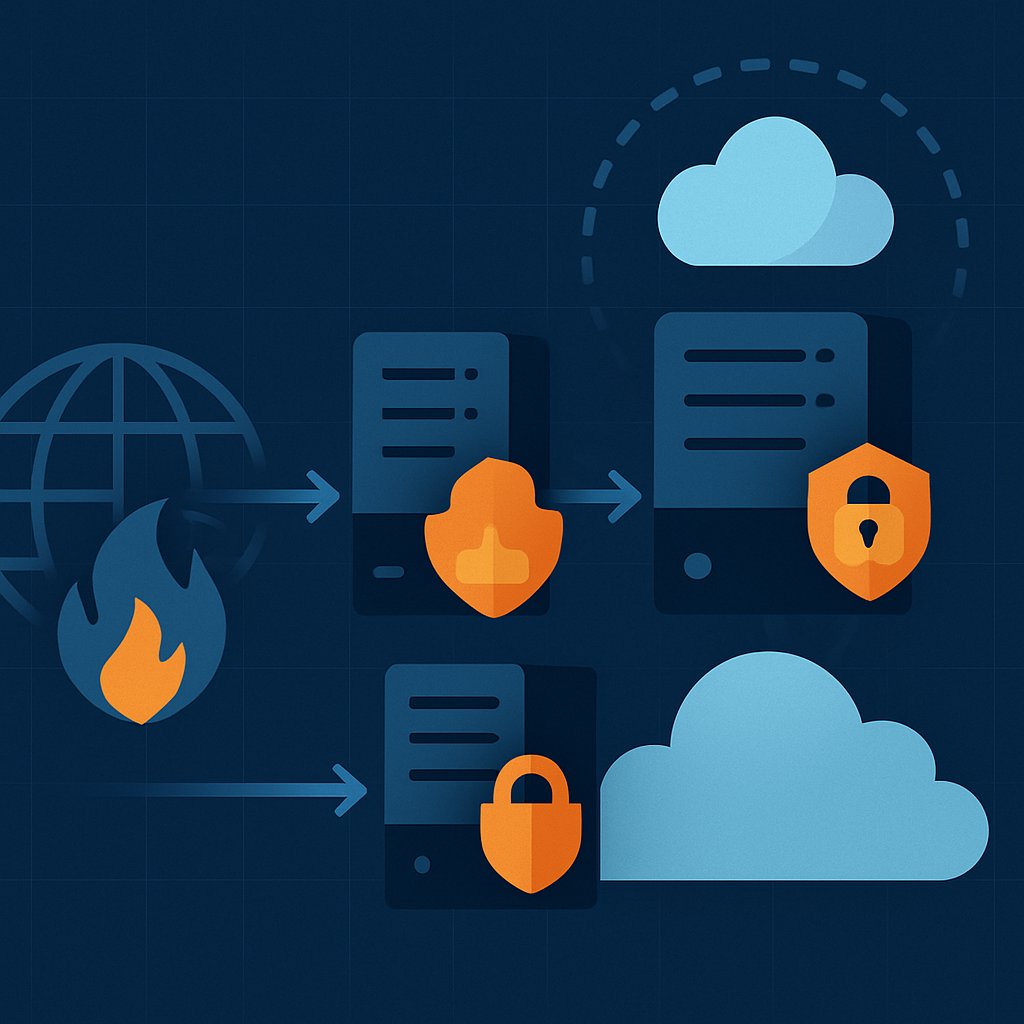
Choose the Right WAF: ModSecurity vs Cloudflare vs AWS

Enhancing Your Web Application Security: ModSecurity vs Cloudflare vs AWS WAF

Securing web applications against malicious attacks is crucial for maintaining data integrity and user trust. Web Application Firewalls (WAFs) play a key role in defending against threats such as SQL injection, cross-site scripting (XSS), and other OWASP Top Ten vulnerabilities. This post compares three popular WAF solutions: ModSecurity, Cloudflare WAF, and AWS WAF, to help you choose the best fit for your needs.

Key Takeaways:

  • Understand the role and importance of WAFs in web security.
  • Learn the strengths and weaknesses of ModSecurity, Cloudflare, and AWS WAF.
  • Explore practical code examples and real-world configuration scenarios.
  • Identify common pitfalls and best practices in deploying WAFs.

Understanding Web Application Firewalls

Web Application Firewalls (WAFs) are a critical component in the security architecture of any web-based application. They serve as a protective layer between your web application and the Internet, analyzing HTTP requests to detect and mitigate threats before they reach the application server. This proactive defense is essential in an era where cyber threats are not only increasing in frequency but also in sophistication.WAFs are designed to protect against a wide range of vulnerabilities, including SQL injection, cross-site scripting (XSS), and other threats listed in the OWASP Top Ten. By intercepting and inspecting each HTTP request, a WAF can block malicious payloads and prevent data breaches, ensuring that only legitimate traffic reaches your application.

ModSecurity Overview

ModSecurity is a widely used open-source WAF that integrates seamlessly with popular web servers such as Apache, Nginx, and IIS. It offers robust real-time monitoring, logging, and access control capabilities. One of its key strengths is the ability to create custom rules that tailor security to the specific needs of an application.Let's take a closer look at how ModSecurity rules are crafted and applied:
# Basic ModSecurity rule example to block specific user agents
SecRule REQUEST_HEADERS:User-Agent "BadBot" \
"id:1234,phase:1,deny,status:403,log,msg:'Bad Bot Detected'"
Here’s what each part of this rule does:- SecRule specifies that this is a security rule. - REQUEST_HEADERS:User-Agent targets the User-Agent header in incoming HTTP requests. - The rule triggers if the User-Agent matches "BadBot". - id:1234 assigns a unique identifier to this rule for easy reference and management. - phase:1 indicates the rule should be executed in the request headers analysis phase. - deny,status:403 blocks the request and returns a 403 Forbidden HTTP status code. - log,msg:'Bad Bot Detected' logs the incident with a custom message.

Strengths and Weaknesses

  • Strengths:
    • Highly configurable with custom rule sets that can be tailored to specific security needs.
    • Supports integration with a wide range of platforms, providing flexibility in deployment.
    • As an open-source solution, it benefits from community support and regular updates.
  • Weaknesses:
    • Configuration can be complex, requiring a deep understanding of the syntax and logic to avoid misconfigurations.
    • May introduce performance overhead on high-traffic sites due to its detailed inspection processes.

Cloudflare WAF Overview

Cloudflare WAF is a cloud-based service that leverages Cloudflare's global network to provide a robust firewall solution. It stands out for its ease of deployment and integration with Cloudflare’s content delivery network (CDN) and other security services, providing a comprehensive security shield with minimal configuration effort on the user's part.Here’s how you might set up a basic rule to block SQL injections using Cloudflare's intuitive dashboard:
# Cloudflare rule example to block SQL injection attempts
{
  "expression": "(http.request.uri.query contains \"SELECT\")",
  "action": "block",
  "description": "Block SQL Injections"
}
In this example, the rule examines query strings for the presence of SQL keywords like "SELECT" and blocks requests that appear to be attempting SQL injection.

Strengths and Weaknesses

  • Strengths:
    • Simplified deployment process that allows users to quickly set up and manage firewall rules.
    • Operates on a global scale, benefiting from Cloudflare’s extensive network to offer high availability and low latency.
    • Regularly updated rule sets protect against the latest threats, reducing the administrative burden on users.
  • Weaknesses:
    • Offers less granular control over traffic compared to on-premise solutions like ModSecurity.
    • Dependency on Cloudflare’s infrastructure might not suit organizations requiring complete control over their security posture.

AWS WAF Overview

AWS WAF is Amazon’s managed WAF solution, deeply integrated with AWS services such as CloudFront, the Application Load Balancer, and API Gateway. AWS WAF is known for its scalability, flexibility, and detailed logging capabilities, making it a powerful tool for organizations already utilizing AWS infrastructure.Here’s an example of how you might configure a rule to block specific IP addresses using AWS WAF:
# AWS WAF rule to block IP addresses
{
  "Name": "block-bad-ip",
  "Priority": 1,
  "Action": { "Block": {} },
  "Statement": {
    "IPSetReferenceStatement": {
      "ARN": "arn:aws:wafv2:us-west-2:123456789012:regional/ipset/block-bad-ip"
    }
  }
}
This rule blocks requests from IP addresses listed in a specified IP set, demonstrating AWS WAF's ability to integrate with other AWS services.

Strengths and Weaknesses

  • Strengths:
    • Seamlessly integrates with other AWS services, providing a cohesive and powerful security posture for AWS-hosted applications.
    • Highly scalable to accommodate growing traffic demands without degrading performance.
    • Offers detailed logging and monitoring, enabling proactive threat management and response.
  • Weaknesses:
    • Setup and management can be complex, requiring a good understanding of AWS services and security.
    • Costs can escalate with increased usage, especially for high-traffic applications.

Comparison: ModSecurity vs Cloudflare vs AWS WAF

The table below summarizes the differences between ModSecurity, Cloudflare WAF, and AWS WAF, each offering unique benefits depending on your specific requirements:
FeatureModSecurityCloudflare WAFAWS WAF
DeploymentOn-premiseCloud-basedCloud-based
Configuration ComplexityHighLowModerate
IntegrationWeb serversCDN and security servicesAWS services
CostFreeSubscription-basedUsage-based
Rule CustomizationExtensiveModerateExtensive
ScalabilityLimited by server capacityHighHigh

Common Pitfalls and Best Practices

Deploying a WAF effectively requires careful planning and execution. Here are some common pitfalls and how to avoid them:
  • Overly Permissive Rules: Setting rules that are too permissive can allow malicious traffic through. Regularly review and tighten your rules to ensure they block unwanted traffic effectively.
  • Ignoring Updates: Security threats evolve rapidly, and it's crucial to keep your WAF rules and software up to date to protect against new vulnerabilities.
  • Insufficient Testing: Always test your WAF configurations in a staging environment before deploying them to production. This helps ensure that legitimate traffic isn't inadvertently blocked.

Best Practices:

  • Regularly review and update rules to align with the latest security threats and application changes.
  • Utilize a WAF in conjunction with other security measures, such as intrusion detection systems and regular security audits, for a layered defense strategy.
  • Monitor WAF logs closely to identify potential attack patterns and refine rule sets accordingly.
  • Set up alerts for suspicious activities to enable rapid response and mitigation.

Conclusion

Selecting the right WAF for your organization depends on various factors, including your technical expertise, existing infrastructure, and specific security requirements. ModSecurity offers flexibility and deep configurability for those who prefer on-premise control. Cloudflare WAF simplifies deployment and leverages a global network, making it ideal for those seeking ease of use and scalability. AWS WAF provides powerful integration with AWS services, suitable for applications already hosted on Amazon's platform.As you evaluate these options, consider conducting a thorough security audit to assess your current vulnerabilities and identify the best WAF solution to enhance your web application's security posture. Exploring case studies and engaging with community forums can also provide valuable insights into real-world deployments and configurations.