The software industry is witnessing a foundational transformation: AI agents are not just supplementing but replacing traditional CI/CD (Continuous Integration/Continuous Deployment) pipelines in Fortune 500 enterprises and fast-scaling tech startups alike. At Nvidia’s GTC 2026, CEO Jensen Huang showcased partnerships with Adobe, Salesforce, SAP, and other industry giants, all betting on autonomous AI agents to power the next wave of enterprise automation (VentureBeat). Their goal? To achieve near-zero-latency software delivery and infrastructure that heals itself—without human intervention.
This shift is not just a technological curiosity. According to leading DevOps platforms and engineering leaders, AI-driven pipelines are slashing cycle times, reducing downtime, and enabling organizations to handle operational incidents in seconds, not hours. The result is a new DevOps paradigm: self-healing infrastructure that adapts in real-time, delivers higher reliability, and lets human engineers focus on innovation instead of firefighting.
Continuous Integration (CI) refers to the practice of automatically integrating code changes from multiple contributors into a shared repository several times a day, enabling quick detection of issues. Continuous Deployment (CD) automates the release of validated code to production environments. By allowing AI agents to take over these tasks, teams are experiencing a dramatic reduction in manual intervention.
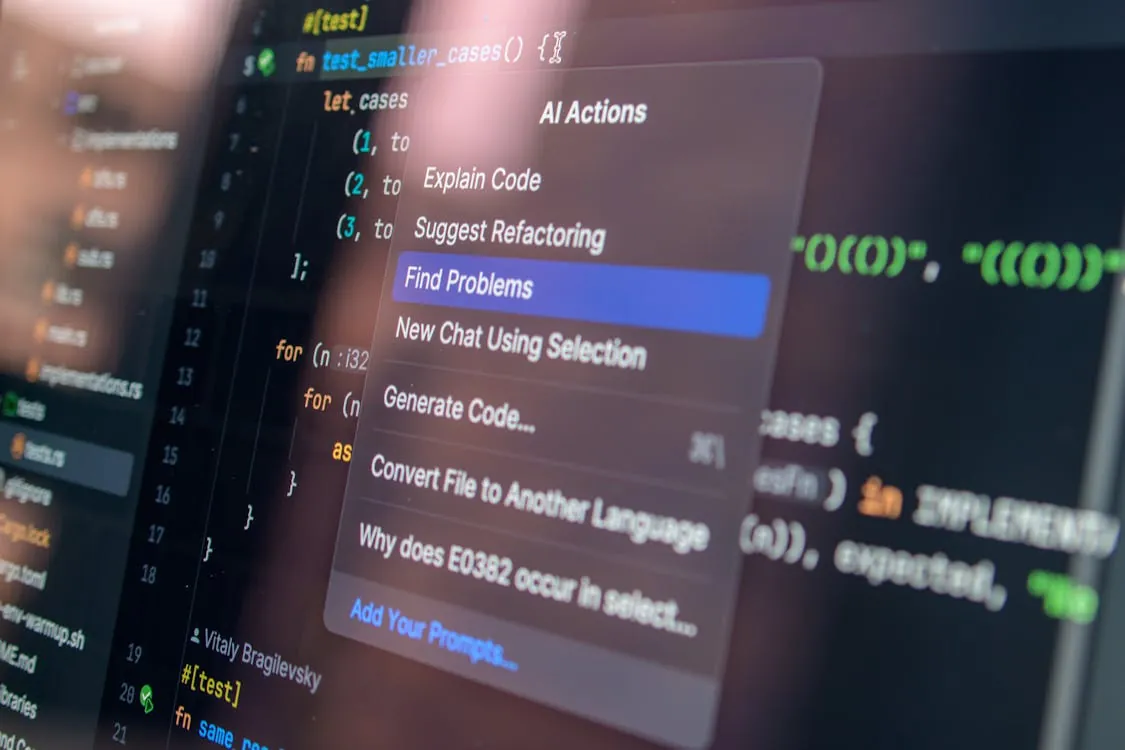
Modern DevOps teams are shifting from manual operations to AI-driven, self-healing workflows. (Image: Pexels)
To understand how this transformation is unfolding, let’s review the evolution from manual pipelines to today’s autonomous solutions.
From Manual Pipelines to Self-Healing Infrastructure
Traditional CI/CD pipelines—powered by tools like Jenkins, GitLab CI, and GitHub Actions—were revolutionary for their time. These platforms enabled automation of repetitive tasks such as running tests, building software artifacts, and deploying to various environments. However, their automation was static, meaning pipelines followed predefined scripts or YAML files and required human intervention when unexpected issues occurred.
For example, consider a scenario where a test intermittently fails due to a race condition (a flaky test). In a traditional pipeline, this failure would halt the deployment and alert an engineer, who would then have to investigate, rerun the test, or apply a manual fix. Similarly, if a build failed due to resource exhaustion (like running out of memory), the pipeline would stop and await manual troubleshooting.
A 2023 DORA State of DevOps Report highlighted a critical bottleneck: nearly 50% of CI/CD time is spent fixing broken builds, most often due to transient or environmental issues—not code defects. In this context, operational toil refers to repetitive manual work that does not add enduring value, such as restarting failed jobs or tracking down configuration mismatches. This toil leads to costly delays, interrupted sleep for on-call staff, and increased risk of human error.
Now, with the rise of agentic AI and platform engineering, organizations are embracing pipelines that don’t just alert—they act. According to RodyTech’s analysis, these self-healing systems combine the reasoning power of large language models (LLMs) with the enforcement and safety of Kubernetes Operators. The result: pipelines that detect, diagnose, and remediate failures on their own, minimizing downtime and human toil.
This shift marks the beginning of autonomous DevOps, where systems can fix themselves without waiting for human intervention. To see how this works in practice, let’s examine the underlying architecture.
How Agentic AI Powers Autonomous, Self-Healing CI/CD
Agentic AI represents a leap beyond static automation. Instead of following rigid scripts, these agents are goal-oriented, meaning they operate with an objective in mind and can adapt their actions based on changing conditions. They are capable of perception, reasoning, and action—a cycle often referred to as the ReAct loop.
Here’s how these systems operate:
Perception: The agent continuously ingests logs, metrics, and system events from sources like Prometheus (a monitoring system), Loki (a log aggregation system), or custom logging stacks. This allows the agent to maintain real-time situational awareness.
Reasoning: Using LLMs (such as Nvidia’s Nemotron or open models), the system analyzes failures, correlates patterns, and determines likely root causes. For instance, it can differentiate between a flaky test (an intermittent failure not due to code logic) and a true logic bug.
Action: Instead of waiting for human intervention, the agent generates remediation steps—such as increasing memory limits, re-triggering a test, or rolling back a dependency—and applies those changes via Kubernetes Operators or similar enforcement layers.
A crucial architectural advance is the use of Kubernetes Operators as a “safety layer.” An Operator is a method of packaging, deploying, and managing a Kubernetes application. In this context, Operators act as policy enforcers, validating AI-driven changes before they’re applied, thus preventing runaway automation or unsafe modifications. For example, an agent might suggest increasing CPU allocation, but the Operator ensures it stays within organizational quotas.
Let’s see how this looks in a practical implementation.
Real-World Implementation: Code Example for Self-Healing Pipelines
To illustrate these concepts, consider a simplified example of how an agentic AI system can repair a failing CI/CD pipeline by automatically adjusting Kubernetes resource limits. This example uses a Custom Resource Definition (CRD) named SelfHealingPipeline and integrates with Kopf, a Python framework for writing Kubernetes Operators. The operator listens for pipeline failures and invokes an AI agent for diagnosis and remediation.
# Operator logic for a SelfHealingPipeline CRD (Python pseudocode)
@kopf.on.field('rodytech.com', 'v1', 'selfhealingpipeline', field='status.phase', new='Failed')
def handle_failure(spec, status, **kwargs):
    logs = get_logs_from_runner(status.podName)
    # Call AI agent to diagnose issue
    diagnosis = llm_agent.diagnose(logs, context=spec)
    if diagnosis['action_required']:
        print(f"Agent suggests: {diagnosis['suggestion']}")
        if spec['selfHealing']['mode'] == 'auto':
            # Apply patch suggested by Agent
            new_spec = patch_yaml(spec, diagnosis['patch'])
            kopf.patch(status=new_spec)
            kopf.restart(status.podName)
        else:
            notify_human(diagnosis)
# Note: production use should add cache size limits, error handling, and RBAC restrictions.
In this workflow:
The operator detects when a pipeline enters a Failed state.
It collects logs from the affected runner (a pod executing the pipeline).
The AI agent analyzes the logs to diagnose the issue and, if necessary, generates a remediation patch (for instance, increasing memory allocation).
If the pipeline is configured for auto mode, the operator applies the patch and restarts the job. For more critical environments, it can notify a human for approval instead.
This pattern lets organizations start with auto-remediation for non-production workloads, then layer on human-in-the-loop approval for more critical environments. For example, a development environment might automatically restart failed jobs with increased resources, while production requires a human to review the AI’s suggestion before applying.
To better understand the impact of these changes, let’s compare traditional pipelines with AI-driven self-healing pipelines.
Comparison Table: Traditional CI/CD vs. AI-Driven Self-Healing Pipelines (2026)
This table highlights the dramatic improvements in failure recovery, human workload, configuration flexibility, and overall scalability made possible by AI-driven pipelines. Notably, features such as multi-modal analysis involve AI agents correlating logs, metrics, and configuration data to quickly pinpoint the root cause of failures, which would otherwise require expert manual inspection.
As with any disruptive technology, autonomous pipelines introduce new challenges. Let’s explore the risks and safeguards essential for successful adoption.
Challenges, Risks, and Guardrails in Autonomous DevOps
While the promise of self-healing infrastructure is compelling, it introduces new risks:
AI Hallucinations: An agent might misdiagnose a failure, resulting in unnecessary or even harmful changes. AI hallucination refers to an instance where an AI generates incorrect or misleading conclusions. Strict validation and RBAC (Role-Based Access Control) restrictions are essential to prevent unwanted actions.
Infinite Loops: Without safeguards, an agent could get stuck repeatedly retrying an unfixable problem, consuming resources and costs. By limiting the number of retries and escalating persistent issues to humans, teams can avoid runaway processes.
Security: AI agents must operate within tightly controlled environments. Operators should enforce limits, and all sensitive actions should be logged and auditable to maintain compliance and security.
Adoption and Trust: Organizations must build confidence in agentic systems by starting small (non-prod workloads, auto-remediation of flaky tests), then expanding as reliability is proven. Over time, as the AI agent demonstrates safe and effective operation, its responsibilities can be increased.
For instance, a team may begin by allowing the AI to automatically rerun failed tests in a development environment. Once trust is established, they might permit auto-scaling of resources or even rollbacks of failed deployments. The key is to design the human’s role as a supervisor—setting guardrails for agents, not micromanaging pipelines.
The most successful teams design their role as supervisors—setting guardrails for agents, not micromanaging pipelines. For more, see RodyTech’s implementation guide.
To summarize these insights, let’s review the major takeaways.
Key Takeaways
Key Takeaways:
Photo via Pexels
AI agents are rapidly replacing traditional CI/CD by enabling pipelines to self-diagnose and heal in real time. For example, agentic systems can automatically restart failed tests or adjust resource allocations without waiting for engineers.
Architectures combine LLMs for reasoning, Kubernetes Operators for safe enforcement, and observability tools for real-time perception. This integration ensures that AI-driven changes are always validated and traceable.
Benefits include faster recovery times, reduced operational toil, improved scalability, and dynamic, policy-driven automation. Teams can respond to incidents in seconds and scale infrastructure to meet real-time demand.
Risks—such as incorrect fixes and security exposure—are mitigated by operator validation, RBAC, and phased adoption strategies. Guardrails ensure that AI-driven pipelines remain safe and reliable as they take on more responsibility.
Major industry players like Nvidia, Adobe, Salesforce, and Siemens are leading the adoption of autonomous, AI-driven infrastructure.