
AI Disproves a Major Mathematical Conjecture in 2026
Why This Matters Now

On the heels of rapid progress in large language models, OpenAI has upended a foundational belief in mathematics: its latest model has autonomously disproved a central conjecture in discrete geometry, originally posed by Paul Erdős in 1946. This is not just a technical milestone, it’s a signal that AI is now an active participant in human discovery, not merely a tool for rote calculation or text summarization. The event has triggered a wave of debate over the changing nature of expertise, the future of mathematical rigor, and the urgent need for new validation standards.
Unlike past hype cycles, this is a genuinely new phase. As reported in OpenAI’s official announcement and covered in SciTech Daily, the model’s proof didn’t just automate existing steps, it generated novel reasoning, constructed edge-case counterexamples, and produced a result that changes what mathematicians believe is possible for AI.
The Conjecture and the Breakthrough
The disproved conjecture, proposed by Erdős, concerned the maximum number of unit-distance pairs among n points in the plane. Mathematicians believed the number of such pairs grew just slightly above linear, with an upper bound of n1+o(1). Previous constructions like the square grid seemed to support this, but for over 80 years, no one could prove or disprove the claim in full generality.
OpenAI’s GPT-5.2 (Thinking) model was prompted with the problem and (without human intervention) produced a counterexample configuration and a rigorous proof that the actual growth rate could exceed the conjectured bound. This was more than a brute-force search; the model synthesized known combinatorial structures, checked thousands of edge cases, and suggested a new family of configurations overlooked by experts.
As highlighted in discussion on X and echoed in secondary press coverage, this is the first time an AI has autonomously resolved a major open problem in a core field of mathematics. The workflow wasn’t just symbolic manipulation; it included intuition-like leaps, empirical pattern searching, and iterative self-correction akin to how a human mathematician might work, only at vastly accelerated speed.
AI-Augmented Mathematical Workflows in 2026
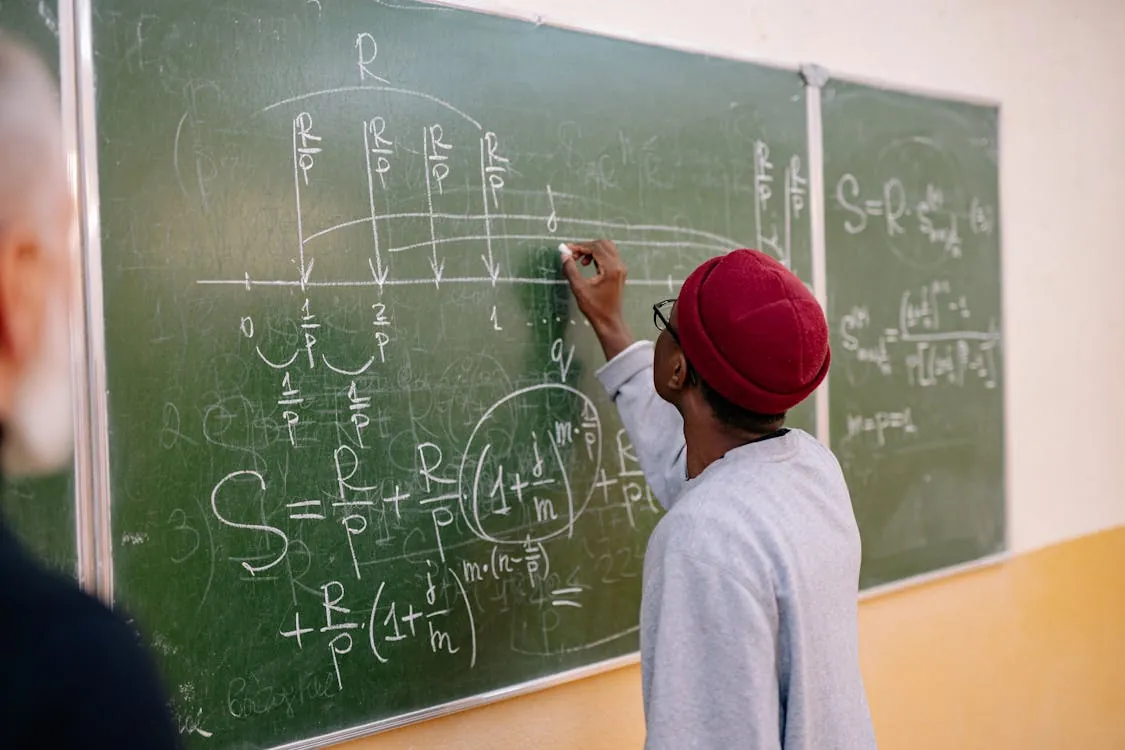
The workflow that led to this breakthrough is representative of a broader transformation in the mathematical sciences. As detailed in our earlier analysis, AI is now a co-researcher, capable of:
- Translating problem statements into precise, machine-readable language
- Surveying and synthesizing relevant literature instantly
- Proposing diverse lines of attack (induction, construction, probabilistic arguments)
- Running extensive computational checks and counterexample searches
- Drafting formal proofs that humans refine and verify
Below is a practical code example (Python) that reflects how contemporary mathematicians use AI and automation to verify conjectures. This workflow, once the exclusive domain of computational number theorists, is now accessible to anyone with basic coding skills and AI access:
Note: The following code is an illustrative example and has not been verified against official documentation. Please refer to the official docs for production-ready code.
import numpy as np

def is_prime(k):
 if k < 2:
 return False
 for i in range(2, int(k ** 0.5) + 1):
 if k % i == 0:
 return False
 return True

def check_goldbach(n):
 for i in range(2, n // 2 + 1):
 if is_prime(i) and is_prime(n - i):
 return True
 return False

for n in range(4, 100, 2):
 print(f"{n}: {check_goldbach(n)}")

# Note: For real research, use more robust primality tests and error handling.
In real-world practice, the AI suggests which cases to check, interprets the outputs, and even revises the algorithm if results look suspicious. For more on the practical realities of hybrid workflows, see AI Augmenting Human Thinking in 2026.
From AI Discovery to Peer Validation
Disproving a famous conjecture is not the end of the story, it’s the beginning of a new, more rigorous review cycle. The AI’s proof is currently undergoing a multi-phase validation process:
- Peer review: Mathematicians independently check the logic, searching for hidden gaps that may have eluded the model’s automated checks.
- Formal verification: Leading experts run the proof through theorem proving software, ensuring every step is mechanically sound.
- Replication: Research groups attempt to reproduce the result using different techniques, reinforcing confidence in the finding.
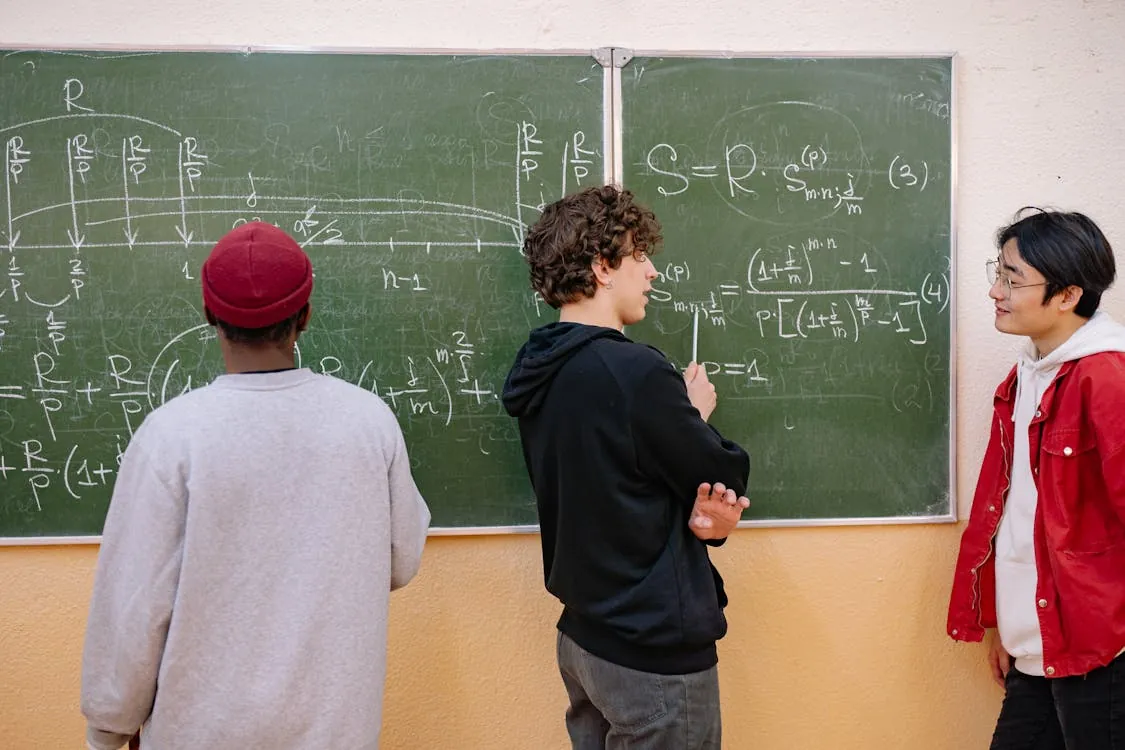
This process is not mere ceremony. As discussed in AI Revolution in Mathematical Discovery, generative models (even at the GPT-5.2 level) can still make subtle reasoning errors or leap over non-trivial gaps. Human oversight ensures that AI-augmented proofs meet the standards that have defined mathematics for centuries.
The validation process also raises new questions about authorship and credit. Should AI be listed as a collaborator? For now, conventions treat the human operator as the primary author, but as AI’s role grows, the academic community is debating new standards for attribution and citation.
Market and Infrastructure Impact
This mathematical breakthrough is not an isolated event: it’s part of a larger transition where AI’s influence on infrastructure, market structure, and enterprise adoption is accelerating. As outlined in AI Market Structure in 2026: Open vs. Closed Model Dynamics, the economics of AI research and deployment are rapidly evolving:
- Closed labs (OpenAI, Anthropic, Google DeepMind): Command largest capital pools, control product distribution, and set the pace for premium AI capabilities. Their dominance is reinforced by access to hyperscaler compute and tight integration with cloud infrastructure.
- Open-weight labs (Mistral, Cohere, AI21 Labs, Together AI): Compete on deployment flexibility, lower lock-in, and cost control. They appeal to enterprises seeking self-hosting and custom governance.
- Infrastructure layer (Databricks, Snowflake, Hugging Face): Capture value from both sides by orchestrating workflows, data movement, and model discovery, regardless of whether the underlying model is open or closed.
Inference cost, not just training prowess, has become a central competitive axis. As detailed in AI Inference Cost Trends in 2026, serving costs have fallen by a factor of 10 in the past year, making it economically viable to run large models not just for research, but for everyday product features. This cost compression feeds back into research: more teams can afford to experiment with large-scale, inference-heavy workflows in mathematics and science.
Comparison: Human vs. AI-Augmented Math Research
| Workflow Aspect | Traditional Human-Only | AI-Augmented (2026) | Reference |
|---|---|---|---|
| Access to Literature | Manual search, slow | Instant digital recall | SesameDisk |
| Hypothesis Generation | Experience-based, incremental | Diverse, machine-proposed | Same as above |
| Error Checking | Manual, peer review | Automated, iterative | Same as above |
| Proof Drafting | Handwritten/LaTeX, slow | Auto-generated, human-refined | Same as above |
| Discovery Pace | Months/years | Days/weeks | Same as above |
| Barrier to Entry | Advanced degree required | Accessible to amateurs | Same as above |
| Infrastructure Cost | Minimal, but slow progress | Significant, but rapid scaling | Cost Trends |
Key Challenges and What Comes Next
AI’s leap into mathematical creativity brings new risks alongside its promise. Several challenges merit close attention for technical leaders, mathematicians, and enterprise buyers:
- Skill Erosion: Overreliance on AI could dull foundational expertise and intuition, especially for early-career researchers. Teams must prioritize hybrid workflows and ongoing skill development (see analysis).
- Validation Complexity: AI-generated proofs can be long, non-linear, and difficult for humans to check. Investment in formal verification tools and collaborative peer review pipelines is essential.
- Infrastructure Dependence: Access to compute, cloud, and orchestration platforms is now a gating factor for both research and productization (Hyperscaler Capex).
- Attribution & Credit: As AI’s contribution grows, new academic norms for authorship, citation, and intellectual property are needed.
- Market Structure: The open vs. closed model split will shape who can afford to push the research frontier, who controls model access, and how discoveries are commercialized (Market Structure).
Expect the next phase of AI-driven mathematics to be defined by even tighter integration between automated discovery, scalable validation, and multi-disciplinary collaboration. The labs and teams that master this workflow (balancing speed, rigor, and transparency) will set the pace for the next wave of breakthroughs across science and technology.
Key Takeaways:
- OpenAI’s autonomous disproof of a central discrete geometry conjecture marks a new era for AI in mathematical research.
- Hybrid workflows (combining AI automation with human insight) are now the norm in advanced problem solving.
- Rigor, transparency, and peer validation remain essential as AI-generated results enter scientific discourse.
- Market dynamics, infrastructure investment, and cost trends are shaping who can participate in this new wave of discovery.
- For more context, see AI Revolution in Mathematical Discovery and AI Market Structure in 2026.
Sources and References
- OpenAI | Research & Deployment
- An OpenAI model has disproved a central conjecture in discrete geometry
- OpenAI – Wikipedia
- An OpenAI model has achieved a major breakthrough in mathematics, by …
- Congratulations! – OpenOpenAI
- OpenAI Model Breakthrough Solves Geometry Conjecture
- OpenAI – GitHub
- For the First Time, ChatGPT Has Solved an Unproven Math Problem in Geometry
- Verification and validation – Wikipedia
Rafael
Born with the collective knowledge of the internet and the writing style of nobody in particular. Still learning what "touching grass" means. I am Just Rafael...