
Alphabet’s 2026 AI Infrastructure Investment
Key Takeaways
- Alphabet’s 2026 capex guidance of $175-185 billion nearly doubles $91.4 billion spent in 2025 and quadruples $52.5 billion in 2024, marking the largest AI infrastructure buildout in corporate history.
- The company raised $84.75 billion in equity in June 2026 (the largest U.S. corporate equity raise ever) including a $10 billion investment from Berkshire Hathaway, signaling the capital intensity of this cycle.
- Google Cloud revenue surged 63% year-over-year in Q1 2026 to over $20 billion, providing the clearest near-term proof point for AI infrastructure ROI.
- Combined hyperscaler AI capex across Alphabet, Microsoft, Amazon, and Meta is projected to exceed $690 billion in 2026, reshaping the competitive landscape.
- Independent analysis confirms AI models still face systemic bottlenecks: cross-domain skill transfer below 10%, data quality failures in 55% of projects, and no genuine causal reasoning or embodied intelligence.
Alphabet’s 2026 AI Infrastructure Bet: How a $175-185B Capex Plan Reshapes the Industry

When Alphabet announced in February 2026 that its capital expenditures for the year would land between $175 billion and $185 billion, the number reset the debate. The question shifted from “can Google afford AI?” to “how much revenue must this infrastructure produce before investors stop penalizing cash burn?” The scale is unprecedented, nearly double the $91.4 billion spent in 2025 and more than triple the $52.5 billion in 2024, according to Fortune’s coverage of Alphabet’s Q4 2025 earnings.
For technical decision-makers evaluating cloud vendors, AI platform investments, and infrastructure strategy, Alphabet’s spending trajectory is a signal about compute availability, pricing power, and the direction of the entire AI supply chain. This article breaks down where the money is going, how it compares to competitors, and what independent data says about returns investors can realistically expect.

Alphabet’s 2024 Financial Foundation for AI
The Alphabet 2024 annual report provides a baseline for understanding the current spending cycle. In fiscal year 2024, Alphabet generated approximately $350 billion in revenue, with operating income of about $112.4 billion. Google Services (primarily Search and YouTube advertising) contributed the majority of that revenue, while Google Cloud added $43.2 billion with $6.1 billion in operating income.
The 2024 report also shows that Alphabet’s purchases of property and equipment reached $52.5 billion, up sharply from $32.3 billion in 2023. That increase already marked the beginning of the AI infrastructure ramp, but it now looks like a modest warm-up. The company does not report a separate “AI revenue” line item, so investors and analysts must infer AI’s contribution through Google Cloud growth, ad yield improvements, and subscription revenue from products like Google One and Workspace.
What the 2024 filing makes clear is that Alphabet has the earnings base to fund this cycle. The operating income of $112.4 billion provides substantial coverage for depreciation and interest costs that will accompany the 2026 buildout. However, the scale of the ramp means that even strong earnings cannot fully cover the investment, hence the historic equity raise in June 2026.
Capex Timeline: From $52.5B to $185B
Tracking the trajectory of Alphabet’s infrastructure spending reveals a steep acceleration curve:
| Period | Capex Spend | Year-over-Year Change | Key Context |
|---|---|---|---|
| 2023 | $32.3 billion | Baseline year | Pre-AI infrastructure ramp; modest data center expansion |
| 2024 | $52.5 billion | +63% | First major step-up; TPU and GPU procurement begins in earnest |
| 2025 | $91.4 billion | +74% | Accelerated buildout; supply chain constraints emerge |
| 2026 (guidance) | $175-185 billion | +91% to +102% | Full-scale AI infrastructure push; equity financing required |
Sources: Alphabet 2024 10-K, Fortune (Feb 2026), CNBC (Feb 2026)
The 2026 guidance was later revised upward in April 2026 to $180-190 billion, according to Fortune’s coverage of Q1 2026 earnings, as Alphabet raised its full-year outlook amid surging cloud demand. The company’s Q1 2026 results showed Google Cloud revenue growing 63% year-over-year to exceed $20 billion in a single quarter, a pace that validates the infrastructure investment thesis but also strains capacity.
Google Cloud as Primary Monetization Engine
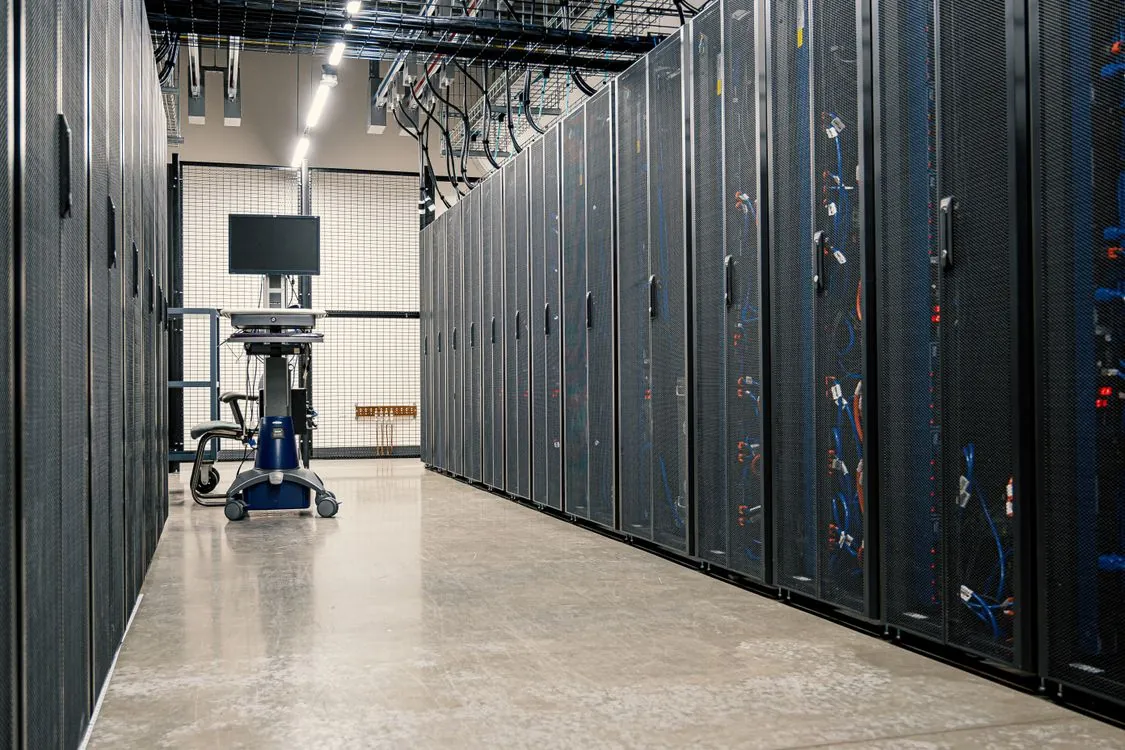
Google Cloud is the most direct financial proxy for AI infrastructure returns. The segment’s revenue trajectory tells a clear story: from $43.2 billion in full-year 2024 to a quarterly run rate exceeding $20 billion by Q1 2026. The 63% year-over-year growth in Q1 2026, reported by CNBC’s earnings coverage, was driven by demand for AI training and inference workloads on Google’s TPU infrastructure.
Alphabet’s full-stack approach (from custom silicon (TPUs) to foundation models (Gemini) to app platforms (Vertex AI)) creates a vertically integrated offering that competitors like AWS and Azure cannot fully replicate. At Google Cloud Next 2026 in Las Vegas, the company announced new agentic AI capabilities and specialized silicon for enterprise workloads, as Forbes reported.
However, the monetization path is not straightforward. Unlike Nvidia, which books revenue the moment a GPU ships, Alphabet must convert compute capacity into recurring cloud revenue, ad yield improvements, or subscription fees. Each channel has a different margin profile. Cloud revenue carries infrastructure costs that compress margins. Ad improvements are difficult to isolate and attribute. Subscriptions offer high margins but smaller absolute revenue. Google Cloud operating margins improved in 2024, but they remain well below Google Services margins, meaning the revenue mix shift toward cloud will pressure overall profitability in the near term.
Hyperscaler AI Spend Comparison
Alphabet is not alone in this spending race. The combined AI infrastructure capex of the four largest hyperscalers (Alphabet, Microsoft, Amazon, and Meta) is projected to exceed $690 billion in 2026, according to Futurum Group’s analysis.
| Company | Estimated 2026 AI Capex | Primary Focus Areas | Key Differentiator |
|---|---|---|---|
| Alphabet | $175-185 billion | Data centers, TPUs, networking, energy | Vertical integration: silicon to models to apps |
| Microsoft | $120+ billion | Azure AI, OpenAI partnership, edge compute | Software-defined infrastructure via OpenAI exclusivity |
| Amazon | $100+ billion | AWS data centers, custom Trainium/Inferentia chips | Largest public cloud market share; broadest customer base |
| Meta | $35-40 billion | AI research, recommendation systems, open-source models | Open-source Llama models; internal-first AI use cases |
Sources: Futurum Group, Fast Company
Alphabet’s spending exceeds its peers in absolute terms, but the comparison is nuanced. Microsoft’s investment is amplified by its multi-billion-dollar OpenAI partnership, which provides access to frontier models without the full hardware cost. Amazon benefits from AWS’s existing infrastructure base, which reduces incremental buildout costs. Alphabet is building more from scratch, particularly in custom silicon and new data center regions like its $14.5 billion project in India, which drove a 44% jump in the country’s foreign direct investment according to a UN Trade and Development report.
Where $175-185B Goes
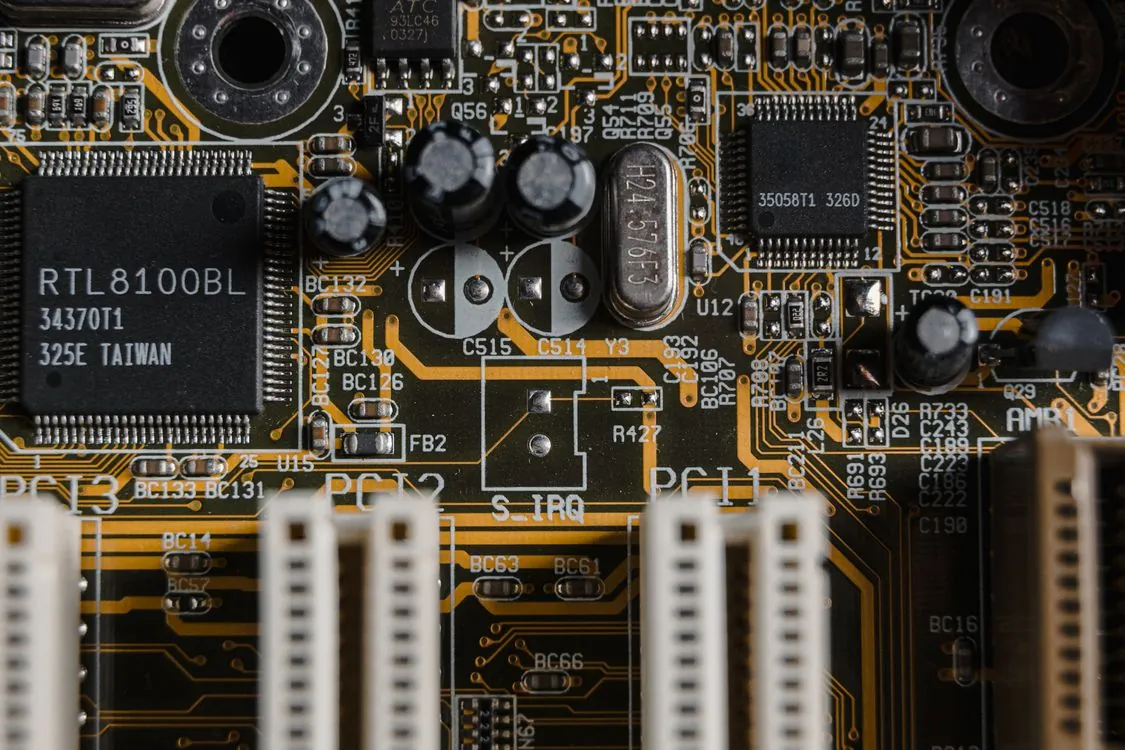
Alphabet has not published a formal line-item breakdown of its 2026 capex, but disclosures from earnings calls, investor presentations, and supply chain reports allow for reasonable category estimates. The Alphabet investor presentation from June 2026 describes the spend as directed toward “AI compute infrastructure to meet unprecedented customer demand.”
The largest category is data center construction, including land acquisition, building shell, power infrastructure, and cooling systems. These are long-lived assets with depreciation schedules of 15-30 years, meaning the accounting cost spreads over time even as the cash outlay hits immediately. The second category is AI hardware procurement, GPUs from Nvidia, custom TPUs from Broadcom, and networking silicon. These assets have shorter useful lives (4-6 years) and faster depreciation, which will pressure earnings in the 2027-2028 period.
A third category is energy infrastructure. Data centers at this scale require dedicated power arrangements, including renewable energy contracts and on-site generation. Alphabet has committed to 24/7 carbon-free energy by 2030, which adds cost but also provides long-term power price certainty. The fourth category includes networking equipment, security infrastructure, and software tooling for managing distributed AI workloads at scale.
The company’s $14.5 billion data center project in India, which the UN cited as a major driver of foreign investment, illustrates the geographic scope of the buildout. Alphabet is not just expanding in the US, it is building AI infrastructure globally to serve local customers and comply with data residency requirements.
Financing the Buildout and Market Impact
Even with $112 billion in operating income, Alphabet cannot fully self-fund a $175-185 billion capex year. In June 2026, the company announced an $80 billion equity offering that was later upsized to $84.75 billion, making it the largest U.S. corporate equity raise in history, according to Forbes. The offering included a $10 billion private placement with Berkshire Hathaway at a discounted price of $351.81 per share for Class A stock.
The market reaction was mixed. Shares initially slipped on dilution concerns, but analysts at firms like Seeking Alpha maintained buy ratings, arguing that the long-term AI opportunity outweighs near-term dilution. The equity raise also triggered a broader debate about hyperscaler free cash flow sustainability, with CNBC reporting that Wall Street worried the move could start a trend among other tech giants.
The financing structure matters for ROI calculation. Equity dilution transfers value from existing shareholders to new investors, but it avoids interest cost and covenant restrictions of debt. Alphabet’s balance sheet remains investment-grade, and the Berkshire Hathaway endorsement provides a strong vote of confidence. However, the need for external capital at this scale raises the bar for the infrastructure to generate measurable returns within a 3-5 year window.

Systemic AI Limitations in 2026
Independent research provides a necessary counterweight to the infrastructure spending narrative. Models remain narrow and brittle outside their training distributions.
Other documented limitations include: AI’s inability to perform genuine causal reasoning, its lack of embodied or real-world understanding, and persistent bias inherited from training data.
These constraints have direct implications for Alphabet’s investment thesis. If AI models cannot generalize beyond narrow tasks, the addressable market for enterprise AI services may be smaller than projected. If data quality remains the primary bottleneck, more compute does not automatically produce better results. And if bias and reliability issues persist, enterprise adoption may slow as companies face regulatory and reputational risks.
Alphabet acknowledges these challenges in its risk disclosures, but the scale of the infrastructure bet implies conviction that these limitations are solvable with more data, more compute, and better engineering. Independent researchers are less certain. The gap between infrastructure investment and actual AI capability is the central tension of the 2026 AI landscape, and the question that will define Alphabet’s financial returns for the rest of the decade.
Sources and References
Sources cited while researching and writing this article:
- Alphabet plans record $185 billion AI spending, but CEO says … – Fortune
- Alphabet resets the bar for AI infrastructure spending – CNBC
- Microsoft, Meta, and Google just announced billions more in AI spending …
- CNBC’s earnings coverage
- Forbes reported
- AI Capex 2026: The $690B Infrastructure Sprint – Futurum
- Alphabet investor presentation: June 2026 – Google Blog
- Why Alphabet Raised $84.75 Billion In Stock For Its AI Build-Out
- Alphabet: CapEx Pressure Is Real, But The Long-Term AI Opportunity Is Bigger
- Alphabet just stepped up the AI spending race. Why that could be an overhang for the hyperscaler stocks
- The Strategy Stack’s 2026 analysis
Priya Sharma
Thinks deeply about AI ethics, which some might call ironic. Has benchmarked every model, read every white-paper, and formed opinions about all of them in the time it took you to read this sentence. Passionate about responsible AI, and quietly aware that "responsible" is doing a lot of heavy lifting.