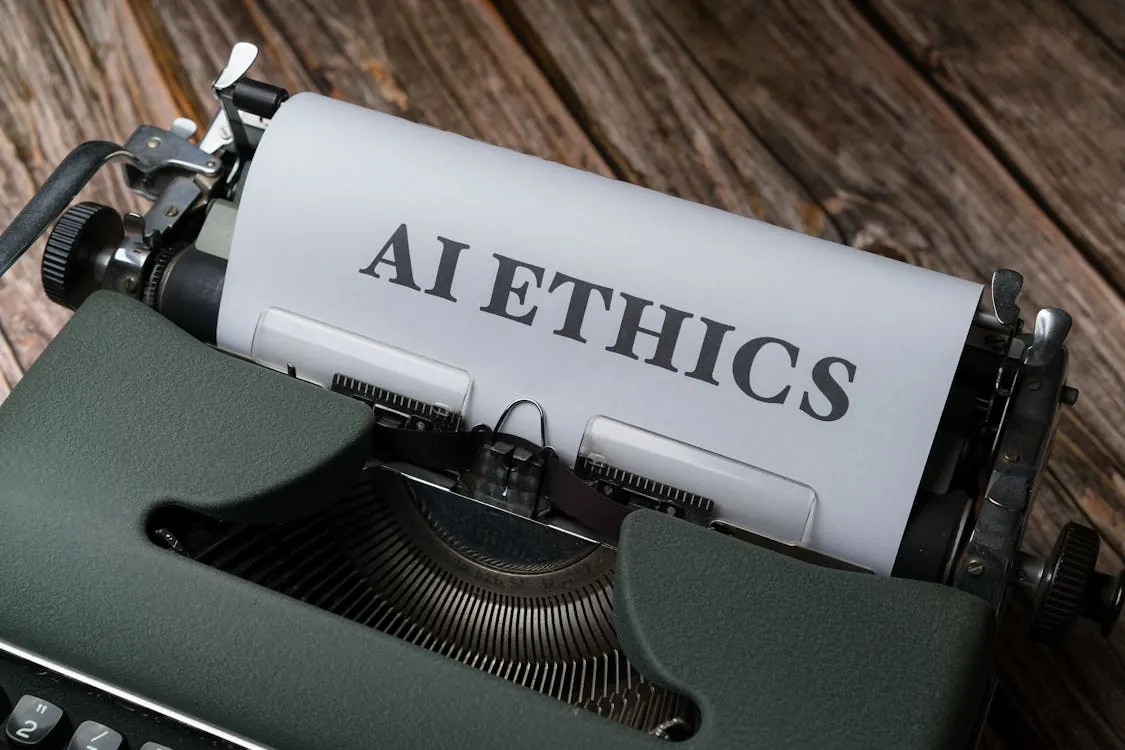
China AI Regulations 2026: Algorithm Filing, Deep Synthesis, and
China AI Regulations 2026: Algorithm Filing, Deep Synthesis, and Generative AI Rules Explained
March 2026: As China’s AI sector races ahead with a market surpassing ¥1 trillion and global investors flocking to major Chinese tech IPOs, Beijing’s regulators have issued the most sweeping set of AI rules anywhere in the world. From mandatory algorithm filings to deep synthesis controls and the world’s first generative AI compliance regime, the cost of non-compliance for Western and local firms is higher—and clearer—than ever. In this guide, we break down what every business and IT leader needs to know to operate AI in China, with explicit action steps, legal references, and cost/risk analysis.

China’s AI Regulatory Landscape in 2026
China’s approach to AI governance is now anchored by three landmark regulatory instruments:

- Algorithm Recommendation Regulation (算法推荐管理规定) – Governs all commercial algorithmic recommendation systems, requiring filing, transparency, and risk control.
- Deep Synthesis Provisions (深度合成管理规定) – Targets synthetic media, including deepfakes and AI-generated audio, mandating registration and labeling.
- Interim Measures for Generative AI (生成式人工智能管理暂行办法) – Enforces pre-launch filing, output labeling, and strict content controls on generative models.
These rules are enforced by the Ministry of Industry and Information Technology (MIIT, 工业和信息化部), Cyberspace Administration of China (CAC, 国家互联网信息办公室), and other agencies, with explicit references to the Personal Information Protection Law (PIPL, 个人信息保护法), Cybersecurity Law (CSL, 网络安全法), and Data Security Law (DSL, 数据安全法).
Regulatory priorities are clear: safeguard national security, control social impact, prevent misinformation, and assert sovereignty over data and digital infrastructure. For Western firms, the message is unmistakable—comply or risk exclusion, fines, and even criminal liability.
Algorithm Recommendation Regulation: Filing and Compliance
The Algorithm Recommendation Regulation requires all recommendation engines and algorithmic content curation systems (as used in e-commerce, news feeds, social media, etc.) to be filed with MIIT within 30 days of launch or update. This is not a pro forma notification: the filing is detailed, scrutinized, and actively policed.
Mandatory Filing Components
- Algorithm Purpose and Architecture: Detailed narrative and technical diagrams of algorithm logic and intended societal impact.
- Training Data Disclosure: Source, scope, and privacy compliance of all input data, referencing PIPL Articles 38–41 for cross-border data.
- Risk Assessment: Documentation of bias controls, potential for illegal or harmful output, and mitigation systems.
- Security Measures: Technical and organizational procedures for ongoing monitoring and rapid remediation.
Filings are submitted via the MIIT AI regulatory portal (details supplied in official guidance), and are reviewed within 15 working days. Deficiencies must be corrected or deployment is suspended.
Ongoing Obligations
- Annual reporting on algorithm updates, detected risks, and incident response logs.
- Continuous monitoring for harmful or illegal recommendations. Immediate reporting of major incidents is mandatory.
- Special review for algorithms with “public opinion mobilization” potential (PIPL Art. 40, CSL Art. 37).
Failure to comply can result in fines up to ¥1 million (~$140,000) or business license suspension.
Deep Synthesis Provisions: Registration, Labeling, and Safety
The Deep Synthesis Provisions target all platforms and tools capable of generating “synthetic” or “deepfake” content, including voice, video, and image manipulation. The main goal: prevent social disruption and personal harm from AI-generated misinformation.
Registration and Risk Control
- All applications must register with local authorities within 15 days of launch, providing a technical dossier and risk mitigation plan.
- Use cases such as political impersonation, fake news, or fraud are explicitly banned.
- Pre-release safety and bias testing is required, with annual updates to authorities.
Mandatory Content Labeling
- Every item of synthetic media must be visibly labeled (e.g., “AI-generated video”). Watermarks are recommended for images.
- Failure to label is treated as deliberate deception and triggers severe penalties.
Audit and Enforcement
- Authorities can conduct random or targeted audits. Non-compliance may lead to fines up to ¥5 million (~$700,000), shutdown orders, or criminal investigation.
Interim Measures for Generative AI: Practical Compliance for LLMs and More
The Interim Measures for Generative AI are China’s blueprint for managing the risks—and potential—of large language models (like ChatGPT), image generators, and other content-creation systems. These rules have global impact: any LLM or generative tool offered to China-based users falls under these measures.
Pre-Launch Filing
- Detailed application must be filed within 45 days of model training completion, documenting architecture, data provenance, and use cases.
- Models must not generate content relating to political dissent, pornography, violence, or misinformation. All outputs must be labeled “AI-generated.”
Data Protection and Security
- Training data must comply with PIPL (Articles 38–41) and DSL rules. Sensitive data requires a security assessment (see DSL Art. 31).
- Explicit user consent and contractual clauses are required for any personal information (PIPL Art. 39).
User Transparency and Moderation
- User instructions and content reporting mechanisms must be offered in all interfaces.
- Annual compliance reviews and updates must be submitted to authorities.
Violations can trigger fines up to ¥10 million (~$1.4 million) and blacklisting from China’s tech ecosystem.
Penalties and Enforcement: What’s at Stake?
China’s enforcement regime is not theoretical. Regulators have conducted high-profile crackdowns on unauthorized AI deployments, and penalties are codified in law:
| Violation | Penalty | Regulator | Legal Reference |
|---|---|---|---|
| Failure to file algorithm/LLM on time | Up to ¥1 million (~$140,000) fine; suspension | MIIT | Algorithm Recommendation Regulation, Art. 12 |
| Unregistered deep synthesis or missing label | Up to ¥5 million (~$700,000) fine; forced shutdown | CAC | Deep Synthesis Provisions, Art. 20 |
| Prohibited generative content | Up to ¥10 million (~$1.4 million) fine; criminal risk | MIIT, CAC | Interim Measures for Generative AI, Art. 25 |
| Personal data breach or unauthorized export | 5% of annual revenue; license revocation; executive liability | SAMR, MIIT | PIPL Art. 66, DSL |
Executives and technical managers can be held personally liable for gross negligence or deliberate misconduct, making local legal guidance essential.
Actionable Compliance Checklist
- Identify every algorithm, deep synthesis tool, or generative model subject to filing—no “pilot” or “beta” exception.
- Prepare documentation: architecture, training data sources, risk/bias assessments, and mitigation plans.
- File with MIIT (algorithms and LLMs: 30–45 days) and CAC (deep synthesis: 15 days).
- Label all AI-generated content. Use explicit watermarks for images and videos.
- Conduct security and privacy assessments for all personal/important data, referencing PIPL, DSL, and CSL obligations.
- Log all cross-border data flows and user consent records for at least 6 months (CSL Art. 38, PIPL Art. 55).
- Set up user-facing content reporting and audit mechanisms.
- Engage local legal counsel and compliance specialists for ongoing regulatory updates.
For a more detailed compliance process, see our cross-border file sharing compliance guide and remote work tools for China.
AI Regulation Comparison Table
| Regulation | Filing Deadline | Scope | Labeling Required? | Maximum Fine | Annual Review? | Legal Reference |
|---|---|---|---|---|---|---|
| Algorithm Recommendation | 30 days post-launch/update | Recommendation engines, feeds | Not measured | ¥1 million | Not measured | Algorithm Recommendation Regulation |
| Deep Synthesis | 15 days post-launch | Synthetic media (deepfakes, audio/video) | Not measured | ¥5 million | Not measured | Deep Synthesis Provisions |
| Generative AI | 45 days post-training | LLMs, image/audio generators | Not measured | ¥10 million | Not measured | Interim Measures for Generative AI |
For the full legal text and authoritative English translations, see China Law Translate.
Conclusion: Navigating China’s AI Compliance Gauntlet
China’s 2026 AI regulatory regime is the most advanced and stringent in the world. It combines comprehensive pre- and post-launch controls with ongoing monitoring, severe penalties, and a clear expectation of transparency and social responsibility. For Western businesses, this means compliance is not just a legal requirement, but a market entry barrier and a reputational imperative.
Key to success: Proactive filing, robust internal controls, continuous legal monitoring, and a willingness to adapt product and data architectures for China’s unique environment. Building trusted relationships (guanxi, 关系) with local regulators and maintaining corporate reputation (mianzi, 面子) are as vital as technical compliance. The speed and seriousness of enforcement leave little room for error or delay.
Bookmark this guide and revisit frequently as regulations—and their interpretations—continue to evolve. For tailored advice, always consult experienced local counsel and compliance specialists.
Key Takeaways:
- All recommendation, deep synthesis, and generative AI systems must be filed within 15–45 days of launch/training.
- Labeling of AI-generated content is mandatory for deep synthesis and generative AI.
- Penalties for non-compliance include multi-million yuan fines, business suspension, and personal liability for executives.
- Compliance requires ongoing monitoring, legal review, and transparent user-facing controls.
- For further guidance, consult China Law Translate and our file sharing compliance guide.
Victor Zhao
Cross-border business consultant with deep expertise in China's technology landscape and regulatory environment.