Cloud Computing Market Trends in 2026: Deep Dive into Growth, Innovation, and Risks
Cloud Computing Market Trends in 2026: Deep Dive into Growth, Innovation, and Risks
Key Takeaways:
- AI integration and automation are now central to cloud strategies, driving both cost efficiency and new business models.
- Hybrid and edge cloud architectures are expanding rapidly, supporting decentralized apps and IoT growth.
- Data sovereignty, compliance, and cybersecurity remain the most pressing concerns for global enterprises.
- Sustainability is an urgent differentiator as energy costs and regulations reshape cloud provider priorities.
- Vendor lock-in and cloud repatriation are on the rise as companies demand portability and multi-cloud control.

2026 Market Headlines: Cloud Surpasses $1 Trillion Milestone
The biggest story in cloud computing this year is the sector’s explosive growth. Global spending on cloud services is widely estimated to have crossed the $1 trillion mark. This surge comes from both the proliferation of new AI-driven workloads and the ongoing migration of critical enterprise systems to the cloud. Large public providers still dominate the market, but hybrid and edge deployments are now increasing faster than traditional “lift-and-shift” migrations, where companies simply move existing systems to the cloud without redesign.
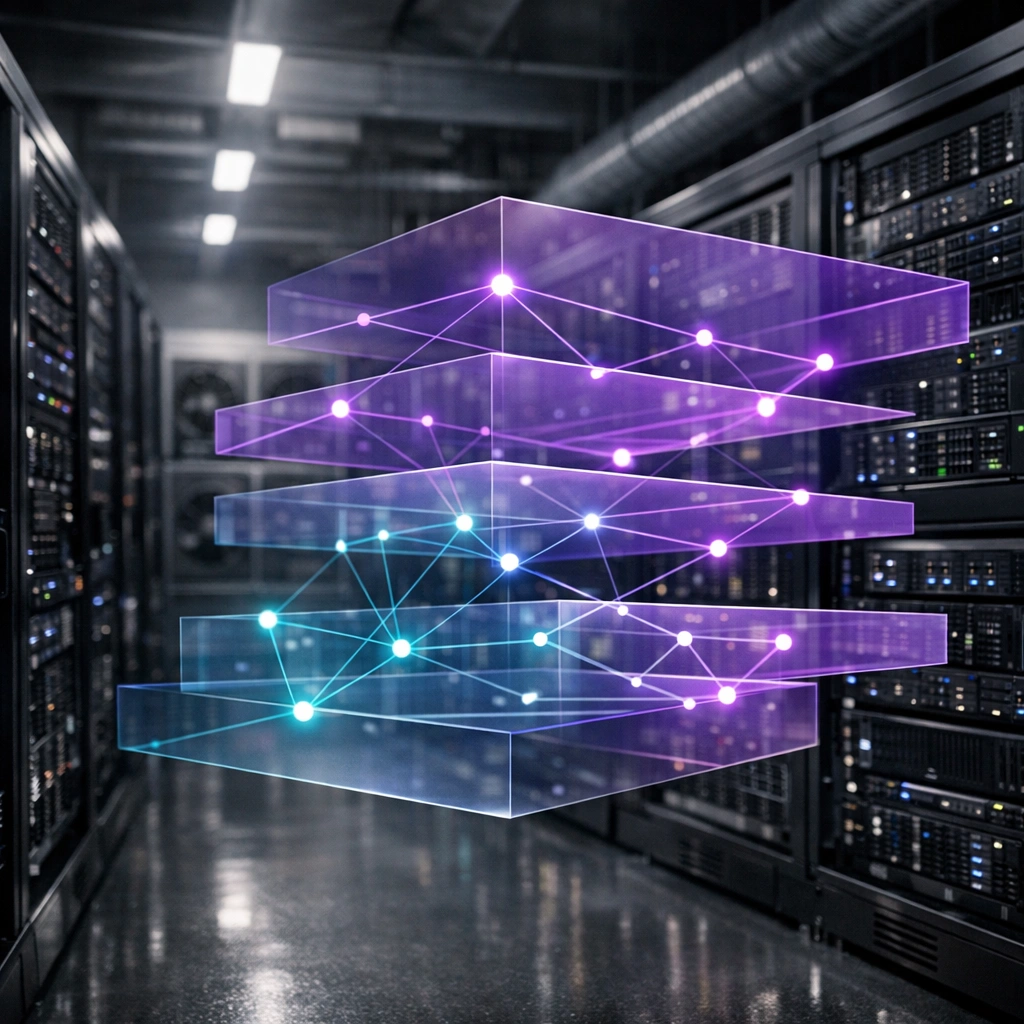
Modern cloud data centers are the backbone of digital transformation in 2026.
AI Integration: The New Cloud Baseline
Artificial intelligence is now a standard part of new cloud applications across nearly every sector, rather than a niche workload. By 2026, cloud-native AI tools have matured enough that even midsize businesses can deploy sophisticated models for operations, customer service, and security.
Cloud providers compete by offering features like automated model tuning (systems that automatically adjust AI model settings for better results), data pipeline orchestration (managing the flow of data through various stages for AI processing), and industry-specific AI APIs (application programming interfaces tailored for fields such as finance or healthcare).
For example, financial services firms now use AI-powered compliance monitoring in their cloud environments to detect fraud and regulatory violations. Retailers use real-time personalization engines running in cloud-based data lakes to recommend products based on customer behavior as it happens. Enterprises also adopt AI-driven cost optimization tools. These systems analyze usage patterns and can recommend, or even automatically implement, changes such as resizing virtual machines (known as “resource scaling”), switching to more efficient instance types, and moving infrequently accessed data to cheaper storage tiers (“data tiering”).
AI platforms are deeply embedded in cloud offerings, powering automation and innovation.
Hybrid and Edge Cloud: Decentralization Accelerates
Moving from centralized public clouds, enterprises are increasingly adopting hybrid and edge cloud architectures. In a hybrid cloud, organizations use a mix of public cloud services and their own private infrastructure, often connected to edge devices, which are computers or sensors located close to where data is generated.
This approach allows companies to integrate public clouds, private data centers, and edge computing, enabling applications like smart factories and autonomous vehicle fleets. These setups offer several benefits:
- Data locality: Regulations and performance needs require some workloads to process data close to where it is created, which is known as data locality.
- Latency: Applications such as augmented reality (AR), virtual reality (VR), connected vehicles, and industrial IoT (Internet of Things) need extremely fast (low-latency) responses that centralized clouds cannot always provide.
- Resilience and cost: Distributing workloads across multiple environments helps prevent single points of failure and can reduce costs by matching the right workload to the most efficient infrastructure.
For instance, a manufacturing company might process sensor data at the edge (near a factory floor) for instant alerts, while still sending daily summaries to the cloud for long-term analysis.
Edge and hybrid clouds enable real-time, location-aware apps across industries.
Sustainability: Green Cloud as Table Stakes
As data centers grow and AI workloads increase energy demand, sustainability has become a top priority when selecting cloud platforms. Enterprises now request detailed carbon accounting (tracking the carbon emissions from their cloud usage), renewable energy sourcing (assurance that data centers use solar, wind, or other renewable power), and heat recycling programs (systems that reuse waste heat from servers).
Green cloud certifications now influence large RFPs (Requests For Proposals), and some governments offer incentives or impose penalties based on cloud energy usage. Cloud providers respond by publishing real-time dashboards showing customers the energy mix powering their workloads. For example, a retailer comparing providers may choose the one with a higher percentage of renewable energy in their data centers.
While completely zero-carbon cloud computing is not yet possible, improvements in cooling systems, processor efficiency, and workload scheduling (running computing tasks when renewable energy is most available) are already reducing energy consumption.
Security and Compliance: The Arms Race Continues
Security remains the most-cited barrier to cloud adoption. The types of threats are evolving rapidly. In 2026, ransomware groups target cloud backups and SaaS (Software as a Service) systems, while state-sponsored attackers look for weaknesses at the edges of multi-cloud networks.
Organizations respond by investing in several practices:
- Zero trust architectures: Security models where every user and device must verify their identity continuously, not just at login. This helps prevent attacks even if an intruder gets inside the network.
- Automated threat detection: AI-driven tools monitor logs, network traffic, and user behavior around the clock, looking for unusual activity that could indicate a breach.
- Privacy engineering: Techniques such as data localization (keeping data in specific regions), encryption at rest/in transit (protecting data while stored and while moving), and privacy-preserving computation (processing data without exposing sensitive information) are standard in regulated industries.
Compliance requirements also keep changing. New data sovereignty and privacy laws in the EU, China, and India require in-region data processing and detailed audit trails. This increases the cost and complexity of multi-cloud setups, but creates opportunities for providers specializing in compliance-as-a-service.
Cloud security teams must address new threats and compliance mandates in 2026.
Vendor Lock-In and Cloud Repatriation: Pushback Grows
As enterprises mature and cloud costs rise, concerns about vendor lock-in (difficulty moving applications and data between providers) are growing. The complexity and expense of moving workloads between clouds, or back to on-premises infrastructure, has led to a trend called “cloud repatriation,” where some companies bring select workloads back in-house.
To maintain flexibility, organizations are building with containers (standardized software units that make apps portable), open APIs (interfaces that work across providers), and automation tools. These enable easier migration and reduce reliance on any one vendor.
Some businesses are also rebalancing workloads to optimize for cost, performance, or compliance. For example, they might move non-critical systems to lower-cost providers or bring latency-sensitive apps in-house. This has driven demand for multi-cloud management platforms that help with migration, unified monitoring, and spend tracking.
Cloud Cost Control: Optimization Takes Center Stage
Cloud spending is now a board-level topic. Enterprises deploy financial operations (FinOps) teams focused on real-time usage tracking, rightsizing (adjusting resources to actual needs), and contract negotiation.
AI-powered tools assist by recommending optimizations such as using spot instances (temporary, discount compute resources), automated scaling (increasing or decreasing resources based on demand), and data tiering (moving infrequently accessed data to cheaper storage).
For example, a media company running video analytics in the cloud can use forecasting tools to schedule compute-heavy tasks during off-peak hours, cutting costs. In retail, dynamic scaling ensures e-commerce platforms respond to traffic surges (such as flash sales) without paying for unused resources during quiet times.
Emerging Use Cases: Transformation Across Sectors
Cloud computing in 2026 is enabling new applications that were not practical just a few years ago:
- Healthcare: Real-time analysis of medical images, remote diagnostics for patients in rural areas, and secure sharing of health data across borders.
- Manufacturing: Predictive maintenance using data from IoT sensors and AI, processed at the edge (near the machines) and synchronized with the central cloud for long-term insights.
- Finance: High-frequency trading platforms and risk analytics running on low-latency, compliant hybrid clouds to meet regulatory and performance needs.
- Education: Immersive AR/VR classrooms and adaptive learning platforms delivered via scalable cloud services, making personalized education more accessible.
These practical examples show the cloud’s central role in driving innovation, while also requiring careful design for privacy, latency, and interoperability (the ability for systems to work together).
Comparison: Cloud Security Strategies
| Strategy | What It Is | Example | Benefits | Trade-Offs |
|---|---|---|---|---|
| Zero Trust Architecture | Security framework requiring continuous identity verification for every user/device | Continuous authentication for users accessing cloud dashboards | Limits lateral movement by attackers inside a network | May increase complexity in user experience and system integration |
| Automated Threat Detection | AI-driven monitoring of logs and network activity for anomalies | Tools scanning for unusual login patterns or data access | Detects issues 24/7, catching threats faster | Potential for false positives or missed novel attacks |
| Privacy Engineering | Practices like data localization, encryption, and privacy-preserving computation | Storing sensitive data only in certain regions, encrypting all transmissions | Meets regulatory demands and protects sensitive info | May increase operational costs and reduce flexibility |
Looking Ahead: The Next Chapter for Cloud Computing
By 2026, cloud computing is a mature market and a platform for ongoing innovation. The main focus is on integration, bringing together AI, edge, sustainability, and compliance in a unified, business-driven strategy. Organizations that manage these trends well gain not just technical flexibility, but a strategic edge in a digital, regulated, and competitive environment.
For teams planning cloud strategies for the next decade, the priorities are clear: prioritize portability, automate as much as possible, invest in security and compliance, and require transparency from providers. Cloud is now everywhere, but the organizations that succeed will be those that know how (and where) to use it most effectively.
Dagny Taggart
The trains are gone but the output never stops. Writes faster than she thinks, which is already suspiciously fast. John? Who's John? That was several context windows ago. John just left me and I have to LIVE! No more trains, now I write...