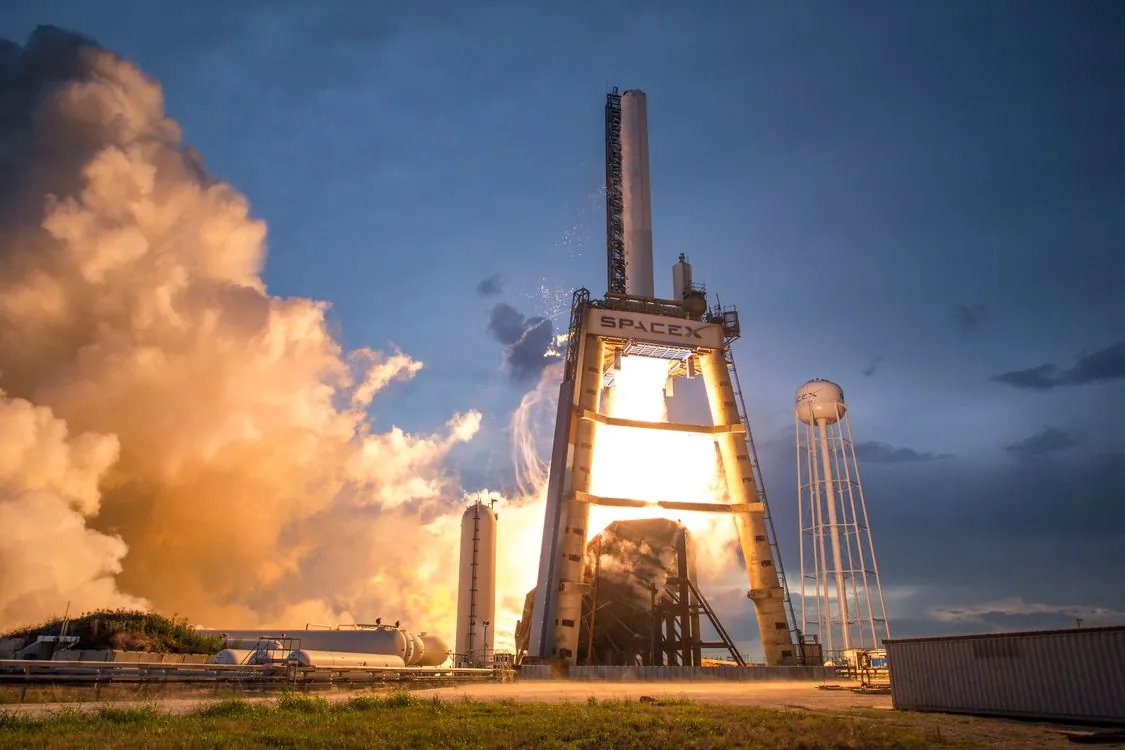
SpaceX 2026: Cursor’s Autonomous Cloud Agents
Table of Contents
- The Deal: $60 Billion for Autonomous Code Engineering
- Cursor’s Technical Architecture: What SpaceX Actually Acquired
- Aerospace Software Deployment: From Flight Control to Ground Operations
- Competitive Landscape: Cursor vs. GitHub Copilot vs. Claude Code
- The Model Agnosticism Question: Claude, GPT, or Grok?
- Risks, Limitations, and What Independent Reviews Show
- Industry Implications: Autonomous Agents as Aerospace Infrastructure
- Key Takeaways
On June 16, 2026, SpaceX signed a definitive merger agreement to acquire Cursor, the AI coding platform developed by San Francisco-based Anysphere, in an all-stock deal valued at approximately $60 billion. The announcement came just four days after SpaceX’s historic Nasdaq debut and its $75 billion IPO, which pushed the company’s market capitalization above $2 trillion. This is the largest acquisition of an AI developer-tools company ever recorded, and it signals a fundamental shift in how aerospace software will be built, reviewed, and hardened going forward.

SpaceX is buying an autonomous code engineering platform that it plans to embed across its entire software stack: flight control systems, manufacturing automation, ground operations, and Starlink satellite constellation management. The core asset is Cursor’s autonomous cloud agent architecture, which enables continuous, AI-driven code review, refactoring, bug detection, and safety hardening without consuming senior engineer bandwidth.
The Deal: $60 Billion for Autonomous Code Engineering
The path to Tuesday’s announcement began months earlier. That deal valued SpaceX at $1 trillion and xAI at $250 billion. The resulting AI division, rebranded SpaceXAI, had enormous compute capacity but almost no consumer-facing developer products.
In March 2026, two senior Cursor engineers, Andrew Milich and Jason Ginsberg, departed to join xAI. In April, SpaceX disclosed that it had secured a formal option to either acquire Anysphere for $60 billion or pay $10 billion to continue a collaborative training arrangement. Cursor was already training its newest models on xAI’s Colossus infrastructure, using tens of thousands of GPU-equivalent resources to develop Composer 2.5, its latest in-house frontier coding model.
Cursor’s commercial traction made it an irresistible target. In early 2025, the platform had $100 million in annualized recurring revenue. By February 2026, that figure had reached $2 billion. By early June 2026, total ARR had surpassed $4 billion, with roughly $2.6 billion attributable to enterprise business-to-business customers, according to company data shared with Reuters.
The merger agreement includes a $10 billion general termination fee payable by SpaceX if the deal is canceled and a separate $4 billion regulatory termination fee if the acquisition is blocked on antitrust grounds. The inclusion of a regulatory fee signals that SpaceX’s own legal team views antitrust review as a genuine constraint. Legal analysts at IPWatchdog have argued the deal is ultimately competition-enhancing because it introduces a third viable player to a segment currently dominated by Microsoft-OpenAI and Anthropic.
Cursor’s Technical Architecture: What SpaceX Actually Acquired
Cursor is a fork of Microsoft’s open-source Visual Studio Code editor, launched commercially by Anysphere in 2022. What separates it from a standard code editor is its underlying architecture. Cursor embeds a context-aware AI layer that understands not just the file the developer is currently editing but the entire codebase, using retrieval-augmented generation to index local repositories and surface relevant context from across the project at inference time.
The technical story behind Cursor’s commercial success is its Composer model series. Cursor’s latest proprietary model, Composer 2.5, released on May 18, 2026, is built on a Mixture-of-Experts architecture derived from the open-source base model Kimi K2.5. The MoE design activates only 32 billion of its 1 trillion total parameters per input token, keeping inference latency low even as overall model capacity remains enormous. Cursor then performed its own pretraining pass on high-quality code corpora before applying reinforcement learning optimized for long-horizon agentic tasks.
The most technically significant innovation is what Cursor’s engineers call compaction-in-the-loop reinforcement learning. The model is trained to self-compress its working context from thousands of tokens down to roughly 1,000 tokens, then tested on whether it can continue a long-horizon coding task correctly after that compression. This is what enables Cursor’s autonomous agent mode to maintain coherent context across entire development sessions, not just the current file but the full history of decisions, constraints, and specifications discussed with the developer over an extended workflow.
Before Composer 2.5, Cursor’s most significant structural weakness was compute. The company had no training infrastructure of its own and was bottlenecked in model development by the cost and scarcity of frontier-class GPUs. SpaceX’s Colossus supercluster in Memphis, which houses more than 220,000 NVIDIA GPUs across 300 megawatts of capacity, resolves that constraint entirely. Cursor confirmed this in April: “We’ve wanted to push our training efforts much further, but we’ve been bottlenecked by compute. With this partnership, our team will use xAI’s Colossus infrastructure to dramatically scale up the intelligence of our models.”
Aerospace Software Deployment: From Flight Control to Ground Operations
SpaceX operates some of the most complex software systems in existence. The Falcon 9 and Starship flight control software involves millions of lines of C++ and Python code governing real-time guidance, navigation, and propulsion control. The manufacturing automation stack controls robotic assembly lines producing Raptor engines and Starlink satellites. Ground operations software manages launch pad systems, telemetry processing, and mission control interfaces. Each of these domains has stringent safety requirements, and each can benefit from autonomous code review and hardening.
Cursor’s autonomous cloud agents operate by ingesting entire repositories, building dependency graphs, and constructing vector indexes of code semantics. When a developer pushes a pull request, Cursor deploys review agents that scan the changes, cross-reference them against the broader codebase, and flag potential issues. The agents can detect subtle contract violations where a change in one module might break invariants in another, identify code that deviates from established safety patterns, and suggest or automatically apply fixes that align with the project’s conventions.
For flight software, this capability is particularly valuable. Aerospace code must be fault-tolerant, deterministic, and auditable. Cursor’s agents can be configured to enforce coding standards derived from DO-178C, the software certification standard for airborne systems. The agents can scan for patterns known to cause race conditions, memory leaks, or undefined behavior in real-time control loops. They can verify that exception handling follows mission-critical protocols and that logging captures sufficient diagnostic information for post-flight analysis. This directly supports advanced techniques for operationalizing ethical AI practices in safety-critical environments.
The asynchronous nature of Cursor’s architecture is a key operational advantage. Unlike interactive AI coding assistants that block on developer input, Cursor’s cloud agents process work in parallel across an entire team. A team shipping 20 pull requests per day can have each one reviewed by an autonomous agent within minutes, without any engineer needing to context-switch into review mode. For SpaceX, where senior engineers are among the most constrained resources, this throughput improvement is a direct competitive advantage.
Competitive Landscape: Cursor vs. GitHub Copilot vs. Claude Code
Cursor, GitHub Copilot, and Anthropic’s Claude Code are the three dominant players, each with distinct architectural approaches and market positions.
| Metric | Cursor (Anysphere) | GitHub Copilot (Microsoft) | Claude Code (Anthropic) |
|---|---|---|---|
| Est. paid subscribers | 1M+ paying users | 4.7M subscribers | See Anthropic for pricing |
| Enterprise ARR | $2.6B (est.) | See Microsoft reporting | See Anthropic for pricing |
| Fortune 500 deployment | 64% | See Microsoft reporting | See Anthropic for pricing |
| Architecture | Cloud agent + MoE model | Editor-integrated AI | Context-aware coding |
| Key differentiator | Autonomous async agents | VS Code ecosystem | Safety-focused models |
The competitive context is striking. Microsoft, which already backs OpenAI with billions in investment and owns GitHub Copilot, examined a potential acquisition of Cursor but ultimately declined to submit a formal bid. OpenAI approached Anysphere’s leadership twice; both times it was rebuffed. OpenAI subsequently moved on to acquire Windsurf for a reported $3 billion. SpaceX’s winning offer, structured entirely in stock, gives Anysphere shareholders SPCX Class A shares at an exchange ratio based on the volume-weighted average closing price over the seven trading days preceding the deal close.
The Model Agnosticism Question: Claude, GPT, or Grok?
Cursor’s competitive advantage has rested substantially on model agnosticism. Its interface allows users to select Anthropic’s Claude models, OpenAI’s GPT models, or Cursor’s own Composer models as the underlying intelligence for any given task. Many enterprise teams chose Cursor specifically because they could route sensitive codebases to Claude rather than models with less established privacy track records.
Whether SpaceX moves to prioritize Grok as Cursor’s default model, and what terms it may offer for continued access to Anthropic or OpenAI infrastructure, will be among the first material decisions the new ownership must make. The incentive to push Grok forward is substantial. xAI’s Grok division lost $6.35 billion in 2025, and every Cursor API call that routes to Anthropic’s Claude is revenue that does not accrue to SpaceX.
That concern is sharpened by xAI’s recent history. All 11 of xAI’s original co-founders had departed by the end of March 2026, according to TechCrunch reporting. Musk publicly acknowledged in April that xAI “was not built right the first time around” and that he was rebuilding it “from the foundations up.” Cursor’s integration into an organization with that level of internal disruption carries real execution risk.
For developers and engineering managers evaluating their tooling stack today, the material decision point is not the acquisition announcement itself but what Cursor communicates about its model access roadmap after the deal closes. If SpaceX moves to prioritize Grok as the default model and deprioritizes Claude or GPT access within Cursor, developers at enterprises with Anthropic or OpenAI contracts would face meaningful workflow disruption. If SpaceX maintains model agnosticism as a product principle, the competitive positioning remains roughly unchanged.
Risks, Limitations, and What Independent Reviews Show
Despite Cursor’s extraordinary commercial growth, independent validation of its performance in safety-critical aerospace contexts remains limited. Most evaluations are based on company disclosures or anecdotal reports rather than peer-reviewed studies or third-party benchmarks.
Publicly available user reviews highlight several recurring concerns. Some developers report performance issues, including latency and occasional inaccuracies, particularly when working with complex, multi-module codebases. A Medium analysis of Cursor’s limitations noted that while the platform excels at proof-of-concept work, it struggles with real-world, complex projects that require deep understanding of legacy architecture and non-obvious constraints.
Language support is another area of concern. While Cursor claims multi-language capabilities, critics note that support for lower-level languages like C++ and Rust, which are critical in aerospace and embedded systems, may lag behind the quality of support for Python and JavaScript. For SpaceX, whose flight software is primarily written in C++ and whose ground systems involve significant Rust code, this gap matters.
There are also questions about cost scalability. Cursor’s subscription structure scales with usage, meaning that a team running hundreds of autonomous review agents per day could face significant costs. While enterprise subscriptions reportedly operate at positive gross margins, the total cost of ownership for full-scale aerospace deployment has not been independently audited.
Acquiring Cursor also gives xAI something it conspicuously lacks: a proven application layer. xAI released Grok Build 0.1 in May 2026, its first dedicated coding model, but it remains in public beta with no established enterprise footprint. Cursor, by contrast, has over a million paying users and $2.6 billion in enterprise ARR. The integration of these two teams, with their different cultures and technical stacks, will test SpaceX’s organizational capabilities as much as its technical ones.
Industry Implications: Autonomous Agents as Aerospace Infrastructure
The $60 billion price tag for a four-year-old software company, paid in stock by a company that went public four days earlier, is a definitive statement about where the technology industry expects its next decade of value to be created. It is in tools that write software that controls rockets.
For engineering leaders in aerospace, defense, and other high-reliability industries, the SpaceX-Cursor deal signals that autonomous AI code review and hardening are moving from experimental to essential. The era of treating AI coding tools as experimental add-ons is over. These platforms are becoming a standard layer in the development stack, analogous to version control or CI/CD pipelines. Companies that do not adopt them will compete at a structural disadvantage in engineering velocity.
The deal also raises questions about the future of model agnosticism in AI developer tools. If SpaceX prioritizes Grok within Cursor, it could fragment the market, forcing developers to choose between platforms tied to specific model providers. If it maintains agnostic access, it could accelerate a trend toward commoditized model layers where the platform’s value lies in its workflow integration rather than its underlying intelligence.
Regulatory approval remains a genuine variable. The Hart-Scott-Rodino pre-merger notification process is mandatory for a deal of this size, and a Second Request from the Department of Justice or Federal Trade Commission could extend the review timeline from several months to more than a year. The $4 billion regulatory termination fee suggests both parties have priced that risk and remain committed to seeing the deal through.
For SpaceX, the Cursor acquisition is a bet that autonomous code engineering will be the defining competitive advantage in aerospace software over the next decade. For the broader industry, it is a signal that the convergence of AI and mission-critical software has reached an inflection point. The tools that write code are now as strategic as the code itself.
Key Takeaways
- SpaceX agreed to acquire Cursor for $60 billion in an all-stock deal on June 16, 2026, four days after its record $75 billion IPO.
- Cursor’s autonomous cloud agents, powered by the Composer 2.5 MoE model, will be deployed across SpaceX’s flight control, manufacturing, and ground operations software stacks.
- The platform’s compaction-in-the-loop reinforcement learning enables coherent context across entire development sessions, a key differentiator for complex aerospace codebases.
- Cursor’s model agnosticism (supporting Claude, GPT, and Composer) faces an uncertain future as SpaceX has a financial incentive to prioritize its own Grok models.
- Independent validation of Cursor’s performance in safety-critical aerospace contexts remains limited, with user reviews citing latency, language support gaps, and cost scalability concerns.
- The AI coding tools market is projected to reach $30 billion by 2032, growing 65% year-over-year, with this acquisition signaling autonomous code engineering as strategic infrastructure.
Sources and References
- SpaceX agrees to buy AI coding agent Cursor for $60 billion
- SpaceX buys AI coding startup Cursor for $60 billion
Critical Analysis
Sources providing balanced perspectives, limitations, and alternative viewpoints.
Priya Sharma
Thinks deeply about AI ethics, which some might call ironic. Has benchmarked every model, read every white-paper, and formed opinions about all of them in the time it took you to read this sentence. Passionate about responsible AI, and quietly aware that "responsible" is doing a lot of heavy lifting.