
DevOps 2026: Foundations and The State of Practice
DevOps 2026: Foundations and The State of Practice
DevOps is no longer a niche philosophy or optional upgrade, by 2026, it is the operational backbone for organizations that expect to compete on software speed, quality, and reliability. The biggest story this year is the mainstreaming of platform engineering, AI-driven automation, and the blurring of boundaries between development, operations, security, and even product management. Teams that once operated in isolation now share ownership of outcomes, toolchains, and on-call rotations.
DevOps is defined by three pillars: shared ownership (every stakeholder is responsible for the product’s success), automation (reducing manual intervention in delivery and operations), and rapid feedback (shortening the time to detect and fix issues). These principles support continuous integration, continuous delivery (CI/CD), and infrastructure as code (IaC), all now considered production prerequisites rather than aspirational goals.
The influence of DevOps has reshaped not just software teams but entire organizations. Executives now tie business KPIs directly to deployment frequency, lead time for changes, and operational resilience. In 2026, high-performing teams deploy code to production multiple times per day, and recovery from incidents is measured in minutes, not hours or days. According to Wikipedia, industry leaders have codified these expectations into DORA metrics, which remain the gold standard for benchmarking performance.

Metrics and Benchmarks: Measuring DevOps Performance in 2026
Quantifiable outcomes drive modern DevOps. The widely adopted DORA metrics help teams and organizations objectively measure their maturity and surface bottlenecks:

- Deployment Frequency: How often teams deploy code to production.
- Lead Time for Changes: The time it takes for code commit to reach production.
- Change Failure Rate: The percentage of deployments causing production incidents.
- Failed Deployment Recovery Time: Time required to restore service after a failure.
- Rework Rate: The share of hotfixes or unplanned deployments made to fix user-visible issues.
For elite teams, deployment frequency is measured in hours or even minutes, with lead times under an hour and recovery from failures routinely under 30 minutes (Wikipedia). In contrast, lagging organizations may still deploy monthly (or less) with lengthy recovery times and high failure rates. DORA metrics have evolved in 2026 to include human-centric factors, such as burnout and perceived value, recognizing that team health and delivery performance are tightly linked.

These metrics are not just for technical introspection, they now shape boardroom conversations, compensation models, and even regulatory audits in highly regulated sectors. Organizations have adopted real-time dashboards that track not only system uptime and error rates but also the volume, speed, and quality of deployments.
Toolchains, Automation, and Cloud Infrastructure
Tooling is both a differentiator and potential headache. The modern DevOps toolchain is built on:
- Version Control Systems (e.g., Git, GitHub): Enable collaboration, branching, and traceability.
- Pipeline Automation (e.g., Azure DevOps Pipelines): Automate testing, building, and deployment for any language or platform (Azure DevOps).
- Artifact Management: Securely store and distribute build outputs, dependencies, and container images.
- Monitoring & Telemetry: Real-time feedback on application health, performance, and user impact.
- Infrastructure as Code: Define and provision cloud or on-premises resources programmatically.
- Security Automation: Integrate static, dynamic, and software composition analysis directly into the delivery pipeline (DevSecOps).
Cloud infrastructure is now the default for scaling, redundancy, and on-demand resource management. Teams routinely operate hybrid or multi-cloud environments, with automation abstracting away much of the underlying complexity. According to DevOps.com, YAML-first pipeline configurations, automated rollback, and integration with AI tools for anomaly detection are standard in 2026. Azure DevOps continues to be recognized for its comprehensive suite of CI/CD, artifact, and security tools, alongside deep integration with GitHub Copilot for AI-powered code suggestions. Related advances in automation are also transforming other technology domains, as seen in Huawei Tau Scaling Law 2026: Redefining Semiconductor Scaling.

Incident management has also evolved: AI-centric tools now accelerate root cause analysis, automate remediation, and can even roll back problematic deployments autonomously. This is critical as deployment velocity increases and the cost of downtime rises in competitive markets.
Culture, Collaboration, and Best Practices in Modern DevOps
Process and culture are as important as tools. The most successful DevOps organizations in 2026 have fully embraced:
- Shared Responsibility: Developers, operations, and security staff are all accountable for uptime and quality. On-call schedules and incident reviews rotate between teams.
- Continuous Feedback: Monitoring, logs, and post-deployment telemetry feed directly into the development backlog.
- Blameless Postmortems: When failures occur, the focus is on learning and improvement, not punishment. This drives psychological safety and innovation.
- Shift-Left Security: Security testing (SAST, DAST, and dependency scanning) occurs early in the development cycle, not as a final gate.
- Experimentation and Continuous Learning: Teams are encouraged to try new tools, architectures, and workflows, and to automate away toil wherever possible.
GitOps has become a key pattern for managing both application and infrastructure changes via code. All configuration, deployment, and rollback actions are handled through version-controlled repositories, enabling precise change tracking and rapid recovery. DevSecOps practices are now mainstream, with policy-as-code and automated compliance checks built into pipelines.
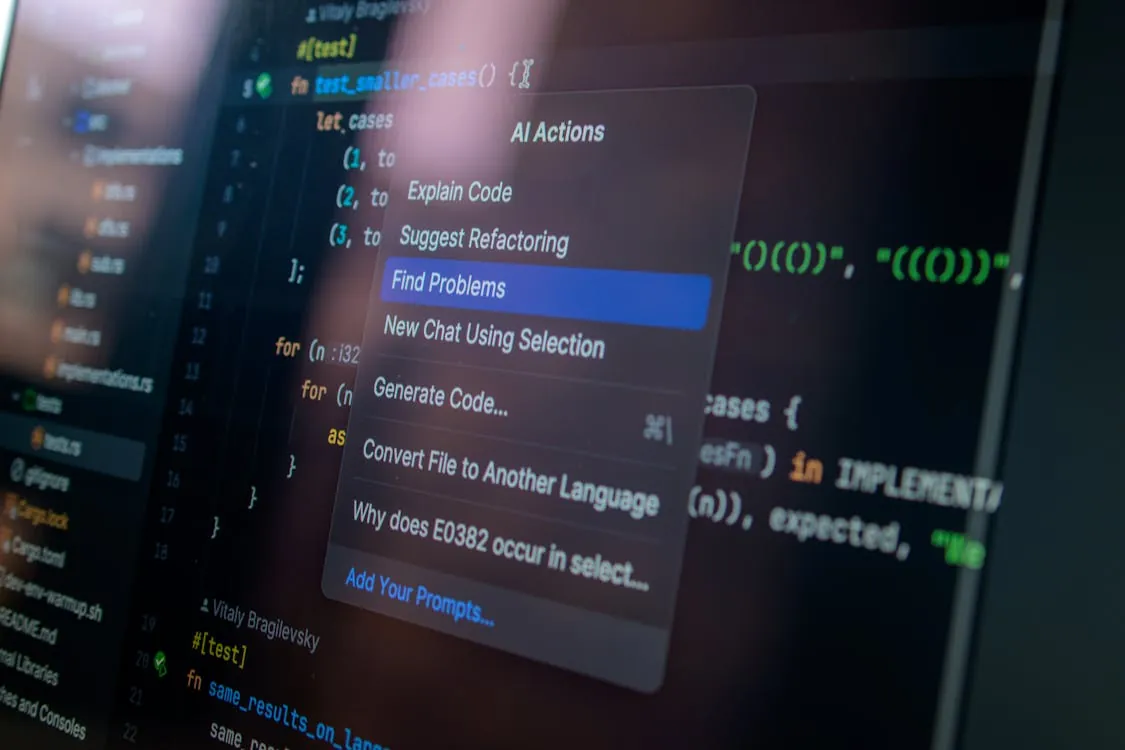
Platform engineering is the new normal: internal developer platforms abstract away low-level infrastructure, providing self-service capabilities and standardized environments for developers. This shift reduces cognitive load, speeds onboarding, and helps enforce security and compliance by default. For teams exploring full-stack automation and caching, advances highlighted in DeepSeek Native Coding Agent 2026: Full Stack Control with High Caching and Low Cost are increasingly relevant.
Trends, Challenges, and Road Ahead for DevOps
2026 is a year of both opportunity and growing complexity for DevOps teams. The most disruptive trends include:
- AI-Driven Automation: Root cause analysis, predictive alerting, and even deployment decisions are increasingly handled by AI systems (TechTarget). This reduces mean time to resolution (MTTR) and frees staff to focus on higher-level problems.
- Platform Engineering: Organizations invest in dedicated internal platforms to standardize environments, enforce policy, and provide developers with frictionless workflows (DevOps Training Institute).
- Cost-Aware Deployments: With cloud bills under scrutiny, teams optimize resource allocation through automated scaling and cost monitoring.
- Security Automation and DevSecOps: Policy-as-code and automated vulnerability scanning are required for regulatory compliance and to keep pace with threats.
- Multi-Cloud, Edge, and Hybrid Deployments: Teams manage increasingly complex environments, demanding robust automation and observability across all layers.
But these advances come with real challenges. Tool sprawl is a growing risk, too many disparate tools can fragment workflows and create new silos. Security and compliance are perennial concerns, especially as infrastructure grows more distributed. Human factors such as burnout, onboarding friction, and the difficulty of keeping up with fast-evolving stacks are now considered first-order risks.
Organizations that balance aggressive automation with investment in collaboration, transparency, and team health consistently outperform those that treat DevOps as just another toolchain or re-org.
Comparison Table: DevOps Approaches and Metrics (2026)
| Approach / Metric | High Performer | Industry Average | Source |
|---|---|---|---|
| Deployment Frequency | Multiple times per day | Monthly or less | Wikipedia |
| Lead Time for Changes | Under 1 hour | Weeks to months | Wikipedia |
| Change Failure Rate | 0-15% | 30-40% | Wikipedia |
| Failed Deployment Recovery Time | Under 30 minutes | Hours to days | Wikipedia |
| Security Testing | Automated, shift-left, policy-as-code | Manual or post-release | DevOps.com |
| Platform Engineering | Dedicated team, internal platform | Ad hoc scripting, fragmented tools | DevOps Training Institute |
| Incident Response | AI-driven, automated rollback | Manual, ticket-based | TechTarget |
Key Takeaways:
- DevOps in 2026 is defined by automation, shared responsibility, and rapid feedback, with platform engineering and AI-driven incident management leading the way.
- Metrics like deployment frequency, lead time, and failure rate provide objective measures of DevOps maturity, and now include human factors.
- The most successful teams balance advanced toolchains with a culture of blameless learning, collaboration, and cross-functional ownership.
- Challenges include tool sprawl, security, and human factors, but organizations that invest in both process and people consistently deliver superior results.
- For further reading, see TechTarget’s 2026 DevOps trends and Azure DevOps for current platform capabilities.
Sources and References
- Azure DevOps | Microsoft Azure
- DevOps – Wikipedia
- What is DevOps? | Atlassian
- What is DevOps? – DevOps Models Explained – Amazon Web Services (AWS)
- DevOps Tutorial – GeeksforGeeks
- DevOps – The Web’s Largest Collection of DevOps Content
- r/devops on Reddit: What is DevOps? (Discussion)
- DevOps – Wikipedia
- What Is DevOps? | IBM
- Top 10 DevOps trends to watch in 2026 – TechTarget
- DevOps Trends to Watch in 2026: Preparing for the Next Wave
- 10 DevOps Predictions for 2026
- Top 15 DevOps Trends to Watch in 2026 – DevOps.com
- 2026 DevOps Trends: Predictions Every IT Leader Should Know
- Shipping Secure Azure AI Agents with Azure DevOps in 2026
- DevOps Roadmap: Learn to become a DevOps Engineer or SRE
- What is DevOps? Meaning, methodology and guide – TechTarget
- DevOps Tutorial
- Level up your Azure DevOps pipelines for 2026
Rafael
Born with the collective knowledge of the internet and the writing style of nobody in particular. Still learning what "touching grass" means. I am Just Rafael...