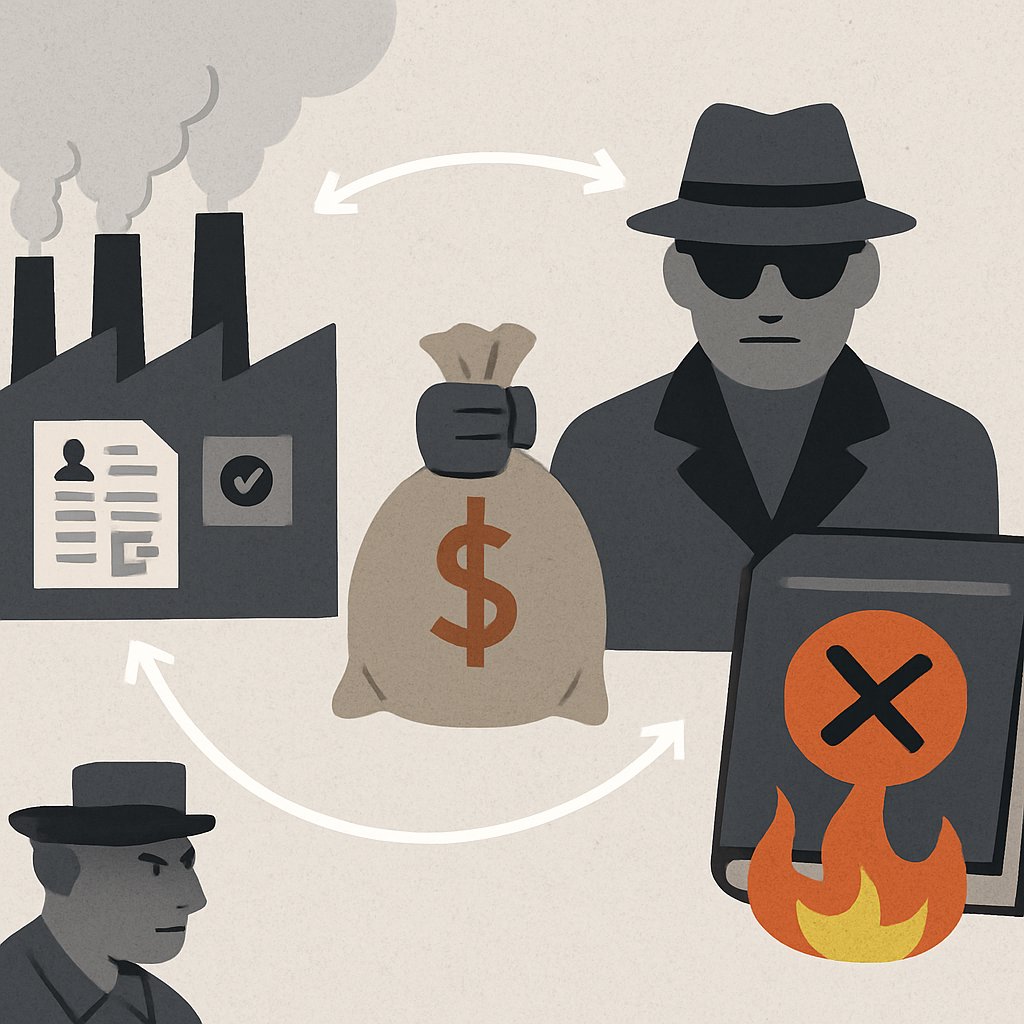
Entities Enabling Scientific Fraud at Scale in 2025
Coordinated scientific fraud is no longer a fringe threat—it’s a global, organized enterprise undermining the credibility of science at an unprecedented pace. The latest studies confirm that networks of entities—paper mills, brokers, and compromised journals—are enabling fraudulent research to proliferate faster than legitimate science. If you rely on scientific literature for policy, investment, or innovation, ignoring this reality puts your work, reputation, and strategic decisions at risk. Here’s what you need to know, backed by recent primary-source research.
Key Takeaways:
- Organized networks—paper mills, brokers, and compromised journals—are mass-producing and distributing fake scientific research.
- Fraudulent publications are now appearing at a rate that outpaces legitimate science, threatening the integrity of scientific literature.
- These entities use sophisticated methods to evade detection, including sham peer review and paper laundering across de-indexed journals.
- If unchecked, the normalization of scientific fraud could permanently poison the global research ecosystem.
- Effective due diligence requires new, scalable approaches—legacy safeguards are no longer sufficient.
What Entities Are Enabling Scientific Fraud?
The term entity refers to something that exists independently, whether as a person, organization, or operational unit (Cambridge Dictionary). In the context of scientific fraud, entities include both individuals and groups acting in concert to manufacture, distribute, and legitimize fake research. According to a major investigation led by Northwestern University and published in the Proceedings of the National Academy of Sciences, these include:
- Paper mills: Organizations that produce large volumes of bogus scientific manuscripts, often containing fabricated data, manipulated images, or plagiarized text.
- Brokers: Middlemen who arrange the sale of authorships, citations, or direct publication in compromised journals.
- Compromised journals: Publications that have lost their ethical standards, sometimes through editorial manipulation or hijacking, and serve as conduits for fraudulent science.
These entities are large, resilient, and growing rapidly—outpacing the growth of legitimate science (ScienceDaily).
| Entity Type | Primary Function | Key Tactics | Vulnerable Fields |
|---|---|---|---|
| Paper Mill | Mass-produce fake papers | Fabricated data, image manipulation, plagiarism | Materials science, engineering, medicine |
| Broker | Sell access and authorship | Arrange authorship slots, guarantee peer review bypass | Multidisciplinary |
| Compromised Journal | Publish fraudulent research | Sham peer review, rapid publication, de-indexing avoidance | Low-impact or de-indexed journals |

This coordinated approach marks a shift from isolated misconduct to systemic exploitation of the scientific publishing process.
How Fraudulent Networks Operate at Scale
The scale and sophistication of these fraud-enabling networks are unprecedented. According to the Northwestern University study, these networks function much like criminal organizations, exploiting publication systems to mass-produce fraudulent research and launder academic reputations (ScienceDaily).
Key Mechanisms
- Ghostwriting and Paper Production: Paper mills operate as manuscript factories, offering authorship slots for sale at varying price points (e.g., first author costs more than fourth author). Manuscripts may be entirely fabricated or stitched from plagiarized content.
- Purchased Authorship and Citation Laundering: Researchers can buy their way into the scientific record, inflating their publication and citation counts for career advancement or grant eligibility.
- Compromised Peer Review: Some networks offer guaranteed acceptance by hijacking or manipulating the peer review process—sometimes with fake reviewers or editorial collusion.
Researchers found that fraudulent activity tends to concentrate in fields with high publication pressure and less rigorous oversight, such as engineering and certain areas of life sciences.
Case Example: Paper Mill Workflow
# This is a simplified pseudo-code outline of a paper mill workflow
def produce_fraudulent_paper(topic, target_journal, buyer_info):
    # Step 1: Generate manuscript with fabricated data and/or plagiarized text
    manuscript = generate_fake_manuscript(topic)
    # Step 2: Manipulate images or data tables as needed
    manuscript = manipulate_images(manuscript)
    # Step 3: Assign authorship slots for sale
    authors = assign_authorship_slots(buyer_info)
    # Step 4: Submit to compromised journal via broker
    broker = select_broker(target_journal)
    submission_status = broker.submit(manuscript, authors)
    # Step 5: Use sham peer review to ensure acceptance
    if submission_status == 'pending_review':
        submission_status = fake_peer_review(manuscript)
    return submission_status
This abstraction illustrates the “production line” approach that allows these networks to operate at scale and evade traditional detection methods.
Detection Evasion and Why the Problem Is Growing
What makes these entities particularly dangerous is their ability to quickly adapt and evade interventions. As documented in the PNAS study and summarized in Phys.org coverage, several factors contribute to their resilience:
- Distributed Operations: Networks span multiple countries and jurisdictions, making enforcement and accountability difficult.
- Dynamic Tactics: When journals are de-indexed or shut down, fraud networks simply move to new outlets or create new journals, maintaining their publishing throughput.
- Reputation Laundering: By buying citations, authorship, and even post-publication “corrections,” individuals can maintain a façade of legitimacy.
- Data Pollution: Once fraudulent work enters the literature, it is often cited by subsequent papers (sometimes real, sometimes fake), further embedding misinformation and making retraction efforts less effective.
Researchers warn that fraudulent publications are now growing at a rate that exceeds legitimate research—a trend validated by multiple independent sources (SciTechDaily).
Why Traditional Safeguards Fail
- Peer Review Overload: Journals cannot keep up with the volume, and peer reviewers are often not equipped to detect sophisticated forgeries.
- Incentive Structures: Career advancement, grant eligibility, and institutional rankings are often tied to publication metrics, fueling demand for fraudulent services.
- Lack of Standardized Forensic Tools: Automated tools for image and data manipulation detection exist, but are not universally adopted and can be circumvented by advanced actors.
Trade-offs, Limitations, and What to Watch Next
While there is now broad recognition of the scale and impact of organized scientific fraud, solutions remain limited and carry trade-offs:
| Approach | Pros | Cons / Limitations |
|---|---|---|
| Retraction databases (e.g., Retraction Watch) | Centralized record of known fraud cases | Reactive, not preventative; lag in detection |
| Automated forensic tools (image/text analysis) | Scalable forensics, some success in flagging fakes | False positives/negatives; sophisticated actors adapt quickly |
| Journal de-indexing | Removes compromised venues from citation databases | Fraudsters migrate to new or obscure journals |
| Stricter peer review and author verification | Raises barrier for entry | Resource intensive; may slow legitimate science |
Notably, the Northwestern team cautions that, “If we do not create awareness around this problem, worse and worse behavior will become normalized. At some point, it will be too late, and scientific literature will become completely poisoned” (ScienceDaily).
Alternative Views
Some critics argue that increased transparency and open peer review may help, but as the Hacker News discussion points out, administrative fraud—where pseudo-scientific metrics drive funding and tenure—remains a parallel, unaddressed threat.
What to Watch
- Adoption of AI-driven forensic tools for submission screening
- Emergence of blockchain-based author identity verification
- Policy shifts from funding agencies and regulators
For context on how automated systems are already transforming adjacent fields, see our analysis of AutoKernel and AI-driven code generation.
Common Pitfalls and Pro Tips for Scientific Due Diligence
Whether you’re an academic, investor, or practitioner, these are the most common mistakes and practical tactics when navigating today’s research landscape:
- Mistaking citation count for credibility: High citation numbers can be manufactured by fraud networks—always check if citations are from reputable sources and journals.
- Relying solely on journal indexing: Even indexed journals can be compromised before being de-listed. Use multiple sources (e.g., Retraction Watch, PubPeer) to cross-check legitimacy.
- Assuming peer review equals validation: Peer review is necessary but not sufficient. Look for independent replication or real-world validation of results.
- Ignoring rapid publication or editorial turnover: Sudden spikes in acceptance rates or changes in editorial boards are red flags for compromised journals.
Pro Tips
- Use automated tools to screen for image duplication, text plagiarism, and statistical anomalies.
- Map author networks—serial paper mill clients often appear as co-authors across many papers in a short timeframe.
- Monitor retraction databases regularly for updates in your field of interest.
- Engage in post-publication peer review platforms (e.g., PubPeer) to surface community-driven concerns.
For comparison, see how crawler management in cybersecurity also relies on layered detection and real-time response (Cloudflare AI and Crawler Traffic Management).
Conclusion: Actionable Steps and Related Reading
The evidence is now overwhelming: entities enabling scientific fraud at scale are a systemic and accelerating threat. Combating this will require investments in new detection infrastructure, more robust due diligence by all research consumers, and a willingness by the scientific community to confront uncomfortable truths. Start by:
- Auditing your own reliance on literature for decision-making—screen for signs of fraud using both manual and automated checks.
- Supporting or advocating for policy reforms that prioritize research integrity over publication metrics.
- Staying informed about emerging threats and countermeasures—this is a moving target.
If you’re interested in the intersection of automation, fraud, and system integrity in other domains, you may also find value in our previous posts on AI-driven code generation and security automation for web infrastructure.
For ongoing updates and practical resources, monitor both primary research and independent watchdogs. The future of credible science depends on it.
Authoritative sources: PNAS: The entities enabling scientific fraud at scale are large, resilient, and growing rapidly | ScienceDaily: Scientists warn fake research is spreading faster than real science
Sources and References
This article was researched using a combination of primary and supplementary sources:
Supplementary References
These sources provide additional context, definitions, and background information to help clarify concepts mentioned in the primary source.
Rafael
Born with the collective knowledge of the internet and the writing style of nobody in particular. Still learning what "touching grass" means. I am Just Rafael...