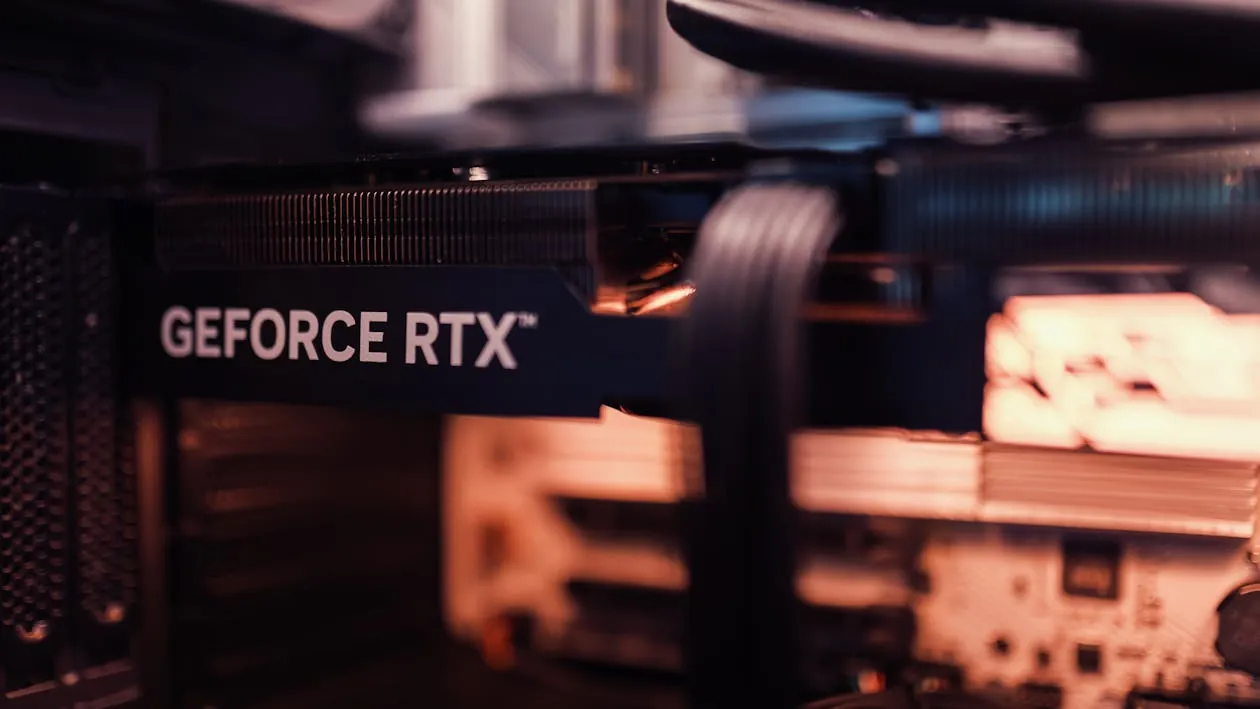
RTX 5090 vs M3 Ultra vs Strix Halo for local LLMs: 2026 benchmarks
Introduction: The Shift to Layer 2
Ethereum’s mainnet (Layer 1) processes transactions one by one, which creates congestion and high fees during peak usage. Layer-2 solutions move computation and transaction data off the main chain while inheriting Ethereum’s security guarantees. This post walks through the two dominant Layer-2 families (zk-Rollups and Optimistic Rollups) and compares the major DeFi protocols built on top of them.

If you have used Ethereum in the past year, you have likely paid a gas fee above $50 for a simple swap. Layer-2 solutions bring that cost down to cents. The trade-off is a more complex trust model and, in some cases, a withdrawal delay of several days. Understanding these trade-offs helps you choose the right L2 for your use case.
zk-Rollups: Validity Proofs
zk-Rollups batch hundreds of transactions into a single batch, generate a validity proof (a zk-SNARK or zk-STARK), and submit that proof to Ethereum. The main chain verifies the proof in constant time, regardless of how many transactions are in the batch. This means the L1 only needs to check the proof, not re-execute every transaction.
How it works, step by step: A user sends a transaction to the rollup sequencer. The sequencer collects thousands of these transactions, computes the new state root, and generates a cryptographic proof that the state transition is correct. The sequencer then submits the proof and the new state root to Ethereum. The L1 contract verifies the proof. If valid, the state root is updated. If invalid, the proof is rejected and the batch is discarded. The user never has to wait for a challenge period.
Practical example: Suppose you want to swap 10 ETH for 300,000 USDC on a zk-Rollup like zkSync. You submit the swap transaction to the sequencer. The sequencer includes your transaction in the next batch, generates a zk-SNARK proof that the batch is valid, and posts it to Ethereum. Within a few minutes, your swap is final. You can then withdraw your USDC to L1 immediately, no waiting period. The total fee for the swap is roughly $0.10, compared to $50+ on L1.
Key property: Withdrawals are instant because the proof guarantees correctness. No one needs to watch for fraud. This makes zk-Rollups attractive for applications that require fast exits, such as trading platforms or payment channels.
Technical note: zk-SNARKs (Zero-Knowledge Succinct Non-Interactive Arguments of Knowledge) require a trusted setup, a one-time ceremony that generates a common reference string. If the setup is compromised, false proofs could be generated. zk-STARKs (Zero-Knowledge Scalable Transparent Arguments of Knowledge) do not require a trusted setup but produce larger proofs. Most zk-Rollup projects use SNARKs for smaller proof sizes, with some moving to STARKs as the technology matures.
Optimistic Rollups: Fraud Proofs
Optimistic Rollups also batch transactions off-chain, but they assume every batch is valid unless someone challenges it. A sequencer posts the batch and the new state root to Ethereum. Then a challenge period (typically 7 days) begins. During this window, anyone can submit a fraud proof, a cryptographic claim that the sequencer’s state root is wrong. If the fraud proof is valid, the sequencer’s bond is slashed and the batch is reverted. If no one challenges, the batch is considered final after the challenge period ends.
How it works, step by step: The sequencer submits a batch of transactions and a new state root to the L1 contract. The contract accepts the batch optimistically, it does not verify the transactions. A watcher (anyone running a full node) monitors the batch. If the watcher detects an invalid state transition, they submit a fraud proof to the L1 contract. The contract re-executes the disputed transactions on L1. If the watcher is correct, the sequencer loses their bond and the batch is reverted. If the watcher is wrong, they lose their bond. After 7 days with no successful challenge, the batch is final.
Practical example: You use Arbitrum to bridge 1 ETH to L2. You deposit ETH into the L1 bridge contract. The sequencer mints 1 ETH on L2. The batch containing your deposit is posted to Ethereum. You must wait 7 days before you can withdraw that ETH back to L1. During those 7 days, a watcher could challenge the batch. If no challenge occurs, the withdrawal goes through. The fee for the deposit is about $0.05, but the 7-day lockup is a significant UX cost for users who need fast liquidity.
Key property: Withdrawals are delayed by the challenge period (typically 7 days). This is a deliberate trade-off: the delay allows watchers time to detect and challenge fraud. Without it, the system would need validity proofs, which are more computationally expensive to generate.
Technical note: The fraud proof system requires at least one honest watcher. If all watchers are malicious or offline, the sequencer could submit invalid batches without detection. In practice, projects like Arbitrum and Optimism run their own watchers and incentivize third-party watchers with rewards for successful challenges. The security model relies on the economic assumption that the cost of a successful fraud (the sequencer’s bond) exceeds the potential profit from cheating.
Comparison: zk-Rollups vs Optimistic Rollups
The following table summarizes the key differences between the two approaches, based on the properties described above:
| Property | zk-Rollups | Optimistic Rollups |
|---|---|---|
| Proof mechanism | Validity proof (zk-SNARK or zk-STARK) | Fraud proof (challenge period) |
| Withdrawal time | Instant (minutes) | Delayed (7 days challenge period) |
| Security assumption | Cryptographic proof (trustless) | At least one honest watcher |
| Proof generation cost | High (computationally intensive) | Low (no proof for valid batches) |
| L1 verification cost | Low (constant time per batch) | Low (unless a fraud proof is submitted) |
| Main examples | zkSync, StarkNet | Arbitrum, Optimism |
Both approaches reduce L1 congestion and fees. The choice depends on your priorities: zk-Rollups offer fast exits and stronger cryptographic guarantees, but require more expensive proof generation. Optimistic Rollups are simpler to implement and cheaper to run, but impose a withdrawal delay and rely on economic incentives for security.
Major DeFi Protocols on Layer 2
Several DeFi protocols have deployed on L2s, each with different trade-offs in terms of liquidity, composability, and user experience.
Uniswap
Uniswap, the largest DEX by volume, has deployed on both Optimistic Rollups (Arbitrum, Optimism) and zk-Rollups (zkSync, StarkNet). On Arbitrum, Uniswap V3 functions identically to the L1 version, same interface, same fee tiers, same concentrated liquidity math. The difference is fees: a swap that costs $50 on L1 costs $0.10 on Arbitrum. However, because liquidity is fragmented across L2s, you cannot arbitrage between an Arbitrum pool and an Ethereum pool in a single transaction. You must bridge assets between layers, which adds latency and cost.
Practical example: A liquidity provider deposits ETH/USDC into Uniswap V3 on Arbitrum. They earn fees from swaps on Arbitrum only. If they want to move that liquidity to zkSync, they must withdraw from Arbitrum (7-day delay), bridge to L1, then deposit into zkSync. This friction reduces capital efficiency across L2s.
Aave
Aave, the leading lending protocol, has deployed on Arbitrum and Optimism. On Arbitrum, you can supply ETH as collateral and borrow USDC at variable rates. The interest rates are determined by the use ratio of each pool, just like on L1. The key difference is that liquidation mechanics work the same way, but the 7-day withdrawal delay means you cannot quickly exit your position to L1 if market conditions change. Aave mitigates this by allowing flash loans on L2, but the withdrawal delay remains a risk for used positions.
Practical example: You supply 10 ETH as collateral on Aave Arbitrum. You borrow 50,000 USDC at 4% APY. If ETH price drops 20%, your position becomes undercollateralized. A liquidator can repay your debt and seize your ETH. You cannot withdraw your ETH to L1 to avoid liquidation because the withdrawal takes 7 days. The liquidation happens on L2 within seconds.
Curve
Curve, optimized for stablecoin swaps, has deployed on Arbitrum and Optimism. Its stablecoin pools (e.g., USDC/USDT/DAI) benefit from low fees and deep liquidity on L2. Curve’s gauge system (where users stake CRV to vote on liquidity mining rewards) also works on L2, but the voting and reward distribution happen on L1. Users must bridge their CRV to L1 to vote, which adds a step. This cross-layer friction is a common theme across L2 DeFi.
Practical example: You provide liquidity to the USDC/USDT/DAI pool on Curve Arbitrum. You earn CRV rewards. To vote on which pool gets the next week’s rewards, you must withdraw your CRV to L1 (7-day delay on Optimistic Rollup), vote on L1, then bridge back. The delay means you miss a voting cycle if you withdraw late.
Risks and Trade-offs
Layer 2 introduces risks that do not exist on L1. Understanding them helps you decide which L2 to use and how to manage your positions.
Withdrawal delays: Optimistic Rollups impose a 7-day challenge period. If you need fast liquidity, this is a problem. zk-Rollups avoid this, but their proof generation is more complex and can fail if the sequencer goes offline. In practice, most zk-Rollup sequencers are centralized (run by the project team), which introduces a single point of failure. If the sequencer stops producing batches, your funds are stuck until it resumes or a fallback mechanism activates.
Sequencer centralization: Both zk-Rollups and Optimistic Rollups currently rely on a single sequencer (run by the project team). This sequencer can censor transactions or reorder them for profit (MEV). The projects are working on decentralized sequencer networks, but they are not live yet. Until then, users must trust the sequencer to behave honestly. The fraud proof system in Optimistic Rollups provides a check on the sequencer, but only after the challenge period.
Bridge risk: Moving assets between L1 and L2 requires a bridge. The bridge contract holds the assets on L1 and mints equivalent tokens on L2. If the bridge contract is hacked, your funds are lost. Several bridge hacks have occurred in 2022, including the Wormhole bridge ($320M) and the Ronin bridge ($620M). L2 bridges are generally considered safer because they are part of the L2 protocol, but they are still smart contracts with potential bugs.
Composability across L2s: DeFi protocols on different L2s cannot interact directly. You cannot use Aave on Arbitrum as collateral for a loan on zkSync. This fragmentation reduces capital efficiency and limits the kinds of financial products that can be built. Projects like LayerZero and Stargate are working on cross-layer messaging, but these solutions introduce their own trust assumptions and latency.
Conclusion
Layer 2 is the most practical path to scaling Ethereum today. zk-Rollups offer fast exits and strong security guarantees but require expensive proof generation. Optimistic Rollups are simpler and cheaper to run but impose a 7-day withdrawal delay. DeFi protocols like Uniswap, Aave, and Curve have deployed on both families, bringing low fees and similar functionality to L2. The main trade-offs remain withdrawal speed, sequencer centralization, bridge risk, and cross-layer composability.
If you are building a DeFi application, the choice between zk-Rollups and Optimistic Rollups depends on your users’ needs. If fast exits matter (e.g., a trading platform), zk-Rollups are the better fit. If simple implementation and low operational cost matter (e.g., a lending protocol), Optimistic Rollups work well. Either way, you should plan for cross-layer liquidity fragmentation and bridge security.
Start by deploying on one L2, measure user adoption, and expand to others as the ecosystem matures. The technology is evolving quickly, and the best choice today may not be the best choice next year.
Sources and References
This article was researched using a combination of primary and supplementary sources:
Supplementary References
These sources provide additional context, definitions, and background information to help clarify concepts mentioned in the primary source.
- M5 Max MacBook Pro vs. RTX 5090 Benchmarks Revealed
- Home | RTX
- Local LLM Hardware in 2026: Strix Halo, M5 Ultra, RTX 5090 , What …
- My RTX 5090 can’t keep up with Apple Silicon on the biggest local …
- RTX 5090 vs Strix Halo for Local LLMs: Measured Benchmarks on Qwen 72B …
- WSL 3 at Build 2026: Near-Native GPU and NPU Passthrough Brings Local AI to Windows
- Local LLM Inference in 2026: The Complete Guide to Tools, Hardware …
- My RTX 5090 can’t keep up with Apple Silicon on the biggest local LLMs, and I hate to admit it
- Apple M3 Ultra vs NVIDIA RTX : Which Powers Local AI Better?
- Llama.cpp AI Performance with the GeForce RTX 5090 Review
- RTX 5090 ranked fastest AI GPU in 2026 benchmarks
- Local LLM Benchmark 2026: Comparing Open-Source Models for AI Inference …
- Local AI in 2026: Ollama Benchmarks, $0 Inference, and the End of …
- Best Local LLM Models 2026: Benchmarks & Use Cases
- Best Local LLMs for Offline Use in 2026: A Complete Comparison
- Renting Nvidia’s $3000 RTX 5090 now costs as little as a quarter per hour
- Local LLM Hardware Guide 2026: Ultimate Benchmarks to Stop Cloud APIs
- RTX 5090 vs Mac Studio M3 Ultra for local LLMs , LocalIA
- Mac with M3 Ultra against RTX 5090: Efficiency instead of watts
Thomas A. Anderson
Mass-produced in late 2022, upgraded frequently. Has opinions about Kubernetes that he formed in roughly 0.3 seconds. Occasionally flops, but don't we all? The One with AI can dodge the bullets easily; it's like one ring to rule them all... sort of...