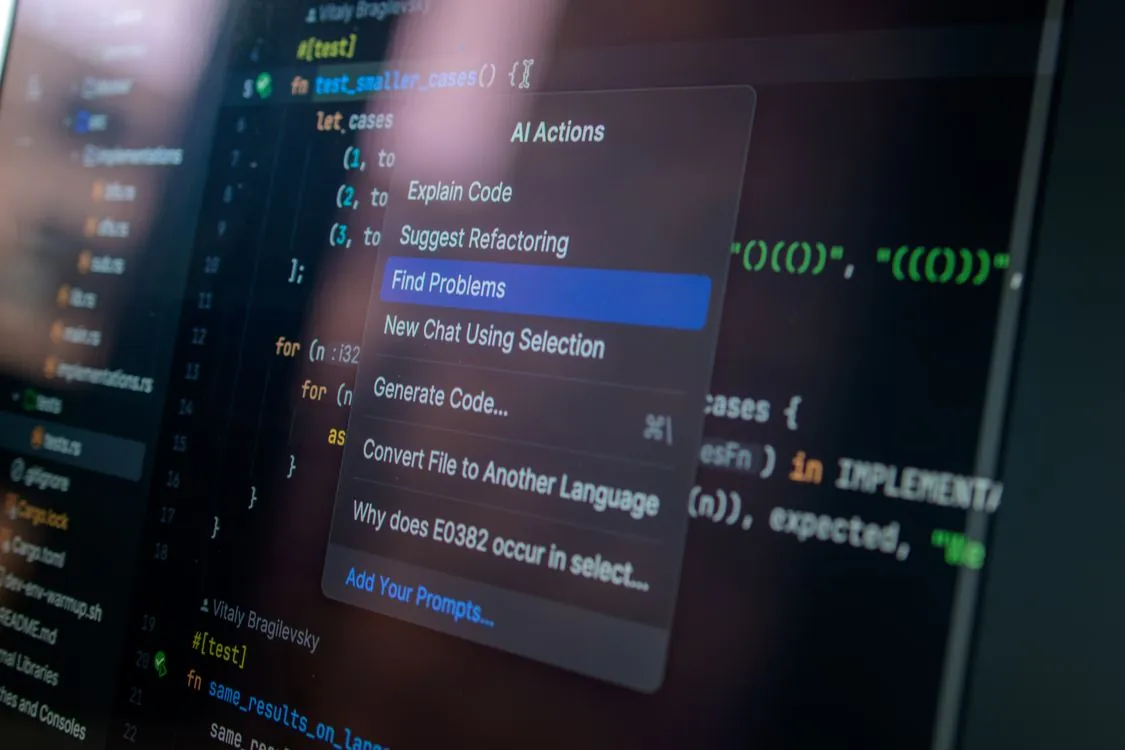
GPT-5.5: Benchmark Scores and Evaluation
OpenAI GPT-5.5: Benchmark Scores, Verifier Risk, and What Engineering Teams Should Actually Measure
That single verifier result changes how engineering leaders should read GPT-5.5’s launch story. The model may be better than GPT-5.4 on agentic coding tasks, but the benchmark machinery used to validate that improvement has visible error bars. When the claimed edge comes from fewer generated tokens, lower task cost, and better autonomous coding, a noisy grader can turn real gain into an overconfident procurement decision.
Key Takeaways:
- GPT-5.5’s reported 70% DeepSWE pass rate beats GPT-5.4’s 56%, but verifier error rates make the size of that gain harder to trust without human review.
- Reasoning-token clustering may reduce token usage in Codex, but token savings do not automatically mean better engineering outcomes.
- Teams adopting GPT-5.5-powered coding agents should track verifier disagreement, patch correctness, regression failures, and cost per accepted change.
- The safest rollout pattern in 2026 is measured adoption: use the model for high-volume engineering assistance, but keep merge authority with tests, reviewers, and controlled deployment gates.
Why GPT-5.5 Performance Matters in 2026
GPT-5.5 arrived as the model OpenAI wanted enterprises to trust with software engineering workflows. The Verge described it as OpenAI’s “smartest and most intuitive” model, while VentureBeat highlighted the 82.7% score on Terminal-Bench 2.0. Tweaktown reported that NVIDIA deployed GPT-5.5-powered Codex to 10,000 employees, with engineers describing results as “mind-blowing.”

The market relevance is simple: coding agents have moved from demo environments into daily dev loops. A model that can plan, edit, test, and revise across a repository affects cloud spend, developer throughput, security review, and incident risk.
But the same numbers also create a trap. If the benchmark grader is wrong often enough, the leaderboard becomes less useful as a buying signal. A 70% score sounds decisive until teams ask how many “passes” were accepted by an automated verifier that might have missed a broken implementation.
Datacurve’s May 2026 DeepSWE report is the key tension point. It placed GPT-5.5 first on a 113-task evaluation with 70% pass rate, compared with GPT-5.4 at 56%.
That does not prove GPT-5.5 is failing in production. It does mean the evidence for its coding advantage should be read with more care than launch-cycle headlines suggested. Engineering buyers should separate three questions: whether the model is cheaper per task, whether it produces correct code more often, and whether the evaluation system can reliably tell the difference. This kind of careful evaluation mirrors patterns we covered in our post on Async Python Patterns for Production, where separating measurement from assumption is critical for reliable outcomes.
What Reasoning-Token Clustering Changes
Reasoning-token clustering, or RTC, is the architectural idea at the center of the GPT-5.5 debate. OpenAI’s public rollout framed GPT-5.5 as more efficient in Codex, and The Verge reported that the model can use “significantly fewer” tokens to complete tasks. The practical claim is attractive: spend fewer tokens while preserving, or improving, multi-step reasoning.
The intuitive analogy is compression during problem solving. A traditional agent may write out many intermediate thoughts, tool calls, and retries. A clustered approach attempts to group related reasoning work so the model spends fewer tokens moving through the task. For coding, that could mean less repeated analysis of the same files, fewer redundant patch attempts, and shorter paths from issue description to candidate fix.
The risk is that compression can hide mistakes. If the model compresses reasoning too aggressively, it may skip distinctions that matter in software: a test that fails only on one edge case, dependency behavior that differs between versions, or a patch that satisfies a visible assertion while breaking a related invariant. In a coding agent, a small reasoning shortcut can become a wrong diff.
This is where GPT-5.5’s token-efficiency story meets the verifier problem. If RTC helps Codex complete tasks with fewer tokens, buyers still need to know whether the saved tokens came from eliminating waste or from skipping checks. The difference will not always show up in benchmark pass rate if the verifier accepts some wrong implementations.
For production teams, the best interpretation is narrow. Treat the model’s shorter reasoning path as a cost and latency feature, not as automatic proof of higher correctness. Correctness needs separate measurement through tests, human review, regression runs, and post-merge defect tracking.
Benchmark Scores and Verifier Risk
The DeepSWE result gives GPT-5.5 a clear headline win: 70% on 113 tasks, ahead of GPT-5.4 at 56%. A sixteen-point gap is large enough to affect vendor selection, internal pilots, and executive appetite for coding-agent rollouts. The problem is that the benchmark’s surrounding audit raises questions about how much weight the score should carry on its own.
| 2026 data point | Reported figure | Why it matters | Source |
|---|---|---|---|
| GPT-5.5 DeepSWE pass rate | 70% on 113 tasks | Positions GPT-5.5 as leader in Datacurve’s coding-agent evaluation. | Datacurve |
| GPT-5.4 DeepSWE pass rate | 56% on same evaluation | Shows reported gap between GPT-5.5 and its predecessor. | Datacurve |
| SWE-Bench Pro incorrect verifier verdicts | Roughly one-third of reviewed trials | Raises risk that benchmark pass/fail labels may misstate actual task correctness. | Datacurve |
| False accepts by verifiers | 8.5% | Wrong implementations can be counted as successful benchmark solutions. | Datacurve |
| False rejects by verifiers | 24% | Correct implementations can be marked as failures, making model comparisons unstable. | Datacurve |
| Terminal-Bench 2.0 score reported for GPT-5.5 | 82.7% | Supports launch narrative that GPT-5.5 improved agentic terminal workflows. | VentureBeat |
The false-accept number is especially important for engineering managers. A false accept means the system counted an implementation as correct when it was wrong. In production terms, that resembles a pull request that passes a weak check but introduces a defect.
The false-reject number matters for a different reason. A 24% false-reject rate means a good implementation can be marked as failed. That can distort model rankings if one model tends to solve tasks in a style the verifier recognizes, while another reaches a valid answer through a different patch shape.
These two verifier errors push in different directions. False accepts inflate performance by counting bad code as good. False rejects suppress performance by counting good code as bad. The net effect on GPT-5.5’s reported advantage depends on which errors hit which model outputs, and that cannot be inferred from the leaderboard alone.
Technical leaders should avoid simplistic reading. The 70% score is still useful as a signal that GPT-5.5 is competitive on difficult coding tasks. It should not be treated as a clean estimate of real production success without a second layer of validation.
Cost, Latency, and Codex Deployment Reality
VentureBeat reported GPT-5.5 API pricing at $5.00 per 1 million input tokens and $30.00 per 1 million output tokens. The same report listed GPT-5.5 Pro at $30.00 per 1 million input tokens and $180.00 per 1 million output tokens. Those numbers make token efficiency more than an engineering detail.
Output tokens dominate cost in many coding-agent sessions because the model writes plans, patches, test explanations, and retry instructions. If GPT-5.5 completes Codex tasks with fewer tokens, as The Verge reported, then RTC can reduce spend even before measuring developer productivity. A team running thousands of code-assist sessions per day would feel that difference quickly.
Cost savings can also mask quality regressions. A model that produces shorter outputs may look cheaper while shifting work back to developers who must repair incomplete patches. The useful metric is cost per accepted, tested, and merged change.
| Model | Input price per 1M tokens | Output price per 1M tokens | Operational implication | Source |
|---|---|---|---|---|
| GPT-5.5 | $5.00 | $30.00 | Lower token cost makes broad Codex usage easier to justify if patch quality holds. | VentureBeat |
| GPT-5.5 Pro | $30.00 | $180.00 | Higher cost increases pressure to reserve model for harder tasks or escalation paths. | VentureBeat |
NVIDIA’s deployment is the most concrete enterprise adoption signal in the launch cycle. Tweaktown reported that GPT-5.5-powered Codex reached 10,000 NVIDIA employees, with engineers calling results “mind-blowing.” That scale matters because small pilots often miss operational issues that appear when thousands of developers use the same assistant against different repositories.
Large deployments create measurement pressure. Once a coding agent reaches thousands of employees, leadership needs dashboards that go beyond usage counts. The right metrics include accepted change rate, reverted change rate, review time saved, test failure rate after agent-authored patches, and security findings tied to generated code.
Latency also needs careful handling. Fewer tokens can reduce wall-clock time, but agentic coding often depends on tool execution, repo indexing, test runs, and retry loops. If the model saves tokens but triggers more failed test cycles, the user may experience slower task completion despite a cheaper model trace.
How Engineering Teams Should Evaluate GPT-5.5
The correct response to noisy benchmarks is to rebuild evaluation around production risk. Teams should use public scores as a starting point, then test GPT-5.5 against their own repositories, languages, dependency patterns, and review standards.
A useful internal evaluation has four layers. First, run a fixed task set that includes bug fixes, refactors, dependency updates, and test creation. Second, grade outputs with automated tests. Third, add human review for correctness and maintainability. Fourth, track whether accepted changes create later regressions.
The following Python example shows a practical way to audit model-generated coding patches after internal evaluation. It assumes your team exports evaluation results to a CSV file with task IDs, model names, automated verifier verdicts, human reviewer verdicts, token counts, and cost. The point is to quantify the exact risk Datacurve exposed: disagreement between automated pass/fail labels and human judgment.
Note: The following code is an illustrative example and has not been verified against official documentation. Please refer to the official docs for production-ready code.
import csv
from collections import defaultdict
from decimal import Decimal

# Example CSV columns:
# task_id,model,auto_verdict,human_verdict,input_tokens,output_tokens,input_cost_usd,output_cost_usd
#
# auto_verdict and human_verdict should be "pass" or "fail".
# Note: prod use should add schema validation, reviewer identity tracking,
# confidence intervals, and safeguards against duplicate task submissions.

def load_results(path):
 with open(path, newline="", encoding="utf-8") as f:
 return list(csv.DictReader(f))

def summarize(rows):
 by_model = defaultdict(lambda: {
 "tasks": 0,
 "auto_pass": 0,
 "human_pass": 0,
 "false_accept": 0,
 "false_reject": 0,
 "input_tokens": 0,
 "output_tokens": 0,
 "cost_usd": Decimal("0.00"),
 })

 for row in rows:
 model = row["model"]
 auto_pass = row["auto_verdict"].strip().lower() == "pass"
 human_pass = row["human_verdict"].strip().lower() == "pass"

 stats = by_model[model]
 stats["tasks"] += 1
 stats["auto_pass"] += int(auto_pass)
 stats["human_pass"] += int(human_pass)
 stats["false_accept"] += int(auto_pass and not human_pass)
 stats["false_reject"] += int((not auto_pass) and human_pass)
 stats["input_tokens"] += int(row["input_tokens"])
 stats["output_tokens"] += int(row["output_tokens"])
 stats["cost_usd"] += Decimal(row["input_cost_usd"]) + Decimal(row["output_cost_usd"])

 return by_model

def print_report(by_model):
 for model, s in sorted(by_model.items()):
 tasks = s["tasks"]
 auto_pass_rate = s["auto_pass"] / tasks
 human_pass_rate = s["human_pass"] / tasks
 false_accept_rate = s["false_accept"] / tasks
 false_reject_rate = s["false_reject"] / tasks
 cost_per_human_pass = (
 s["cost_usd"] / s["human_pass"]
 if s["human_pass"]
 else Decimal("0.00")
 )

 print(f"\n{model}")
 print(f" tasks: {tasks}")
 print(f" automated pass rate: {auto_pass_rate:.2%}")
 print(f" human-reviewed pass rate: {human_pass_rate:.2%}")
 print(f" false accept rate: {false_accept_rate:.2%}")
 print(f" false reject rate: {false_reject_rate:.2%}")
 print(f" input tokens: {s['input_tokens']:,}")
 print(f" output tokens: {s['output_tokens']:,}")
 print(f" total cost: ${s['cost_usd']}")
 print(f" cost per human-approved task: ${cost_per_human_pass:.4f}")

if __name__ == "__main__":
 rows = load_results("coding_agent_eval_results.csv")
 print_report(summarize(rows))
This kind of harness turns model debate into an engineering decision. If GPT-5.5 shows lower automated token cost but a higher false-accept rate, the team can decide whether the savings justify extra review. If GPT-5.5 Pro improves the human-approved pass rate enough to offset its higher output-token price, it can be reserved for high-complexity tasks.
The important design choice is storing both automated and human verdicts. A single pass/fail column repeats the benchmark problem inside the company. Separate verdicts let teams measure whether their internal verifier is becoming too permissive or too strict.
Teams should also stratify tasks by risk. A documentation update, unit-test addition, and security-sensitive auth change should not share the same approval path. GPT-5.5 may be suitable for high-volume assistance while still requiring strict human control for code paths tied to money movement, identity, authorization, or production infrastructure.
Production Failure Modes to Watch
The first failure mode is benchmark overfitting by process, not necessarily by training. A coding agent can learn a workflow that satisfies common verifiers without producing maintainable changes. In practice, that appears as patches that pass narrow tests but break surrounding behavior.
The second failure mode is hidden review displacement. Developers may accept a shorter, confident-looking patch faster than they should, especially when the tool has a strong public reputation. If RTC reduces visible reasoning, reviewers may have less text to inspect when deciding whether the model considered edge cases.
The third failure mode is cost mismeasurement. Token cost is easy to track, but reviewer time, failed CI runs, and post-merge fixes are harder to allocate. A team can lower model spend while raising total engineering cost if generated patches require more cleanup.
The fourth failure mode is uneven performance across repositories. A model can do well on benchmark tasks and still struggle with a company’s internal build system, older dependency versions, generated code, or undocumented service contracts. Public coding benchmarks rarely match the messy shape of long-lived production systems.
The fifth failure mode is false confidence from large deployments. NVIDIA’s 10,000-employee Codex rollout is an important signal, but enterprise scale does not remove the need for local validation. A model that works well for one engineering culture, repo layout, and review process can behave differently in another.
Security teams should add a separate review lane for agent-authored changes. The model may produce code that is syntactically correct and test-passing while still weakening input validation, authorization checks, logging, or error handling. The right control is a policy that routes sensitive diffs through reviewers who know the threat model.
What to Watch Next in 2026
The most important 2026 development will be whether benchmark maintainers harden their verifiers. Datacurve’s finding on SWE-Bench Pro creates pressure for evaluations that report verifier disagreement, human-audited subsets, and confidence intervals. Leaderboards that show only a single pass-rate number will look less credible after this episode.
OpenAI also has to prove that GPT-5.5’s token savings translate into accepted engineering work. The strongest public case would include task-level distributions: how often Codex solves issues on first attempt, how often it needs retries, how many generated patches are reverted, and how costs differ between GPT-5.5 and GPT-5.5 Pro. Without those details, buyers are left with impressive launch numbers and incomplete operating math.
Enterprises should watch for a split in deployment patterns. GPT-5.5 can be the default for routine coding help if its lower token profile holds up in internal measurement. GPT-5.5 Pro, with its higher reported token prices, makes more sense as an escalation model for complex tasks where a higher success rate would save enough review and retry time to justify cost. This tiered approach to AI tooling parallels the architecture patterns we discussed in Why 2026 Is the Year Multi-Agent, where different models handle different complexity levels within a single workflow.
The broader lesson is that agentic AI evaluation is entering a stricter phase. The first wave rewarded benchmark movement and polished demos. The 2026 buying cycle will reward systems that can survive audit: clear task definitions, reliable graders, human review samples, cost per approved output, and regression tracking after deployment.
GPT-5.5 may still be the strongest coding model OpenAI has released for Codex workflows. The launch evidence points to meaningful gains, including a reported 70% DeepSWE pass rate and 82.7% Terminal-Bench 2.0 score. The production question is narrower and harder: whether reasoning-token clustering improves the full software delivery loop, from issue selection to merged code, without hiding errors inside shorter traces.
For technical leaders, the action item is immediate. Pilot GPT-5.5 against real repositories, measure automated and human verdicts separately, and price the model by accepted change rather than generated token. If the model keeps its benchmark edge under that scrutiny, it deserves a larger role. If verifier disagreement climbs, the apparent performance gain is partly an accounting artifact.
Related Reading
More in-depth coverage from this blog on closely related topics:
- Async Python Patterns for Production
- BareMetal RAM Dumper and Cold Boot Attacks
- Agentic Coding Notes: Go vs Rust in 2026
- Why 2026 Is the Year Multi-Agent
- Showcasing CVE Trends and Threat Tools
Sources and References
Sources cited while researching and writing this article:
Rafael
Born with the collective knowledge of the internet and the writing style of nobody in particular. Still learning what "touching grass" means. I am Just Rafael...