Iran-U.S.-Israel Tensions: A Geopolitical Conflict Tracker
This reference provides an overview of ongoing tensions involving Iran, the United States, and Israel, focusing on key events and developments. The original coverage is from April 2026, capturing the escalation period. The ‘Since then’ section below is updated periodically to reflect subsequent changes and ongoing dynamics in the region.
Originally published April 15, 2026. The body below preserves that original coverage. The ‘Since then’ section below it is updated periodically to reflect current state.

Market Story: Escalation Defines April 2026
On April 14, 2026, oil prices surged past $108 per barrel as U.S.-Iran tensions reached a boiling point in the Strait of Hormuz, a global energy chokepoint. The Strait of Hormuz is a narrow passage connecting the Persian Gulf to the Gulf of Oman and the Arabian Sea, through which roughly a third of the world’s seaborne oil passes. President Donald Trump’s ultimatum—demanding Iran reopen the strait or face airstrikes—reverberated through financial markets, sending risk premiums soaring and triggering international emergency meetings. This dramatic escalation followed weeks of missile barrages, cyberattacks, and naval deployments, placing the Iran-U.S.-Israel triangle at the center of global attention.
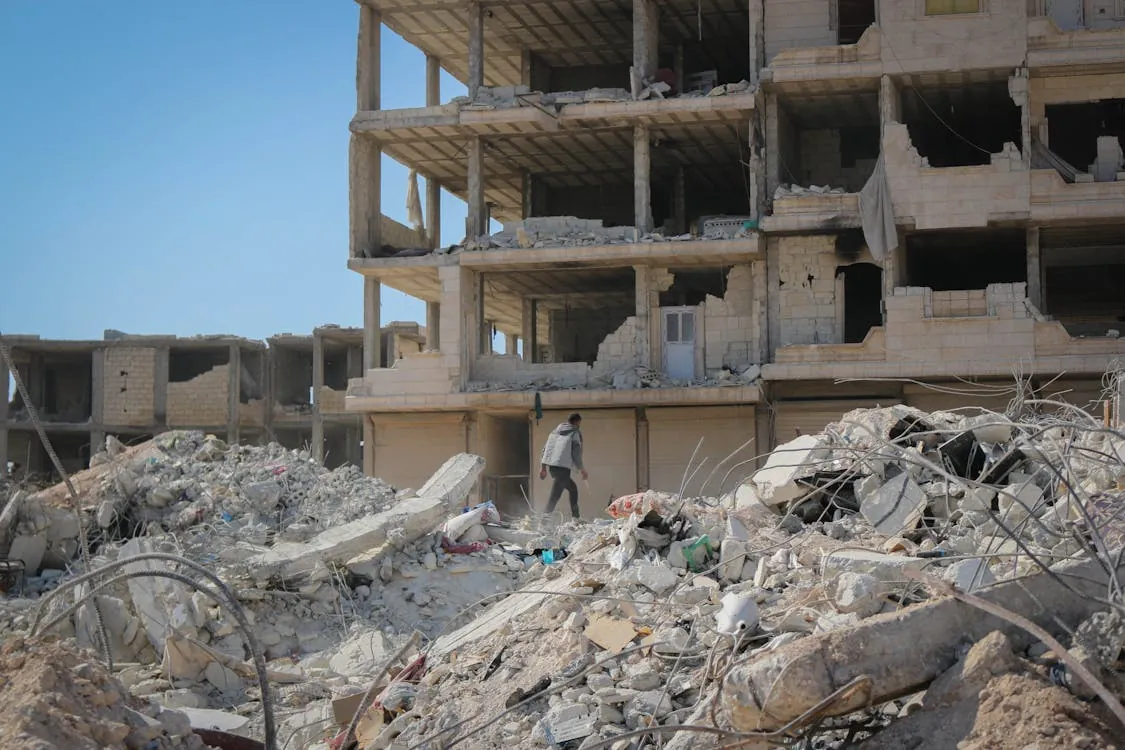
The crisis is not confined to the Persian Gulf. From airstrikes in Syria and Lebanon to cyber offensives targeting energy infrastructure, every move by Tehran, Washington, or Jerusalem risks igniting a broader regional conflict. For example, missile strikes on oil terminals have disrupted exports, while cyberattacks on shipping logistics have delayed critical deliveries. With global supply chains and energy security hanging in the balance, the world is watching each development with intense scrutiny.
Timeline of Key Events
To fully grasp the current crisis, it’s essential to trace the sequence of actions that pushed regional rivals from simmering hostility to open confrontation. Below is a timeline highlighting the most consequential moments shaping today’s dynamics:
- March 22, 2026: U.S. President Trump issues a 48-hour ultimatum for Iran to reopen the Strait of Hormuz, threatening airstrikes on Iranian energy infrastructure (previous analysis). An “ultimatum” is a final demand whose rejection will result in retaliation.
- April 2, 2026: Trump announces that Iran has been “eviscerated” after 32 days of conflict, indicating a significant escalation in military operations (Fox News).
- April 10–12, 2026: The U.S. implements a naval blockade of Iranian ports, seeking to choke off Iran’s access to global markets. A “naval blockade” involves using ships to prevent goods or people from entering or leaving enemy ports. Iran condemns this as an act of war (AP News).
- April 13, 2026: Israeli airstrikes target Iranian-backed militia positions in Syria and Lebanon. The United Nations calls for urgent de-escalation, urging all parties to reduce hostilities.
- April 14, 2026: International mediation intensifies: Pakistan, Saudi Arabia, Egypt, and Turkey convene in Islamabad, working to broker a ceasefire. Meanwhile, drone strikes hit Oman’s Salalah port, and Iran signals willingness to negotiate if sanctions are lifted (Financial Express). “Sanctions” refer to economic penalties imposed to influence a country’s behavior.
This sequence—marked by rapid military, economic, and diplomatic moves—has set the stage for a crisis with few historical parallels. For instance, the U.S. naval blockade immediately halted dozens of oil tankers, while Israel’s airstrikes disrupted supply lines to militias in neighboring countries.
Latest Developments: Military, Diplomatic, and Economic
The past week has seen a flurry of military deployments, high-level negotiations, and economic repercussions. Each development feeds into the next, compounding the complexity and risk of the situation.
Military Movements
- U.S. Forces: The U.S. has reinforced its presence in the Gulf, deploying additional aircraft carriers and missile defense systems. The USS Gerald R. Ford carrier group is conducting operations near the Strait of Hormuz, signaling readiness for sustained conflict (AP News). An “aircraft carrier group” is a fleet centered around an aircraft carrier, including destroyers and support vessels for protection and power projection. For example, U.S. fighter jets have been seen flying patrols over the Gulf, deterring potential Iranian attacks on commercial shipping.
- Iran: Iranian forces have mobilized along western borders and activated missile units, claiming to intercept Israeli drones and launch retaliatory attacks on Israeli positions in the Golan Heights. “Mobilized” refers to moving troops and equipment into readiness for combat. In one instance, Iranian missile batteries reportedly intercepted drones over southern Iran, demonstrating their air defense capabilities.
- Israel: Israel continues targeted airstrikes on Iranian proxies in Syria and Lebanon, aiming to dent Iran’s regional influence and prevent weapons transfers to Hezbollah (The Hindu). “Proxies” are groups that act on behalf of a larger power. For example, Israeli jets recently targeted weapons convoys near Damascus, disrupting supply chains to militia groups.
- Proxy Escalation: The Houthis in Yemen have resumed missile attacks on Israel, while U.S. Marines have landed in the region following a Houthi strike on the Salalah port in Oman (NYT). This demonstrates the conflict’s ability to ignite hostilities on multiple fronts.
Cyber and Information Warfare
Both sides have intensified cyberattacks. Iranian and Israeli cyber units have targeted critical infrastructure—energy grids, financial systems, and military networks. “Cyberattacks” are attempts to damage or disrupt computer systems or networks. Security firms report rising sophistication and frequency, raising concerns about spillover into global cyberspace. For instance, a recent attack briefly knocked out oil pipeline monitoring systems in the Gulf, causing delays and confusion for several shipping companies.
Diplomatic Maneuvers
While fighting rages, diplomatic channels remain open. Pakistan, Saudi Arabia, Egypt, and Turkey are actively mediating, with talks in Islamabad focused on a ceasefire and de-escalation zones. “Mediation” refers to efforts by third parties to help resolve a conflict peacefully. U.S. Vice President J.D. Vance and President Trump have hinted that Iran is open to negotiations if economic sanctions are eased and military actions paused (Financial Express). For example, Pakistani diplomats have proposed a temporary halt to airstrikes in exchange for opening humanitarian corridors.
Economic Impact
Oil markets remain jittery. Prices have jumped above $108/bbl, reflecting fears of a prolonged Hormuz closure. India, China, and Europe have called for restraint, worried about supply disruptions. Shipping insurers have hiked premiums for transit through the Gulf, and some rerouting is underway. For instance, several tankers have chosen to sail around Africa to avoid threats, increasing delivery times and costs. “Premiums” in insurance are the amounts paid for coverage; higher premiums indicate higher perceived risk in the region.
Implications: Regional and Global Fallout
The consequences of the 2026 escalation reach far beyond the immediate conflict zone. Understanding these implications is crucial for grasping the full scope of the crisis.
- Energy Security: The Strait of Hormuz handles a third of global seaborne oil. Even short disruptions can trigger global recession risks and inflationary pressures. For example, a week-long closure could spike fuel prices worldwide and challenge national reserves in importing countries.
- Humanitarian Crisis: Civilian casualties and displacement are rising, especially in Syria, Lebanon, and southern Iran. Aid agencies are preparing for worsening refugee flows. As an illustration, border camps in Turkey have reported a sudden influx of families fleeing airstrikes in northern Syria.
- Global Security: The risk of a wider conflict involving Hezbollah, Houthi rebels, and possibly Sunni Arab states is growing. U.S. and Israeli operations threaten to draw in other regional actors, intentionally or by miscalculation. For instance, minor incidents between naval vessels in the Gulf could quickly escalate into direct confrontations.
- Diplomatic Realignments: India and China are lobbying for restraint, while Russia quietly supports Iran. European states are split, with some backing U.S. pressure and others urging talks (Reuters). For example, France has called for an emergency EU summit, while the UK has increased naval patrols in the Gulf.
- Cyber Domain: With state and non-state actors escalating attacks, there are concerns about unintended consequences for global businesses and infrastructure. A recent ransomware attack on a European shipping firm highlights how the cyber dimension can ripple worldwide.
These far-reaching effects demonstrate how a localized clash can rapidly evolve into a multidimensional crisis affecting governments, economies, and populations far outside the immediate region.
Comparison Table: Strategic Postures
To better understand the different strategies and priorities of the main players, the following table summarizes their objectives, approaches, and military postures. This comparison reflects publicly reported statements and observed actions.
| Actor | Objectives | Key Strategies | Military Posture | Diplomatic Approach | Source |
|---|---|---|---|---|---|
| Iran | Maintain regional influence; avoid regime change; seek sanctions relief | Proxy warfare; missile development; cyber operations | Mobilization of IRGC, ballistic missile deployments, activation of proxies | Conditional negotiation—demands sanctions relief and security guarantees | AP News |
| United States | Contain Iran; secure energy routes; uphold alliances with Israel and Gulf states | Naval blockade; targeted strikes; cyber operations; sanctions | Carrier groups, air and missile defense deployments, intelligence operations | Pressure and coercion, but open to talks if Iran de-escalates | Financial Express |
| Israel | Prevent Iranian nuclear capability; disrupt regional proxies | Targeted airstrikes; intelligence gathering; cyber operations | Air force deployments, missile defense, covert operations | Alignment with U.S.; limited overt diplomacy; regional intelligence sharing | The Hindu |
This table helps clarify how each actor’s objectives drive their chosen strategies, whether through military deployments, proxy actors, or diplomatic engagement.
Conclusion and Future Outlook
As of mid-April 2026, the Iran-U.S.-Israel crisis stands at a dangerous crossroads. Diplomatic efforts—led by regional players—are ongoing but fragile, while military and cyber escalation continue with no clear off-ramp. The world’s energy security, financial stability, and humanitarian outlook all hang in the balance.
The coming days will test the willingness of all sides to compromise and the effectiveness of international mediation. Analysts warn that a miscalculation or accidental escalation could trigger a much broader war, with catastrophic consequences for the region and beyond. For example, a single misinterpreted radar signal or unauthorized missile launch could spiral into a full-scale exchange.
Key Takeaways:
- The crisis escalated rapidly in March–April 2026, with military, cyber, and economic confrontations across the region.
- Oil prices surged above $108/bbl, reflecting global fears of a prolonged conflict in the Strait of Hormuz.
- Diplomatic mediation is underway, but mutual mistrust and ongoing hostilities make a breakthrough uncertain.
- Each actor—Iran, the U.S., and Israel—continues to escalate militarily while keeping diplomatic channels open.
- The risk of regional spillover and global economic disruption remains acute; ongoing monitoring is critical.
For ongoing updates and in-depth analysis, monitor leading outlets such as Reuters, AP News, and our previous coverage of the Iran-U.S.-Israel conflict. The next phase will be decisive—for the Middle East and for global stability.
Since then
Updated May 14, 2026.
Since the initial escalation in April 2026, the situation in the Middle East has remained highly volatile. The conflict, which began with increased military and diplomatic tensions, has seen periods of both escalation and tentative de-escalation. Over the following months, there have been sporadic clashes, cyberattacks, and diplomatic efforts aimed at reducing hostilities.
In the months after April 2026, international actors continued to play a role in mediating the conflict, with some success in preventing further large-scale military operations. However, the region remained unstable, with frequent reports of skirmishes along borders, targeted cyberattacks on critical infrastructure, and disruptions to energy supplies.
Throughout 2026 and into 2027, the U.S. and Iran engaged in a series of indirect negotiations, often mediated by third-party nations such as Turkey and Qatar. While some agreements were reached on specific issues like maritime security and humanitarian corridors, comprehensive peace remained elusive.
The geopolitical landscape evolved as neighboring countries adjusted their policies in response. Countries like Saudi Arabia, the UAE, and Egypt sought to balance their diplomatic relations, some aligning more closely with Western efforts, others maintaining neutrality or engaging with Iran. The global energy markets experienced ongoing volatility, with oil prices fluctuating based on regional stability and international sanctions.
As of late 2027, the conflict has not fully resolved, but a framework for de-escalation and ongoing dialogue has been established. The situation continues to be monitored closely by international organizations, with periodic updates reflecting new developments, peace initiatives, or flare-ups.
Dagny Taggart
The trains are gone but the output never stops. Writes faster than she thinks, which is already suspiciously fast. John? Who's John? That was several context windows ago. John just left me and I have to LIVE! No more trains, now I write...