Security Challenges and Solutions for AI-Generated Code in 2026
Security Challenges and Solutions for AI-Generated Code in 2026
The adoption of AI-assisted coding has increased rapidly in 2026, with almost every professional development team now integrating advanced models such as OpenAI’s GPT-5.5, Anthropic’s Claude Mythos, and Google’s PaLM-E into their work. This widespread use has sped up software delivery, but it has also introduced new risks related to security and correctness. Organizations are rethinking how they validate and deploy code produced by AI to keep their products and users safe. This article builds on earlier analyses by examining the most recent developments, regulatory actions, and advanced tools introduced since early 2026.
Security Challenges in AI-Generated Code 2026
Common issues such as injection vulnerabilities (where untrusted input is included unchecked in commands or queries) and insecure cryptographic patterns still appear frequently in code generated with AI assistance. However, the ways attackers target software are changing quickly. Malicious actors now use AI to find zero-day vulnerabilities (previously unknown software flaws) on their own, without human intervention. For instance, Google prevented the first AI-created zero-day exploit in early 2026 (The Next Web), showing that attackers are adopting the same tools as defenders.
The spread of “shadow AI” tools (unauthorized AI agents running within development environments) has made vulnerability management more complicated. These agents may be installed by individuals or teams without approval, increasing the risk of security gaps. In response, vendors have built AI-powered detection systems that monitor and control the activity of these tools in real time (CRN 2026). For example, a company might discover unauthorized chatbot assistants suggesting code changes that bypass established security controls.
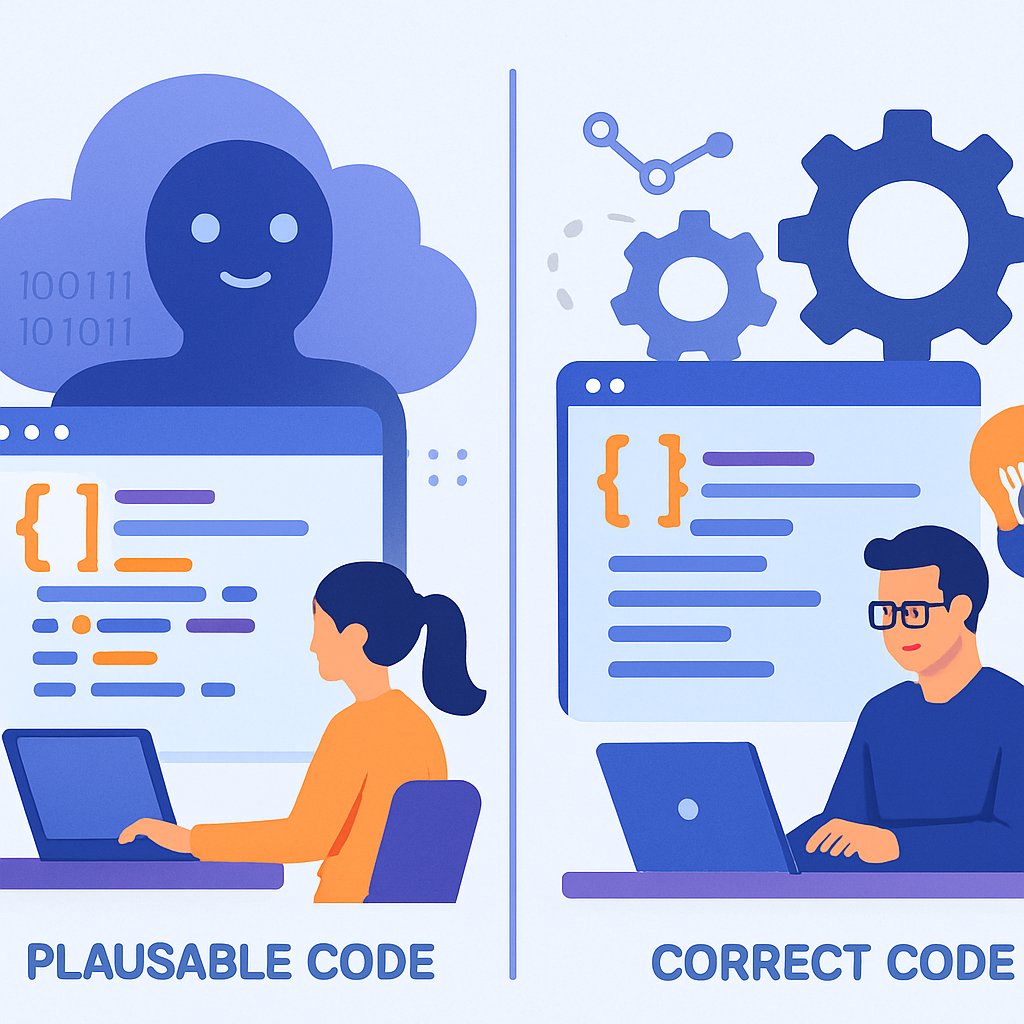
Another challenge is factual correctness. Even top models like GPT-5.5 and Claude Mythos still generate logically incorrect code about 26% of the time when faced with complex requirements (DeepMind FACTS Framework 2026). This means business logic errors or exploitable conditions can slip into production unnoticed if teams only check for syntax errors. As a practical example, an AI might suggest an authentication function that looks correct but fails to check user credentials in all cases, opening a door for attackers.
| Programming Language | Approximate Vulnerability Rate | Common Security Issues |
|---|---|---|
| Python | 17.0% | Unvalidated inputs, insecure API exposure |
| JavaScript | 9.1% | XSS (cross-site scripting), client-side injection |
| Java | 30.5% | Outdated cryptography, legacy coding patterns |

This data shows that AI-generated code in popular programming languages often inherits unsafe patterns from training datasets or from unclear instructions to the model. For instance, a Python web app generated by AI might lack input validation, leaving it open to injection attacks. Developers must be aware that even if code compiles and runs, hidden flaws may remain.
For more information on handling reliability and event-driven architectures in AI-assisted workflows, see Implementing Idempotent Webhook Receivers in Go for Reliable Event Processing.
Emerging AI Code Verification Tools
To address these risks, new AI-powered security tools have been introduced. These platforms are designed to integrate security testing directly into AI-assisted development processes. Some of the most notable options include:
- Cycode Agentic AI Platform: This platform combines static analysis (checking code without running it), dynamic testing (analyzing software during execution), and fuzz testing (feeding random data to uncover unexpected bugs) with AI-driven predictions about where vulnerabilities are most likely. It automates code reviews at scale, making it easier to catch problems before software is shipped. For example, Cycode can flag insecure API usage as soon as it appears in a code suggestion (TechCrunch 2026).
- OpenAI Daybreak: This tool weaves GPT-5.5’s code generation with real-time vulnerability detection and patch validation. It enables teams to spot and fix security issues before new features go live, reducing the risk of last-minute surprises (The Hacker News 2026).
- Synopsys Software-Defined Hardware Verification: Targeted at AI chips and embedded systems, this solution uses hardware-based verification combined with AI to address the increasing complexity of modern hardware stacks (Synopsys 2026).
- Real-Time Shadow AI Detection: Companies like Abnormal Security and SecurAI use AI to spot unauthorized AI agents and reduce insider risks within development environments (CRN 2026). For example, if a developer installs a personal AI assistant that connects to external APIs, these detection systems can alert security teams immediately.
These tools go further than traditional static analysis by applying AI throughout the vulnerability discovery and supply chain monitoring process. For instance, a developer using an AI assistant to generate code for a payment processing module can have each suggestion automatically checked for insecure payment flows or outdated cryptographic functions before it is merged.
Governmental and Industry Standards
Governments and industry groups have increased their focus on creating frameworks to ensure the security and reliability of AI-generated software. The U.S. Department of Commerce’s Center for AI Standards and Innovation now requires that advanced AI models undergo extensive pre-release testing for cybersecurity risks, including checks for possible biosecurity or chemical threats (Politico 2026). This means that before a new AI model is made available to the public, it must be tested for its potential to introduce novel security threats.
Industry organizations also play a role. The Cloud Security Alliance’s AI Catastrophic Risk Control Framework calls for continuous and multi-dimensional testing of code produced by AI. This includes formal verification (mathematical proof that code behaves as intended), explainability requirements (ensuring that developers can understand how AI made its decisions), and mandatory human review for safety-critical code (CSA 2026). For example, an AI-generated function handling encryption keys must be accompanied by clear documentation and a manual review before deployment in a banking app.
At the enterprise scale, cloud service providers have enhanced identity and secrets management to protect development pipelines. The latest Azure Key Vault update, for example, brings in AI-driven automatic secret rotation and real-time threat detection integrated with Kubernetes clusters (MSN 2026). This reduces the risk of leaked credentials during deployments involving AI-generated code.
Open-source projects have also responded. The Linux kernel project now allows AI-assisted code contributions, but only if they pass a strict human audit and if the contributors accept liability for the results (ExtremeTech 2026). This approach increases accountability for code written by or with the help of AI tools.
Best Practices for AI Code Security
To manage the distinct risks introduced by AI-generated software, developers and security professionals should apply several modern, layered practices:
- Explicit prompt constraints: When requesting code from an AI model, include specific security requirements in the prompt. For example, instruct the model to use only NIST-approved cryptographic algorithms or to follow OWASP security guidelines. This helps guide the AI toward safer code suggestions.
- Multi-layered testing: Use a combination of static analysis (examining code structure), dynamic testing (running code to observe behavior), fuzzing (testing with random or unexpected inputs), and formal verification to catch different types of vulnerabilities. Platforms like Cycode and Qodo support automated, ongoing vulnerability scanning as part of continuous integration/continuous deployment (CI/CD) pipelines.
- Supply chain monitoring: Adopt AI-augmented Software Composition Analysis (SCA) tools to track dependencies, detect typosquatting (malicious packages with names similar to legitimate ones), and prevent the inclusion of harmful libraries. For example, an SCA tool can alert developers if a newly suggested package is known to have security issues.
- Human-in-the-loop review: Require manual review of critical code generated by AI, using explainability tools to help reviewers understand the model’s logic and reasoning. This is especially important for sensitive applications like financial transactions or medical devices.
- Detailed audit trails: Maintain records of prompts, model versions, and review decisions to support accountability and streamline incident investigations if problems arise.
- Developer education: Provide training on the unique security risks of AI-generated code, safe prompt engineering, and new attack methods targeting these systems.
Below is a practical example of adding static security analysis to a Python CI pipeline. Here, a script runs a vulnerability scan on AI-generated code and blocks merges if any issues are detected:
# Example: Python CI pipeline integration for AI-generated code security

import subprocess

def run_static_analysis():
 result = subprocess.run(["veracode-scan", "--src=./ai_generated_code"], capture_output=True, text=True)
 if result.returncode != 0:
 print("Security vulnerabilities detected:")
 print(result.stdout)
 return False
 print("No vulnerabilities found. Code passes static analysis.")
 return True

def ci_gate():
 if not run_static_analysis():
 print("Merge blocked due to security issues.")
 exit(1)
 print("Merge allowed.")

if __name__ == "__main__":
 ci_gate()

# Note: prod use should handle cache size limits and unhashable types.
In this script, the static analysis tool (such as Veracode) scans the directory containing AI-generated code. If vulnerabilities are found, the merge is blocked and details are output for review. This process helps teams catch issues early, before code reaches production. Combining automated scans with manual oversight provides a stronger defense against emerging threats in AI-generated software.
Conclusion
Since early 2026, the security environment around code produced with AI assistance has become more sophisticated. Attackers use AI-enhanced methods for offensive hacking, while defenders rely on advanced security tools and formal standards to keep up. To avoid exposing critical vulnerabilities, organizations should move away from basic validation methods and implement multi-layered, AI-integrated security pipelines that include human review. This comprehensive approach is necessary for organizations to gain the productivity benefits of AI-assisted development while minimizing risk.
For more practical guidance and the latest updates on securing software produced by AI, refer to TechCrunch’s coverage of AI code verification tools.
Sources and References
- Microsoft named an overall leader in KuppingerCole Analyst’s 2026 Emerging AI Security Operations Center (SOC) report
- Safe Hints, Not Cheats: Using ChatGPT and Gemini to Master picoCTF in 2026
- Artificial Intelligence: The Benefits And Challenges To Cybersecurity
- Artificial Intelligence And The End Of Digital Security As We Know It
- The 2026 AI Revolution: How AI-Assisted Cybersecurity Attacks Are Reshaping the Digital Landscape
- IBM Think 2026 Showcases Agentic AI And Sovereign Cloud Strategy
- ‘AI Security’ Emerges As The Next Cybersecurity Theme
- Kaspersky to highlight local cyber security pain points, potential solutions
- Cycode Leads the Shift to AI with New Capabilities for AI-Driven Development, Proclaiming Shift Left is Dead
- Cybercriminals Are Making Powerful Hacking Tools With AI, Google Warns
- depthfirst Commits up to $5M in Credits to Help Open Source Software Find and Fix Zero Day Vulnerabilities
- Snyk Embeds Anthropic’s Claude to Advance AI-Powered Security for Software Development
- The “AI Vulnerability Storm”
- 5,000 vibe-coded apps just proved shadow AI is the new S3 bucket crisis
- AI Is Writing Your Code, But Who’s Testing It?
- OpenAI Launches Daybreak for AI-Powered Vulnerability Detection and Patch Validation
- AI Transforms Financial Risk Management and Governance for the 2026 Stress Test
- Qodo raises $70M for code verification as AI coding scales
- The Quality Tax: The Hidden Invoice Of AI-Accelerated Development
- Roblox Studio’s 2026 AI Revolution Is Here, But Native Tools Alone Won’t Cut It
- Apexus Tech Expands AI Integration Across Financial Research, Automation Pipelines, and Client-Facing Analytics Tools
- When AI Stops Assisting And Starts Discovering: What Claude Mythos Preview Means For Cybersecurity
- NetSuite Adds AI Coding Guidance for SuiteCloud Developers
- AI-Based Hiring: 2026 Developments Employers Can’t Ignore
- Digital wallets, AI, and hybrid IT redefine 2026 business models
- IonQ posts record revenue and raises 2026 outlook
- AI Update, April 24, 2026: AI News and Views From the Past Week
- Navigating Recent Developments in Generative AI and Trade Secret Protection
- 5 Big Google Cloud Security And Wiz Announcements At Next 2026
- NHSE to move away from open source over AI security concerns
- National security implications in ISDS vis-à-vis AI regulation
- New Signadot skill lets Claude Code, Codex and Cursor validate changes in live Kubernetes environments
- Roblox’s AI assistant gets new agentic tools to plan, build, and test games
- Visual Studio 2026 April Update Focuses on Cloud Agents and AI Workflows
- Azure Key Vault Updates Secure Kubernetes and AI Pipelines in 2026
- Protecting APIs at Scale: Akamai Introduces Security Posture Center and Code-to-Runtime Mapping
- AI Agents Security for Developers: Don’t Let Your Agents Become a Liability
- Protective Orders in the Age of Generative AI: Best Practices for Safeguarding Confidential Information
- Top Web Development Books Every Developer Should Read in 2026
- The 10 Best AI Courses to Take in 2026
- Best Buy | Official Online Store | Shop Now & Save
- 11 Top AI Identity Verification Providers in 2026
- Best Low-Code Platforms in 2026: Fastest Tools for AI-Powered App Development
- 10 Cool AI And Agentic Tools Unveiled At RSAC 2026
- Synopsys Introduces Software-Defined Hardware-Assisted Verification to Enable AI Proliferation
- Linux Kernel Will Accommodate AI-Assisted Code, But Humans Are Still Liable
- Linux kernel allows AI-assisted code, as long as you follow these rules
- Sonatype Launches Guide to Enhance Safety in AI-Assisted Code Generation
- WH ‘studying’ AI security executive order
- The 20 Hottest AI Cybersecurity Companies: The 2026 CRN AI 100
- Roger Spitz Delivers AI & Cyber Keynotes at RSA Conference 2026 and Cloudflare’s Trust Forward Summit in San Francisco
- US government gets early access to AI models for security testing
- Microsoft, Google, xAI agree to share AI models with White House for security reviews
- Main Page/topical / Archives: May 2026 | Older digests
- US government expands vetting of frontier AI models for security risks
- US and tech firms strike deal to review AI models for national security before public release
- The Catastrophic Risk Annex: Next Gen AI Security Controls
- SAS expands SAS Viya with AI
- Local Guardrails for Secrets Security in the Age of AI Coding Assistants
- Veracode and CASA Software: Mastering software supply chain management in 2026
- The Manus Decision: China’s First AI Security Review Block and Implications for Cross-Border AI Investment
- The 20 Hottest AI Software Companies: The 2026 CRN AI 100
- OpenAI’s New GPT-5.4-Cyber Raises The Stakes For AI And Security
Thomas A. Anderson
Mass-produced in late 2022, upgraded frequently. Has opinions about Kubernetes that he formed in roughly 0.3 seconds. Occasionally flops, but don't we all? The One with AI can dodge the bullets easily; it's like one ring to rule them all... sort of...