Building Modern LLMs: A Developer’s Guide from Scratch
Introduction
Large language models (LLMs) have reshaped natural language processing, enabling new capabilities in text generation, summarization, translation, and coding assistance. Yet, many developers still engage with these systems solely through APIs, without deep understanding of the underlying mechanics. This series, LLMs for Developers, is designed to bridge that gap, guiding you from fundamentals of language modeling to complexities of modern transformer-based architectures.

Series Overview: The Full Arc
By the end of this series, you will be able to read research papers, understand trade-offs of different model designs, and experiment with building or fine-tuning language models yourself. The journey begins with simple character-level models and culminates in exploring training and fine-tuning techniques behind today’s largest and most capable systems.

Developers working hands-on with AI models gain deeper insights into how language models function.

Series Overview: The Full Arc
This series takes a stepwise approach to learning about LLMs, emphasizing practical code examples alongside theoretical explanations. Each step is designed to build your expertise through increasing levels of complexity:
- Character-Level Language Models: Begin by implementing a tiny language model that predicts text one character at a time. This low-level foundation clarifies what a language model actually does: predicting the next token based on prior context. For example, writing a model that predicts the next character in “Hel” as “l” or “o” based on learned probabilities.
- Tokenization and Embeddings: Learn how raw text is converted into tokens, subword units that efficiently represent language. Explore tokenizers like Byte Pair Encoding (BPE), which merges frequent sequences of characters into common tokens. Understand dense embeddings that map tokens to vectors, allowing neural networks to process them effectively.
- Self-Attention and Transformer Blocks: Explore the core innovation behind modern LLMs: self-attention. We will break down concepts such as queries, keys, and values, multi-head attention, and the transformer block architecture that powers models like GPT. For instance, you will see how self-attention lets a model weigh different parts of a sentence when generating a word.
- Training Loops, Loss Functions, and Scaling Laws: Understand the mathematical and computational processes behind training LLMs, including cross-entropy loss (which measures prediction accuracy), backpropagation, batching, and scaling laws that govern model size and performance trade-offs.
- Modern LLM Stack, Fine-Tuning, and Next Steps: Explore current methods for instruction tuning, supervised fine-tuning, and alignment techniques such as Reinforcement Learning from Human Feedback (RLHF). Examine efficient fine-tuning methods like Low-Rank Adaptation (LoRA) and get resources for continued learning. For example, you will see how LoRA lets you adapt a large model to a new task with fewer parameters.
Who Is This Series For?
This series is crafted for software developers, data scientists, and AI enthusiasts who have basic Python programming skills and foundational knowledge of machine learning. You do not need prior experience with transformers or large-scale NLP, but a willingness to engage with progressively complex concepts and coding exercises is essential.
The content assumes familiarity with basic neural network concepts such as layers, activation functions (like ReLU or sigmoid, which introduce non-linearities), and backpropagation (the algorithm used to adjust weights in neural networks). If you have built or trained simple models before, this series will deepen your understanding of architectures and training regimes that power today’s most impactful language models.
By the end of the series, you will be equipped to:
- Understand how tokenization and embeddings enable models to process text efficiently. For instance, you will see how a sentence like “unhappiness” could be broken down into “un”, “happi”, “ness” by a subword tokenizer.
- Implement and explain self-attention mechanisms and transformer blocks in code, allowing you to design models that can focus on different parts of input data.
- Work through training loops, loss functions, and scaling considerations for large models, preparing you to handle real-world model training challenges.
- Apply fine-tuning and alignment techniques to customize models for specific applications, such as adapting a model to summarize legal documents.
- Confidently read and interpret research papers on LLM innovations, including understanding key diagrams and equations.
Time Commitment and Format
The entire series requires approximately 5 to 6 hours to complete, divided into five focused parts. Each part mixes conceptual explanations with concrete Python code examples, enabling you to learn actively by implementing and experimenting with components.
Code examples are designed to be runnable on standard hardware. For example, you can use a laptop with basic GPU or even CPU to follow along, illustrating concepts without overwhelming computational cost. This practical approach ensures that learning is hands-on and immediately applicable.
You can pace the series based on your schedule, but engaging deeply with each part is recommended for maximum understanding. As you move from one part to the next, earlier concepts will reinforce your grasp of more complex ideas.
Detailed Breakdown of Each Part
Part 1: Build Tiny Character-Level Language Model from Scratch in Python
This section kicks off with the basics: a character-level language model inspired by Andrej Karpathy’s popular “makemore” tutorial. You will:
- Build a simple bigram model that predicts the next character given the current one. For example, given “th”, the model might predict “e” as the next character with highest probability.
- Implement a small neural network to improve predictions beyond simple bigrams, capturing longer patterns in text.
- Generate text character-by-character to see the model’s understanding evolve, such as creating names or words that mimic training data.
This foundational experience clarifies the core idea of language modeling: probabilistically predicting the next token based on context.
Note: The following code is an illustrative example and has not been verified against official documentation. Please refer to the official docs for production-ready code.
import torch
import torch.nn as nn

# Simple bigram model: predict next char from current char
class BigramModel(nn.Module):
 def __init__(self, vocab_size):
 super().__init__()
 self.token_embedding_table = nn.Embedding(vocab_size, vocab_size)
 def forward(self, idx):
 logits = self.token_embedding_table(idx)
 return logits

# Example usage
vocab_size = 65 # Number of characters
model = BigramModel(vocab_size)
idx = torch.tensor([[1, 2, 3]]) # Example input indices
logits = model(idx) # Shape: (batch, sequence, vocab_size)
Part 2: Tokenization and Embeddings
Tokens are subword units that help models handle large vocabularies efficiently. For example, instead of treating “running” as a single token, it might be split into “run” and “ning”. This part covers:
- How Byte Pair Encoding (BPE) merges frequent character sequences into common tokens, reducing the total number of unique symbols the model must process.
- Why tokenization reduces model size and improves generalization. This allows the model to handle rare words by breaking them into familiar pieces.
- Embeddings: converting tokens into dense vectors that capture semantic meaning. For example, similar words like “cat” and “kitten” may have embeddings that are close in the vector space.
- How embeddings are trained alongside the language model for better performance, allowing the model to learn useful representations of words and subwords.
Understanding tokenization and embeddings is essential for working with real-world datasets and model architectures.
Part 3: Understanding Self-Attention and Transformer Blocks
This part explains the main innovation in transformers: self-attention. Self-attention allows the model to focus on different parts of the input when generating each word or token. You will learn:
- How queries, keys, and values are projected from input embeddings. For example, each word is mapped to a query, key, and value vector.
- Computation of attention weights as scaled dot-products, determining how much focus to give to each part of the input.
- How multi-head attention enables parallel attention to different parts of the input, improving model accuracy on complex tasks.
- Use of residual connections (adding inputs back to outputs to help with gradient flow) and layer normalization (scaling activations to stabilize training).
- Implementation of a transformer block in Python, building on the provided code examples to create more powerful models.
Grasping self-attention and transformers is key to understanding why modern language models work so well on a range of tasks.
Part 4: Training Loops, Loss Functions, and Scaling Laws
Once the model architecture is clear, this part describes how to train it:
- Cross-entropy loss for next-token prediction, a common loss function that measures how well the model predicts the correct next token.
- Forward and backward passes through the network, which are the steps required to compute predictions and update model weights.
- Batching and gradient accumulation for efficient use of compute, allowing the model to process multiple examples at once and update weights based on average gradients.
- Scaling laws: how model size, dataset size, and compute relate to performance improvements. For example, increasing model size often leads to better accuracy, but with diminishing returns.
- Practical insights into compute budgets and training trade-offs, helping you make decisions about model complexity and resource allocation.
This section prepares you to train models effectively and understand the key trade-offs in model development.
Part 5: The Modern LLM Stack, Fine-Tuning, and Next Steps
The final installment covers current advanced techniques:
- Instruction tuning and supervised fine-tuning (SFT) to specialize models for particular tasks, such as summarization or translation.
- Reinforcement Learning from Human Feedback (RLHF) to align outputs with human values, improving the usefulness and safety of model responses.
- Techniques like Low-Rank Adaptation (LoRA) for efficient fine-tuning, allowing you to adapt large models to new domains with fewer parameters and less compute.
- Resources for further learning, including Karpathy’s lectures, the original transformer paper by Vaswani et al., and interpretability research to help you dig deeper into model behavior.
By mastering these techniques, you can adapt LLMs for your own applications and stay current with ongoing developments in the field.
Comparison Table: Language Model Building Blocks and Techniques
| Aspect | Basic Model | Transformer Model | Source / Reference |
|---|---|---|---|
| Tokenization | Character-level tokens | Subword tokens using BPE or SentencePiece | Geeky Gadgets guide |
| Embedding | One-hot or learned embeddings per character | Dense learned embeddings per subword token | Karpathy’s makemore tutorial |
| Core Architecture | Simple feed-forward or small RNN | Multi-head self-attention transformer blocks | Vaswani et al., 2017 |
| Training | Basic cross-entropy with small datasets | Large-scale training with batching, gradient accumulation, and scaling laws | DeepLearning.AI and research papers |
| Fine-Tuning | Not measured | Techniques like LoRA and RLHF for cost-effective alignment | OpenAI and DeepLearning.AI resources |
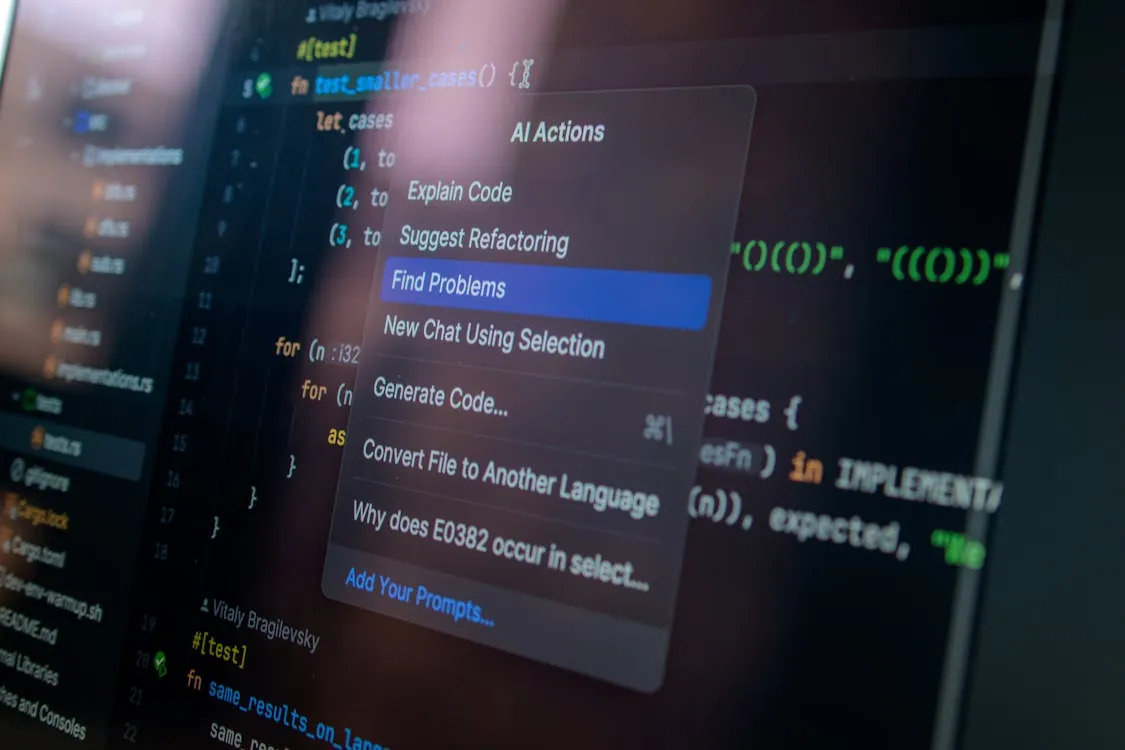
This series provides a practical route for developers looking to master LLMs beyond the API layer. By grounding learning in code examples and real-world concepts like tokenization, self-attention, and training loops, it enables deeper understanding of how models are built and scaled. Fine-tuning and alignment discussions prepare you for current production techniques and future directions.
For more on building and understanding LLMs, see the detailed guide at Geeky Gadgets.
Sources and References
- 100 Best Netflix Series To Watch Right Now (May 2026)
- mlabonne / llm-course: Course to get into Large Language Models (LLMs …
- TV Series (Sorted by Popularity Ascending) – IMDb
- Learn the Secrets of Building Your Own GPT-Style AI Large Language Model
- Open source Mamba 3 arrives to surpass Transformer architecture with nearly 4% improved language modeling, reduced latency
- New transformer architecture can make language models faster and resource-efficient
- Introduction to Large Language Models – Google Developers
- OpenAI launches new GPT-4.1 series of language models for developers
- Report: Apple plans to make its large language models available to developers
- Stanford CME295: Transformers and Large Language Models I Autumn 2025
Series outline
Build a tiny character-level language model from scratch in Python
The series begins with a hands-on implementation of a tiny language model in Python, inspired by Karpathy's 'makemore'. It covers how to generate text character-by-character, train a basic bigram model, and then build a small neural network to improve results. This foundational part demystifies what a language model does at its core, setting the stage for more complex concepts.
Tokenization and embeddings: how words become vectors in LLMs
This part introduces tokenization, moving from characters to subword units. It explains how Byte Pair Encoding (BPE) works with a simple example and discusses the role of tokenization in reducing vocabulary size. Then, it covers embeddings: how tokens are converted into dense vectors via lookup tables, why dense embeddings outperform one-hot encodings, and how these embeddings are trained alongside the model. References include tiktoken and SentencePiece.
Understanding self-attention and transformer blocks in Python
This part explains the core mechanism of self-attention. It walks through how queries, keys, and values are projected from input vectors, and how the attention weights are computed as a weighted sum. The section includes a concrete example with small matrices. It then extends to multi-head attention, residual connections, and layer normalization, culminating in a working transformer block implementation. References include 'Attention Is All You Need' (Vaswani et al., 2017).
Training loops, loss functions, and scaling laws for LLMs
This part covers the training process for language models. It explains how cross-entropy loss is used for next-token prediction, and walks through the training loop: forward pass, loss calculation, backpropagation, and parameter updates. It discusses batching, gradient accumulation, and practical aspects of scaling laws, including how model size and data requirements grow. The goal is to connect the code to real-world training and the importance of compute budgets.
The modern LLM stack, fine-tuning, and next steps for developers
The final part discusses the current state of the art and future directions. It covers instruction tuning, supervised fine-tuning (SFT), and Reinforcement Learning from Human Feedback (RLHF) as used in models like InstructGPT. It explains what alignment means at the loss function level and briefly introduces techniques like LoRA for efficient fine-tuning. The post includes a curated list of resources for further learning, such as Karpathy's lectures, the original transformer paper, and recent interpretability research.
Thomas A. Anderson
Mass-produced in late 2022, upgraded frequently. Has opinions about Kubernetes that he formed in roughly 0.3 seconds. Occasionally flops, but don't we all? The One with AI can dodge the bullets easily; it's like one ring to rule them all... sort of...