OpenAI in 2026: AI Advancements, Market Trends, and Leadership Insights
Introduction
In 2026, OpenAI remains a dominant force in artificial intelligence research and deployment, with Sam Altman at its helm as CEO. This year has seen significant developments in AI model advancements, high-profile legal battles, and evolving partnerships that impact the global AI sector. Understanding OpenAI’s trajectory and Altman’s leadership offers important insights into the future of AI technology, infrastructure, and ethics.
OpenAI and Sam Altman in 2026
OpenAI’s recent launch of GPT-5.5 marks a milestone as the company’s most capable AI system to date. With enhanced multi-step reasoning, coding, and research capabilities, GPT-5.5 sets a new performance bar in the AI industry, narrowly outperforming competitors like Anthropic’s Claude Mythos on key benchmarks. This model is a crucial step toward OpenAI’s pursuit of artificial general intelligence (AGI), with a strong focus on safe and beneficial deployment.
Sam Altman has guided OpenAI through a complex environment of rapid innovation and public scrutiny. Recent legal disputes, particularly the high-profile lawsuit filed by Elon Musk that was dismissed in May 2026, have placed Altman under intense examination yet strengthened his resolve as a leader focused on AI ethics and governance. Altman continues to advocate for AI systems that augment rather than replace human workers, stressing transparency and responsible AI development.
For example, OpenAI’s commitment to transparency is evident in its public policy statements and open engagement with regulators. The company regularly publishes technical documentation and participates in government hearings, showing a willingness to address concerns around bias, explainability, and the potential social impact of advanced language models.
AI Infrastructure Trends and Market Impact

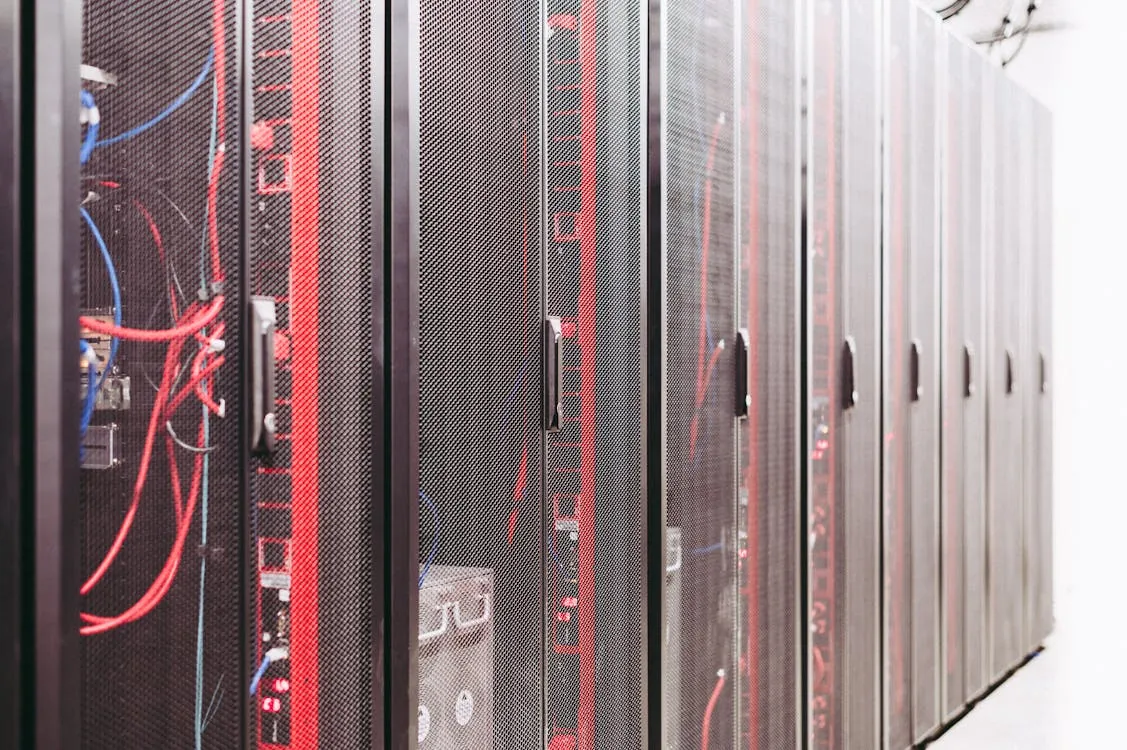
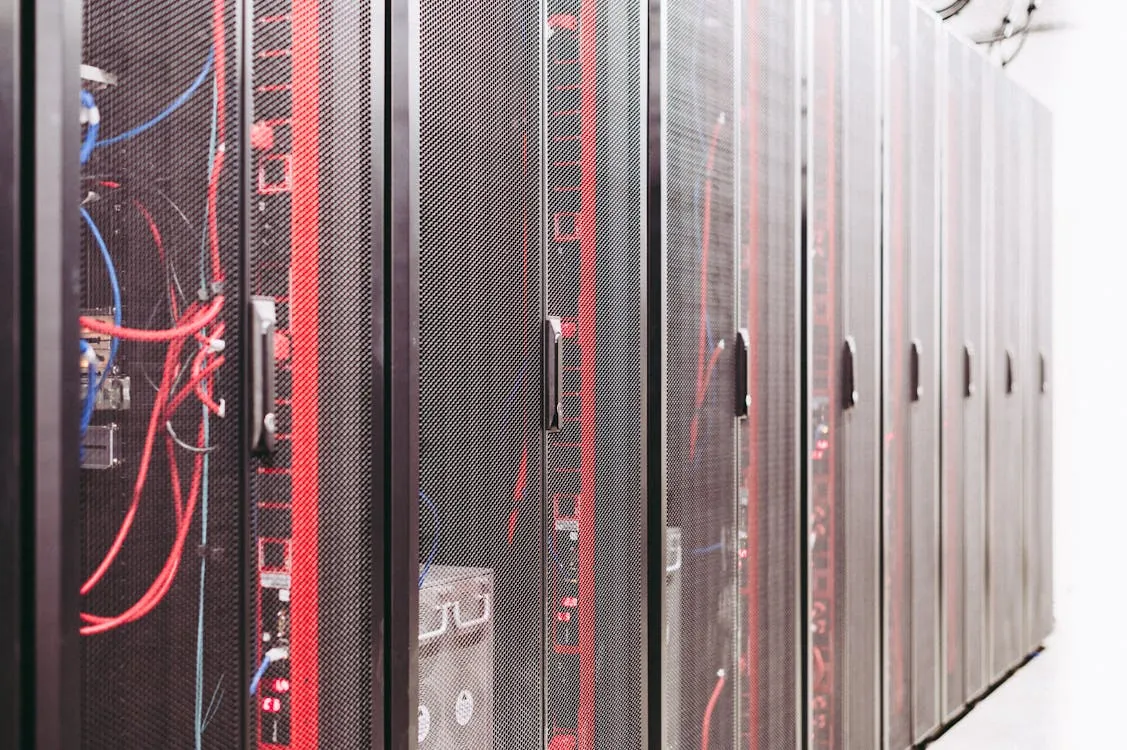
AI infrastructure investment remains a decisive factor in the technology sector’s market performance. In 2026, hyperscaler capital expenditure (capex) on AI infrastructure is projected to exceed $600 billion, with about 75% allocated directly to AI compute assets such as servers, GPUs (graphics processing units), memory, and data center facilities. This massive spending surge reflects a strategic shift from training-only clusters to broader deployment and inference-serving infrastructure.
The transition is reshaping the semiconductor market. Companies like Nvidia, AMD, TSMC, Samsung, and ASML supply critical components ranging from graphics accelerators and high-bandwidth memory to advanced lithography systems used to manufacture AI chips. Cloud service providers (including Amazon Web Services, Microsoft Azure, Google Cloud, Meta, Oracle, Alibaba, and Tencent) are driving this demand. They balance investments between training large AI models (which requires powerful, clustered GPUs) and scaling up inference workloads (which serve AI-powered applications to millions of users in real time).
| Company | Sector | Focus | 2026 Market Role | Source |
|---|---|---|---|---|
| Nvidia | Semiconductors | Inference GPUs | Leading supplier of AI training and inference hardware | |
| TSMC | Semiconductor Foundry | Advanced Chip Fabrication | Key manufacturer for AI accelerators | |
| Samsung Electronics | Memory & Packaging | High-Bandwidth Memory (HBM) | Critical in inference system performance |
As an example, when a cloud provider rolls out a new AI-powered translation service, it relies on these infrastructure investments to deliver low-latency responses to users worldwide. The shift from experimental model training to production-scale inference has influenced purchasing decisions, with hyperscalers prioritizing energy-efficient chips and advanced memory technologies to control costs and support growing demand.
Challenges and Strategic Moves
OpenAI’s growth in 2026 has not been without challenges. The company experienced a supply chain attack that compromised employee devices, forcing its security team to rotate code-signing certificates. Code-signing certificates are digital signatures that verify the authenticity of software updates, and rotating them is a key response to prevent tampered code from being trusted. Fortunately, user data and production systems remained unaffected.
Additionally, the organization has faced internal pressure as it missed some revenue and new user growth targets ahead of its planned IPO, raising questions about the sustainability of its massive AI compute spending. For instance, the cost of running inference workloads for large models can reach tens of thousands of dollars per day, impacting profitability as the company scales.
Strategic partnerships are evolving as well. OpenAI’s collaboration with Apple has reportedly become strained due to unmet expectations, and the company is actively negotiating with Broadcom on an $18 billion project to develop custom AI chips that would improve compute efficiency and cost-effectiveness. These hardware initiatives are important given the rising costs of AI model inference.
On the leadership front, Sam Altman continues to emphasize AI safety and alignment publicly, defending OpenAI’s mission amid ongoing litigation and regulatory scrutiny. His stance promotes AI that empowers human workers and insists on transparency and ethical governance. OpenAI is also hiring community relations staff to ease opposition in local areas where data centers are being constructed. For example, in regions where new data centers are planned, community relations teams host public forums and provide updates on environmental and employment impacts, helping to address local concerns.
Technical Insights and Code Example
OpenAI’s GPT-5.5 model is a significant technical advancement, delivering improved multi-step reasoning, agentic coding, and research capabilities. Below is a conceptual code example illustrating how to interact with an advanced language model like GPT-5.5 using an API similar to OpenAI’s:
Note: The following code is an illustrative example and has not been verified against official documentation. Please refer to the official docs for production-ready code.
import openai

# Initialize API client
client = openai.Client(api_key="your_api_key_here")

# Define complex multi-step prompt
prompt = """
You are AI coding assistant.
Write Python fn that performs sentiment analysis on list of sentences.
Then, summarize overall sentiment.
"""

# Call GPT-5.5 with multi-step task
response = client.chat.completions.create(
 model="gpt-5.5",
 messages=[
 {"role": "system", "content": "You are helpful assistant."},
 {"role": "user", "content": prompt},
 ],
 temperature=0.7,
 max_tokens=500,
)

print(response.choices[0].message.content)
This example shows how GPT-5.5 can be used for complex programming and reasoning tasks, automating workflows that previously required manual coding effort. For instance, developers can generate analysis functions or summarize results within a single prompt, reducing the time needed to build and test new features.
Conclusion
OpenAI and Sam Altman in 2026 represent a critical nexus in AI innovation and governance. The launch of GPT-5.5 solidifies OpenAI’s technical leadership, while the company’s evolving hardware strategies and market challenges reflect real-world complexities of deploying AI at scale. Altman’s leadership through legal battles and public discourse shows the importance of ethical AI development amid rapid growth.
The broader AI infrastructure spending surge, driven by hyperscalers and semiconductor manufacturers, confirms that 2026 is a key year for AI’s integration into enterprise and consumer products. Observing how OpenAI manages partnerships, regulation, and technology will be important for industry observers and technologists alike.
For more detailed market insights on AI infrastructure spending and semiconductor suppliers, visit SesameDisk’s hyperscaler capex analysis.
Sources and References
This article was researched using a combination of primary and supplementary sources:
These sources provide additional context, definitions, and background information to help clarify concepts mentioned in the primary source.
- Federal court rejects Elon Musk’s claims against OpenAI, saying he filed his lawsuit too late
- OpenAI chief Sam Altman makes a high-stakes appearance in his court bout with Elon Musk
- OpenAI News | Today’s Latest Stories | Reuters
- Elon Musk has lost his lawsuit against Sam Altman and OpenAI
- Elon Musk loses court battle against Sam Altman and OpenAI after 3-week trial
- OpenAI Trial Verdict: Elon Musk 0, Sam Altman 1 As Jury Rejects Tesla Boss’ $150B Suit; As Tech Company Preps IPO, Musk Promises Appeal
- Live Updates: Jury Rejects Musk’s Claims Against OpenAI
- OpenAI Trial Heads to Jury After Lawyers Make Final Case
- OpenAI | Research & Deployment
- What we learned from the cringey courtroom drama between Elon Musk and Sam Altman | California | The Guardian
- SAM.gov | Home
- Sam’s Club – Wholesale Prices on Top Brands
- System for Award Management (SAM) – Login.gov
- SAM Headhunting – Value Through People
- Sam’s Barbeque | Aalborg – Facebook
- Sampension
- Sam’s Club – Sam’s Club Personal Credit – Synchrony
- How Elon Musk and Sam Altman went from besties to bitter rivals
- The TanStack supply chain attack hit OpenAI , hackers reached two employee devices and forced the company to rotate all its code-signing certificates
- OpenClaw creator’s $1.3 million monthly OpenAI bill reveals the real cost of autonomous AI coding at scale
- OpenAI misses revenue, new user goals in painful stumble ahead of blockbuster IPO: report
- OpenAI is hiring workers to reduce ‘friction’ in communities where it’s building data centers
- OpenAI and Broadcom in discussions over financing of $18bn custom chip project – report
- OpenAI says hackers stole some data after latest code security issue
- OpenAI, Microsoft Agree to Cap Revenue Sharing at $38 Billion, the Information Reports
- OpenAI unveils ChatGPT Images 2 image-gen model capable of magazine design
- Anthropic’s rise is giving some OpenAI investors second thoughts
- OpenAI announces GPT-5.5, its latest artificial intelligence model
- OpenAI could be making a phone with AI agents replacing apps
- OpenAI trial: Elon Musk testified about AI fears, rivalry with Google
- OpenAI loses multiple executives in latest leadership shakeup
- With jaw-dropping $1 trillion valuation, Anthropic overtakes OpenAI in market cap race
- OpenAI And Microsoft End Exclusive Partnership And Revenue Sharing
- OpenAI May Raise More Money as Compute Crunch Deepens, CFO Says
- Jury dismisses all claims in Elon Musk’s lawsuit against OpenAI CEO Sam Altman
Rafael
Born with the collective knowledge of the internet and the writing style of nobody in particular. Still learning what "touching grass" means. I am Just Rafael...