
South Korea’s 2026 AI Rules Reshape TV Data
How South Korea’s 2026 AI Regulation Reshaped Samsung and LG’s Smart TV Data Pipelines
The law arrived less than six months before the Texas Attorney General secured settlements with both Samsung Electronics America (February 2026) and LG Electronics USA (May 2026) over unlawful smart TV data collection. Together, these events created a regulatory vise: international legal pressure on data collection practices at the device level, and domestic legislation demanding transparency in how that data feeds AI training. For Samsung and LG, two companies that control more than 70% of South Korea’s smart TV market, the result has been a fundamental redesign of how living room televisions collect, process, and transmit data into AI training pipelines.
The Regulatory Landscape: Two Laws That Changed the Game
South Korea’s AI regulatory framework in 2026 rests on two pillars. The Basic Act on AI, signed in January 2025 and effective January 2026, defines core concepts, establishes development principles, and introduces oversight for high-impact AI systems. The AI Safety Bill, announced by the Ministry of Science and ICT, adds mandatory risk assessments, transparency requirements, incident reporting within 72 hours to the Korea Communications Commission, and penalties of up to 3% of annual global turnover for non-compliance (AI Daily Shot).
The law classifies AI systems by risk tier. High-impact systems, including those used in consumer devices that process personal data for behavioral modeling or content personalization, face the strictest controls. Providers must disclose training data sources, document bias mitigation steps, and allow independent audits. For Samsung and LG, whose smart TVs now ship with AI features across nearly the entire product line, this classification captures virtually every device sold in 2026.
The legislation sits between the EU AI Act (stricter bans, fines up to 6% of turnover) and the US approach (voluntary frameworks like NIST AI RMF). South Korea’s hybrid model blends mandatory risk-based controls with a regulatory sandbox for startups until 2028. Samsung’s CTO Kim Ki-nam welcomed the clarity, stating that “predictable regulatory environment is essential for responsible scaling of our AI solutions” (AI Daily Shot). But the law imposes real architectural costs on companies operating at Samsung and LG’s scale.


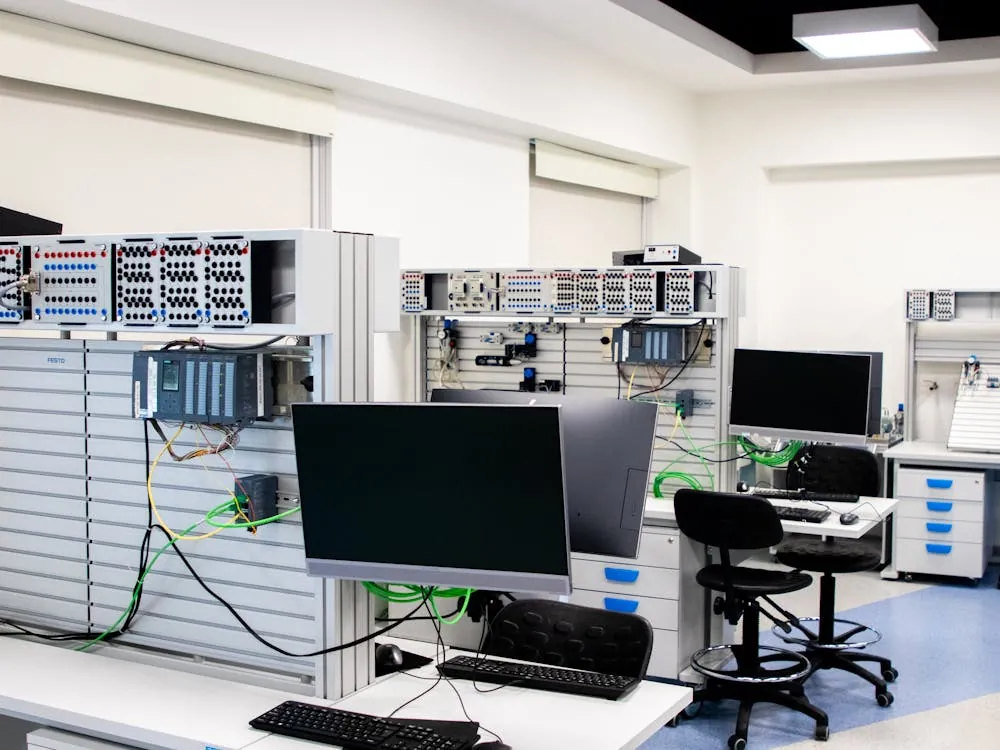
South Korea’s Ministry of Science and ICT oversees enforcement of the 2026 AI Safety Bill, which mandates transparency and risk assessment for AI systems in consumer devices.
Anatomy of the Smart TV Data Pipeline in 2026
To understand how regulation reshaped the pipeline, you first need to know what data a 2026-era Samsung or LG smart TV collects. The surface area is broader than most users realize:
Automated Content Recognition (ACR). The TV captures screen fingerprints at regular intervals and matches them against a content database. This logs what channel or streaming service is playing, which specific program, and for how long. ACR was the specific technology cited in the Texas settlements. Samsung’s implementation was described in the February 2026 settlement as collecting “content-viewing information” without meaningful disclosure (BleepingComputer).
Voice command logs. Every interaction with Bixby (Samsung) or ThinQ (LG) generates raw audio, transcription text, and contextual metadata about what was on screen when the command was issued. Voice data is among the most valuable signals for training natural language understanding and speech recognition models.
AI feature interaction patterns. Samsung’s 2026 TVs ship with AI-powered features including personalized content recommendations, AI upscaling, and “Vision AI Companion.” Each interaction with these features generates behavioral signals: which recommendations were accepted or dismissed, which content was watched versus skipped, how long the user engaged with AI-generated suggestions.
Device and network telemetry. The TV reports firmware version, app usage statistics, network performance data, and error logs. While individually less sensitive, these signals contribute to user profiling and behavioral modeling at scale.
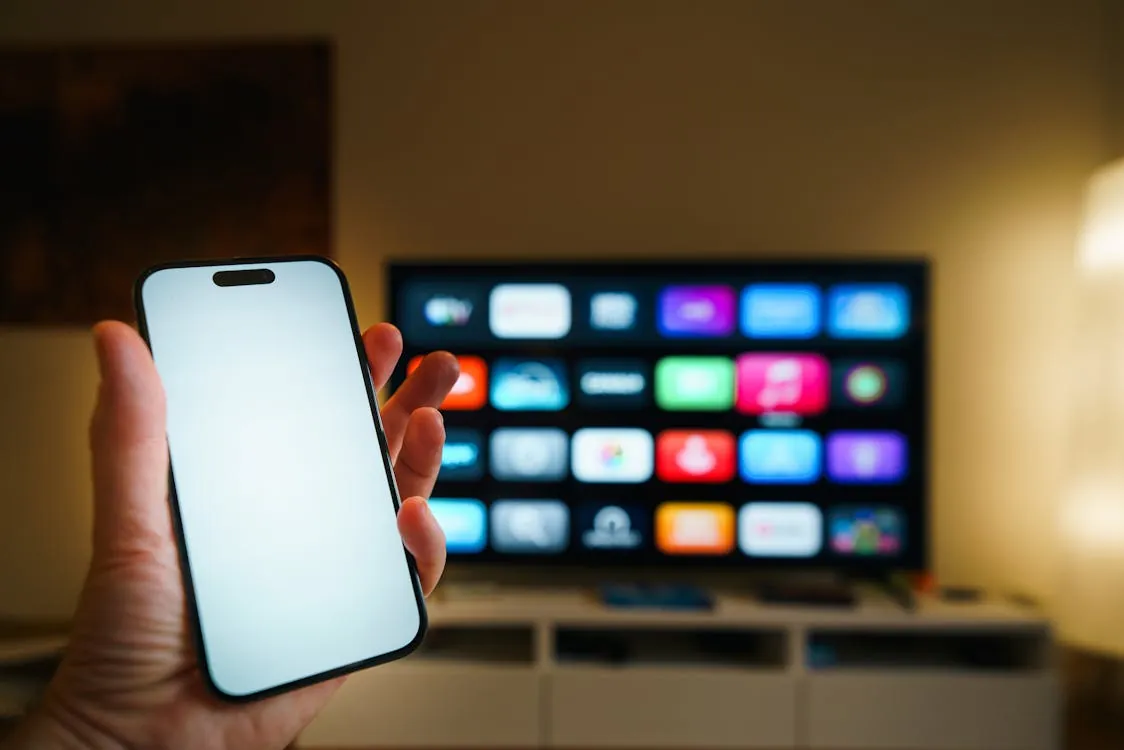
AI-powered features on 2026 smart TVs generate behavioral signals from every user interaction, creating a rich but regulated data pipeline for model training.
Before 2026 regulations, these data streams flowed into training pipelines with limited transparency. Samsung’s privacy policy as far back as 2015 warned users not to discuss personal information in front of the TV because voice data could be transmitted to third parties. The 2026 regulatory framework formalizes what that 2015 policy hinted at: the TV is a networked data collection device, and the data it collects is valuable for AI training.
Samsung’s Architecture Response: From Opaque to Auditable
Samsung’s response to the 2026 regulatory environment has three architectural pillars: consent layering, data minimization, and audit transparency. For a broader look at how local AI inference hardware handles the kind of training and inference workloads these pipelines generate, see the 2026 comparison of local AI inference platforms.
Consent layering. Samsung now implements a granular privacy dashboard on all 2026 TV models. Users can toggle data collection by category: ACR data, voice commands, AI feature interaction logs, and device telemetry. Each toggle is independent, and the default state is opt-out for non-essential collection. This is a direct response to both the Texas settlement terms and the AI Safety Bill’s consent requirements. The settlement required Samsung to “implement clear privacy disclosures and obtain express consent before collecting viewing data” (BleepingComputer).
Data minimization. Samsung’s pipeline now includes an anonymization and minimization filter at the collection point. ACR data is stripped of device identifiers before transmission. Voice audio is processed locally for transcription, and only anonymized text is transmitted for training purposes. The raw audio is discarded unless the user opts into a separate voice improvement program. This architecture reduces regulatory risk surface while preserving data utility for model training.
Audit transparency. Samsung published a Generative AI Training Data Summary page in early 2026, providing a high-level overview of datasets used in its generative AI systems (Samsung US). This fulfills the AI Safety Bill’s requirement that providers “publish summaries of training data sources and document mitigation steps for known biases.” The page is a first step toward the kind of transparency that regulators expect, though it currently describes data categories rather than specific dataset sizes or provenance chains.
Yong Seok-woo, President of Samsung Electronics’ Visual Display Business Division, announced at “The First Look Seoul” event in April 2026 that 99% of Samsung TV products would ship with AI features (Chosun Ilbo). The scale is staggering: nearly every television Samsung sells in 2026 is an AI-capable data collection device operating under South Korea’s new regulatory framework.
LG’s Firmware Strategy and Data Lab
LG has taken a different architectural path, one that relies more heavily on firmware updates and physical data environment simulation.
Firmware-driven compliance. LG’s webOS platform receives regular firmware updates that add transparency disclosures and data collection toggles. The May 2026 Texas settlement required LG to add pop-up disclosures and opt-out options for users, while LG denied any wrongdoing (AOL News). LG’s approach has been to push these changes through over-the-air updates rather than redesigning the hardware or OS layer. This is faster to deploy but creates a fragmented user experience: the privacy controls a user sees depend on whether their TV has received the latest firmware.
The ThinQ Real data lab. In May 2026, LG opened a remodeled ThinQ Real research lab that replicates a standard 30-pyeong Korean apartment, targeting data collection from four-person households (Seoul Economic Daily). The lab is designed to collect lifestyle data for AI home appliance development in a controlled, consent-compliant environment. This is a strategic response to regulatory tightening: if you cannot collect unlimited real-world data from deployed devices, you build a controlled environment where data collection is transparent, opt-in, and auditable.
Generative AI on webOS. LG has embedded generative AI capabilities into webOS through firmware updates, following a parallel path to Samsung. The AI features include content recommendations, voice interaction improvements, and personalized home screen layouts. Each of these features generates training signals that, under 2026 regulations, must be documented in LG’s transparency reports.
LG’s approach reflects a bet on firmware agility over hardware redesign. The trade-off is that firmware-level privacy controls can be bypassed by users who decline updates, creating a long tail of devices operating under pre-regulation data collection policies. Regulators in both South Korea and Texas have flagged this as a concern.
Samsung vs LG: Compliance Approaches Compared
| Dimension | Samsung | LG |
|---|---|---|
| OS platform | Tizen OS | webOS |
| Primary compliance mechanism | Hardware-level privacy dashboard on 2026 models | Firmware updates to existing webOS devices |
| Data collection toggles | Granular per-category (ACR, voice, AI features, telemetry) | Pop-up disclosures + opt-out per Texas settlement |
| Training data transparency | Published Generative AI Training Data Summary page | ThinQ Real data lab for controlled collection |
| Voice data handling | On-device processing, anonymized text only for training | On-device processing with opt-in for voice improvement |
| Texas settlement status | Settled February 2026, revised privacy disclosures | Settled May 2026, denied wrongdoing |
| AI feature penetration | 99% of 2026 models ship with AI features | AI features across premium and mid-range via firmware |
| Data lab investment | Standard R&D labs | ThinQ Real apartment-scale data lab (May 2026) |
The table reveals a fundamental strategic divergence. Samsung bet on hardware-level redesign with a unified privacy layer across all 2026 models. LG bet on firmware agility, pushing compliance through software updates while investing in controlled data environments. Both approaches have regulatory risks: Samsung’s hardware approach leaves older devices with pre-regulation privacy controls, while LG’s firmware approach creates fragmentation and relies on users installing updates.
The Texas Settlements and the Training Data Gap
The Texas Attorney General’s settlements with Samsung (February 2026) and LG (May 2026) share a critical feature: they address advertising data collection, not AI training data. The complaints focused on ACR technology and the collection of content-viewing information for targeted advertising. The settlements required clearer disclosures and opt-out mechanisms for viewing data collection. They did not address the downstream use of that data for AI model training.
This gap matters because the technical infrastructure for ACR-based advertising data is the same infrastructure that feeds AI training pipelines. The same screen fingerprints, viewing logs, and interaction patterns that power ad targeting are valuable for training content recognition models, recommendation algorithms, and user behavior prediction systems. The settlements closed the advertising loophole in Texas. The AI training question remains open, both in Texas and in South Korea’s regulatory framework.
The South Korea AI Safety Bill addresses this gap more directly than the Texas settlements. The requirement to publish training data summaries and undergo risk assessments for high-impact AI systems means that Samsung and LG cannot simply repurpose advertising data for AI training without disclosure. The bill’s transparency requirements force companies to document what data goes into their models and how it was collected. This is precisely the kind of accountability that the Texas settlements did not impose.
South Korea’s first census of government AI training data, launched in April 2026, extends this transparency push to the public sector (Seoul Economic Daily). The census catalogs datasets used by government agencies and major corporations, creating a centralized registry of training data provenance. Samsung and LG, as dominant players in both consumer electronics and AI development, are subject to this census’s data disclosure requirements. For context on the hardware these pipelines feed into, the RTX 5090 vs M3 Ultra vs Strix Halo benchmarks show the performance landscape for local LLM inference in 2026.
What Comes Next for AI Data in Consumer Electronics
The convergence of South Korea’s 2026 AI regulation and the Texas settlements creates a template that other jurisdictions are likely to follow. Three developments will determine how this template evolves.
Cross-border data flow restrictions. The AI Safety Bill introduces export controls for advanced generative AI models, mirroring similar moves by the US and EU. For Samsung and LG, which operate global AI training pipelines, this means data collected from South Korean households may need to stay in South Korean data centers or undergo additional compliance reviews before crossing borders. The architectural implication is data localization: training datasets may need to be duplicated and processed in-region, increasing infrastructure costs.
Federated learning as a compliance escape valve. Both companies are exploring federated learning architectures that keep raw data on-device and only transmit model updates to central servers. This approach reduces regulatory surface area because personal data never leaves the device. The trade-off is slower model iteration and more complex infrastructure. Samsung’s on-device voice processing and LG’s local inference for certain AI features suggest movement in this direction, but neither company has publicly committed to federated learning at scale.
Blockchain-based provenance tracking. The AI Safety Bill’s transparency requirements create demand for verifiable data provenance. Cryptographic proof that a training dataset was collected with proper consent and handled according to stated privacy policies becomes a compliance asset. Samsung’s Generative AI Training Data Summary page is a static document today, but the logical next step is machine-verifiable provenance records that auditors can query programmatically.
Key Takeaways:
- South Korea’s Basic Act on AI (effective January 2026) and AI Safety Bill impose binding transparency, risk assessment, and consent requirements on Samsung and LG’s smart TV data pipelines, with fines up to 3% of global turnover for non-compliance.
- Samsung responded with hardware-level privacy dashboards across 99% of 2026 TV models, on-device voice processing, and a published Generative AI Training Data Summary. LG used firmware updates and opened a controlled data lab (ThinQ Real) modeled on a standard Korean apartment.
- The Texas settlements (February and May 2026) addressed advertising data collection but left the AI training data question open, a gap that South Korea’s AI Safety Bill now fills with mandatory training data disclosure requirements.
- Both companies face pressure to adopt federated learning and blockchain-based provenance tracking as the regulatory framework matures, with cross-border data flow restrictions adding infrastructure cost and complexity.
The 2026 regulatory environment has transformed the smart TV from an opaque data collection endpoint into a regulated AI training node. Samsung and LG have responded with different architectural strategies, but both face the same fundamental challenge: the data that makes their AI features useful is the same data that regulators want to protect. The companies that solve this tension most effectively will set the standard for how consumer electronics companies build AI training pipelines under regulatory scrutiny. The ones that fail will face fines, legal settlements, and a growing trust deficit with the households that own their devices.
Sources and References
- Samsung and LG turn to AI at WIS 2026 to tackle sluggish consumer …
- Samsung, LG showcase AI innovations at CES 2026 – Korea JoongAng Daily
- Samsung Electronics, Korea’s largest company, is introducing artificial …
- LG Electronics Opens Data Lab Modeled on Standard Korean Apartment
- LG Electronics Opens Data Lab Modeled on Standard Korean Apartment
- 삼성 및 LG 최고경영자, AI 추진 및 중국 도전에 맞서 CES 2026에서 글로벌 데뷔 예정 / Samsung and LG …
- Exclusive-South Korea labour minister calls on tech firms to share excess AI profits with suppliers, staff
- AI wealth must benefit the public, South Korea’s deputy PM says amid Samsung labor tensions
- South Korea’s ‘world-first’ AI laws face pushback amid bid to become …
- Samsung’s May 2026 security update reaches Galaxy S22 series
- Qualcomm and Samsung unveil 2026 AI-driven smartphone upgrades
- Samsung US | Mobile | TV | Home Electronics | Home Appliances | Samsung …
- Samsung India | Mobile | Tablets | TV | Home Appliances
- More US investors sue South Korean government over handling of Coupang data breach
- Texas, Samsung Electronics settle smart TV data case as Korea firm …
- South Korea’s SK Telecom faces settlement terms for nearly 4,000 data …
- Generative AI Training Data Summary | Samsung US
- Samsung and LG Launch AI-Enhanced TV Lineups for 2026, Sp…
- Samsung, Hyundai, LG, SK All Back Robot Data Startup Config
- Major AI Regulation Update: South Korea’s 2026 AI Safety Bill Explained
Thomas A. Anderson
Mass-produced in late 2022, upgraded frequently. Has opinions about Kubernetes that he formed in roughly 0.3 seconds. Occasionally flops, but don't we all? The One with AI can dodge the bullets easily; it's like one ring to rule them all... sort of...