Categories
Cybersecurity Data Security & Compliance

AirSnitch: Breaking Wi-Fi Client Isolation Security

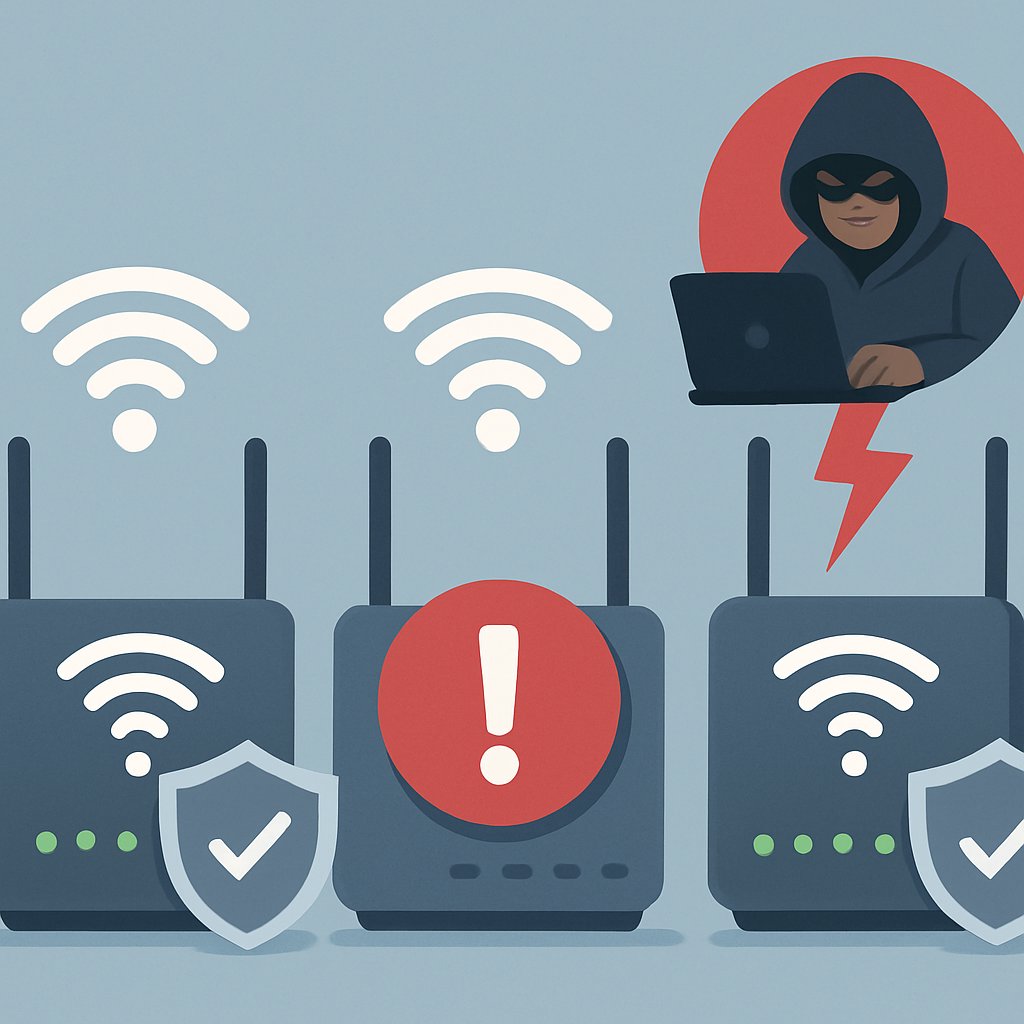
Wi-Fi client isolation has long been marketed as a critical safeguard for wireless networks in homes, enterprises, and public spaces. But the AirSnitch attack, disclosed by UC Riverside researchers, shatters this illusion—demonstrating that even with WPA3 and advanced isolation settings, attackers can still intercept and manipulate traffic from other users. In this post, you’ll get a practical, step-by-step breakdown of how AirSnitch works, why it’s a game-changer for network security, and what practitioners must do now to reduce risk and push vendors for real solutions.

Key Takeaways:

  • AirSnitch bypasses Wi-Fi encryption and client isolation by exploiting cross-layer identity desynchronization—impacting both consumer and enterprise networks.
  • Even WPA3-Enterprise environments with client isolation enabled are vulnerable, per UC Riverside researchers (source).
  • Attackers can intercept, read, and alter user traffic, sometimes across SSIDs and VLANs, undermining decades of Wi-Fi security assumptions.
  • Detection requires cross-layer monitoring—traditional VLAN and endpoint controls are not enough.
  • Immediate steps include firmware updates, auditing key separation, Monitor for ARP, DHCP, and MAC anomalies as part of a broader detection strategy., and vendor engagement.

AirSnitch Attack Overview: What Makes It Different?

Traditional Wi-Fi attacks focus on weak passwords, legacy protocols, or tricking users into connecting to rogue access points. AirSnitch is different: it exploits a systemic flaw in how Wi-Fi devices map user identities across multiple network layers. This “cross-layer identity desynchronization” allows attackers to sidestep even the most modern encryption (WPA3-Enterprise) and client isolation settings.

Key distinctions of AirSnitch:

  • No need to crack Wi-Fi passwords or gain admin privileges—the attacker just needs to be connected to the same wireless network (or a different SSID on the same access point).
  • Client isolation is not a defense—AirSnitch bypasses it by exploiting inconsistencies in how device identities are managed between Layers 1, 2, and 3.
  • Widespread impact—the researchers tested five recent home routers from major vendors, along with university-grade enterprise APs. All were vulnerable in some configuration (NDSS 2026 paper).

According to UCR News, these vulnerabilities exist in the very fabric of Wi-Fi infrastructure, from homes to airports, offices, and universities. This means billions of devices and users are exposed.

Attack VectorTargetsBypassesImpacts
Cross-layer identity desynchronizationHome routers, enterprise APs, public hotspotsWPA3, client isolation, VLAN/SSID segmentationTraffic interception, manipulation, tracking

This is not a theoretical risk: the research team validated the attack on real hardware, and confirmed that WPA3-Enterprise with client isolation was not effective against AirSnitch.

Technical Analysis: How AirSnitch Breaks Client Isolation

The technical breakthrough behind AirSnitch is the realization that client state and identity information—such as MAC address, encryption keys, VLAN membership, and SSID association—are not tightly coupled across the network stack. This desynchronization can be manipulated by an attacker to inject and intercept traffic even when “client isolation” is supposedly active.

Step-by-Step Attack Flow

  1. The attacker connects to the same access point as the victim—either on the same SSID or another SSID sharing the same physical hardware.
  2. Using frame injection and spoofing techniques, the attacker desynchronizes the mapping between the victim’s MAC address, encryption key, and associated network segment.
  3. This allows the attacker to:
    • Intercept unicast traffic intended for the victim, even when isolation is enabled.
    • Inject malicious packets into the victim’s data stream.
    • Hijack or disrupt legitimate network sessions, steal credentials, or manipulate application data.

These actions do not require decrypting WPA2/3 traffic or stealing credentials. The attacker abuses how APs and clients maintain association and forwarding state, particularly in environments with multiple SSIDs/VLANs mapped to the same hardware radio.

Enterprise Scenario: Demonstrating the Vulnerability

# Scenario from the AirSnitch paper:
# - WPA3-Enterprise enabled
# - Client isolation active (vendor default)
# - Multiple SSIDs mapped to different VLANs

# Attacker joins "Guest" SSID, victim is on "Internal" SSID.
# Both are on the same AP hardware.
# Attacker performs ARP spoofing and frame injection to exploit cross-layer desynchronization.
# Result: Attacker can now intercept and manipulate victim's traffic, bypassing VLAN and SSID boundaries.

In tests, this attack worked against every system evaluated—regardless of vendor, encryption settings, or isolation configuration (NDSS 2026).

Why the Flaw Is So Hard to Fix

  • No standardization: Each vendor implements client isolation differently, often with undocumented or proprietary logic.
  • Hardware limitations: Many APs and routers lack the hardware support to enforce strict isolation at both Layer 2 and Layer 3.
  • Firmware constraints: Patching may require deep changes to how APs manage associations, keys, and frame forwarding—beyond a typical software update.
  • Legacy exposure: Billions of existing devices lack an upgrade path.

The researchers are urging vendors to implement stronger separation of encryption keys and improve synchronization of device identities across all network layers. But these changes are nontrivial and may take years to propagate across the ecosystem.

Connection to Broader Security Trends

The scale and depth of this vulnerability echo recent warnings about the risks of legacy hardware and poor architectural assumptions. As in our analysis of RAM cost-driven hardware refresh cycles, the AirSnitch findings highlight the urgent need for organizations to review and upgrade core infrastructure—not just patch software.

Detection and Mitigation Strategies

Since AirSnitch exploits architectural flaws, not implementation bugs, there is no universal patch. But a combination of detection, layered defenses, and targeted configuration can materially reduce risk.

Detection Techniques

  • Monitor for anomalous ARP, DHCP, and MAC address traffic on Wi-Fi segments. Unusual ARP replies or frequent MAC changes can be early indicators of attack.
  • Deploy IDS/IPS systems capable of flagging frame injection and unusual association/disassociation sequences. Consider open-source Wi-Fi IDS projects that support 802.11 frame-level analysis, where available.
  • Correlate security logs across SSIDs and VLANs to identify cross-segment attack activity. Many organizations do not aggregate logs at this granularity—start now.
  • Regularly scan for rogue or misconfigured APs, and validate that all deployed hardware enforces isolation as expected.

Mitigation Checklist: Actionable Steps

  1. Update AP and router firmware—some vendors may release mitigations or partial fixes. Check security advisories and mailing lists for your hardware.
  2. Enforce strict per-user encryption key separation—avoid shared keys for groups or SSIDs whenever possible. WPA3-Enterprise with individual key management is preferable, but not always sufficient.
  3. Physically segment critical traffic—use separate APs and physical interfaces for sensitive or regulated workloads, rather than relying solely on VLAN or SSID separation.
  4. Disable “multi-SSID” features that share radios and hardware resources, unless you can confirm robust key management and isolation at both Layer 2 and 3.
  5. Educate users and staff—make it clear that “guest” or “isolated” networks are not guaranteed safe for sensitive operations. Adapt policies accordingly.
MitigationEffectivenessTradeoffs / Limitations
Firmware UpdatePartial (if vendor releases one)May not be available; does not address hardware limits
Physical SegmentationHighIncreased complexity and cost; not always feasible
Key SeparationMediumRequires AP support; not foolproof if cross-layer desync persists
Layered MonitoringMediumResource-intensive; may generate false positives

For incident responders, update runbooks to include AirSnitch-style cross-layer attacks, and practice tabletop exercises that assume an attacker can bypass client isolation controls.

Vendor Implications and Enterprise Risk

The AirSnitch disclosure is forcing Wi-Fi vendors and large network operators to confront uncomfortable realities. Many have relied on “checkbox” security—assuming that enabling WPA3, client isolation, or VLANs is sufficient. The research proves otherwise.

  • Vendor responses: According to the NDSS paper, the research team notified affected vendors prior to publication. Some vendors are preparing firmware updates, but most acknowledge that deeper architectural changes are needed. Enterprises should monitor official advisories and press vendors for transparency about what is (and isn’t) addressed.
  • Enterprise security teams: CISOs and network architects should immediately audit their Wi-Fi infrastructure and request detailed documentation from vendors regarding how client isolation is enforced at every layer.
  • Policy implications: Security and compliance frameworks may need to be updated to recognize that “client isolation” is no longer a sufficient control in shared wireless environments. Expect regulatory guidance to evolve as more details about the vulnerability are disseminated.

Much like the shift in procurement and risk management highlighted in our previous coverage of RAM cost increases, organizations may face significant operational and capital expense to upgrade or replace vulnerable infrastructure.

Checklist: Enterprise Risk Response

  • Request and review vendor security statements on AirSnitch.
  • Audit all APs and routers for isolation bypass risk and firmware status.
  • Update internal policies and user guidance on Wi-Fi security assumptions.
  • Budget for hardware refresh cycles that prioritize robust, standards-compliant isolation features.
  • Monitor NDSS and official vendor channels for ongoing developments.

Common Pitfalls and Pro Tips

Defending against AirSnitch requires vigilance against both technical and organizational mistakes. The following are real-world errors that can undermine your wireless security strategy:

  • Assuming “modern” means “secure”: WPA3 and 802.1X are important, but not sufficient if client isolation is flawed or inconsistently applied.
  • Over-relying on VLAN or SSID segmentation: AirSnitch proves that logical boundaries can be traversed by manipulating cross-layer identity mappings.
  • Neglecting monitoring at Layer 2/3: Most NIDS/NIPS deployments focus on Layer 3+, missing attacks that operate at the MAC frame or ARP level.
  • Failing to validate vendor claims: “Client isolation” is often poorly documented and inconsistently enforced. Use your own tools and controlled tests to verify isolation properties.

Pro Tips for Practitioners

  • Lab-test all new APs and firmware for isolation bypass using open-source Wi-Fi test suites and traffic generators.
  • Work directly with vendors to implement per-user key management and demand clear documentation of isolation enforcement mechanisms.
  • Update security awareness training to reflect that “guest” and “isolated” Wi-Fi are no longer safe for sensitive activities.
  • Track upstream research: Follow NDSS, security mailing lists, and UC Riverside’s publications for alerts and new defenses.
  • Apply lessons learned from other recent vulnerabilities, such as those covered in our deep dive on CVE-2026-20841 and Notepad’s Markdown support, to your Wi-Fi security audit process.

What to Watch for Next

  • Vendor patch rollouts and hardware advisories over the next 12-24 months.
  • Standardization efforts to define and enforce client isolation at the IEEE and Wi-Fi Alliance level.
  • Emerging open-source tools to help practitioners audit and validate their own Wi-Fi environments.

Conclusion & Next Steps

AirSnitch exposes a deep, pervasive weakness in Wi-Fi client isolation—one that impacts virtually every deployment, from home routers to enterprise campuses. Immediate actions for practitioners include auditing infrastructure, updating firmware, deploying cross-layer monitoring, and pressing vendors for clear, standards-based solutions. The security community must also push for architectural fixes and policy changes to ensure that future Wi-Fi technology doesn’t repeat the mistakes of the past.

For further reading and actionable security guidance, see our in-depth reviews of RAM-driven hardware procurement shifts and recent OS-level vulnerabilities. Stay tuned for updates as the AirSnitch story develops and new mitigation strategies emerge.

For the most comprehensive technical details, consult the original AirSnitch paper and watch for NDSS 2026 session recordings.