Categories
China Travel & Living Chinese Culture & History

Chinese Porcelain and Ceramics: An Art History Journey

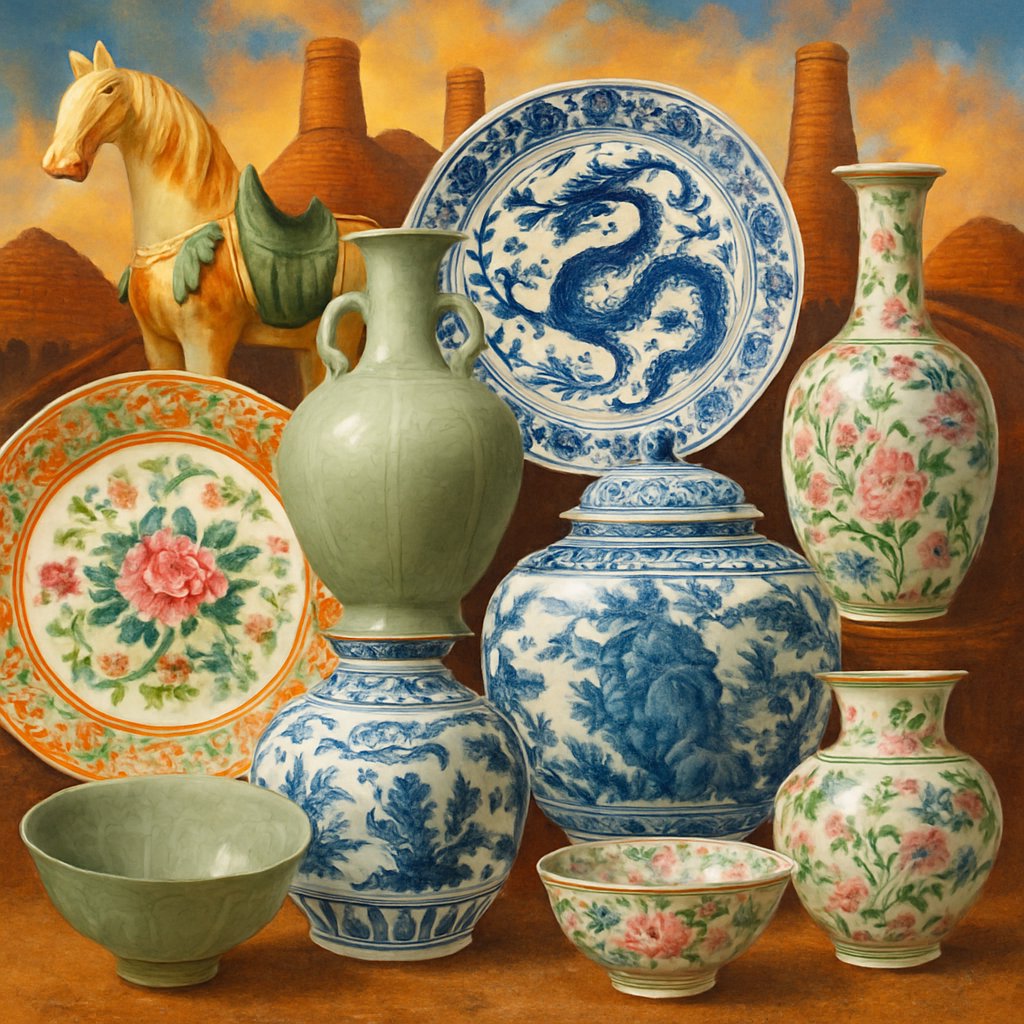
Chinese porcelain and ceramics are more than exquisite objects—they are vessels of history, artistry, and cultural exchange. From the vibrant hues of Tang dynasty sancai to the refined elegance of Song celadon and the iconic blue-and-white wares of Ming and Qing, each period tells a story of technical innovation and aesthetic philosophy. Understanding these masterpieces means tracing the journey of clay, glaze, and fire from ancient kilns to the world stage.

Key Takeaways:

  • Recognize major dynastic styles: Tang sancai, Song celadon, Ming blue-and-white, Qing famille rose
  • Understand Jingdezhen’s role as the “porcelain capital” and its ongoing legacy
  • Learn practical identification techniques for authenticating Chinese ceramics
  • Explore the cultural and historical impact of porcelain on China and the world
  • Compare major periods and their distinguishing features in a summary table

Dynastic Evolution: Tang, Song, Ming, and Qing Ceramics

Tang Dynasty (618–907): Sancai 三彩

The Tang dynasty’s sancai (三彩, “three colors”) wares are among China’s most recognizable ancient ceramics. These low-fired earthenwares feature lively glazes in amber, green, and cream, creating a marbled effect that captures the vibrancy of the era. Sancai was used for mingqi (冥器)—figurines and vessels placed in tombs for the afterlife. The forms are often robust: camels, horses, guardians, and court ladies, reflecting the cosmopolitan Silk Road culture of Tang China. The glazes, runny and unpredictable, embody the Tang taste for spontaneity and boldness.

Song Dynasty (960–1279): Celadon 青瓷 and Beyond

The Song dynasty marked a profound shift toward understated elegance. Celadon (青瓷, qīngcí) wares from kilns such as Longquan (龙泉) and Ru (汝) are prized for their serene, jade-like glazes and subtle carved or incised decoration. Song ceramics emphasize form and glaze harmony, reflecting Neo-Confucian ideals of balance and simplicity. Delicate forms—bowls, dishes, vases—are often thin-walled and perfectly proportioned. Other Song innovations include white Ding ware (定瓷) and the rare, crackled-glaze Guan ware (官窑).

Ming Dynasty (1368–1644): Blue-and-White 青花

Ming blue-and-white porcelain (青花, qīnghuā) is perhaps the most globally celebrated Chinese ceramic style. These wares use imported cobalt pigment under a clear glaze, resulting in vivid, painterly scenes—dragons, landscapes, floral scrolls—on a luminous white body. Early Ming pieces are robust and expressive, while later wares from the Xuande (宣德) and Chenghua (成化) reigns achieve remarkable technical finesse. Blue-and-white porcelain became a major export commodity, shaping tastes across Asia, the Middle East, and Europe.

Qing Dynasty (1644–1912): Famille Rose 粉彩 and Imperial Opulence

The Qing dynasty saw even greater technical and decorative complexity. Famille rose (粉彩, fěncǎi) wares, developed in the early 18th century, use opaque pink enamel and a vibrant palette to create intricate, multi-layered designs—floral bouquets, court scenes, auspicious symbols. Imperial patronage under emperors Kangxi (康熙), Yongzheng (雍正), and Qianlong (乾隆) led to a golden age of porcelain, with ever-more elaborate forms, glazes, and painting techniques. Qing ceramics embody the dynasty’s wealth and cosmopolitanism, often blending Chinese motifs with Western influences introduced through trade.

DynastySignature WareKey FeaturesCommon Motifs
Tang (618–907)Sancai 三彩Three-color glazes; tomb figurines; lively formsHorses, camels, court figures
Song (960–1279)Celadon 青瓷, Ding 定瓷, Guan 官窑Jade-like glaze, elegant shapes, subtle decorationLotus, peony, abstract pattern
Ming (1368–1644)Blue-and-white 青花Cobalt blue underglaze, white porcelain, detailed paintingDragons, landscapes, floral scrolls
Qing (1644–1912)Famille rose 粉彩, famille verteBright enamels, complex designs, imperial marksPeonies, phoenixes, imperial scenes

For a deeper understanding of how these ceramic styles influenced broader Chinese aesthetics, see Comparing Traditional and Modern Chinese Architecture and Reviving Tang, Song, Ming, and Qing Legacies in Urban Design.

Jingdezhen: The Heart of Chinese Porcelain

No discussion of Chinese ceramics is complete without Jingdezhen (景德镇), often called the “Porcelain Capital” of China. Located in Jiangxi province, Jingdezhen has an unbroken tradition of porcelain production spanning over a thousand years. By the Song dynasty, it supplied the imperial court; by Ming and Qing times, it dominated both domestic and export markets. Today, over 16,000 workshops and 150,000 artisans continue to shape its legacy (2026 IAC Congress Jingdezhen).

Why Jingdezhen?

  • Natural resources: High-quality kaolin clay, crucial for translucent, durable porcelain
  • Skilled labor: Generations of specialized artisans—throwers, carvers, painters, glazers
  • Imperial patronage: Official kilns (官窑, guān yáo) serving the court set standards for quality and innovation
  • Trade routes: Proximity to the Yangtze River and Maritime Silk Road enabled global distribution

Jingdezhen porcelain is described as “as white as jade, as bright as a mirror, as thin as paper, as sound as a chime” (source). The city’s kilns have produced everything from minimalist scholar’s cups to monumental vases for foreign markets. Major innovations—such as underglaze blue, overglaze enamels, and complex multi-stage firings—were refined here and spread worldwide.

Jingdezhen remains a living museum and beacon for global ceramic dialogue, hosting international exhibitions and educational alliances. To see how the city's legacy shapes contemporary art, the Jingdezhen International Ceramic Art Biennale offers a window into ongoing innovation.

How to Identify Chinese Porcelain: Practical Tips for Collectors

Distinguishing authentic Chinese ceramics from later copies or forgeries requires a careful eye and historical knowledge. Here are key factors to consider when identifying pieces from major periods:

Physical Characteristics

  • Body and Glaze: Tang sancai pieces have a coarse, porous body; Song celadon is dense with a jade-like, sometimes crackled glaze; Ming blue-and-white is fine, with a slightly bluish-white body; Qing famille rose is thinner, often with a glassy, smooth glaze.
  • Decoration: Look for period-specific motifs and painting styles. Song wares are minimalist; Ming features bold, narrative painting; Qing wares offer dense, multicolored designs.
  • Imperial marks: Many Ming and Qing pieces bear reign marks (nianhao 年号) on the base, but beware—these were sometimes added later or used honorifically on later wares.
  • Shape and Proportion: Authentic forms reflect the aesthetics of their time—Song pieces are often small and refined, Ming and Qing can be more robust or elaborate.

Provenance and Context

  • Consider the source: Was the item excavated in a documented context or acquired from a reputable collection?
  • Scientific analysis (such as thermoluminescence dating) can help verify age, especially for high-value Tang and Song pieces.
  • Consult auction records and museum collections for comparable forms and decoration (see Sotheby’s Chinese Art auctions for examples).
PeriodBody / GlazeCommon FakesIdentification Tips
TangEarthenware, sancai glazeModern “tomb” figuresCheck for burial soil, glaze runs, surface pitting
SongStoneware, celadon/crackled glazesImitation “Longquan” waresExamine glaze depth, subtlety of carving, foot ring
MingPorcelain, underglaze blue19th/20th c. blue-and-white copiesAssess blue tone, painting style, reign marks
QingPorcelain, famille rose enamelsModern reproductions, spurious marksInspect enamel texture, color layering, mark authenticity

For more on the intersection of craftsmanship and philosophy, see Exploring Chinese Philosophy: Confucianism, Taoism, Buddhism.

Cultural Significance and Global Influence

Chinese ceramics are not just decorative—they are deeply woven into China’s social, spiritual, and economic fabric. Porcelain reflects key values in Chinese culture, such as harmony (和谐, héxié), balance, and the pursuit of perfection through skilled labor. The shape of a vessel itself is an artistic expression, whether the serene Guanyin (观音, Guānyīn) statues of Dehua white porcelain or the minimalist beauty of Yixing zisha (紫砂) teapots (The China Journey).

  • Ritual and daily life: Ceramics served roles in ancestor worship, state ritual, and everyday dining, reflecting social hierarchy and cosmological order.
  • Trade and diplomacy: Porcelain was a cornerstone of the Silk Road and Maritime Silk Road, catalyzing early globalization and cross-cultural exchange from the Han dynasty onward (China Sage).
  • Innovation and adaptation: Each dynastic style responded to changing tastes, markets, and technologies, blending tradition with foreign influences.
  • Modern relevance: Contemporary artists and craftspeople in places like Jingdezhen continue to push boundaries, ensuring the living heritage of Chinese ceramics endures.

Chinese porcelain’s global journey has profoundly shaped art, technology, and taste worldwide. Record finds, such as the Yuan dynasty shipwreck off Singapore loaded with blue-and-white wares, reveal the scale of this historical trade (source).

Common Pitfalls and Pro Tips

Avoiding Misidentification

  • Don’t trust marks alone: Many Qing and Ming pieces carry earlier reign marks or modern reproductions. Always assess the entire piece—body, glaze, decoration, and context.
  • Beware of “antique” patinas: Modern fakes sometimes use chemical or mechanical aging. Authentic ancient ceramics tend to show genuine wear—glaze contraction, burial encrustations, or natural firing flaws.
  • Context is critical: Isolated finds with no provenance are high risk. Seek documentation, previous auction records, or scientific testing for major acquisitions.

Best Practices for Collectors and Scholars

  • Study museum collections and auction catalogs regularly—visual memory is key to recognizing authentic forms and decoration.
  • Network with specialists in Chinese ceramics, including curators and reputable dealers.
  • When in doubt, consult with laboratories offering thermoluminescence or compositional analysis for ancient pieces.
  • Stay informed about recent discoveries and ongoing research, as new finds can reshape understanding of ceramic history.

Conclusion and Further Exploration

Chinese porcelain and ceramics are living testaments to the country’s artistic, technical, and cultural ingenuity. From the tombs of Tang emperors to the tables of modern collectors, these treasures continue to inspire and connect people across time and continents. Whether you admire the minimalist beauty of Song celadon or the opulent flair of Qing famille rose, understanding these works deepens your appreciation of China’s enduring pursuit of harmony and excellence in art.

For further reading on how Chinese cultural achievements shape the present, explore Reviving Tang, Song, Ming, and Qing Legacies in Urban Design or discover the philosophy behind these aesthetics in Exploring Chinese Philosophy: Confucianism, Taoism, Buddhism. If you're interested in the broader context of festivals and traditions, see Explore Traditional Chinese Festivals Beyond New Year.

To go deeper into the language, symbolism, and craft, consult primary sources and major museum collections. The journey through Chinese ceramics is far from over: each piece is an invitation to look closer, ask questions, and appreciate the timeless dialogue between earth, fire, and human creativity.

Sources and References

This article was researched using a combination of primary and supplementary sources:

Supplementary References

These sources provide additional context, definitions, and background information to help clarify concepts mentioned in the primary source.