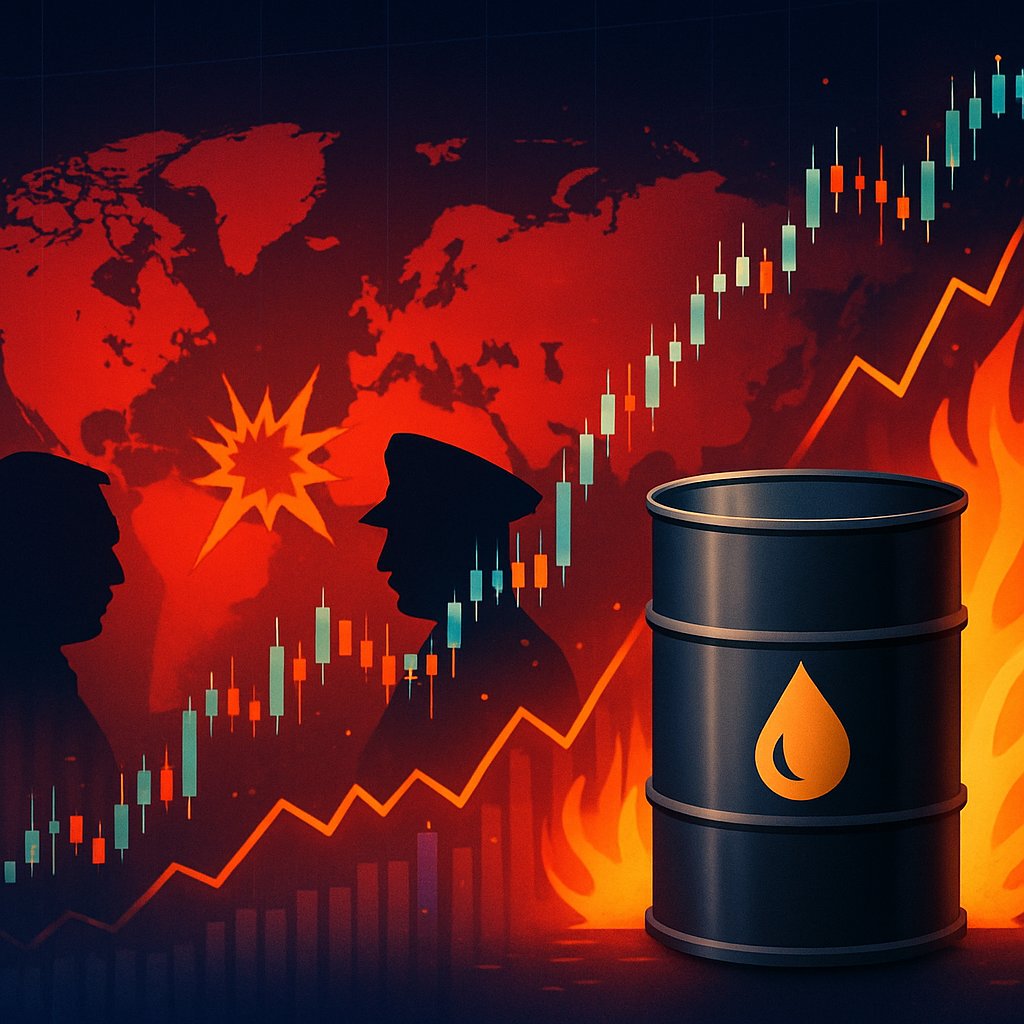
If WTI crude (CL=F) holds above $85 and extends into the high-$80s into Friday on continued Hormuz-related disruption headlines, odds rise that the Dow (^DJI) remains the laggard index while Nasdaq (^IXIC) leadership narrows further. A policy push for much lower oil prices (e.g., $50 rhetoric) is a countervailing force—but the near-term tape is more likely to be driven by physical supply/logistics constraints and risk premia than by aspirational price targets.
To make the mechanics more concrete, consider how this can show up in real-time market behavior:
- “Holds above $85” as a positioning trigger: If WTI repeatedly trades above $85 rather than quickly mean-reverting, it can reinforce the idea that the market is pricing persistent tightness rather than a one-off spike.
- “Extends into the high-$80s” as a headline amplifier: When prices push into the high-$80s alongside recurring Hormuz-related disruption headlines, the move can feel more “validated” by the news flow, which can increase risk sensitivity across equities.
- Index divergence example: In that setup, the Dow can lag as higher energy costs pressure parts of the economy more directly, while Nasdaq leadership can narrow further as investors become more selective about which growth exposures they want to own in a higher-input-cost environment.
A few terms in the call are worth defining in plain language so the thesis reads as intended:
- “Hormuz-related disruption headlines”: News suggesting potential interruptions in oil flows or shipping through the Strait of Hormuz, a critical route for global energy logistics.
- “Near-term tape”: Trader shorthand for the immediate price action and market tone—what markets are doing right now, often driven by headlines and positioning rather than long-horizon fundamentals.
- “Physical supply/logistics constraints”: Real-world limits—production capacity, transport, shipping routes, and distribution bottlenecks—that can keep supply from responding quickly even if there is political pressure for lower prices.
- “Risk premia”: The extra price investors demand to hold an asset when uncertainty rises. In oil, that often appears as an added “geopolitical” or “disruption” component embedded in prices.
- “Aspirational price targets”: Politically discussed or rhetorically desired price levels (e.g., “$50 oil”) that may not be immediately achievable if constrained by economics or physical realities.
That framing also clarifies the intended balance in the prediction: the $50 rhetoric is acknowledged as a countervailing force, but the near-term path is described as more likely to be governed by constraints and uncertainty pricing if disruption risk remains front-and-center.
Sources and References
This article was researched using a combination of primary and supplementary sources:
Market Data
Real-time financial data used for price quotes, index levels, and market statistics.

