Categories
Financial Markets Markets

Fed Holds Rates Steady Amid War and Inflation Uncertainty

Fed Holds Rates Steady as War-and-Inflation Uncertainty Hits Risk Assets

Subheadline: The Federal Reserve’s March 18 decision to keep policy unchanged landed in a tape that repriced growth, hammered “duration,” and forced investors to reconcile higher oil with falling gold and bitcoin—an ugly cross-asset mix that pushed U.S. equities to fresh 2026 lows by the close.

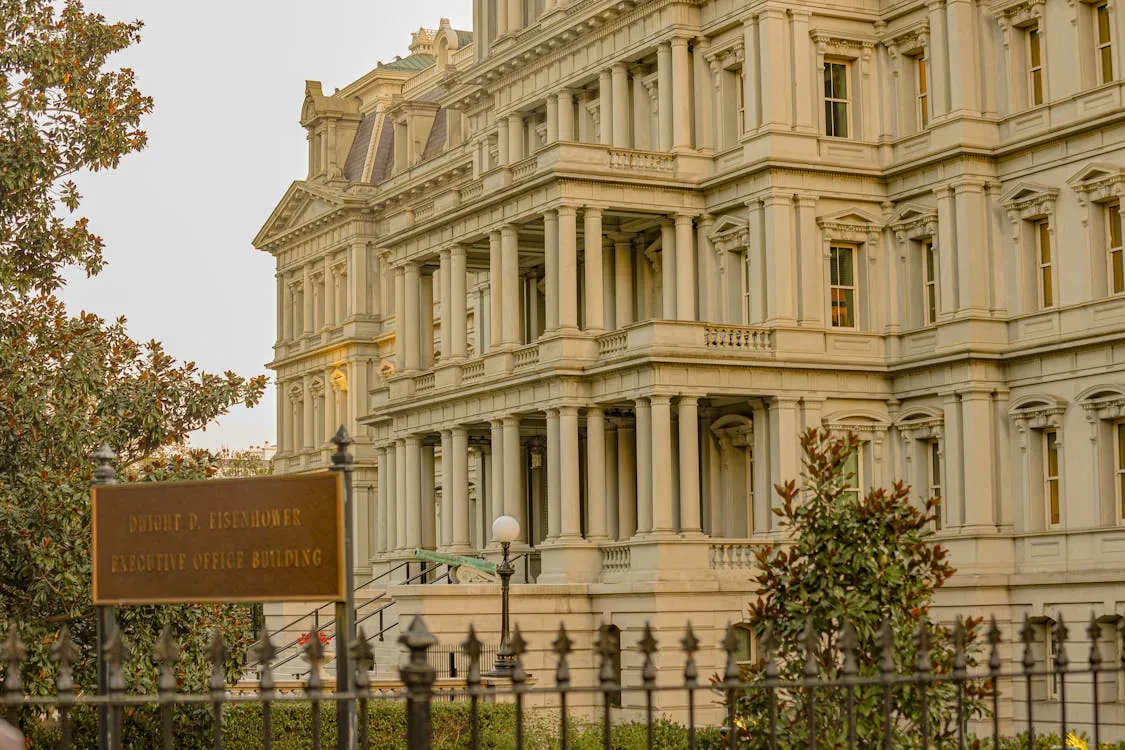
Government building exterior in Washington, D.C., representing U.S. policy institutions
Policy risk is back in the driver’s seat: the Fed held rates steady on March 18 as markets digested war-driven energy shocks and stubborn inflation uncertainty.

Key Takeaways:

  • U.S. stocks sold off hard Wednesday, March 18, 2026: S&P 500 (^GSPC) closed at 6,624.71 (-1.36%), Nasdaq (^IXIC) at 22,152.42 (-1.46%), and Dow (^DJI) at 46,224.62 (-1.64%) (official 4:00pm ET close; data as-of 20:00 UTC).
  • Cross-asset signals diverged: WTI crude (CL=F) settled at $97.73 (+1.58%) while gold (GC=F) settled at $4,846.30 (-3.09%); Bitcoin (BTC-USD) traded around $71,111.24 (-3.80%) as of ~19:58 UTC.
  • Fed messaging emphasized uncertainty tied to the Iran war and inflation dynamics; investors treated “hold” as a risk-management stance, not a dovish pivot (coverage: CNBC/CNN/TheStreet, March 18).
  • What to watch next: rate-path credibility versus energy-driven inflation, and whether risk-off broadens beyond high-multiple tech into credit-sensitive cyclicals.

Market Overview (March 18, 2026 Close): A Fed “Hold” Meets a Risk-Off Repricing

The market-moving fact from Wednesday’s session was the closing damage: the S&P 500 (^GSPC) finished March 18 at 6,624.71, down 91.38 points (-1.36%), while the Nasdaq Composite (^IXIC) closed at 22,152.42 (-1.46%) and the Dow Jones Industrial Average (^DJI) ended at 46,224.62 (-1.64%) (official 4:00pm ET closes; prices as-of 20:00 UTC). The declines came as the Federal Reserve held rates steady and repeatedly flagged uncertainty around the economic impact of the Iran war and inflation persistence, per contemporaneous reporting from CNBC and CNN.

Intraday, the pattern was familiar to anyone trading 2026’s “macro-first” tape: early positioning around the Fed gave way to a broader de-risking wave as investors processed the policy statement, vote split, and Chair Powell’s press-conference emphasis on inflation progress coming in “less than hoped” (CNBC, March 18). By the close, the Dow’s -768.64 point drop signaled that the pain wasn’t isolated to high-duration tech; it was broad risk aversion.

This session also matters in context. In our recent coverage of tariff-driven volatility and Europe’s tech read-through, we highlighted how quickly macro headlines can transmit into multiples and positioning; that framework held up again today, but with the Fed and energy shock as the accelerant rather than tariffs. Investors should compare this tape to the prior day’s softer close discussed in our analysis of U.S. tariff threats and European tech’s Q1 2026 market impact, because March 18’s move suggests the market is shifting from “headline sensitivity” to “risk budget reduction.”

Index (Ticker)Close (Mar 18, 2026)Point Change% ChangeSession Range
S&P 500 (^GSPC)6,624.71-91.38-1.36%6,621.66–6,705.18
Nasdaq Composite (^IXIC)22,152.42-327.11-1.46%22,144.76–22,461.76
Dow Jones Industrial Average (^DJI)46,224.62-768.64-1.64%46,193.06–46,913.93

Forward-looking: the next test is whether Thursday brings stabilization (buyers step in on policy clarity) or continuation (investors sell rallies as energy inflation risk stays bid).

Close-up of a stock market data display with colorful numbers
Wednesday’s close reflected broad de-risking: major indices fell more than 1% even after the Fed held policy steady.

Top Movers: Single-Name Dispersion Survives a Macro Tape

Even on a day dominated by the Fed and geopolitics, dispersion stayed extreme. On the upside, SwimR (SWMR) closed at $55.00 (+77.42%), easily the day’s standout gainer by percentage. Lululemon (LULU) finished at $165.39 (+3.84%), while several smaller names posted double-digit gains including RGC (RGC) at $26.62 (+15.91%), Traeger (COOK) at $34.99 (+16.96%), and VG (VG) at $14.90 (+14.88%) (all as-of 20:00 UTC).

On the downside, AbbVie (ABBV) ended at $208.30 (-5.21%) and FIG (FIG) closed at $25.23 (-8.09%) (as-of 20:00 UTC). Importantly, these stock-specific moves occurred while the index-level selloff was broad—meaning stock picking still mattered, but beta dominated portfolio outcomes.

TickerClose (Mar 18, 2026)% ChangeWhat moved it (session context)
SWMR (SWMR)$55.00+77.42%Largest % gainer in the session amid broad risk-off.
Lululemon (LULU)$165.39+3.84%Held up despite macro pressure; followed earnings/guidance headlines in the news cycle (CNBC coverage in the same window).
Traeger (COOK)$34.99+16.96%High dispersion day: notable upside move even as indices fell >1%.
RGC (RGC)$26.62+15.91%Strong upside move; illustrates continued single-name volatility.
Venture Global (VG)$14.90+14.88%Energy-adjacent beta drew attention as oil settled higher.
AbbVie (ABBV)$208.30-5.21%Large-cap healthcare weakness added to defensive sector disappointment.
FIG (FIG)$25.23-8.09%One of the sharpest % decliners on a day when risk budgets were cut.

Forward-looking: if the Fed-driven volatility persists, expect more “index down, some names up big” sessions—especially around earnings and guidance updates.

Sector Performance: The Fed’s Discount-Rate Shock Collides With Oil’s Inflation Shock

Wednesday’s sector story was less about “rotation” and more about correlation spikes: when the market reprices the policy path, sector fundamentals take a back seat to duration and leverage. The Nasdaq’s -1.46% close is consistent with a renewed discount-rate sensitivity, echoing the dynamic we discussed in our coverage of the Nasdaq “Fast Entry” debate and tech underperformance, where governance headlines mattered—but oil and rates ultimately set the multiple.

Energy-linked exposures benefited from crude’s move, but the broader market still sold off—suggesting investors treated higher oil as stagflationary rather than growth-positive. That tension is the key: oil up is not automatically “energy stocks up, market up.” In 2026’s regime, oil up increasingly reads as “inflation up, Fed constrained, risk assets down.”

Financials also deserve attention. A Fed “hold” at a time of geopolitical risk can be supportive for net interest margins in isolation, but if the hold is driven by inflation uncertainty and growth risk, credit spreads and loan-loss expectations can overwhelm the benefit. The market’s message through the Dow’s -1.64% decline: investors were not paying up for cyclicals on this decision.

Forward-looking: watch whether the next sessions show leadership from quality defensives, or whether the selloff broadens to “everything except energy” as inflation risk stays elevated.

Trader using laptop and smartphone to monitor markets
When the Fed’s reaction function is uncertain, investors shorten time horizons and manage exposure dynamically—even outside institutional desks.

Macroeconomic Developments: What the Fed Actually Signaled—and Why Markets Didn’t Like It

Factual recap (policy): Reporting from CNBC on March 18 indicated the Fed held interest rates steady, with officials noting “uncertain” impacts from the Iran war. CNN’s live coverage emphasized Powell’s focus on inflation and the lagged pass-through from tariffs into consumer prices, framing the Fed as managing a widening cone of uncertainty rather than steering toward a clean “soft landing.” TheStreet characterized the decision as a divisive hold that underscores the central tension in 2026’s policy debate: inflation risk versus growth risk, with war-driven energy prices scrambling the rate path.

Market interpretation (analysis): The problem for risk assets wasn’t simply “no cut.” It was the implication that the Fed is uncomfortable declaring victory on inflation while oil is rising and geopolitics is threatening supply chains. In that setup, the market hears: (1) cuts may come later than hoped, (2) the distribution of outcomes is wider, and (3) the Fed’s tolerance for inflation surprises is lower than risk markets want. That combination is mechanically bearish for equity multiples because it lifts the discount rate and raises the equity risk premium simultaneously.

Today’s cross-asset moves reinforced the message. Gold (GC=F) settling at $4,846.30 (-3.09%) while WTI crude (CL=F) settled at $97.73 (+1.58%) is not the “classic” inflation-hedge pairing moving together. It suggests forced deleveraging and liquidity preference: investors sold what they could, not only what they wanted to. Bitcoin (BTC-USD) at $71,111.24 (-3.80%) in the same snapshot window adds to the “liquidity matters” interpretation.

Forward-looking: the next macro catalyst is whether energy prices continue to rise (tightening financial conditions indirectly) and whether incoming inflation and labor-market data validate the Fed’s caution.

Commodities and Global Markets: Oil Up, Gold Down, Crypto Down—A “Stress Mix”

Wednesday’s commodity tape was the day’s loudest macro contradiction. WTI crude (CL=F) officially settled at $97.73, up $1.52 (+1.58%) at the NYMEX 2:30pm ET settlement (as-of 19:50 UTC). Gold (GC=F) settled at $4,846.30, down $154.70 (-3.09%) at the COMEX 1:30pm ET settlement (as-of 19:50 UTC). Bitcoin (BTC-USD) traded around $71,111.24 (-3.80%) as of ~19:58 UTC.

This matters because oil is the macro transmission channel that can force the Fed’s hand without any change in domestic demand. In our prior commodity-focused coverage—Crude oil and gold markets (March 14, 2026): safe-haven demand remains—we described a regime where geopolitics kept a safe-haven bid intact. Today’s gold drop, despite higher oil and war risk, is a warning that positioning and liquidity can dominate “textbook” correlations when volatility spikes.

Forward-looking: if oil continues to climb while gold fails to catch a bid, expect broader tightening in financial conditions as investors reduce gross exposure across asset classes.

Outlook and Key Events Ahead: What Investors Should Watch Next (and How to Trade the Regime)

Economic Calendar: The next inflation and growth prints matter more than the next headline

The Fed has effectively told markets it is data-dependent in an environment where “data” includes geopolitics via energy prices. That makes upcoming inflation and labor-market releases more market-moving than usual, because they determine whether the Fed can look through an oil shock or must treat it as persistent. The key is not the level of inflation alone, but whether core components show renewed acceleration that forces a higher-for-longer narrative.

Investors should also monitor rate-sensitive corners of the market for stress signals. When a Fed hold is interpreted as caution rather than comfort, the market tends to punish leverage and reward balance-sheet resilience. That dynamic can persist even if the next data print is only modestly hot, because positioning has already shifted toward defensiveness.

Earnings Watch: Micro still matters—especially guidance under macro uncertainty

Even in a macro-dominated tape, earnings can break correlation. The week’s earnings calendar includes Dollar Tree (DLTR) with an EPS estimate of $2.53, KE Holdings (BEKE) with an EPS estimate of $0.06, and Science Applications International (SAIC) with an EPS estimate of $2.31 (calendar as-of 20:00 UTC). In this regime, focus less on “beat/miss” and more on how companies discuss input costs, demand elasticity, and any exposure to shipping and energy volatility.

Guidance is the real catalyst because the market is already repricing discount rates. If management teams start to embed higher fuel and logistics costs into forward outlooks, that’s a second-order tightening: margins compress while the discount rate rises. That’s how earnings risk compounds.

Central Bank & Policy: Uncertainty is the message—and markets are paying for it

CNBC’s March 18 coverage emphasized the Fed’s decision to hold rates steady while noting uncertain impacts from the Iran war, and highlighted Powell’s posture in the press conference. CNN’s live updates framed the Fed chair as focused on inflation and on lagged tariff effects that could take months to pass through. TheStreet’s framing of a “divisive hold” captured the market’s core issue: policy is no longer a single-path forecast; it’s a distribution with fat tails.

For investors, the actionable implication is that the “Fed put” is less reliable when inflation is the constraint. In that environment, rallies can be sold quickly if oil rises, because higher oil tightens the Fed’s reaction function even if growth weakens. That is a difficult mix for broad equities and a supportive mix for volatility strategies and selective real-asset exposure.

Technical Levels & Sentiment: Watch for follow-through after a new 2026 low

Wednesday’s close pushed major indices lower with little ambiguity: the S&P 500 closed near the day’s low range (intraday range 6,621.66–6,705.18), and the Nasdaq also finished close to session lows (range 22,144.76–22,461.76). That matters because “weak close” days tend to invite systematic selling and reduce dip-buying confidence, especially when tied to macro events like the Fed.

Sentiment risk is heightened when correlations rise. If investors treat the next session as “sell rallies” rather than “buy dips,” even good single-name earnings can struggle to lift the tape. The practical response is to separate alpha hunting (idiosyncratic winners) from beta exposure (index risk) more aggressively than usual.

Risks & Catalysts: The 2026 playbook is oil → inflation expectations → policy credibility

The near-term risk is an adverse feedback loop: oil rises on war headlines, inflation expectations creep up, the Fed stays cautious, and equities de-rate further. Wednesday’s tape already displayed pieces of that loop: WTI settled higher while equities sold off sharply. The unusual part was gold falling hard at the same time, hinting at forced selling rather than orderly hedging.

There are also second-order policy risks beyond the Fed. CNBC reported on U.S. actions aimed at steadying oil markets, including a 60-day waiver of Jones Act shipping rules. Those kinds of interventions can alter near-term energy pricing but also signal that the shock is large enough to force policy improvisation—another contributor to uncertainty premia.

What to watch next: If crude continues to climb while equities remain heavy, markets may start to price a more explicit stagflation risk, even if Powell resists that label. Conversely, if oil cools and inflation data cooperates, the Fed’s “hold” could be reframed as patience rather than constraint—setting up a reflexive rebound. Either way, the next few sessions should be treated as regime-defining, not noise.

External sources referenced: Fed decision and Powell remarks as covered by CNBC (March 18, 2026), with additional contemporaneous framing from CNN’s business live updates and TheStreet’s analysis of the rate-path debate (all March 18, 2026). Market closes and settlements are from Yahoo Finance data captured at the timestamps cited above.