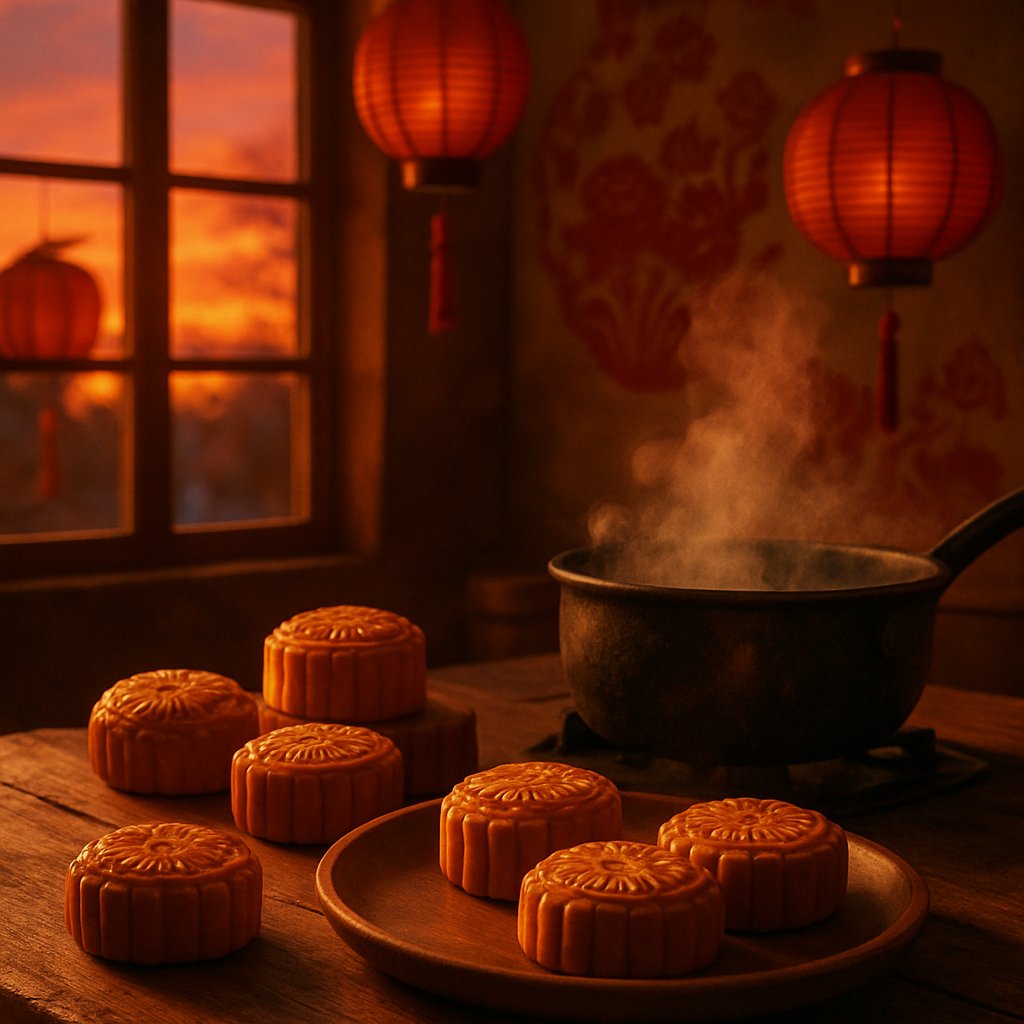
Mooncakes (yuèbǐng 月饼) are at the heart of the Mid-Autumn Festival, an occasion that celebrates family reunion, gratitude, and the poetic beauty of the full moon. Far from being just a seasonal treat, mooncakes are vessels of legend, artistry, and togetherness that bridge generations and regions. Whether you’re savoring the classic richness of Cantonese-style mooncakes, the flaky, savory bite of Suzhou varieties, or the chilled elegance of snow skin mooncakes, each bite is steeped in cultural symbolism and personal meaning. This guide explores the most celebrated mooncake varieties, their fillings, authentic recipes, and the deep-rooted customs of gifting and sharing that make them so much more than dessert.
Key Takeaways:
- Understand the deep cultural and symbolic significance of mooncakes during the Mid-Autumn Festival
- Distinguish between Cantonese, Suzhou, and snow skin mooncake varieties
- Explore classic and modern mooncake fillings, with notes on ingredient substitutions
- Follow detailed, authentic recipes for making mooncakes at home
- Learn the etiquette and meaning behind mooncake gifting culture
Cultural Significance of Mooncakes and the Mid-Autumn Festival
The Mid-Autumn Festival (Zhōngqiū Jié 中秋节) is one of the most beloved and widely celebrated festivals in China, traditionally held on the 15th day of the eighth lunar month. At the core of the celebration is the act of moon-gazing, sharing mooncakes, and gathering with family. The round shape of mooncakes symbolizes completeness and reunion—a visual metaphor for the full moon and the coming together of loved ones. Eating mooncakes is much more than enjoying a pastry; it’s a ritual of connection, gratitude, and remembrance of ancestors (source).
Mooncakes often feature motifs like lotus flowers (purity and harmony), rabbits (the Jade Rabbit legend), and Chang’e (the moon goddess). Chinese characters such as 福 (fú, good fortune), 寿 (shòu, longevity), and 喜 (xǐ, happiness) are commonly embossed, serving as edible blessings for the recipient. These pastries are central to the Festival’s narrative, which is rich with the story of Chang’e’s flight to the moon, the Jade Rabbit’s loyalty, and ancient harvest rituals. The mooncake, in this context, is a symbol of family reunion and well-wishing, echoing traditions explored in dishes like those featured in Symbolism of Chinese New Year Foods: A Reunion Dinner Guide.
Historically, mooncakes have even played a role in clandestine communication. One famous legend recounts how secret messages were hidden inside mooncakes to coordinate the Ming rebellion against Mongol rule—a testament to how food and history are often intertwined in Chinese culture.
Mooncake Varieties: Cantonese, Suzhou, and Snow Skin
Mooncakes are not monolithic—there are distinct regional styles, each with unique ingredients, textures, and flavors. Let’s compare the three most iconic types:
| Variety | Region | Crust | Common Fillings | Texture | Special Features |
|---|---|---|---|---|---|
| Cantonese (Guǎngshì yuèbǐng 廣式月餅) | Guangdong, Hong Kong | Baked, tender and thin | Lotus seed paste, salted egg yolk, red bean, mixed nuts | Soft, dense | Ornate patterns, golden hue |
| Suzhou (Sūshì yuèbǐng 苏式月饼) | Jiangsu (Suzhou) | Baked, flaky and layered (lard or shortening) | Sweet bean paste, jujube paste, minced pork | Light, crispy | Often savory, spiral crust, smaller size |
| Snow Skin (Bīngpí yuèbǐng 冰皮月饼) | Hong Kong, modern/innovative | Unbaked, mochi-like (glutinous rice) | Mung bean, lotus, fruit, custard, chocolate | Chewy, cool | Served chilled, pastel colors, creative fillings |
Cantonese-style mooncakes are the most internationally recognized, their glossy, intricate tops often stamped with auspicious characters. Suzhou-style mooncakes are cherished for their multi-layered, flaky crust and frequent use of savory fillings like pork with a hint of sweetness. Snow skin mooncakes, a contemporary favorite, are made with glutinous rice flour and have a refreshing, ice-cold chew—perfect for those seeking something less rich or less oily.
Within each variety, there are further regional adaptations and family recipes, echoing the diversity found in other Chinese culinary traditions such as dim sum and dumplings.
Fillings and Authentic Recipes
Classic Fillings: Flavors with Meaning
- Lotus Seed Paste (liánróng 莲蓉): The gold standard for Cantonese mooncakes. Smooth, delicately sweet, and often paired with a salted duck egg yolk (yándàn xiàn 咸蛋馅) to symbolize the moon and harmony in relationships.
- Red Bean Paste (hóngdòu shā 红豆沙): An earthy, comforting filling common across many regions.
- Mixed Nuts (wǔrén 五仁): A robust blend of walnuts, almonds, sesame, melon seeds, and candied winter melon. Each nut represents harmony and abundance, though the taste can be polarizing.
- Jujube Paste (zǎo ní 枣泥): Sweet and faintly tart, made from Chinese red dates; especially popular in northern China.
- Pork or Ham: Suzhou-style mooncakes feature savory fillings like minced pork, seasoned with soy, sugar, and Shaoxing wine for a rich umami note.
- Snow Skin Fillings: Mung bean, custard, coconut, matcha, fruit puree, and modern twists like chocolate or cheese. The unbaked crust is ideal for delicate, fresh flavors.
Authentic Cantonese-Style Mooncake Recipe (Lotus Seed Paste & Salted Egg Yolk)
Dough:
- Golden syrup: 60g (2 oz)
- Peanut oil: 25g (0.9 oz)
- Lye water: 1/2 tsp
- All-purpose flour: 100g (3.5 oz)
Filling:
- Lotus seed paste: 400g (14 oz)
- Salted egg yolks: 4 (halved)
Assembly:
- Mix syrup, oil, and lye water. Gradually add flour. Knead to a soft dough. Rest for 30 minutes.
- Divide dough and filling into 8 portions (dough: ~20g each; filling: ~50g each).
- Flatten dough, wrap around filling (add half an egg yolk to each portion), and seal.
- Dust with flour, press into a mooncake mold to shape and imprint.
- Bake at 180°C (350°F) for 5 minutes. Remove, brush tops with egg wash, bake for another 10-12 minutes until golden.
- Cool completely; the crust will soften after 1-2 days.
Tips: For ingredient substitutions, try white bean paste for a lighter flavor, or use store-bought lotus paste if prepping from scratch isn’t feasible. For the iconic glossy finish, use a very light egg wash and don’t overbake.
Snow Skin Mooncake Recipe (Custard or Bean Filling)
- Glutinous rice flour: 100g (3.5 oz)
- Rice flour: 30g (1 oz)
- Wheat starch: 20g (0.7 oz)
- Powdered sugar: 80g (2.8 oz)
- Milk: 200ml (6.8 oz)
- Vegetable oil: 25g (0.9 oz)
- Custard or sweet bean paste: 300g (10.5 oz)
- Mix flours, sugar, milk, and oil. Steam for 25 minutes, stirring once midway.
- Cool, knead into a soft, elastic dough.
- Divide dough and filling into equal portions (~25g each for dough, ~30g for filling).
- Wrap filling in dough, shape using a mooncake mold or by hand.
- Chill for at least 2 hours before serving.
Snow skin mooncakes are best enjoyed fresh and kept refrigerated. Their pastel colors and cold, chewy texture have made them a favorite among younger generations and those seeking lighter alternatives.
Gifting Culture and Modern Mooncake Etiquette
Mooncake gifting is a cherished tradition that extends far beyond family circles. It is a way to honor elders, express gratitude to teachers and business partners, and maintain social connections. The presentation is almost as important as the pastry itself: high-quality mooncakes are typically boxed in elaborate packaging, often with an even number of cakes to signify balance and harmony (source).
Common etiquette includes:
- Presenting mooncakes with both hands as a sign of respect
- Accompanying the gift with polite wishes, such as “May you enjoy a long and happy life under the full moon” (月圆人团圆, yuè yuán rén tuán yuán)
- Avoiding overly extravagant or imbalanced packaging, as modesty is highly valued
- Gifting to family, friends, colleagues, and teachers as an act of gratitude and maintaining relationships
Modern mooncake boxes often include a variety of flavors and are exchanged in business settings as well as among friends. The trend of creative fillings and limited-edition packaging has transformed mooncake gifting into a showcase of innovation and personal taste, much like the evolving etiquette seen in dim sum culture.
This ritual of giving and receiving mooncakes is about more than food—it’s about expressing care, reinforcing social bonds, and sharing in the beauty of the season. Even overseas, gifting mooncakes is a way for Chinese communities to maintain cultural ties and introduce tradition to new generations (source).
Common Pitfalls and Pro Tips for Homemade Mooncakes
Making mooncakes at home can be deeply rewarding but also challenging. Here are some common pitfalls and expert tips, adapted from Mooncakes: Recipes and Cultural Significance:
- Cracked crusts: Overworking the dough or using too much flour can cause cracks. Rest the dough and keep it covered to maintain moisture.
- Leaking fillings: Fillings that are too oily or wet can seep through the crust. Ensure your paste is thick, smooth, and not sticky before wrapping.
- Uneven baking: Home ovens often have hot spots. Rotate your baking tray halfway through and use an oven thermometer for accuracy.
- Sticking to molds: Lightly dust both dough and molds with flour or a bit of oil to prevent sticking and preserve the intricate patterns.
- Tough texture: Overbaking or using low-fat dough can result in hard mooncakes. Aim for a golden brown color on top, pale yellow sides, and a soft, slightly domed finish.
- Storage: Traditional mooncakes can be kept at room temperature for up to a week, but snow skin varieties must be refrigerated and eaten within 2-3 days for best texture.
Always let baked mooncakes rest for at least a day to allow the crust to soften and flavors to meld—a little patience goes a long way to achieving the perfect bite. For additional insights into Chinese pastry technique and etiquette, see Exploring Dim Sum: Culture, Etiquette, and Essential Dishes.
Conclusion and Next Steps
Mooncakes are more than a festival pastry—they’re edible expressions of reunion, gratitude, and history. By understanding their varieties, cultural significance, and the art of gifting, you can experience the Mid-Autumn Festival as millions do across China and the world: with warmth, nostalgia, and a sense of togetherness. Try making your own mooncakes, share them with friends and family, and explore deeper into Chinese food culture through related traditions and recipes. For those interested in broader Chinese festival foods or regional specialties, check out our guides to Chinese New Year dishes, dumplings, or the lively world of hot pot culture.
For more resources and in-depth coverage, refer to Mooncake, A Traditional Mid-Autumn Festival Pastry 2026 and our own mooncake recipe collection and festival guide.
Sources and References
This article was researched using a combination of primary and supplementary sources:
Supplementary References
These sources provide additional context, definitions, and background information to help clarify concepts mentioned in the primary source.

