Categories
Software Development Tools & HowTo

Ladybird Browser Adopts Rust: A New Era for Web Development

Ladybird Browser’s move to adopt Rust marks a pivotal moment for both browser engineering and the open-source ecosystem. This isn’t a routine rewrite or incremental update—it’s a fundamental shift in how a next-generation web browser is being built, and it could have ripple effects far beyond the project’s current pre-alpha status. If you care about browser security, performance, or the long-term health of the web platform, this is the development to watch right now.

Key Takeaways:

  • This shift aligns Ladybird with major industry trends toward memory-safe programming in browser architectures, although specific components have not been detailed yet.
  • Hacker News).
  • This shift aligns Ladybird with major industry trends toward memory-safe programming in browser architectures.
  • You’ll learn what’s changing inside Ladybird, how Rust’s properties impact browser security and performance, and what this means for practitioners and the browser landscape.
  • Includes side-by-side comparison of Rust and C++ for browser development, plus actionable tips for teams considering a similar transition.

Why Ladybird Browser Adopting Rust Matters

Ladybird Browser’s decision to embrace Rust is a direct response to the most urgent pain points in browser development: security vulnerabilities, memory management headaches, and the need for sustainable, maintainable code as projects scale. As recently highlighted,

Ladybird is a genuinely new browser project—still in pre-alpha but the MSN article only states a new browser is coming in 2026, not that Ladybird is targeting that year or is the specific browser referenced.

(MSN).

Rust’s growing adoption in critical software infrastructure is not just hype. The language’s strict compile-time checks, ownership model, and lack of null pointers systematically prevent many classes of bugs that have plagued C++ codebases in browsers like Chrome and Firefox for decades. Mozilla’s Servo engine and Google’s experiments with Rust in Chromium have demonstrated that Rust is more than a trend—it’s the new standard for low-level safety and parallelism.

For Ladybird, choosing Rust now—while the project is still relatively young—means fewer legacy migration headaches and a cleaner slate to build against evolving web standards. As one commentator put it: “Ladybird as a project is not that old, and it's still in pre-alpha, if they are going to make important changes then it's better now than later.” (Hacker News).

This is a strategic move. By adopting Rust early, Ladybird positions itself at the forefront of browser innovation, potentially avoiding years of technical debt and security incidents.

How Ladybird Is Integrating Rust

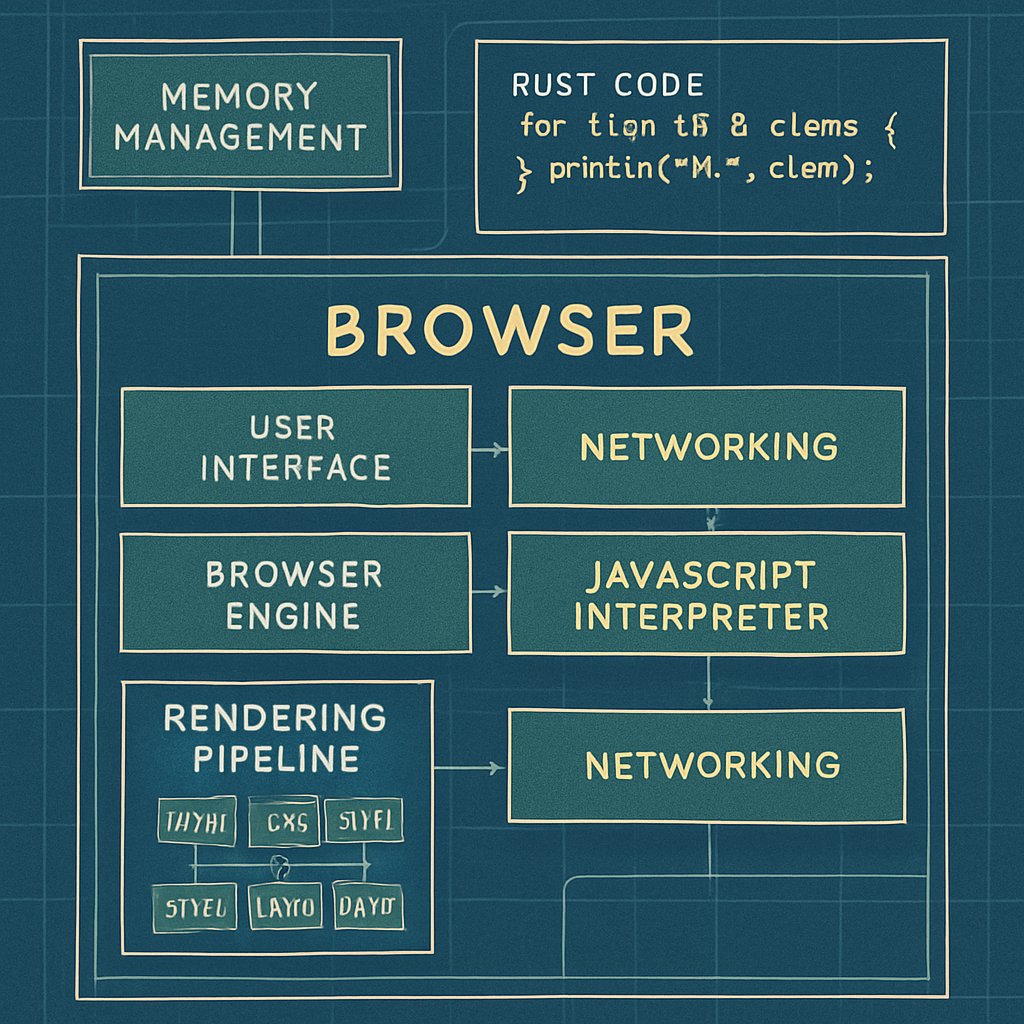
While Ladybird’s transition is ongoing and details remain fluid, the project’s core maintainers have started porting key subsystems to Rust. According to public discussion, initial efforts are focused on:

  • Replacing memory-unsafe C++ modules with Rust equivalents
  • Building new components (such as networking or HTML parsing) directly in Rust
  • Maintaining interoperability between Rust and existing C++ code via standard FFI (Foreign Function Interface) patterns

For practitioners, this phased approach is instructive. Instead of an all-at-once rewrite—which rarely succeeds for complex projects—Ladybird is taking a modular migration path. Example: porting the network stack first, then iterating on rendering or scripting subsystems as Rust’s ecosystem matures and integration points stabilize.

Example: FFI Integration Pattern

Here’s a simplified (but realistic) example of how you might expose a Rust function to C++ in a browser project:

// In Rust (lib.rs)
#[no_mangle]
pub extern "C" fn rust_compute_layout(input: i32) -> i32 {
    // Perform layout calculations safely
    input * 2 // Example logic
}
// In C++
extern "C" int rust_compute_layout(int);

int main() {
    int result = rust_compute_layout(42);
    // result should be 84
}

This pattern allows Ladybird to incrementally migrate hot paths and critical systems without breaking the existing C++-based architecture.

Why Not Just Start Over?

Building a browser from scratch is a herculean task. By integrating Rust in stages, Ladybird leverages existing C++ investments while steadily improving safety and maintainability. This hybrid approach is now the industry norm for major infrastructure projects (see our coverage of Oxc’s Rust-powered JavaScript toolchain for a parallel example).

Practical Example: Rust’s Impact on Performance

To illustrate the performance benefits of Rust, consider a scenario where a browser needs to handle multiple concurrent network requests. In a C++ implementation, developers often face challenges with memory safety and race conditions, which can lead to crashes or unpredictable behavior. In contrast, Rust’s ownership model ensures that these issues are mitigated at compile time, allowing for smoother execution and better resource management. This means that as more users engage with web applications, Rust-based browsers can maintain performance without the overhead of debugging memory-related issues.

Real-World Implications for Developers and Users

For browser practitioners, the Rust adoption wave is not just about language fashion—it’s about tangible improvement in both security and day-to-day engineering velocity.

  • Memory Safety:
  • Rust’s ownership model and type system eliminate entire classes of memory bugs (use-after-free, buffer overflows) that account for a significant fraction of browser CVEs annually.
  • Concurrency: Rust’s fearless concurrency primitives make it easier to write parallel code that’s safe by construction—a major win for rendering, layout, and JavaScript engine performance.
  • Maintainability: Fewer bugs and clearer module boundaries translate to faster iteration and easier onboarding for new contributors, critical for a fast-moving open-source browser.

Practical Example: Safer DOM Manipulation

For implementation details and code examples, refer to the official documentation linked in this article.

Unlike C++, Rust guarantees that once a DomNode is added as a child, there are no dangling pointers or accidental double-frees—these are enforced at compile time, not left to runtime checks or developer discipline. This is a critical advantage when dealing with complex, user-provided HTML in a browser context.

Impact for End Users

While Ladybird remains pre-alpha, its Rust foundation could eventually deliver:

  • Fewer critical browser crashes due to memory errors
  • Faster security patching cycles (fewer classes of vulnerabilities to patch)
  • Improved performance on multi-core systems as concurrency becomes safer to exploit

As we’ve seen in other domains—such as the recent advances in Rust-based JavaScript tooling (Boosting JavaScript Development with Oxc Compiler)—these benefits can compound quickly as the ecosystem matures.

Comparison Table: Rust vs C++ in Browser Projects

AspectRustC++
Memory SafetyEnforced by compiler (no null/dangling pointers)Manual; prone to use-after-free, buffer overflows
ConcurrencyData races prevented at compile timeManual locking; common source of bugs
FFI/InteropSeamless C ABI, but requires careful boundary managementManual; prone to use-after-free, buffer overflows
Learning CurveSteep for teams new to RustWidespread familiarity, but trap-rich
Long-Term MaintainabilityFewer legacy security issues, easier refactorsTechnical debt accumulates rapidly

For a deeper look at how Rust reshapes toolchain performance, see our analysis of Oxc’s Rust-based JavaScript compiler stack.

Common Pitfalls or Pro Tips

  • Mixed-Language Builds: Integrating Rust and C++ in a single project introduces new build complexities. Ensure your CI/CD pipeline is set up to handle cross-language artifacts and error reporting.
  • FFI Boundaries: Bugs often hide at the boundary between Rust and C++. Validate all assumptions about data ownership, lifetimes, and error propagation when calling across languages.
  • Learning Curve: Teams moving from C++ to Rust should budget extra time for onboarding and training. Rust’s borrow checker is powerful, but it will slow development until the team gains fluency.
  • Dependency Management: Rust’s Cargo ecosystem is robust, but integrating third-party crates with legacy C++ code can require patching or custom wrappers.

Pro tip: Start with self-contained modules (like networking or parsing) when porting to Rust. Avoid rewriting cross-cutting concerns (like the rendering pipeline) until you have stable integration patterns.

Conclusion: Next Steps for Browser Innovation

Ladybird’s Rust adoption is more than a technical curiosity—it’s a signal that the browser stack is entering a new era of safety, performance, and architectural clarity. While still early, this move could influence both new entrants and established browsers to accelerate their own migrations—or risk falling behind on security and developer velocity. For practitioners, Ladybird is now an essential project to watch, both for architectural patterns and as a proving ground for the next wave of browser engineering.

Stay tuned for further coverage as Ladybird evolves, and see our related deep dives on Rust-powered JavaScript toolchains and efficient file navigation in developer tooling for broader context on how Rust is reshaping the software landscape.

For official updates as features land, follow project discussions on Hacker News and watch Ladybird’s pre-alpha development as it unfolds in real time. Practitioners considering a similar migration should refer to the official Rust FFI documentation at https://doc.rust-lang.org/nomicon/ffi.html for best practices.