SBCL: A Sanely-Bootstrappable Common Lisp – Technical Deep Dive for Practitioners (2026)
Reproducible bootstrapping isn’t just an academic ideal—it’s critical for trust, auditability, and the long-term resilience of any language ecosystem. “SBCL: A Sanely-Bootstrappable Common Lisp” (Rhodes et al., 2008) lays out a unique approach, enabling SBCL to be built from multiple host Common Lisp implementations. This post dissects the technical architecture, real bootstrapping workflows, and the explicit limitations—including the beta/preview/experimental status of some features as highlighted in the original research. If you need to audit, port, or automate builds for critical Common Lisp infrastructure, understanding SBCL’s model is essential.
Key Takeaways:
- SBCL’s multi-host bootstrapping model is more robust and portable than traditional self-bootstrapping or single-host techniques.
- The paper’s bootstrapping workflows include beta/preview/experimental features—use caution for production systems; always validate stability.
- Real-world commands and build steps are included below, enabling direct practical application.
- SBCL’s approach impacts reproducibility, trust, and the feasibility of auditing or porting compiler toolchains.
- There are real limitations, and notable alternatives (CLISP, GNU CL, Clozure CL) with their own trade-offs.
Why SBCL Bootstrapping Matters
Most language implementations depend on either self-hosting or a single bootstrapping host. Both strategies create risk: a single binary or toolchain can become a point of failure, and “trusting trust” attacks are a real concern. The 2008 paper, SBCL: A Sanely-Bootstrappable Common Lisp, introduced a third path—bootstrapping from multiple, existing ANSI-compliant Common Lisp implementations (Springer Nature Link). This model is motivated by:
- Trust and Transparency: Avoids single-source lock-in, reducing risk of invisible build issues or attacks.
- Portability and Longevity: Enables SBCL to be built and ported as long as any ANSI-compliant Common Lisp exists.
- Community Health: Reduces reliance on the health of any one upstream project, such as CMUCL (SBCL’s original ancestor).
SBCL’s model directly addresses operational risks—if a host toolchain becomes unmaintained, you can port SBCL from another. This is fundamentally different from mainstream compiler builds, which assume a fixed C or Rust toolchain. SBCL’s approach means any ANSI-compliant Common Lisp can be a bootstrap host, as long as it passes a strong subset of the ANSI standard (Goldsmiths Research Online).
How SBCL Achieves Sane Bootstrapping
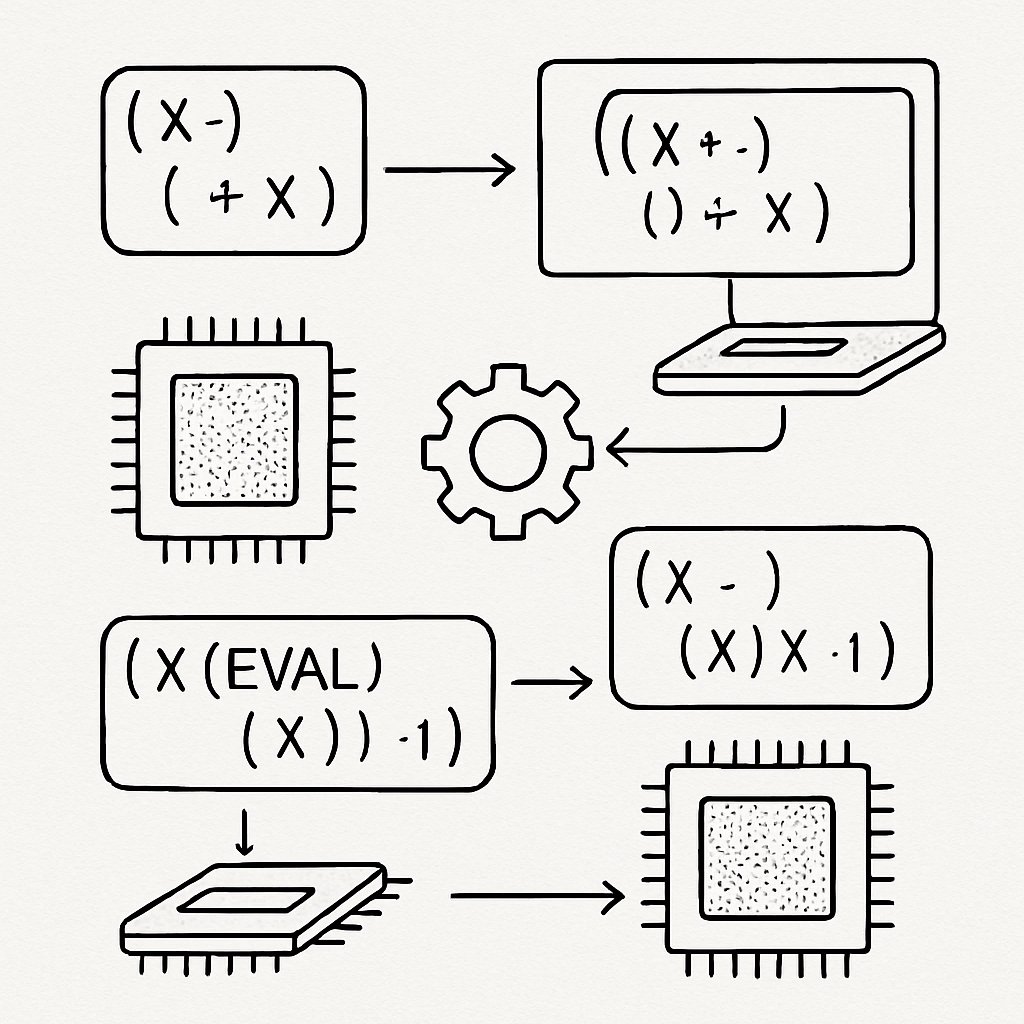
According to the 2008 paper and subsequent documentation, SBCL is neither “pure” self-hosting nor dependent on a single fixed host. Instead:
- SBCL source is compiled using an existing, ANSI-compliant Common Lisp implementation (host).
- Supported hosts include CMUCL, CLISP, Clozure CL, GNU CL, and others—provided they meet ANSI compliance.
- The build process produces a new SBCL binary, which can then be used for subsequent self-compilation (“native” builds).
SBCL’s build system supports portability, with scripts and loader files that enable multi-host workflows. Some bootstrapping features and workflows described in the 2008 paper are explicitly marked as beta/preview/experimental—always treat these with caution in production environments (Springer Nature Link).
| Bootstrapping Model | Dependency | Portability | Risk Profile |
|---|---|---|---|
| Self-hosting only | Must have working binary of itself | Low (binary loss = unbuildable) | High risk of “trusting trust”, lock-in |
| Single host (e.g., C-based) | Specific host language/compiler | Moderate | Host bugs propagate; less redundant |
| SBCL’s multi-host | Any ANSI-compliant Common Lisp | High (redundant hosts) | Reduces single-point-of-failure risk |
SBCL’s multi-host bootstrapping model has enabled ports to diverse hardware, operating systems, and architectures (Wikipedia).
Practical Walkthrough: Building and Running SBCL
Installing SBCL
On modern Unix-like systems, SBCL can be installed directly from package repositories (lisp-lang.org):
# Ubuntu/Debian
$ sudo apt-get install sbcl
# Arch Linux
$ sudo pacman -S sbcl
# macOS (Homebrew)
$ brew install sbcl
These prebuilt binaries are suitable for most users. If you need to bootstrap from source (for audits, custom ports, or advanced reproducibility), follow the process in the SBCL source distribution’s INSTALL file.
Bootstrapping SBCL from Another Lisp Implementation
To build SBCL from source using a host Lisp implementation:
- Download the SBCL source tarball from sbcl.org.
- Install a compatible ANSI-compliant Common Lisp (e.g., CMUCL, CLISP, Clozure CL).
- Unpack the SBCL source and run the build script. For example (using CMUCL as host):
$ tar xzf sbcl-<version>-source.tar.gz
$ cd sbcl-<version>/
$ sh make.sh
This process creates a native SBCL binary. Refer to the INSTALL file for host-specific requirements and advanced use cases. Note: Certain build workflows and features described in the 2008 paper are beta/preview/experimental—always verify their stability before production use (Springer Nature Link).
Running SBCL and Using the REPL
After installing or bootstrapping, launch the interactive environment (REPL):
$ sbcl
Example REPL interaction:
; In the SBCL REPL
* (+ 2 3)
5
To automate environment setup with Quicklisp and SLIME:
$ sbcl --eval '(ql:quickload :quicklisp-slime-helper)' --quit
For advanced topics (garbage collection, Unicode, FFI), see the SBCL User Manual.
Considerations, Trade-offs, and Alternatives
SBCL’s approach is robust, but you need to understand the trade-offs:
- Startup Performance: SBCL compiles to fast native code, but startup is slower than some lightweight Lisp implementations due to its image-based architecture.
- Image Size and Portability: SBCL’s core image is larger than CLISP or ECL, and binary images aren’t portable across OS/architecture boundaries.
- Extension Ecosystem: While SBCL supports many extensions, some third-party libraries require patching or adaptation for its stricter compiler/runtime.
- Experimental/Beta/Preview Features: Some bootstrapping features and workflows in the 2008 paper are beta/preview/experimental. Always check their stability before use in production or CI/CD pipelines (Springer Nature Link).
Notable alternatives:
- CLISP: Interpreter-based, smaller memory usage, easier deployment, but slower runtime performance.
- GNU Common Lisp (GCL): Simpler build, but less ANSI-compliant and missing advanced features compared to SBCL.
- Clozure CL: Fast startup and macOS integration, but a smaller community and limited threading.
| Implementation | Performance | Bootstrapping Model | Strengths | Limitations |
|---|---|---|---|---|
| SBCL | High (native compiler) | Multi-host, ANSI CL | Robust, portable, open development | Large image, strict compiler |
| CLISP | Moderate (bytecode interpreter) | Self-hosting, C bootstrap | Small, cross-platform | Slower, limited FFI |
| Clozure CL | High (native compiler) | Self-hosting, C bootstrap | Fast startup, macOS support | Smaller community |
Common Pitfalls and Pro Tips
- Host Implementation Compliance: If your host Common Lisp isn’t sufficiently ANSI-compliant, SBCL may fail with cryptic errors. Run the ANSI test suite on your host before building.
- Architecture-Specific Issues: Not all hosts are equally reliable on every target OS or platform. Consult the official SBCL platform table.
- Strict Compiler Warnings: SBCL’s compiler is strict about non-standard or deprecated code. Refactor legacy code or use
declaimanddeclareforms as needed. - Large Binary Images: The core image size may affect deployment, especially for embedded or serverless scenarios.
- Experimental/Beta/Preview Bootstrapping Features: Explicitly flagged in the 2008 paper—validate their stability before integrating into critical or automated build processes.
For more on toolchain design and operational simplicity, see real-world static site protocol trade-offs.
Conclusion and Next Steps
SBCL’s bootstrapping model remains a reference point for language implementation transparency and resilience. Practitioners who value reproducible builds, auditability, and long-term sustainability should study its approach. Next actions:
- Read the original 2008 SBCL bootstrapping paper for in-depth technical details.
- Experiment with cross-bootstrapping SBCL using multiple hosts; measure and document build reproducibility and performance.
- Monitor and participate in SBCL’s development on GitHub, especially around platform support and build documentation.
Related coverage on toolchain decisions and operational clarity can be found in our Rails 8 analysis and decentralized protocol reporting.
Further reading: SBCL homepage, lisp-lang.org Getting Started, and the original 2008 paper.
Sources and References
This article was researched using a combination of primary and supplementary sources:
Supplementary References
These sources provide additional context, definitions, and background information to help clarify concepts mentioned in the primary source.
- SBCL: A Sanely-Bootstrappable Common Lisp
- SBCL: A Sanely-Bootstrappable Common Lisp | Springer Nature Link
- GitHub - sbcl/sbcl: Mirror of Steel Bank Common Lisp (SBCL)'s official repository · GitHub
- Getting Started | Common Lisp
- Steel Bank Common Lisp - Wikipedia
- SBCL 2.6.2 User Manual
- Pull requests · sbcl/sbcl · GitHub
- Workflow runs · sbcl/sbcl · GitHub
- Projects · sbcl · GitHub
Critical Analysis
Sources providing balanced perspectives, limitations, and alternative viewpoints.

