Introduction: Why Invisalign’s 3D Printing Dominance Matters Now
Invisalign, the flagship product of Align Technology, isn’t just the world’s most recognized clear aligner brand—it’s also the planet’s largest user of 3D printing machines. At a time when additive manufacturing is transforming industries from aerospace to medicine, Invisalign’s operational scale stands out: as of 2025, the company produces over one million custom orthodontic appliances a day via 3D printing (Orthodontic Products Online).

This isn’t just a story about dental devices: it’s a case study in digital manufacturing, materials science, and AI-driven process automation at scale. For developers, engineers, and anyone building production-grade digital workflows, Invisalign’s journey offers rare, concrete lessons on how to scale, automate, and optimize for millions of individualized products—every single day.

How Invisalign Became the Biggest User of 3D Printers
Invisalign’s rise wasn’t inevitable. Founded almost 30 years ago, Align Technology started by using 3D printing to make molds for vacuum-formed aligners—a process novel for its time but slow and wasteful compared to what we see today. As CEO Joe Hogan describes, the company’s competitive advantage came from being the first to push 3D printing beyond prototyping, into “mass customization” at a scale never seen before (WIRED).
The breakthrough came from relentless iteration: modifying 3D printers for production, inventing new post-processing equipment, and, crucially, developing proprietary resins that could be printed directly into aligners. The result: by 2025, Invisalign wasn’t just using 3D printers—it was operating the largest 3D printing factory in healthcare, validated by independent industry experts (source).
The scale is staggering:
- Over 1 million unique aligners and orthodontic appliances produced daily
- More than 22 million patients globally have been treated
- Operations spanning the US, Mexico, Poland, and China—plus a rapidly growing R&D and manufacturing presence in Europe following the 2024 acquisition of Cubicure (Align Investor News)
This scale is only possible with deeply integrated digital workflows and relentless automation—a theme we’ve explored in our analysis of storage strategies for dev teams and real-world microservices communication patterns.
From Prototyping to Million-a-Day Production: The Technical Journey
Early 3D printers were built for prototyping, not for running 24/7 at industrial scale. Invisalign’s team had to:
- Heavily modify commercial 3D printers for reliability, throughput, and material compatibility
- Invent post-processing hardware for washing, trimming, and curing at scale
- Develop new high-viscosity, biocompatible resins with properties matching or exceeding vacuum-formed plastics
- Automate quality control, packaging, and logistics for millions of small, custom shipments
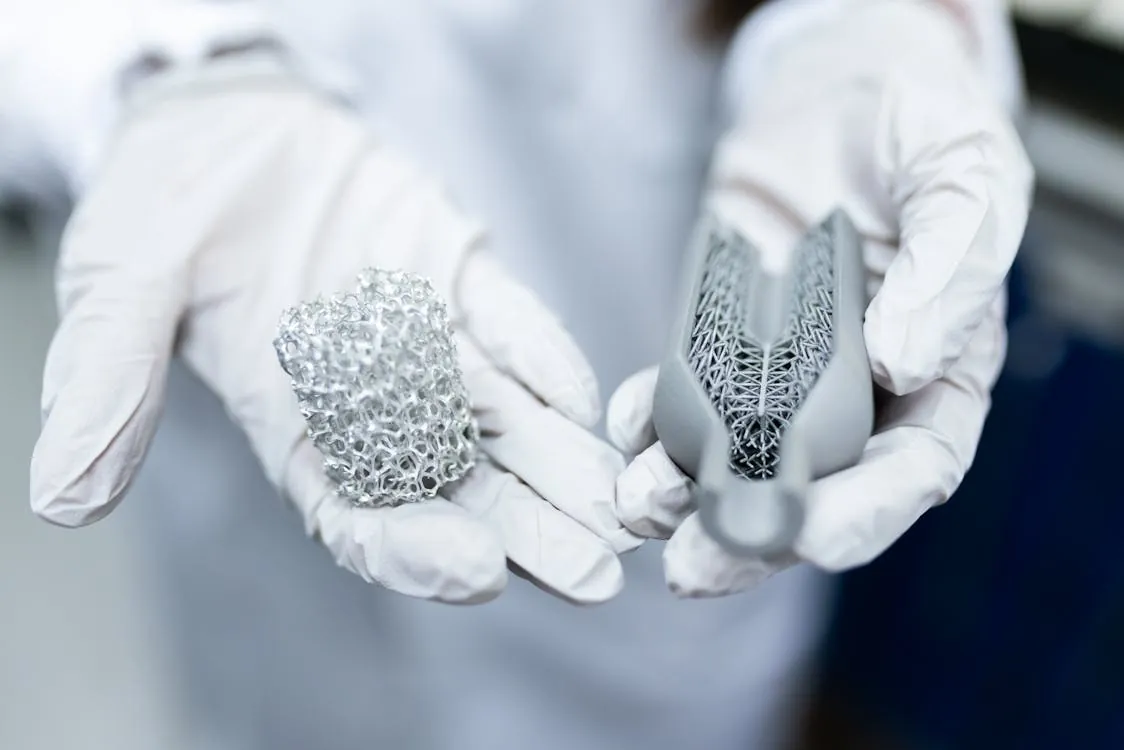
The step-change came in 2024, when Align acquired Cubicure—a pioneer in hot lithography and direct 3D printing of high-performance polymers. Cubicure’s technology enabled Align to print directly with tough, temperature-resistant polymers, skipping the mold step entirely. This is now powering Align’s first commercialized direct-printed appliance, the Invisalign Palatal Expander System (source).
The Architecture of Invisalign’s 3D Printing Operation
Invisalign’s workflow is a paragon of digital manufacturing:
- Patient Data Acquisition: Digital intraoral scans capture patient-specific geometry.
- AI Treatment Planning: Software plans the tooth movement and aligner sequence, generating STL models for each stage.
- 3D Printing Fleet: Modified 3D printers receive models, optimize print orientation, and produce aligners or expanders using proprietary resins.
- Post-Processing: Automated washing, laser trimming, and curing lines prep aligners for shipment.
- Packaging & Shipping: Automated lines package and route millions of individualized shipments worldwide every month.
direction: down
patient_scan: "Patient Teeth Scan"
treatment_planning: "AI Treatment Planning Software"
printer_fleet: "Modified 3D Printers"
post_processing: "Post-Processing (Washing, Laser Trimming)"
quality_control: "Automated Quality Control"
packaging_shipping: "Packaging & Global Shipping"
patient_scan -> treatment_planning -> printer_fleet -> post_processing -> quality_control -> packaging_shipping
This workflow is only possible through a fusion of AI, robotics, and cloud-scale data logistics. Every aligner is unique: a software-defined product manufactured on demand.
Direct 3D Printing vs Traditional Methods: Real-World Trade-offs
Invisalign’s evolution from vacuum-formed to direct 3D printed appliances represents a generational leap:
| Aspect | Traditional (Vacuum-Formed) | Direct 3D Printing | Source |
|---|---|---|---|
| Production Speed | Multi-step, slower | Single-step, faster | WIRED |
| Material Waste | Higher (molds, trimming) | Lower (precise resin use) | Orthodontic Products Online |
| Customization | High, but limited by mold throughput | Ultra-high, each appliance truly unique | Orthodontic Products Online |
| Cost Efficiency | Lower at scale | Improves with automation, scale | WIRED |
Pro Tip: To scale direct 3D printing, you need robust digital workflows and real-time print job orchestration—just like distributed microservices.
Key Technical Challenges & Developer Lessons
Scaling to a million custom devices daily isn’t just about hardware. Some hard-won lessons from Invisalign’s journey:
- Material Science: High-viscosity, biocompatible resins are difficult to process at speed. Cubicure’s hot lithography tech is a breakthrough for directly printed medical devices.
- Automation: Every manual step (washing, trimming, QC) must be automated to hit volume and consistency targets.
- Data Logistics: Managing millions of STL files, print jobs, and shipment records daily requires cloud-grade storage and messaging patterns. See patterns discussed in our microservices comparison.
- AI-Driven Quality: Align leverages its database of 20M+ cases to train AI models for treatment planning, process optimization, and real-time anomaly detection.
Edge Case: Printer orientation (vertical, horizontal, angled) dramatically impacts resin use, print speed, and mechanical performance. Align’s engineers continually experiment and optimize orientations for each appliance geometry.
Code Examples & Practical Insights
1. Orchestrating Print Jobs at Scale (Python pseudo-code)
import requests
def submit_print_job(patient_id, stl_file):
api_url = "https://aligntech.com/api/print-jobs"
data = {"patient_id": patient_id}
files = {"stl": open(stl_file, "rb")}
response = requests.post(api_url, data=data, files=files)
response.raise_for_status()
return response.json()
# Example usage
job_info = submit_print_job("PATIENT12345", "aligner_model_12345.stl")
print("Print job submitted:", job_info)
# Output: Print job submitted: {'job_id': 'xyz', 'status': 'queued'}
This pattern is foundational to scaling personalized manufacturing—every aligner is its own micro-batch, orchestrated through a fleet API.
2. Real-Time Quality Control Using AI (High-Level Example)
def ai_quality_check(scan_data, aligner_model):
# Simulate AI model inference
probability_of_fit = ai_model.predict([scan_data, aligner_model])
if probability_of_fit < 0.97:
raise Exception("Aligner fit below threshold, flag for manual review.")
return True
# Example
try:
ai_quality_check(patient_scan, aligner_model)
print("Aligner approved for shipping.")
except Exception as e:
print("QC failure:", e)
# Output: "Aligner approved for shipping." or "QC failure: Aligner fit below threshold..."
Align uses a similar approach, leveraging its huge case database to train AI models that catch problems before shipping.
3. Optimizing Print Orientation for Material Use
def choose_print_orientation(aligner_geometry):
# Simplified rules: choose orientation to minimize support and resin use
if aligner_geometry.is_long():
return "vertical"
else:
return "horizontal"
# Example
orientation = choose_print_orientation(aligner_model)
print(f"Best orientation: {orientation}")
# Output: Best orientation: vertical
In real production, this is a complex optimization involving geometry, resin flow, and mechanical demands.
Market Impact and Future Directions
The business impact of this technical leadership is profound. Invisalign now holds 60–70% of the global clear aligner market, with revenue exceeding $4B annually (WIRED). The shift from molds to direct 3D printing is cutting costs, reducing waste, and opening the door to even more personalized, accessible orthodontic care.
What’s next? Expect:
- Expansion of direct 3D printing to all aligner products, not just palatal expanders
- Ongoing R&D in polymer chemistry for even better biocompatibility and durability
- Deeper integration of AI for treatment, manufacturing, and logistics optimization
- Pressure for in-office 3D printing (as hardware and software mature)
Key Takeaways:
- Align Technology prints over 1 million custom appliances per day, the largest user of industrial 3D printers worldwide.
- Direct 3D printing eliminates wasteful, multi-step workflows—delivering faster, greener, more personalized care.
- Scaling required deep innovations in materials, automation, and AI-driven workflows.
- For developers, Invisalign’s journey is a roadmap for scaling digital manufacturing and cloud-driven process automation.
References & Further Reading
- WIRED: How Invisalign Became the World’s Biggest User of 3D Printers
- Orthodontic Products Online: Inside Align Technology’s Million-Custom-Appliances-a-Day 3D Printing Operation
- Align Technology News: Acquisition of Cubicure
For related technical strategies in cloud storage, microservices, and production architecture, see our internal coverage:
