Categories
Cloud & Business Technology Storage

Rising RAM Costs Impact HP PC Procurement Strategies

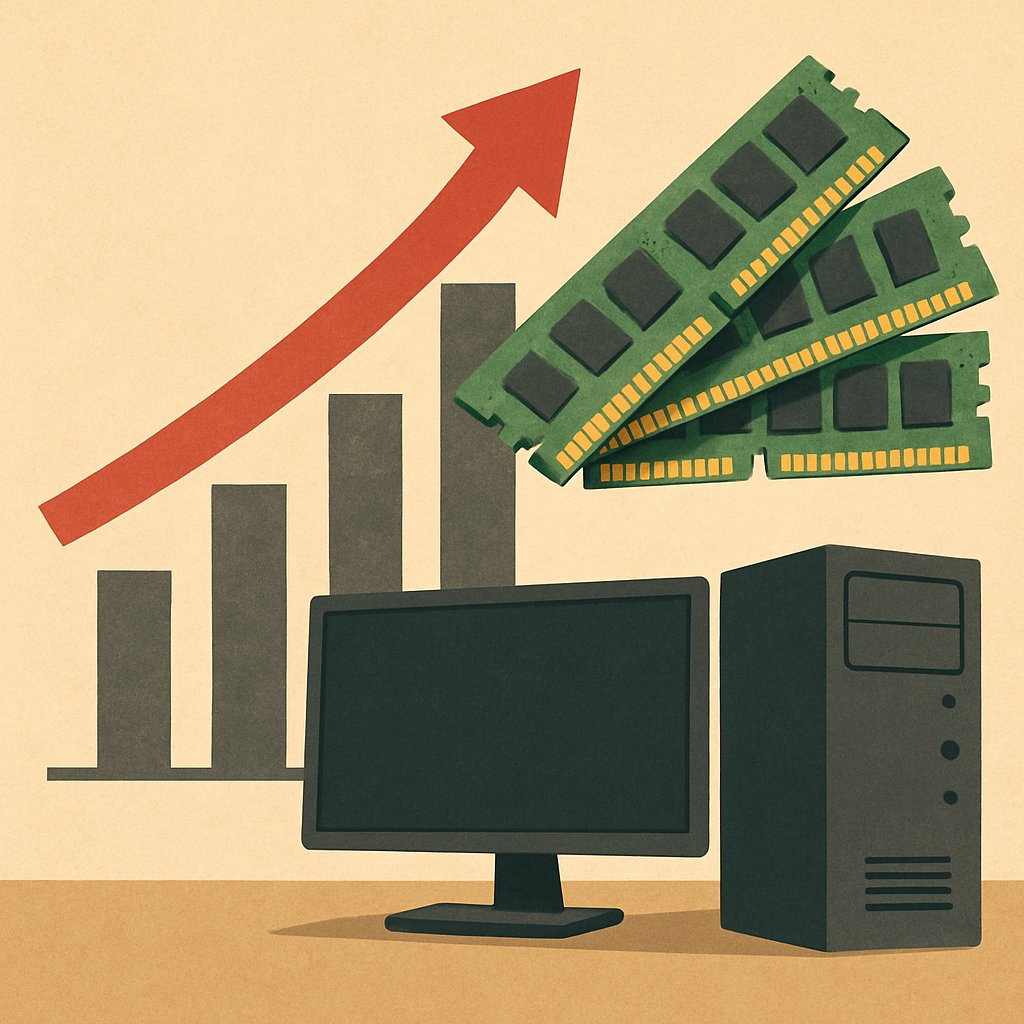
RAM now accounts for 35 percent of the bill of materials for HP PCs—more than double its share from the previous quarter. This sustained spike, confirmed by HP’s leadership, is fundamentally reshaping device costs, PC specs, and procurement strategies for IT buyers through at least 2027.

Key Takeaways:

  • HP reports RAM now represents 35% of the PC bill of materials, up from 15–18% last quarter (Thurrott.com).
  • The increase is driven by surging RAM prices, ongoing AI PC adoption, and global supply constraints.
  • HP expects this elevated cost structure to persist into 2027, impacting device pricing, specs, and IT procurement.
  • All major OEMs face similar trends, but HP’s guidance on duration is among the most conservative reported.
  • IT leaders must prepare for higher hardware costs, supply risk, and evolving spec sheet norms across refresh cycles.

Why This Shift Matters

HP’s Q1 2026 earnings reveal a pivotal change: RAM now constitutes 35% of each PC’s bill of materials (BOM), a leap from just 15–18% the previous quarter (Thurrott.com). For IT managers and technical buyers, this is not a short-term price fluctuation—it represents a new baseline for hardware cost and risk management.

  • Margin Pressure: With RAM absorbing over a third of overall costs, HP and its peers have little room to offset further price increases. This constrains their ability to offer aggressive pricing or enhanced specs, especially as margins remain tight.
  • Procurement Risk: Device supply agreements and large-scale rollouts face heightened cost unpredictability. Buyers must confront the likelihood of less favorable terms and a greater need for BOM transparency.
  • Spec Instability: The economics of standard RAM configurations are in flux. More expensive memory could mean lower default RAM on mainstream models, with upcharges for premium configurations.
  • Prolonged Uncertainty: HP explicitly warns that these elevated memory costs will “continue into 2027,” challenging the expectation of a quick market correction.

These developments, underscored by HP’s own revenue growth in Personal Systems, reflect a sector-wide shift that will affect every large-scale PC buyer, from enterprises to education and government.

The Cost Breakdown: How RAM Reached 35%

HP interim CEO Bruce Broussard confirmed on the company’s earnings call: “RAM prices now account for 35 percent of the total bill of materials (BOM) for each PC it sells, up from 15 to 18 percent in the previous quarter, thanks to escalating RAM prices.” (Thurrott.com)

It’s important to distinguish between RAM-only and RAM + storage component percentages as reported by various sources:

ComponentBOM % (Q4 2025)BOM % (Q1 2026)Source
RAM (only)15–18%35%Thurrott.com
RAM + StorageNot specified35%Ars Technica

The confirmed drivers include:

  • AI and Windows 11 Refresh: HP’s Personal Systems segment saw 11% YoY revenue growth, fueled by AI PCs and the ongoing Windows 11 refresh, increasing demand for higher memory configurations.
  • Supply Chain Bottlenecks: Memory suppliers have not scaled production fast enough to meet demand across datacenter, cloud, and PC markets. Trade and tariff policies add further complexity for U.S. buyers.
  • Duration of Cost Pressure: Unlike previous DRAM cycles, HP’s guidance explicitly projects this elevated pricing will persist into 2027, making it a multi-year risk factor.

This is a structural change. HP’s direct warning: “we now expect this memory problem to continue into 2027,” with no near-term relief in sight (Thurrott.com).

Market Context and Confirmed OEM Impact

HP is not alone in facing soaring memory costs. According to industry reporting, all major PC OEMs are contending with similar BOM pressures (The Verge).

  • Price Transmission: HP has not yet implemented device price increases, but analysts expect that if memory costs remain elevated, price hikes or reduced specs could follow (The Verge).
  • OEM Guidance: HP’s forecast is explicit—high RAM costs will persist into 2027. Statements about other vendors’ guidance (such as Lenovo) are not publicly confirmed in the research sources and should not be assumed as shorter or longer.
  • Unit Sales Remain Strong: Despite these cost increases, HP reported overall PC unit sales up 12%, with consumer PCs up 14% and commercial PCs up 11% (Thurrott.com).

No research source confirms that Apple or Lenovo have already adjusted RAM configurations or that multi-year supply agreements are being renegotiated due to DRAM escalation clauses—such claims should be treated as unconfirmed.

HP’s Personal Systems division has now delivered eight straight quarters of year-over-year revenue growth, underscoring its resilience even as cost headwinds intensify. For a broader view on endpoint market dynamics, see our analysis of open-weight speech-to-text models.

Strategic Implications for IT Buyers

The sharp rise of RAM as a dominant cost driver directly impacts device procurement, refresh schedules, and long-term IT planning:

Budgeting and Lifecycle Management

  • Prepare for Sustained Higher Costs: Even without announced price hikes, expect discounts and incentives to shrink. Budget planning should assume less favorable pricing for the next 12–18 months.
  • Reassess Refresh Cycles: Extending device lifecycles may now offer better value than buying new hardware at the current market peak, especially for non-mission-critical endpoints.
  • Consider Flexible Financing: Leasing or device-as-a-service models can provide agility if memory prices correct in late 2027 or beyond.

Spec and Configuration Strategy

  • Prioritize RAM Where Required: AI workloads and developer endpoints will still require robust memory. Ensure those specs at purchase, as upgradability may be limited in future device lines.
  • Scrutinize Entry-Level Devices: Watch for models with minimal RAM or soldered memory, which could reduce device longevity and productivity. Always validate actual config details before large-scale orders.

Vendor Communication and Negotiation

  • Request BOM Transparency: Ask vendors for regular, detailed BOM breakdowns and forward-looking cost guidance to inform procurement decisions.
  • Review Contract Terms Carefully: Ensure supply agreements allow for price reviews or adjustments if market conditions deteriorate—avoid clauses that lock you into unfavorable terms based on past pricing.

For IT teams managing deployments at scale, see our practical breakdown of hardware impact on AI model deployment.

Pitfalls and Pro Tips for Navigating Memory Costs

Common Pitfalls

  • Expecting a Fast Correction: HP’s guidance is clear: memory inflation will persist well into 2027 (Thurrott.com).
  • Underestimating Lead Times: Custom or high-density RAM modules may experience longer lead times. Secure supply early for critical refreshes and monitor vendor allocation closely.
  • Focusing on Upfront Cost Alone: Devices with the absolute minimum RAM may seem attractive but can lead to performance bottlenecks, higher support costs, and shorter usable life.

Pro Tips

  • Stay Informed on Tariff Policies: HP highlights U.S. tariff policy as a major unknown for 2026. Track policy changes that could further impact pricing and supply.
  • Use Refurbished Hardware Strategically: Consider certified pre-owned or last-generation devices as a stopgap until memory markets stabilize.
  • Build Flexibility into Device Planning: Create deployment roadmaps that accommodate changes in spec or supplier if market conditions shift further.

For further guidance on hardware constraints and endpoint management, review our comparison of WebRTC and SSH for remote terminal access.

Conclusion and Next Steps

HP’s confirmation that RAM now dominates the PC bill of materials should prompt IT leaders to re-examine their procurement and refresh strategies immediately. Memory is now the primary driver of device cost, risk, and configuration volatility. Monitor BOM trends, negotiate for transparency, and prepare for an extended period of market turbulence.

Stay alert for future earnings updates, supply chain developments, and policy changes. For deeper analysis on related hardware and deployment topics, explore our coverage of AI hardware optimization and open-weight model deployment strategies.