Categories
China Business & Technology Cybersecurity Data Security & Compliance

File Sharing Tools and Compliance for China-Global Teams

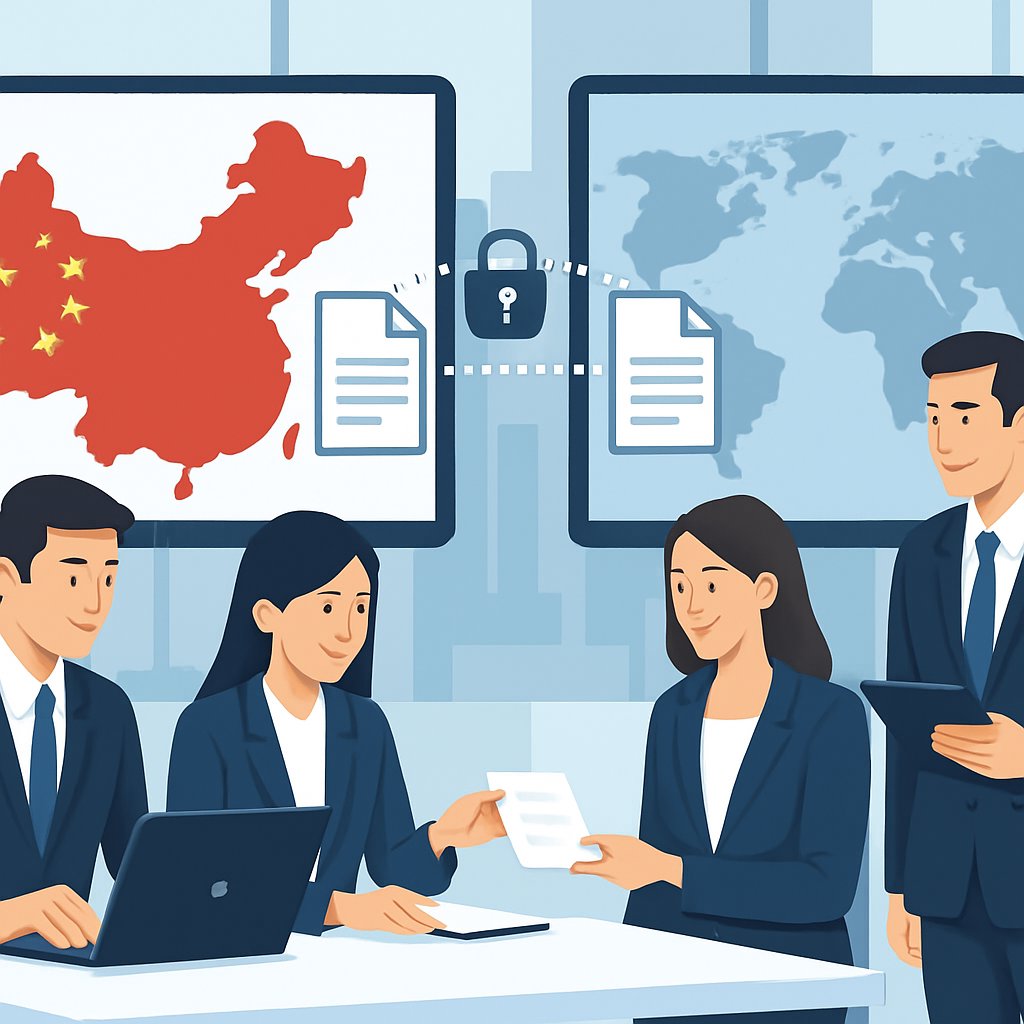
Moving files between teams inside and outside of China is a daily operational challenge for global businesses. The Great Firewall (防火长城, fáng huǒ cháng chéng) creates unique obstacles: international cloud storage, SFTP, and file sharing platforms often become unreliable, slow, or outright inaccessible. On top of that, China’s regulatory environment — in particular the Personal Information Protection Law (PIPL, 个人信息保护法, gèrén xìnxī bǎohù fǎ), Cybersecurity Law (CSL, 网络安全法, wǎngluò ānquán fǎ), and Data Security Law (DSL, 数据安全法, shùjù ānquán fǎ) — imposes strict controls on data flows, especially cross-border transfers. If your organization needs to support fast, compliant file sharing between China-based and international teams, you need more than a VPN or a Dropbox account. Here’s how practitioners are solving this in 2024, with speed, reliability, and compliance in mind.

Key Takeaways:

  • Understand the technical and legal barriers to file sharing between China and international teams
  • Compare enterprise file sharing solutions with China nodes, SFTP setups, and specialized transfer services
  • See real-world speed and reliability benchmarks for common file transfer methods
  • Get an actionable compliance checklist referencing PIPL, CSL, and DSL requirements
  • Learn the trade-offs of leading solutions like FileCloud, and what alternatives exist

Cross-Border File Sharing Challenges: What You Need to Know

Transferring files between China and international offices is not just a technical issue — it’s a complex intersection of digital infrastructure, regulatory restrictions, and business risk. Here’s what makes this uniquely challenging:

  • Great Firewall (GFW) Disruption: The GFW inspects, throttles, or blocks many international file sharing services (e.g., Google Drive, Dropbox, Box, OneDrive). Even with a VPN (虚拟专用网络, xūnǐ zhuānyòng wǎngluò), bandwidth is often limited and connections can drop unexpectedly. For a business, this means lost productivity and broken workflows.
  • Data Residency and Localization: China’s laws require certain categories of data (including “important data” and “personal information”) to be stored within China, and restrict cross-border transfers unless strict conditions are met. See PIPL Articles 38–40, CSL Articles 37–38, and DSL Article 31.
  • Compliance and Approval Process: Cross-border data transfer may require security assessments, government approval, or contractual clauses with data subjects. Non-compliance can lead to fines, business license revocation, or even criminal liability for company officers.
  • Performance Bottlenecks: Packet loss, high latency (often over 250ms), and fluctuating throughput are common when transferring large files between global and China-based users, especially during business hours.

For a detailed look at the technical implications of the Great Firewall, see Understanding the Great Firewall: Business Implications and Solutions.

Practical File Sharing Solutions That Work Across the Great Firewall

To bridge the China–international file sharing gap, IT leaders are turning to solutions that offer:

  • Enterprise Cloud Storage with China Nodes: Providers like FileCloud, Alibaba Cloud OSS (阿里云对象存储), and Tencent Cloud COS (腾讯云对象存储) offer storage nodes physically located in China, which helps with both speed and compliance. Some international platforms (e.g., Files.com, Box) offer “China Gateway” services, but performance and legal compliance vary. According to Sinosend, FileCloud is favored for secure collaboration and compliance across China borders.
  • Dedicated SFTP/FTPS Servers in China: Hosting a secure SFTP or FTPS server inside China (often on Alibaba Cloud or Tencent Cloud) allows direct transfer, but requires ICP licensing for public-facing services and strict firewall and access controls. This is a good fit for batch processing and automated workflows, but less so for real-time collaboration.
  • Compliant File Transfer Services: Specialized services (like Sinosend or DocSpace) provide fast, encrypted cross-border file transfer without requiring users to install a VPN. These platforms often handle compliance documentation and offer granular access control.
  • Hybrid Approaches: Some organizations use a combination of local cloud storage (for China users) and globally accessible cloud drives, synchronizing data through a dedicated, monitored relay server that logs and audits cross-border transfers for compliance checks.
Solution TypeChina PerformanceCompliance ComplexityTypical Monthly Cost (CNY/USD)Key Use Cases
FileCloud (China node)High (no VPN needed)Low/Medium (vendor handles)From ¥600 / $85Team collaboration, file sync, governance
Alibaba Cloud OSSHigh (local peering)Medium/High (ICP, data review)From ¥400 / $56Media sharing, SFTP backend, archives
SFTP/FTPS on China VPSMedium (network dependent)High (ICP, manual controls)From ¥200 / $28Automated transfers, system backups
Files.comMedium/High (premium routing)Medium (some features US-hosted)From $150 (USD only)Business critical transfers
SinosendHigh (optimized for GFW)Low/Medium (handles compliance)From ¥700 / $99Ad hoc file sharing, client delivery

For more on regulatory requirements for Chinese data hosting, see Navigating ICP Requirements for Hosting in China: A Practical Guide.

Speed Comparisons and Performance Tips

File transfer speed between China and international regions is affected by:

  • Route optimization (whether the service uses premium cross-border bandwidth)
  • Whether the file is stored on a local China node or must traverse the GFW
  • File size and concurrency (many small files vs. single large file)
  • Time of day (peak hours mean more congestion)
File Sharing MethodDownload Speed (China user, to US/EU node)Download Speed (China user, to China node)Notes
Dropbox, Google Drive0-100 KB/s (often blocked)N/AUnreliable, often inaccessible
FileCloud (China node)2-6 MB/s10-20 MB/sStable, no VPN required
Alibaba Cloud OSS1-4 MB/s10-18 MB/sBest with China Telecom/Unicom
SFTP on China VPS0.5-2 MB/s5-10 MB/sDependent on routing, not optimized for large concurrent users
Files.com (business plan)2-5 MB/sN/APremium, global network
Sinosend3-7 MB/sN/AOptimized for cross-border, ad hoc transfers

Real-world benchmarks will vary with your ISP and location, but enterprise platforms with China-based storage nodes are consistently 5–10x faster for users inside China compared to international-only solutions.

For more on how the Great Firewall distorts transfer speeds and how to work around it, see this deep dive on GFW business impact.

Compliance Checklist for China File Transfer (PIPL, CSL, DSL)

Before you deploy or select a file sharing solution spanning China and overseas, ensure you’ve addressed these compliance checkpoints:

  • Data Classification: Identify if you are transferring “personal information” (PIPL Art. 4), “important data” (DSL Art. 21), or “core data” (DSL Art. 25). Sensitive data may require government security assessments before cross-border transfer.
  • Localization: Store regulated data on servers within mainland China unless you qualify for a cross-border transfer exception (CSL Art. 37, PIPL Art. 38).
  • Security Assessment: For large-scale or sensitive data transfers, conduct government-mandated security assessments (PIPL Art. 40, DSL Art. 31). This generally applies if you process >1 million individuals’ data or handle “important data.”
  • Legal Documentation: Prepare standard contractual clauses, obtain explicit user consent (PIPL Art. 39), and ensure contracts with overseas entities specify data protection obligations.
  • Logging and Auditing: Maintain logs of all cross-border data transfers for at least six months (CSL Art. 38, PIPL Art. 55).
  • ICP Licensing (ICP备案, ICP bèi'àn): For any public-facing file server or web service hosted in China, secure an ICP filing or license. See how to navigate ICP requirements.

Failure to comply can result in fines up to ¥50 million or 5% of annual revenue (PIPL Art. 66), suspension of business, or even criminal prosecution. For a comprehensive breakdown, see China’s Data Security Law: Compliance Strategies for Firms.

Considerations and Alternatives: FileCloud Case Study

FileCloud is highlighted in multiple reviews as a secure, China-accessible content collaboration platform that does not require a VPN and provides enterprise-grade compliance. However, every solution has trade-offs:

Key Considerations and Trade-offs

  • Smaller Ecosystem: Compared to global giants, FileCloud has a more limited set of integrations and third-party app support. If your team relies heavily on niche SaaS tools, check integration compatibility first (Sinosend).
  • Higher Cost per User: FileCloud and similar enterprise-grade China-compliant services are often priced above consumer-grade tools. For small teams or low-frequency file sharing, this may be overkill.
  • Compliance Complexity for Custom Deployments: If you run your own FileCloud server on a China-based cloud, you are responsible for ICP filing, firewall management, and data protection controls — a significant operational overhead.
  • Alternatives: If FileCloud is not a fit, consider Alibaba Cloud OSS for file storage, SFTP for batch automation, or Sinosend for one-off cross-border deliveries. Files.com and DocSpace are strong for enterprises needing advanced workflow automation and global reach, but may have US-based data residency implications.

No single solution is perfect. The best fit depends on your file volume, compliance risk tolerance, budget, and workflow needs. For protecting IP, see Key Strategies for Protecting Intellectual Property in China.

Common Pitfalls and Pro Tips

  • Assuming VPNs Are a Silver Bullet: VPN access is unreliable in China and may violate local regulations for business use. Always provide a native China-accessible solution for critical workflows.
  • Neglecting Regulatory Updates: China’s data laws evolve rapidly. Assign a compliance owner to monitor for regulatory changes and adapt your processes accordingly.
  • Overlooking User Experience: Test file uploads and downloads from both China and overseas offices before rollout. Latency and timeouts can break mission-critical tasks even if compliance is perfect on paper.
  • Failing to Document Transfers: Maintain detailed logs and audit trails to prove compliance in case of inspection or dispute.

For cultural factors impacting cross-border collaboration, review Cultural Intelligence Tactics for Tech Leaders in China.

Conclusion

File sharing between China and international teams requires a blend of technical adaptation, regulatory vigilance, and business pragmatism. Prioritize solutions with China-based infrastructure, robust compliance support, and tested cross-border performance. Run regular internal audits, keep legal counsel involved, and engage both IT and business stakeholders in solution selection. Next, evaluate your organization’s specific needs against the solution types above, and pilot your top choice with real-world China users before a full rollout.

For ongoing guidance on China tech compliance, see related deep dives on China’s Data Security Law and Great Firewall business impact.

Sources and References

This article was researched using a combination of primary and supplementary sources:

Supplementary References

These sources provide additional context, definitions, and background information to help clarify concepts mentioned in the primary source.

Critical Analysis

Sources providing balanced perspectives, limitations, and alternative viewpoints.