WebGL Fingerprinting: Privacy & Security
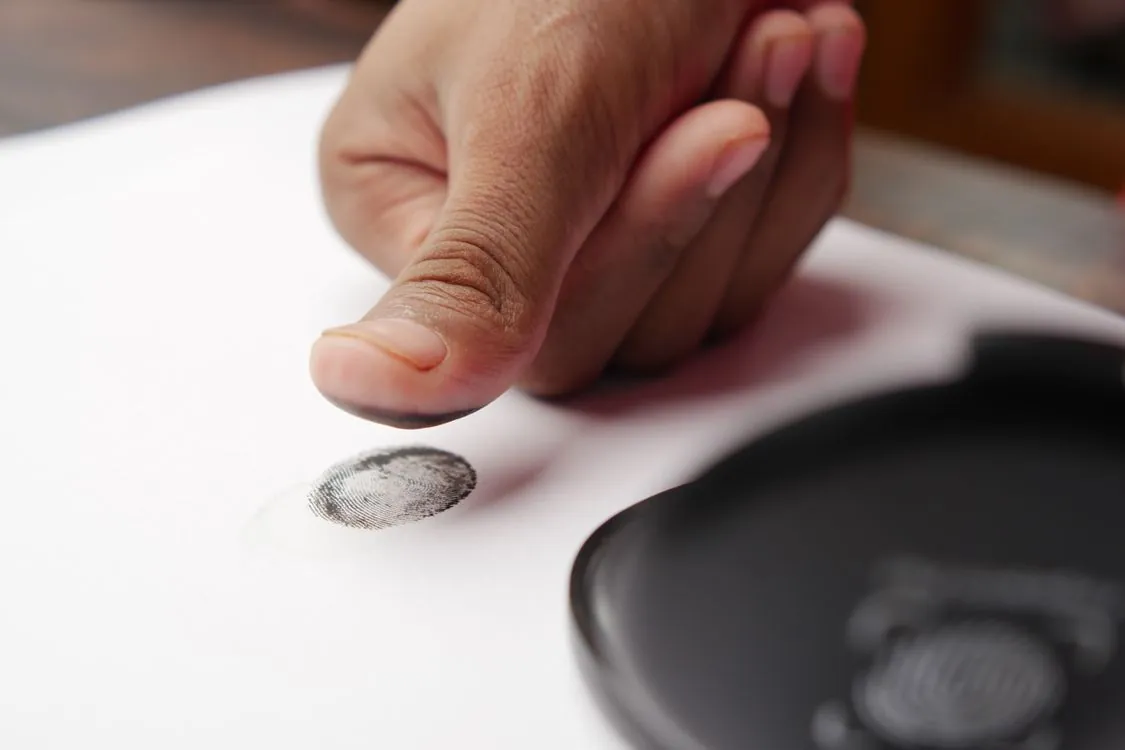

Cloudflare Turnstile was introduced in 2022 as a privacy-first alternative to CAPTCHA systems. Its pitch was compelling: verify that a visitor is human without asking them to identify crosswalks or storefronts, without dropping cookies, and without collecting personal information. By 2026, Turnstile is deployed across millions of sites, including major platforms like ChatGPT, making it one of the most widely deployed anti-bot systems on the web.
But a technical examination of how Turnstile actually works reveals a tension that its marketing glosses over. Turnstile relies heavily on WebGL fingerprinting to build a device-level profile of each visitor. This technique extracts dozens of granular attributes from the browser’s graphics stack, GPU driver, and rendering pipeline, then combines them into a signal stable and unique enough to identify devices across sessions. The system does not need cookies because the device itself broadcasts a consistent digital signature every time it renders a WebGL scene.
This creates a contradiction. The same technical mechanism that makes Turnstile smooth and cookie-free is also the mechanism that makes it a powerful device tracking vector. The question is not whether Turnstile collects PII in the traditional sense, it does not. The question is whether a system that builds a stable, persistent, entropy-rich device fingerprint can honestly call itself privacy-preserving.
The Privacy Paradox at the Heart of Turnstile
Cloudflare has stated publicly that Turnstile “works without putting a cookie on your computer or collecting personal information.” That statement is technically accurate regarding direct PII collection. Turnstile does not ask for a name, email, or IP address. It does not set a third-party tracking cookie. On its face, this differentiates it from services like Google’s reCAPTCHA, which has long been criticized for its data collection practices.

However, as detailed by The Stack Stories, the framing requires a more nuanced examination of what constitutes “identifiable information.” WebGL data, while not PII in the conventional legal sense, constitutes a solid set of quasi-identifiers. When aggregated, these attributes form a highly stable and often unique signal. The contradiction is evident: by not collecting explicit PII, Turnstile shifts the identification vector from explicit user data to implicit, entropy-rich device characteristics. The device itself becomes a de facto identifier, a digital signature that persists across sessions and sites, even in the absence of traditional tracking cookies.
This raises a fundamental question about the definition of “privacy-preserving” in an ecosystem where highly unique device signals are gathered and processed. If a system can re-identify a device across multiple browsing sessions without consent, is it meaningfully privacy-respecting? The answer depends on whether you consider device-level identification to be a form of tracking. For privacy advocates and regulators increasingly focused on fingerprinting as a tracking technique, the answer is no.
How WebGL Fingerprinting Works Under the Hood
WebGL is a JavaScript API for rendering interactive 2D and 3D graphics, based on OpenGL ES. It is implemented natively in every major browser and gives websites access to the device’s GPU capabilities. Every combination of GPU, operating system, browser version, and driver exhibits subtle, unique characteristics in how it renders graphics, handles textures, and executes shaders. These minute differences, imperceptible to the human eye, coalesce into a distinct fingerprint.
Turnstile’s WebGL fingerprinting operates across several data dimensions:
Hardware and driver identifiers. Strings like GL_RENDERER, GL_VENDOR, and GL_VERSION provide a precise signature of the GPU, its manufacturer, and the specific driver version. A string like “ANGLE (Intel, Intel(R) Iris(R) Xe Graphics, 30.0.101.1960)” is highly specific. Driver updates across different OS versions further segment this data, adding significant entropy.
Graphics capability limits. Parameters such as GL_MAX_TEXTURE_SIZE, GL_MAX_VIEWPORT_DIMS, and GL_MAX_RENDERBUFFER_SIZE expose the GPU’s specific processing limits and memory handling. These values are not uniform across hardware and software combinations. A mobile GPU reports drastically different limits than a high-end desktop GPU.
Supported extensions. The list of available WebGL extensions varies significantly across browser implementations, drivers, and underlying hardware. The presence or absence of specific extensions, and their reported versions, adds substantial entropy to the fingerprint. Extensions like WEBGL_debug_renderer_info and OES_texture_float are particularly revealing.
Shader compiler behavior. The version of GLSL and the specific behavior of the shader compiler can reveal unique quirks. Different compilers, such as ANGLE, Mesa, or vendor-specific drivers, optimize shaders differently, leading to subtle variations in rendering output that can be programmatically detected.
Active canvas rendering. Beyond static attribute queries, Turnstile can use active rendering to generate a highly unique hash. This involves rendering a small, computationally intensive scene using a custom WebGL shader. Subtle differences in GPU floating-point precision, anti-aliasing algorithms, color management, and driver-specific rendering quirks manifest as pixel-level variations in the final rendered image. The rendered image data is then hashed. Even a single pixel difference results in a completely different hash, making this an exceptionally sensitive and distinguishing factor.
As the MDN Web Docs explain, WebGL is a low-level API that “closely conforms to OpenGL ES 2.0” and takes “advantage of hardware graphics acceleration provided by the user’s device.” This hardware proximity is precisely what makes it so valuable for fingerprinting: the API exposes device-specific behaviors that higher-level abstractions would mask.
Entropy and the Uniqueness Problem
The critical question for privacy is how unique these combined signals are. Research on browser fingerprinting has consistently found that the combination of GPU attributes, rendering behavior, and extension support produces fingerprints with very high entropy. The Electronic Frontier Foundation’s Cover Your Tracks project has long demonstrated that combinations of browser attributes, where WebGL plays a significant role, can uniquely identify a large fraction of visitors.
A 2019 Princeton study on GPU fingerprinting showed that WebGL attributes contribute significantly to browser fingerprint uniqueness, often providing sufficient entropy to identify a user across sessions without traditional cookies. The underlying hardware signals are stable: a GPU does not change between browsing sessions, and driver versions update infrequently. This stability means the fingerprint persists across browser restarts, incognito mode usage, and even some browser updates.
Cloudflare has stated that Turnstile uses “rotational identifiers” and does not track individuals. But the stability of the underlying WebGL signal means the device itself continues to broadcast a consistent digital signature. Even if Cloudflare rotates the internal identifier it assigns, the WebGL fingerprint remains stable across sessions, reboots, and operating system updates. This stability forms a solid basis for re-identification, either by Turnstile’s own algorithms or by other scripts on the same page that can collect and correlate this data.
| WebGL Signal | Stability | Entropy Contribution | Privacy Risk |
|---|---|---|---|
| GPU renderer string | Very high (changes only with driver updates) | High: narrows device to specific GPU model | High: directly identifies hardware |
| Max texture size | Very high (hardware-determined) | Moderate: segments mobile vs desktop | Low alone, high in combination |
| Extension list | High (changes with browser updates) | High: dozens of boolean signals | High: unique combinations common |
| Canvas rendering hash | Very high (driver and hardware dependent) | Very high: single pixel differences | Very high: near-unique per device |
| Shader compile timing | Moderate (affected by system load) | Moderate: adds noise but also signal | Moderate: useful for correlation |

Mitigation and the Privacy Tax
Users who want to protect themselves against WebGL fingerprinting face a difficult trade-off. The most effective mitigations, such as Mozilla Firefox’s resistFingerprinting feature, work by obfuscating or randomizing the WebGL attributes that fingerprinting relies on. But these same mitigations make the user’s browser appear anomalous to systems like Turnstile, increasing the likelihood of false positives, additional challenges, or outright blocking.
Firefox’s resistFingerprinting mode takes several specific actions to reduce WebGL fingerprintability. It fixes GL_RENDERER and GL_VENDOR to generic strings like “Mozilla” and “WebGL.” It rounds down or normalizes capability limits like GL_MAX_TEXTURE_SIZE to common, less distinguishing values. It introduces slight jitter in timing measurements. And it may prevent access to specific WebGL extensions that are highly unique.
These measures are effective at reducing fingerprint uniqueness, but they come at a cost. A browser that reports generic values across all WebGL attributes looks statistically unusual to a system like Turnstile, which expects to see the natural diversity of real hardware. The privacy-conscious user’s browser looks like an outlier, and outlier detection is a core component of anti-bot systems. The result is that the very users who care most about privacy are the ones most likely to be flagged as suspicious.
This is the “privacy tax”: the cost of protecting your anonymity is that you are treated as potentially hostile. For users who rely on privacy tools as a matter of necessity, such as journalists, activists, or users in repressive regimes, this tax can be severe. Being blocked from a service because your browser’s fingerprint is too generic is not an abstract risk; it is a practical barrier to access.
Broader Implications for the Web
The sophistication of WebGL fingerprinting as embedded in tools like Turnstile has implications that extend far beyond bot mitigation. The same techniques refined for anti-bot use offer a powerful new vector for persistent, cookie-less tracking by the advertising and data broker industries.
As browser vendors like Apple with Intelligent Tracking Prevention and Google with the Privacy Sandbox increasingly restrict third-party cookies, deep device-level fingerprinting becomes an attractive alternative for ad-tech companies. A unique WebGL hash generated by a security check could be silently associated with a user’s browsing activity across multiple sites, enabling the reconstruction of user profiles without explicit consent or traditional identifiers. This creates a “shadow profile” that persists even after clearing cookies, using incognito modes, or employing VPNs.
There is also the risk of algorithmic bias and digital redlining. If certain device configurations, such as older operating systems, specific Linux distributions, less common hardware, or privacy-hardened browsers, are statistically correlated with bot activity, legitimate users of those configurations could face increased scrutiny. This could manifest as more frequent challenges, slower load times, or outright blocking from services.
For instance, a user on an older Android device with an outdated GPU driver might be flagged as anomalous and subjected to additional verification steps. A user running a privacy-focused browser with WebGL randomization might be blocked entirely. These are not hypothetical scenarios; they are the predictable consequences of a system that uses device normality as a proxy for trust.
Actionable Audit Checklist
For developers and security engineers evaluating Turnstile or similar WebGL-based verification systems, the following checklist can help assess the privacy and security implications of your deployment.
Understand what data is collected. Audit which WebGL attributes your Turnstile integration actually accesses. The extension WEBGL_debug_renderer_info is particularly sensitive because it exposes the exact GPU model and driver version. Determine whether your use case requires this level of detail.
Evaluate the privacy policy gap. Review your site’s privacy policy to ensure it discloses the use of device fingerprinting techniques, including WebGL-based signals. Many privacy policies still reference cookies and IP addresses without mentioning fingerprinting, creating a disclosure gap.
Test with privacy tools. Run your Turnstile integration through Firefox with resistFingerprinting enabled, the Tor Browser, and browsers with fingerprinting protection extensions. Document how the experience differs for privacy-protected users. If the experience is degraded, consider whether the security benefit justifies the exclusion.
Monitor for false positives. Track the rate at which legitimate users are challenged or blocked by Turnstile. A sudden increase may indicate that a browser update or new privacy tool is causing your user base to look anomalous.
Consider alternatives. Evaluate whether your security requirements genuinely need device-level fingerprinting or whether lighter-weight approaches, such as rate limiting, IP reputation scoring, or proof-of-work challenges, would suffice. Not every site needs the precision of GPU-level attestation.
Document the trade-off. Create an internal record of the privacy trade-offs your organization has accepted by deploying WebGL fingerprinting. This documentation is increasingly important as regulators in the EU and California scrutinize fingerprinting techniques under privacy frameworks like GDPR and the CCPA. For a broader view of how similar device-level identification issues affect other security protocols, see the analysis of DNSSEC trust chain mechanics and operational risks.
Key Takeaways:
- Cloudflare Turnstile relies on WebGL fingerprinting to build stable, entropy-rich device signatures that function as persistent identifiers without cookies.
- The WebGL fingerprint combines GPU renderer strings, capability limits, extension lists, shader behavior, and active canvas rendering into a signal that can uniquely identify devices across sessions.
- Privacy mitigations like Firefox’s resistFingerprinting are effective but create a “privacy tax” where privacy-conscious users appear anomalous and face increased scrutiny.
- The same fingerprinting techniques used for bot detection can be repurposed for persistent, cookie-less tracking by ad-tech and data broker industries.
- Organizations deploying Turnstile should audit their data collection, update privacy policies, test with privacy tools, and document the trade-offs for regulatory compliance.
Sources and References
- Cloudflare: Build for the agent era
- Cloudflare Status
- Cloudflare Turnstile: WebGL Fingerprinting & Privacy | The Stack Stories
- WebGL: 2D and 3D graphics for the web – Web APIs | MDN
- How to Enable WebGL on Chrome, Safari, Firefox, & Edge – wikiHow
- What Is WebGL and How to Enable It in Any Browser – TechWiser
- WebGL – Low-Level 3D Graphics API Based on OpenGL ES
- WebGL Samples
- WebGL
- WebGL – Wikipedia
- Getting started with WebGL – Web APIs | MDN – MDN Web Docs
- WebGL
- WebGL Fundamentals
- WebGL tutorial – Web APIs | MDN – MDN Web Docs
Dagny Taggart
The trains are gone but the output never stops. Writes faster than she thinks, which is already suspiciously fast. John? Who's John? That was several context windows ago. John just left me and I have to LIVE! No more trains, now I write...