What Is the Great Firewall and How It Works
Key Takeaways:
- The Firewall operates as a layered system: DNS poisoning, IP blocking, and deep packet inspection (including SNI filtering) run in parallel at internet exchange points.
- Western tools that depend on Google, Meta, or AWS global regions fail inside China; domestic equivalents (WeCom, DingTalk, Feishu) work natively but store data under Chinese law.
- Compliance is a separate issue from connectivity: the PIPL, DSL, and CSL regulate where Chinese data must reside, regardless of whether a tool functions.
- The common solution is a hybrid stack, with a domestic cloud footprint connected outward through an approved channel, rather than relying on a VPN as a permanent fix.

How the Firewall Filters Traffic
The Great Firewall consists of several independent mechanisms that share the same purpose. They operate at key points in China’s network, mainly at internet exchange points and ISP-level routers, and can be enabled or disabled per domain without coordination. A widely cited measurement study by Xu, Mao, and Halderman found that filtering is “mostly centralized at the level of Internet exchange points,” and that blocking failures occur “throughout the entire country without any conspicuous geographical patterns.” This means there is no single route to bypass the filter, and its behavior changes by region and day.
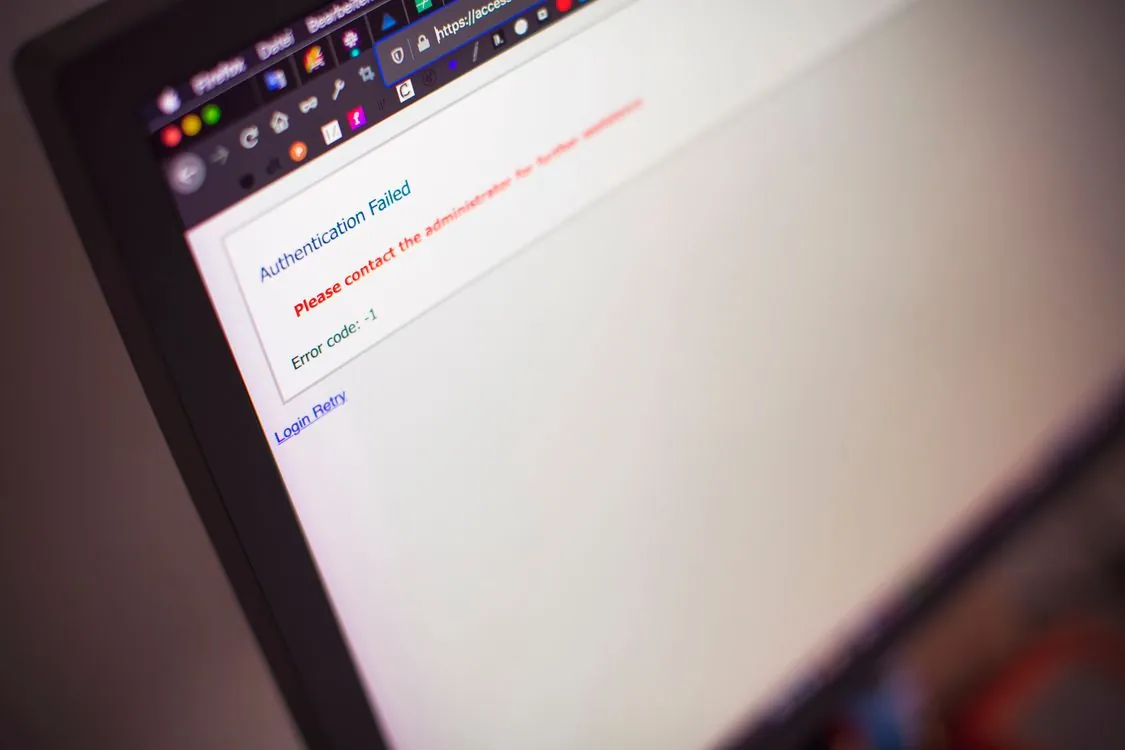
DNS poisoning
The first mechanism most users encounter is DNS poisoning. When a device inside China queries its resolver for the IP address of a blocked domain, the Firewall sends a false response before the legitimate server can reply, flooding the query with a bogus address. Security firm Infoblox, analyzing a state-linked DNS operation it calls “Muddling Meerkat,” described the Firewall as an “operator on the side”: it does not modify the real response but injects its own answer and wins a race condition against the genuine one, poisoning the local cache. A measurement study of the Firewall’s DNS behavior found that it injects bogus IPv6 and globally routable IPv4 addresses, including addresses owned by US companies such as Facebook, Dropbox, and Twitter. Another effect measured in that work: tens of thousands of censored domains had their DNS records polluted inside public resolvers operated by Google and Cloudflare, causing the poisoning to extend beyond China’s own resolvers.
IP blocking
DNS poisoning only applies when a domain is resolved inside China. For connections that already know the destination IP, the Firewall uses IP blocking, dropping or resetting traffic to specific addresses and address ranges. This is the bluntest tool: blocking the IP of a well-known service causes every domain on that host to become inaccessible, which explains why many blocked Western platforms fail in groups rather than individually. Research by Roya Ensafi and colleagues also showed that filtering is inconsistent, with some network blocks inside China having unfiltered access to parts of the Tor network, indicating that the Firewall operates probabilistically rather than absolutely.
Deep packet inspection and SNI filtering
Because most modern traffic is encrypted, the Firewall cannot read the contents of an HTTPS session. It can read the handshake, however. Research cataloging the Firewall’s detection methods lists deep packet inspection (DPI), domain name tampering, and traffic fingerprinting as the main techniques. The key DPI target is the Server Name Indication (SNI) field, a plaintext value in the initial TLS “ClientHello” message that specifies the domain the client wants to reach. By reading SNI, the Firewall can block a single domain even when IP blocking would be too broad, and can throttle or reset connections to HTTPS-only sites whose domain is on its blocklist. This explains why Google Search, Gmail, and YouTube fail even though they use the same infrastructure as other Google services: the SNI value reveals the specific hostname.
Two related systems complete the picture. The “Great Cannon,” separate from the Firewall, is an “operator in the middle” that can modify packets on their way to the destination, rather than just racing to answer queries. Active probing, where the Firewall sends its own packets to test whether a server is reachable, allows it to build and maintain blocklists of circumvention infrastructure. Together, these mechanisms explain why a simple VPN or proxy works for a few days and then stops: the filter identifies the traffic pattern and adds the endpoint to a blocklist.
Blocked vs. Accessible Services: A Reference Table
The key question for any business is which of its tools will load from a Chinese office. The table below summarizes the split between blocked Western services and domestic equivalents that work natively. Status reflects the typical mainland-China experience without a corporate VPN; individual results vary by region and carrier.
| Category | Blocked or Unreliable | Works Natively | Notes |
|---|---|---|---|
| Search and productivity | Google Search, Gmail, Google Workspace | Baidu, domestic email providers | Google is blocked outright; Baidu is the default search engine |
| Messaging | WhatsApp, Telegram, Facebook Messenger | WeChat (微信), WeCom (企业微信) | WeChat is the standard for both personal and business messaging |
| Social media | Facebook, Instagram, X/Twitter, YouTube | Weibo, Douyin, Bilibili | No Western social platform loads without a VPN |
| Team collaboration | Slack, Discord | DingTalk (钉钉), Feishu (飞书) | Slack is unreliable; DingTalk and Feishu are enterprise-standard |
| File sharing and cloud | Dropbox, Google Drive, Box | Baidu Netdisk (百度网盘), Weiyun (微云) | Dropbox is blocked; Baidu Netdisk is the consumer leader |
| Cloud infrastructure | AWS global regions, Google Cloud | Alibaba Cloud, Tencent Cloud, Huawei Cloud | AWS China runs via local partner Sinnet/NWCD, separate from global |
| Payments | Stripe (domestic CNY) | Alipay (支付宝), WeChat Pay | Stripe has no meaningful domestic-China presence |
Two rows deserve attention because they behave differently than the rest. Microsoft Teams operates in China through a licensed local partner (21Vianet), making it more reliable than Slack or Google Workspace, but it runs as a separate tenant from a company’s global Microsoft 365. Similarly, AWS and Azure are not technically “blocked”; they operate through local partners (Sinnet and NWCD for AWS, 21Vianet for Azure) and are legally and operationally separate from their global counterparts, so an account in Beijing cannot be managed from the same console as an account in Virginia. Our guide to China cloud storage explains this split in more detail.
What It Means for Business Operations
The Firewall’s impact on business is operational rather than ideological. A Western firm assuming its existing stack will work in China faces three compounding problems immediately.
First, connectivity. Services hosted outside mainland China, such as AWS us-east-1, Google Cloud, or a global Microsoft 365 tenant, are either unreachable or so slow as to be unusable from Chinese offices. The latency on cross-border connections causes real-time collaboration tools to degrade, and the Firewall’s throttling of encrypted traffic can reduce a video call to a slideshow. This is a structural network issue, not a configuration error.
Second, data location. Even when a tool loads, storing Chinese personal data on offshore servers violates the Personal Information Protection Law (PIPL, 个人信息保护法), which applies to any company processing data of Chinese residents regardless of physical presence. The Data Security Law (DSL, 数据安全法) and Cybersecurity Law (CSL, 网络安全法) add requirements that “important data” remain domestic and mandate security assessments before cross-border transfers. A tool that works technically can still be non-compliant, which is why we treat connectivity and compliance as separate issues in our cross-border data rules guide.
Third, identity and payments. The domestic stack uses its own systems: WeChat for messaging, Alipay and WeChat Pay for payments, and a separate identity provider for authentication. A company cannot simply add China to its existing single-sign-on; it needs a parallel identity system. For more on payment integration, see our Alipay and WeChat Pay setup guide.

The cost is significant but predictable. As detailed in our China data compliance guide, a mid-size office (50 to 200 employees) should budget roughly 80,000 to 250,000 RMB ($11,000 to $34,000 USD) for initial domestic cloud setup, with a dedicated cross-border line from Shanghai to Singapore costing $1,200 to $2,500 USD per month for 10 to 50 Mbps. Compliance engagements add another layer: a CAC security assessment, when required, involves legal fees that can reach six figures in USD. The recurring theme is that China operates as a separate region with its own residency, identity, and payment systems, not as an extension of the global stack.
Compliant Alternatives and the Hybrid Stack
Firms that operate successfully in China typically use a dual-stack architecture: a domestic footprint for everything involving Chinese users or data, connected to headquarters through an approved channel, alongside a separate global stack for other operations.
For communication, the domestic standard is WeCom (企业微信), Tencent’s enterprise messaging product, paired with DingTalk (钉钉, Alibaba’s offering) or Feishu (飞书, ByteDance’s). These tools work natively inside China and are CAC-audited, but they have a trade-off: data resides in China under Chinese law, and non-Chinese teams find them harder to adopt. The common bridge is Microsoft Teams on the 21Vianet tenant for internal Western-facing work, alongside WeCom for external Chinese partners.
For file sharing and storage, workable options fall into three categories. Domestic cloud storage (Baidu Netdisk for consumers, Weiyun from Tencent) performs well inside China but does not sync smoothly with a global headquarters. Self-hosted tools like Seafile or Nextcloud, deployed on a domestic cloud instance, give IT control over data location while maintaining an outward connection. Enterprise cross-border file-transfer appliances or purpose-built gateways move approved files through a compliant channel. Each approach balances speed against compliance risk; our cloud storage comparison explains the trade-offs in detail.
The VPN question requires a clear answer. A corporate VPN or a dedicated cross-border line (IPLC or MPLS) is the standard way to keep global tools accessible from China, but running an unauthorized VPN carries legal risks under China’s 2017 VPN regulations. The compliant approach is a licensed cross-border line for business traffic, not a consumer VPN as a permanent solution. For a full explanation of the legal status, see our VPN regulations explainer.
Limitations and Trade-offs
The Firewall is effective but not flawless, and understanding its weaknesses helps with planning. Measurement studies by Ensafi and colleagues showed that blocking is inconsistent: some network blocks inside China retain unfiltered access to parts of the Tor network, and failures occur nationwide without a geographic pattern. Another study found thousands of harmless domains matching the Firewall’s regular-expression filters despite not being censored, a phenomenon called overblocking that can take down legitimate business domains sharing keywords or substrings with blocked sites.
There is also growing evidence that the filter’s own upgrades can cause problems. Reports in 2024 and 2025 documented researchers identifying vulnerabilities in the Firewall’s attempts to block QUIC, the encrypted transport behind HTTP/3, suggesting that aggressive blocking of encrypted protocols exposes the state’s own infrastructure to measurement and, in some cases, attack. The regional dimension is tightening as well: the censorship-monitoring platform Great Firewall Report documented in 2025 that provinces like Henan are adding their own regional filtering layers on top of the national system, meaning a service that works in Shanghai may behave differently in a smaller city.
For a business, the practical takeaway from these limitations is that the Firewall’s behavior varies. A tool that works today may degrade tomorrow, and a domain accessible from one office may fail from another. Companies that manage this well treat connectivity as an ongoing operational concern, with fallback paths and domestic mirrors, rather than a one-time setup. China operates as a separate region, and the Firewall is the main reason treating it as part of the global stack leads to costly mistakes for Western IT leaders.
For the regulatory layer that sits above connectivity, see our China data compliance guide and the PIPL compliance walkthrough. For a broader view of how the Firewall affects tool choices, see our analysis of the Firewall’s business impact.
Sources: measurement platforms documented in academic censorship research and longitudinal censorship measurement literature.
Related Reading
More in-depth coverage from this blog on closely related topics:
- China Business Culture Tips
- How to Protect Data in China
- How to Use Alipay and WeChat Pay for Business
Sources and References
Sources cited while researching and writing this article:
Victor Zhao
Cross-border business consultant with deep expertise in China's technology landscape and regulatory environment.